
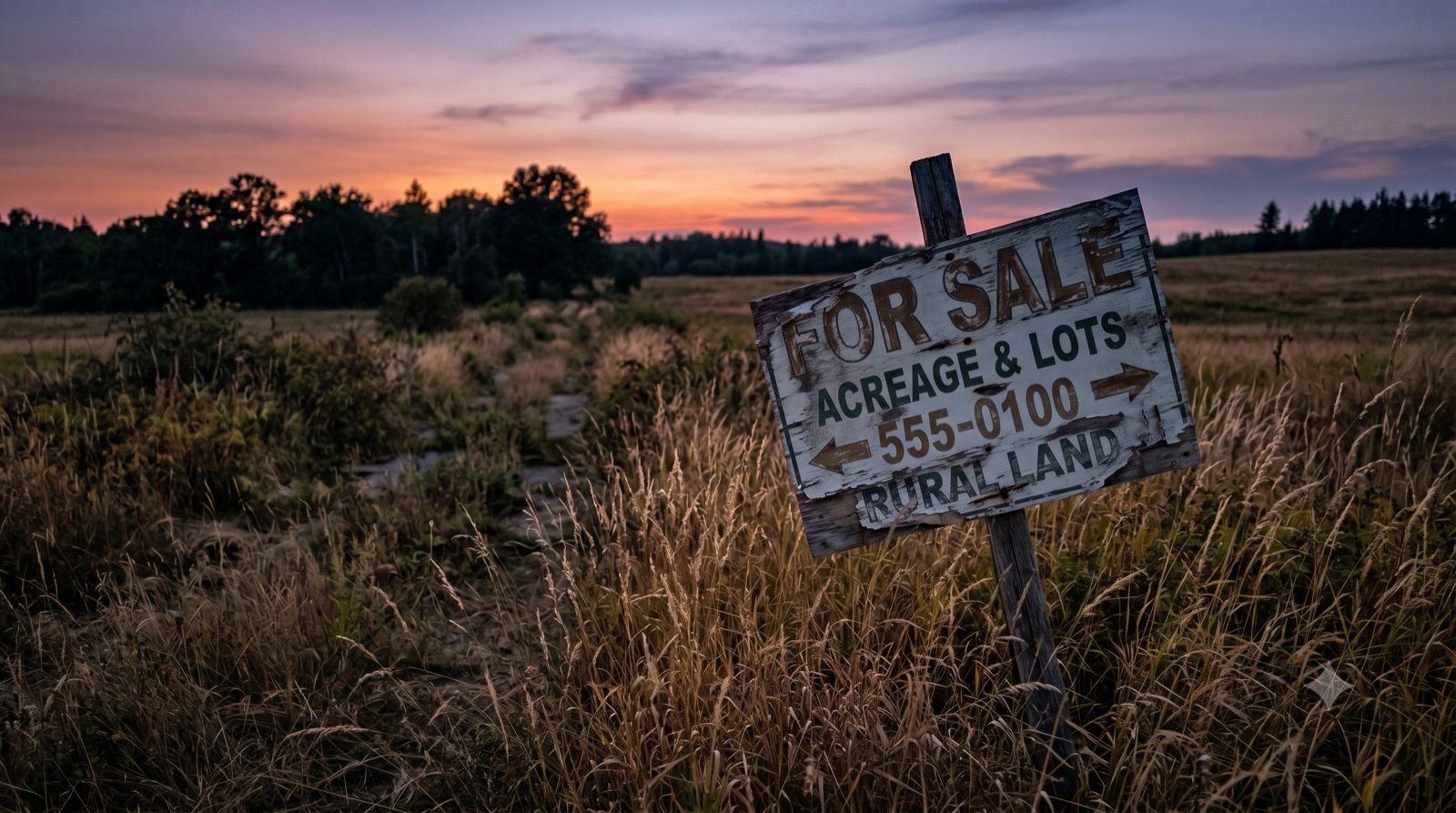
Companies That Buy Land for Cash: How the Business Model Works and How to Vet One
Key Takeaways
- There is no single type of "cash land buyer" — the category includes national we-buy-land operators, regional investors, developers, and 1031-exchange buyers, each with different goals, timelines, and property criteria. Knowing the type you're dealing with helps you evaluate whether their offer makes sense.
- The cash buyer business model is built on absorbing carrying costs, marketing risk, and resale uncertainty — property taxes, insurance, and holding costs accumulate while a buyer waits to resell, and no offer can ignore that math. There is no fixed formula; every offer is priced parcel by parcel.
- Vetting a cash buyer takes about 20 minutes and follows a consistent checklist: written offer, proof of funds, title-company closing, zero upfront fees from the seller, and time to have an attorney review before signing.
What Are Companies That Buy Land for Cash?
Companies that buy land for cash are direct purchasers — they use their own capital to acquire vacant, rural, or undeveloped parcels directly from landowners, without a listing agent, an MLS period, or a financed buyer. The seller gets a firm written offer and, if they accept, a closing on a defined schedule. No commissions come out of the proceeds, and there is no mortgage approval to wait on.
The blog covers the full range of options for landowners, and if you want to understand all three paths to selling — agent, FSBO, or direct cash buyer — the best way to sell land is a good starting point. This post focuses specifically on the cash-buyer side: who these companies are, how the model works, which type is likely contacting you, and how to verify one before you sign. For the trust and legitimacy angle — red flags, scam patterns, and the full vetting checklist — are we-buy-land companies legit goes deeper on that specific question.
If you already want to see what a cash offer looks like for your parcel, you can request one here.
How Does the Cash Land-Buyer Business Model Actually Work?
Cash land buyers make money by purchasing land below what a patient retail seller might achieve, then reselling or developing it at a profit. That is not a hidden agenda — it is the business model stated plainly. Understanding why the math requires a discount makes it much easier to evaluate whether a specific offer is fair.
Why the Offer Reflects More Than Just the Property
When a cash buyer acquires a parcel, they take on a set of real costs and risks that the seller no longer has to carry:
- Property taxes continue to accrue every year the buyer holds the land. Raw land commonly has a longer resale timeline than finished homes, so those taxes add up.
- Carrying costs — liability insurance, occasional maintenance, HOA dues in some jurisdictions — accumulate whether or not anyone is using the parcel.
- Marketing and resale costs — the buyer must still find an end buyer, which may require listing on Land.com, LandWatch, or other marketplaces, paying for photos or surveys, and waiting out a thin buyer pool.
- Resale risk — the market can shift. A buyer who paid cash today may resell into softer conditions in 12 or 18 months.
Because the buyer absorbs all of that, a cash offer is not the same as a retail listing price. It reflects the parcel's specific location, access, zoning, and condition — and the real costs between purchase and resale. According to REtipster, holding costs on real property include property taxes, insurance, and any maintenance, all of which run from the moment of acquisition regardless of how quickly the buyer can resell.
How They Find Sellers
Direct land buyers research public records — county assessor data, tax delinquency rolls, deed records, and GIS mapping tools — to identify parcels that may have motivated sellers: inherited land, absentee owners, properties with delinquent taxes, or lots that have sat unsold for years. They then send targeted mailers, postcards, or make phone and text inquiries to landowners. As LandBoss documents, what feels like a personal outreach is often a data-driven mailing list — bulk outreach at scale, with a small percentage of recipients responding. Receiving an unsolicited offer is not itself a red flag; what matters is how the buyer behaves once you respond.
What Are the Different Types of Companies That Buy Land for Cash?
Not every entity calling itself a "cash land buyer" operates the same way. There are four meaningfully different buyer types you may encounter.
1. National We-Buy-Land Companies
These are companies with nationwide or multi-state footprints that buy rural and vacant land in bulk across many markets. They have operational systems for evaluating parcels remotely — using satellite imagery, county records, and market comps — and can make offers quickly because they have standardized underwriting processes. National operators like the ones found on directories such as Nationwide Land Buyers USA and National Dirt Buyer advertise across many states and close through title companies in each jurisdiction.
What they want: any vacant, rural, or undeveloped parcel where the title is clean enough to close Speed: typically fast — offers within 24–72 hours of initial contact, closings in two to four weeks Best fit for: sellers who want speed above all else and don't need a buyer familiar with their specific local market
2. Regional and Local Investors
Regional investors operate in a defined geography — one state, a cluster of counties, or a specific market they know well. They may be smaller operations (sometimes a single investor or a small team) who buy land regularly but don't advertise nationally. Local investors often have a sharper read on local market conditions, zoning nuances, and what end buyers in their area actually want. Companies like Jerez Land operate regionally and evaluate each parcel based on local knowledge of land values, access conditions, and resale demand.
What they want: parcels in their target geography, often rural acreage or rural residential lots Speed: similar to national operators — offers within days, closings in weeks Best fit for: sellers whose land is in a well-defined region and who want a buyer with local market depth
3. Developers
Developers buy land to build on it. A developer purchasing your parcel is not planning to resell the raw land — they're planning to entitle it, subdivide it, or construct something on it. That adds a layer of complexity: developers typically need to perform substantial due diligence on zoning, utilities, environmental conditions, and entitlement feasibility before they can commit to a price. Developer timelines are therefore longer, and deals may include contingencies related to permitting or feasibility studies.
What they want: parcels near infrastructure, with favorable zoning or entitlement potential — often infill lots, acreage near growing markets, or land with road frontage and utility access Speed: slower — due diligence periods of 30 to 90 days or more are common Best fit for: sellers with land in or near a developing area who don't need to close quickly and are willing to wait through a feasibility period for potentially stronger demand
4. 1031 Exchange Buyers
A 1031 exchange (named for Section 1031 of the U.S. tax code) lets a real estate investor defer capital gains taxes when they sell one investment property and reinvest the proceeds into another "like-kind" property within a strict timeline — 45 days to identify a replacement property and 180 days to close, per IPX1031. Vacant land qualifies as like-kind to other investment real property, which means a 1031 buyer selling a rental house or commercial building can legally acquire your raw parcel as their replacement property.
What they want: any investment-grade parcel that satisfies their identification criteria within their 45-day window Speed: driven entirely by the exchange deadline — they may be highly motivated to close before the 180-day window expires Best fit for: sellers whose parcel meets the replacement-property criteria a 1031 buyer needs; deals can move fast if the timeline aligns
How the Four Buyer Types Compare
| Buyer Type | Primary Goal | Typical Timeline | Due Diligence Period | Best Parcel Fit |
|---|---|---|---|---|
| National we-buy-land company | Resell raw land at a profit | Days to offer, 2–4 weeks to close | Minimal — remote evaluation | Any vacant/rural parcel, clean title |
| Regional / local investor | Resell in known market | Days to offer, 2–4 weeks to close | Moderate — local review | Target geography, rural or undeveloped |
| Developer | Build or subdivide | Weeks to offer, 30–90+ days to close | Extensive — zoning, utilities, permits | Near infrastructure, entitlement potential |
| 1031 exchange buyer | Replace sold investment property and defer capital gains | Driven by exchange deadline | Moderate | Investment-grade parcel meeting their criteria |
How Do You Vet a Company That Buys Land for Cash?
Vetting a cash land buyer before signing anything takes about 20 minutes and involves five consistent steps. This is a summary; the full trust and scam-pattern analysis lives in are we-buy-land companies legit.
Step 1 — Verify the Company Has a Real Online Presence
Search the company's full legal name at the Better Business Bureau (bbb.org) and read not just the letter grade but the complaint resolution history. The BBB advises looking for how complaints were handled — a pattern of constructive resolutions signals a company that takes its reputation seriously. Also check Google Reviews and any available testimonials for specific, detailed accounts of the closing process, not generic five-star ratings without detail.
Step 2 — Request Proof of Funds
A legitimate cash buyer can produce a dated bank statement or bank-issued proof-of-funds letter within 24 hours. Proof of funds confirms that the buyer actually has the capital to close — this is a standard request that any real buyer expects and will accommodate without hesitation.
Step 3 — Confirm Closing Through a Title Company or Attorney
Every legitimate land sale in the United States closes through a licensed title company or a real estate attorney (required in approximately 20 states). The closing agent performs a title search, prepares the deed, disburses funds, and records the transfer with the county. As Metropolitan Title explains, a cash closing can move much faster than a financed one — sometimes as little as a week once title is clear — because there is no lender underwriting involved. If any buyer proposes to handle the deed transfer outside a title company, decline.
Step 4 — Review the Written Offer Before Signing Anything
A legitimate offer arrives as a written purchase agreement or letter of intent that states the purchase price, any due-diligence contingencies, the earnest money amount and where it is held in escrow, the expected closing date, and which party pays which closing costs. Per the NAR's consumer guide on escrow and earnest money, earnest money is deposited into a neutral escrow account and applied toward the transaction at closing — it is the buyer's deposit, not a fee you pay. Nothing should be required from the seller before closing.
Step 5 — Have an Attorney Review Before You Sign
Real estate purchase agreements are binding contracts. Having a real estate attorney spend 30 minutes reviewing the document before you sign is the single most reliable way to catch terms that aren't in your interest — price adjustment clauses, overly broad contingencies, or assignment language that lets the buyer sell the contract to someone else. A legitimate buyer will not discourage this step.
For a complete rundown of what paperwork is involved in a land sale, see paperwork needed to sell land.
Ready to See What a Cash Offer Looks Like for Your Parcel?
If you've been researching companies that buy land for cash, the most useful next step is often requesting a specific, written offer on your property — with no obligation to accept it. A firm cash number lets you compare the cash-buyer path against listing it yourself or working with an agent, and it costs you nothing to have the information.
Jerez Land is a regional cash land buyer that evaluates each parcel individually. We close every transaction through a licensed title company, cover typical closing costs, charge zero commission or listing fees, and can provide proof of funds on request. Our offers are parcel-specific — there is no formula applied generically across all properties, because every parcel has its own access, condition, and local market context.
Request a no-obligation cash offer and we'll review your specific property with you. Whether you ultimately sell to us, list with an agent, or try FSBO, having a firm written number is a useful baseline to start from.
For a broader look at all of your selling options, see the best way to sell land, or if you're looking to move quickly, how to sell land fast covers what drives the timeline. If you'd like to find buyers in your immediate area, land buyers near me walks through how to locate regional operators, and where to sell land online covers the marketplace options.
Frequently Asked Questions
I'm thinking about selling to a cash buyer — how do they make money?
Cash land buyers purchase parcels at a price that accounts for their carrying costs — property taxes, insurance, marketing, and the time it takes to resell — and then resell the land to an end buyer at a higher price. The difference between what they pay you and what they eventually sell for is their margin. There is no hidden trick; the discount versus retail pricing is the mechanism that makes the business work, and a straightforward buyer will explain this openly.
I've got vacant land — do cash buyers buy parcels like mine?
Most cash land buyers focus on vacant, rural, or undeveloped parcels — raw acreage, rural residential lots, agricultural land, recreational property, and landlocked or irregular lots that struggle on the retail market. National operators buy across many states and property types; regional investors often focus on specific geographies or parcel sizes. Developers focus on parcels with entitlement or infrastructure potential. If your land has a specific issue — delinquent taxes, unclear access, heir complications — many cash buyers still purchase those parcels and resolve the issues at or before closing.
I need to sell quickly — how fast can a cash land buyer actually close?
Once you sign a purchase agreement, most cash land closings run two to four weeks, assuming the title is clean. That timeline is driven by how long the title company needs to perform a title search and prepare closing documents, not by lender underwriting (there is none). A buyer who promises same-week closing before doing any title work is a yellow flag worth investigating. Title defects — missing heirs, unpaid liens, or recording gaps — can extend the timeline regardless of buyer type.
Do I have to pay any fees when selling to a cash land buyer?
No. A legitimate cash buyer charges no commission, no listing fee, and no fee of any kind to make you an offer or open a transaction. In most cases, the buyer also absorbs the standard closing costs — the title search, deed preparation, and recording fees. You should receive the full agreed purchase price, net only of any liens or back taxes that are paid off through the title company at closing. Any request for upfront money from the seller before closing is a serious red flag.
What is the difference between a cash land buyer and a developer buying land?
A cash land investor (the "we buy land" type) plans to resell the parcel as raw or minimally improved land to another buyer — they are not building anything. A developer plans to entitle, subdivide, or construct something on the parcel, which means longer due diligence periods and more contingencies related to zoning and permitting. Developer deals can carry higher price potential for the right parcel, but they also involve more uncertainty and longer timelines. If speed and certainty are your priorities, a direct cash investor is usually the faster path; see sell my land for cash for how that process works step by step.
How do I compare offers from multiple cash land buyers?
Request written offers from two or three buyers and compare them on the same dimensions: net proceeds (after any costs you'll bear), the earnest money amount and how it's held, the due-diligence or contingency period, the proposed closing date, and which party covers which closing costs. A higher headline number with a 60-day contingency period and a lot of conditions may be worth less in practice than a slightly lower offer that closes clean in three weeks. Price is one factor; certainty and timeline are the others. You are under no obligation until you sign a purchase agreement, so comparing multiple offers is always a reasonable step.
Disclaimer: This article is for informational purposes only and does not constitute legal, financial, or professional advice. Laws, regulations, and market conditions vary by jurisdiction and change over time. Always consult a licensed real estate professional or attorney before making decisions about selling property. Jerez Land is not responsible for actions taken based on this information.