
Can You Sell Land That Failed a Perc Test?
Key Takeaways
- A failed conventional perc test does not make land unsellable: Alternative septic systems — including mound systems, aerobic treatment units, and drip irrigation systems — are approved in most states and can make a parcel buildable even when the native soil fails a standard percolation test, according to the EPA's Office of Water
- The buyer pool shrinks, but it does not disappear: Cash buyers, recreational land investors, timber operators, and adjacent landowners regularly purchase land without a conventional septic approval, often as-is, without requiring engineering studies or septic contingencies
- Disclosure is legally required in most states: Sellers must disclose known soil limitations, failed test results, and any prior septic-related permit denials before closing — hiding a failed perc test can expose you to rescission claims and fraud liability
Can You Sell Land That Failed a Perc Test?
Yes, you can sell land that failed a perc test. A failed percolation test is a significant limitation that affects the parcel's buildability and shrinks the conventional retail buyer pool — but it does not make a sale impossible. Recreational buyers, timber investors, adjacent landowners, and direct cash buyers purchase parcels without a passing perc regularly, often as-is and without septic contingencies.
This guide explains what a perc test is, what a failure means for your selling options, what alternative systems may still make the lot buildable, who buys land without a passing perc, and how to get out from under a parcel you no longer want to carry.
What Is a Perc Test and Why Does It Matter?
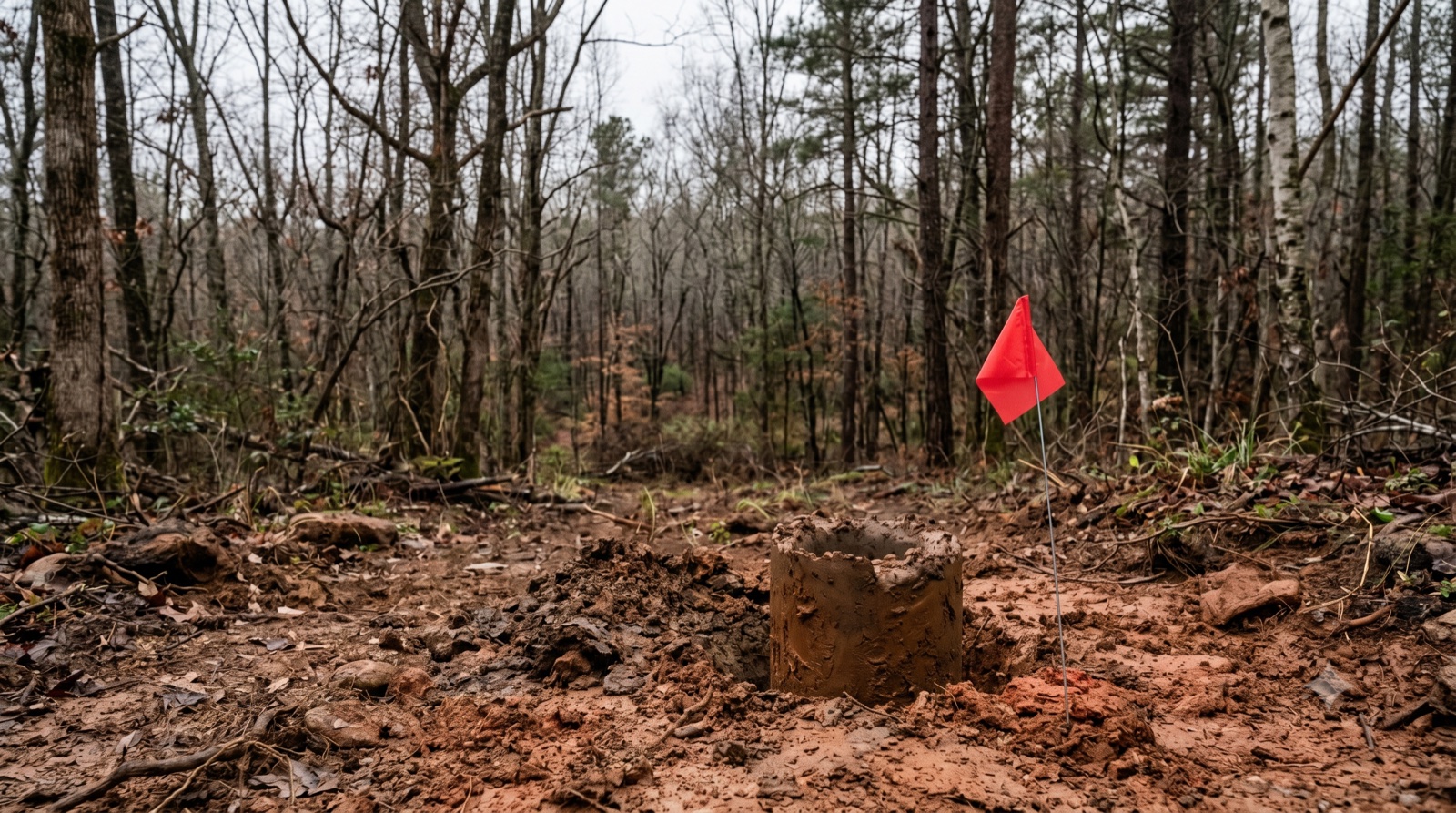
A percolation test (commonly called a "perc test" or "perk test") measures how quickly water drains through the soil at a specific depth. County health departments or licensed soil evaluators conduct the test by digging a hole to a prescribed depth, saturating the soil, and then timing how fast the water level drops — typically measured in minutes per inch, according to Virginia Cooperative Extension publication 452-402.
Perc test results determine whether a conventional gravity-fed septic drainfield can be installed on a parcel. Soil that absorbs water too slowly (usually slower than 60 minutes per inch, though the cutoff varies by state) fails a standard test and cannot support a conventional system.
Why Perc Tests Control Buildability
In areas without municipal sewer access — which covers most rural land in the United States — a functioning on-site wastewater system is a prerequisite for any permitted residential structure. Without an approved system or a credible path to approval, a building permit cannot be issued. This is the direct mechanism through which a failed perc test affects land value: it removes the path to permitted residential construction under conventional methods.
The USDA Natural Resources Conservation Service's Web Soil Survey (websoilsurvey.nrcs.usda.gov) publishes county-level soil limitation maps that often predict perc performance before a formal test is conducted. High clay content, shallow bedrock, high seasonal water tables, and compacted subsoil are the most common contributors to a failed test result.
What Causes a Perc Test to Fail?
- Heavy clay soils: Clay particles bind tightly and allow almost no drainage
- High seasonal water table: Saturated subsoil cannot accept additional effluent
- Shallow bedrock or hardpan: Less than 18–24 inches of suitable soil above rock eliminates most system options
- Caliche or expansive soils: Common in the Southwest and parts of Texas; these soils swell when wet and seal off
- Prior disturbance: Cut-and-fill grading, old dumpsites, or compaction from heavy equipment use can alter drainage
What Does a Failed Perc Test Mean for Land Value?
A failed conventional perc test does not set a fixed dollar penalty on a parcel — it changes the category of buyer who can realistically use the land. Retail buyers seeking a home site financed through a bank typically require a passed perc test or an approved alternative system as a loan condition. When that buyer pool disappears, sellers are left with cash buyers and specialty use buyers who have different criteria.
The practical effect on proceeds depends on location, parcel size, and what alternative uses exist. A 40-acre wooded tract that failed a perc test but carries timber value and hunting appeal loses less relative ground than a 0.5-acre suburban infill lot where residential construction was the only viable use.
| Parcel Type | Most Likely Impact | Alternative Uses |
|---|---|---|
| Rural acreage (timber/hunting) | Moderate — recreational value remains | Hunting lease, timber harvest, conservation |
| Agricultural land with no septic need | Low — farming doesn't require septic | Row crops, grazing, hay production |
| Recreational lot (lake, mountain) | Moderate — some buyers still want it | Camping, RV parking, tent platform |
| Suburban infill lot | High — residential use eliminated under conventional path | Assemblage, storage with zoning variance |
| Remote rural acreage | Low-moderate — buyer pool already narrow | Recreational, investment hold |
Holding a failed perc parcel long-term also carries ongoing costs: property taxes, liability insurance, and any annual association dues if the lot is inside a subdivision. For context on how carrying costs compound, see our guide on how long does it take to sell land.
Are There Alternatives to a Conventional Septic System?
Yes. The EPA's Office of Water recognizes a range of alternative on-site wastewater treatment technologies that can serve lots where conventional drainfields fail. Whether any of these alternatives is approved depends on state and county health department rules, soil depth, lot size, and setback requirements from water features, property lines, and wells.
Common Alternative Septic Systems
Mound systems: A mound system installs an engineered drainfield above the native soil surface, using imported sand fill as the treatment medium. Mound systems are commonly approved where the seasonal water table is too high for a conventional in-ground field. They require larger lots (typically 1+ acres) and significant grading.
Aerobic treatment units (ATUs): ATUs inject oxygen into the treatment process, producing effluent clean enough to discharge through a drip irrigation network rather than a drainfield. Texas and several southeastern states have well-established ATU approval frameworks. NSF International certifies ATU systems under NSF/ANSI Standard 40.
Drip irrigation systems: Treated effluent is distributed through small-diameter tubing buried a few inches below the surface. Drip systems work in tight soils that fail percolation but can distribute treated effluent at low application rates.
Holding tanks: In a small number of jurisdictions, a sealed holding tank (no discharge) is permitted for seasonal structures. The tank must be pumped regularly. This option is heavily restricted and generally not allowed for full-time residential use.
Composting toilets with gray water systems: Some states allow composting toilets combined with separate gray water disposal systems as an engineered alternative, particularly for small cabins or off-grid structures.
A licensed soil scientist or professional engineer can evaluate whether any of these alternatives is feasible for a specific parcel. Some state health departments allow a "variance" process through which a licensed engineer can certify an alternative system design even after a conventional test fails.
Who Buys Land Without a Passing Perc Test?
If you want to skip the engineering process and sell as-is, request a no-obligation cash offer to see what Jerez Land would pay for your parcel in its current condition — no perc test required, no repairs, no listing.
Buyers who regularly purchase land with a failed perc test include:
Recreational and hunting buyers: Hunters, ATV riders, and nature enthusiasts rarely care about septic approval. They want access, timber cover, or water features — not a building site. A parcel with failed soil but excellent deer habitat or trout access can still sell to this audience.
Timber and agricultural operators: Timber buyers purchasing stumpage rights or agricultural operators leasing ground for row crops or grazing do not need septic approval. For them, the land's production potential is the valuation driver.
Adjacent landowners: Neighbors may purchase a failed perc parcel purely to expand their holdings, add a buffer, or control access. They often already have septic infrastructure and do not need another system.
Cash investors and land companies: Direct buyers like Jerez Land purchase land in any condition, including parcels with failed or expired perc tests, outstanding code issues, or no septic history at all. Because we buy with cash and hold or resell to end users ourselves, we absorb the carrying costs, engineering risk, and marketing timeline — none of which falls on you as the seller.
Conservation buyers and land trusts: If the parcel has habitat, wetland, or scenic value, conservation organizations or local land trusts may purchase it for easement or fee-simple acquisition. A failed perc test is a non-issue for conservation purposes.
For more on what makes land attractive to direct buyers even in difficult condition, see are we buy land companies legit.
How to Sell Land With a Failed Perc Test
Step 1: Gather Your Documentation
Pull together the perc test report (date, soil evaluator's name, result), any prior permit applications or denials from the health department, the parcel's legal description, and the most recent property tax bill. If you have a survey, include it. Buyers and their engineers need this package to evaluate the parcel quickly.
Step 2: Disclose Fully
Most states require disclosure of known material defects, and a failed perc test qualifies as a material defect for any buyer planning residential construction. Check your state's seller disclosure requirements with a local real estate attorney. Attempting to hide a failed test result is a fraud exposure — and most buyers will order their own investigation anyway.
Step 3: Identify Your Buyer Type
If you want retail pricing, you need a buyer who believes an alternative system can make the lot buildable. That requires an engineering study and likely a variance application — a process that can take 6–18 months and cost several thousand dollars in engineering fees before a single offer is accepted.
If you want certainty and speed, the market is cash buyers and specialty investors. You trade some proceeds for the elimination of contingencies, engineering costs, and holding time. See our guide on how much is my land worth for a broader look at land valuation factors.
Step 4: Price the Parcel for Its Actual Buyer Pool
Listing at retail prices with MLS agents who specialize in homes — rather than land — routinely produces extended days-on-market followed by price reductions. If your parcel is going to recreational or investment buyers, price it for that audience from the start, or work with a buyer who makes a direct offer.
Also consider whether you have back taxes outstanding — lien exposure can slow any closing. Our guide on selling land with back taxes covers how to handle that situation.
Selling a Failed Perc Lot As-Is
If you want out of a parcel that failed a perc test — no engineering studies, no listing, no waiting — Jerez Land buys land in any condition, in any state. We make a firm written offer based on the parcel's actual characteristics, absorb all carrying costs going forward, and handle closing through a licensed title company or attorney. There are no commissions and no listing fees.
Request a no-obligation cash offer and see what your parcel is worth to a cash buyer today.
Frequently Asked Questions
I have land that failed a perc test — can I actually sell it?
Yes. A failed perc test limits the conventional retail buyer pool — lender-financed buyers typically require a passed perc test or approved alternative system — but recreational buyers, timber investors, adjacent landowners, and direct cash buyers purchase land without a passing perc regularly. Disclosure of the failed test result is required in most states.
Does a failed perc test mean my land is worthless?
No. Land value depends on size, location, access, timber, water features, and a dozen other factors in addition to septic approval. A failed perc test removes one use case (conventional permitted residential construction) but does not eliminate value for recreational, agricultural, timber, conservation, or investment purposes. See how much is my land worth.
My land failed a perc test — what alternative systems could work?
The EPA recognizes mound systems, aerobic treatment units (ATUs), drip irrigation systems, and composting toilet systems as alternatives to conventional gravity drainfields. Approval depends on state and county rules, lot size, soil depth, and setbacks. A licensed soil scientist or professional engineer can evaluate which — if any — options apply to a specific parcel.
Do I have to disclose a failed perc test when selling?
Yes, in most states. A failed perc test is a material defect that affects buildability. Most state seller disclosure statutes require you to disclose known material facts about land condition. Consult a local real estate attorney for the specific requirements in your state.
I'm looking at alternative systems for my failed perc lot — how long does approval take?
Timelines vary significantly by state and county. A variance review process through the local health department can take 3–18 months in most jurisdictions. Engineering, soil studies, and the permit application itself add cost and time before the alternative system is approved — if it is approved at all.
Who buys land with a failed perc test near me?
Direct cash buyers such as Jerez Land, recreational land investors, timber companies, and adjacent property owners are the most common buyers for land with a failed perc test. You can also check with local land trusts if the parcel has conservation value. Do you need a realtor to sell this type of land? Read our guide at do you need a realtor to sell land.
Disclaimer: This article is for informational purposes only and does not constitute legal, financial, or professional advice. Laws and regulations vary by jurisdiction and change over time. Always consult with qualified professionals before making land purchase or sale decisions. Jerez Land is not responsible for actions taken based on this information.