
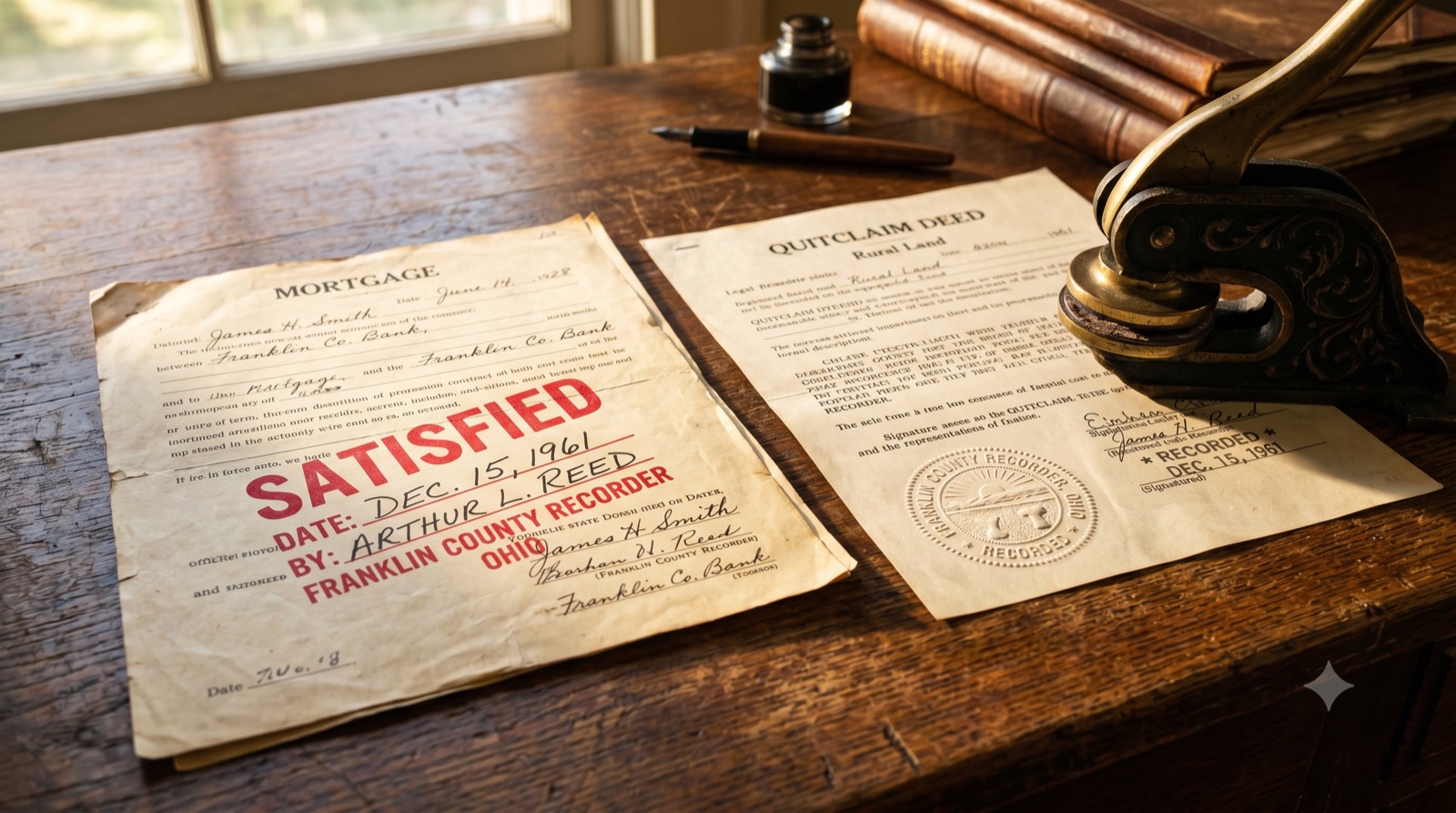
How to Sell Land With an Old Contract for Deed Still on Title
Key Takeaways
- A contract for deed keeps legal title with the seller and gives the buyer only equitable title until the price is fully paid — so a recorded but unresolved land contract leaves the record ownership split and unsettled, which shows up as a cloud on title years later, according to Cornell Law School LII and the Federal Reserve Bank of Minneapolis
- The cure depends on what actually happened — a completed sale that was never deeded is cleared with a fulfillment deed, an abandoned or defaulted contract is cleared by forfeiture or foreclosure, and a tangled or party-missing situation is cleared by a quiet-title action, according to Attorneys' Title Guaranty Fund and Cornell Law School LII
- Forfeiture and cancellation rules vary sharply by state — some states allow a fairly quick notice-and-forfeiture, while others require a foreclosure-style court process once the buyer has paid enough of the price, so a title company and a real estate attorney in the property's state must confirm the right cure, according to the Pew Charitable Trusts and National Consumer Law Center
Can You Sell Land With an Old Contract for Deed Still on Title?
Yes. An old, unfulfilled, or defaulted contract for deed on your parcel is a title cloud you clear, not a wall that stops the sale — the recorded contract simply needs a fulfillment deed, a completed forfeiture or cancellation, or a quiet-title order to remove it, which a title company and a real estate attorney coordinate before closing. The land can still be sold once the record is settled.
This guide explains what a contract for deed (also called a land contract, installment land contract, or bond for title) actually is, why a decades-old one still clouds title, the common scenarios that create the problem — paid-off-but-never-deeded, buyer defaulted and walked away, or original parties who have since died — and the concrete paths to clear it. It also covers your options for selling: clearing it first, or selling to a cash buyer who can work through the title cure. If your parcel carries other recorded claims, our related guides on selling land with an old unreleased mortgage or deed of trust and selling inherited land cover neighboring situations. For more selling guides, visit our blog.
What Is a Contract for Deed, and Why Is It Still Clouding My Title?
A contract for deed is an installment sale of land in which the seller keeps legal title while the buyer takes possession and holds only equitable title until the full price is paid, at which point the seller is obligated to sign and deliver a deed, according to Cornell Law School LII. Because ownership is split until that final step, an unresolved contract leaves the record unsettled — and that unsettled record is the cloud.
In a contract for deed, the buyer (the vendee) pays the seller (the vendor) directly in installments, without a bank, and takes possession right away — but the seller retains legal title as security until the last payment clears, according to Stewart Title and Ohio State University Extension. Only then is the deed delivered. The arrangement goes by many names — land contract, installment land contract, land sale contract, agreement for deed, or bond for title — but the mechanics are the same, according to Nolo.
The trouble is that these contracts are often handled informally and are frequently never recorded, or are recorded and then never formally closed out, according to the Federal Reserve Bank of Minneapolis. A recorded contract for deed with no recorded fulfillment, cancellation, or forfeiture behind it tells the world that someone else may still have an equitable claim to your land. A title examiner treats that unresolved instrument as a cloud on title — an outstanding claim or encumbrance that, if valid, would affect the owner's rights, according to Cornell Law School LII. Until the record shows how the contract ended, a title company generally will not insure clean title, and a sale stalls.
How Did an Old Land Contract End Up Clouding My Property?
An old land contract clouds title when the contract was recorded but the record never captured how it resolved — whether the buyer finished paying, defaulted and walked away, or the original parties died before anyone delivered a deed or cancelled the contract. Each of these leaves the split ownership frozen on the public record, according to Stimmel Law.
The most common scenarios a title search turns up are:
- Paid in full but never deeded. The buyer completed every installment, but the seller never signed and recorded the fulfillment deed that transfers legal title. The buyer has fully earned ownership, yet the record still shows the seller holding legal title subject to the contract, according to Ohio State University Extension.
- Buyer defaulted or abandoned the land. The buyer stopped paying and walked off, but the seller never completed a forfeiture or foreclosure to formally terminate the contract and clear the buyer's equitable interest from the record.
- A party died mid-contract. If the seller dies before conveying, the estate and heirs take legal title subject to the contract and must furnish the deed; if the buyer dies, that equitable interest passes to the buyer's heirs. Either death typically routes through probate on that side before anyone can sign, according to Stimmel Law.
- The contract was never recorded — or was. An unrecorded contract can surface later through possession, tax records, or the parties' files and still cloud a sale; a recorded one that was never released sits in the chain of title indefinitely, according to the Federal Reserve Bank of Minneapolis.
Because a contract for deed can run for decades and often lacks the standardized recording that mortgages get, these loose ends are common — and they usually surface at the worst moment, during the title search after you're already under contract to sell, according to the Pew Charitable Trusts and National Consumer Law Center and the American Land Title Association.
How Do I Clear a Contract for Deed Off My Title?
You clear a contract for deed by recording the document that proves how it ended: a fulfillment deed if the buyer finished paying, a completed forfeiture or foreclosure if the buyer defaulted, or a quiet-title judgment if parties are missing or dead. A title company and a real estate attorney determine which cure fits after a title search, according to Attorneys' Title Guaranty Fund and Cornell Law School LII.
The right path always starts the same way — a title search plus a review by a title company or attorney in the property's state. From there, the cure follows what actually happened.
Path 1: Fulfillment Deed (the Contract Was Satisfied)
If the buyer paid in full, the seller — or the seller's estate or heirs — signs and records a fulfillment deed conveying legal title to the buyer, according to Ohio State University Extension. This is the clean ending the contract always contemplated. If the seller has died, the heirs or the estate's representative have a duty to furnish the proper conveyance, which usually means opening or completing probate on the seller's side so someone has authority to sign, according to Stimmel Law.
Path 2: Forfeiture or Cancellation (the Buyer Defaulted)
If the buyer defaulted and never came back, the seller terminates the contract to wipe out the buyer's equitable interest — but how varies dramatically by state. Many states allow a statutory forfeiture or cancellation: the seller gives the buyer formal written notice and a cure period, and if the buyer does not reinstate, the interest is forfeited, according to the Washington State Legislature's real estate contract forfeiture statute. Other states require a foreclosure-style court process instead — especially once the buyer has paid a certain share of the price or held the contract for a number of years, according to Kreis Enderle and the Pew Charitable Trusts and National Consumer Law Center. Never assume the fast path applies; this is exactly where state law diverges.
Path 3: Quiet-Title Action (Parties Missing, Dead, or the Record Is Tangled)
When the buyer vanished with no traceable heirs, key parties have died, or the record is too knotted for a simple release, the backstop is a quiet-title action — a lawsuit in the county where the land sits asking a court to declare who owns it and to bar stale or unknown claims, according to Cornell Law School LII and Stimmel Law. It is the most thorough fix and the slowest, but it produces a court order that a title company can rely on to insure a clean sale.
Cure Paths at a Glance
| Cure path | When it applies | Who's needed | Rough timeline | Clears title? |
|---|---|---|---|---|
| Fulfillment deed | Buyer paid in full; deed was never delivered | Seller (or seller's heirs/estate) to sign; title company to record | Weeks, if the signer is available; longer if probate is needed | Yes — records the conveyance the contract promised |
| Forfeiture / cancellation | Buyer defaulted or abandoned; contract must be terminated | Seller and a real estate attorney; sometimes statutory notice to the buyer | Weeks to a few months, depending on the state's notice and cure rules | Yes — extinguishes the buyer's equitable interest per state law |
| Foreclosure-style process | Default in a state that requires it (often after the buyer paid a set share) | Attorney and the court; buyer served | Several months | Yes — court terminates the contract like a mortgage foreclosure |
| Quiet-title action | Parties missing or dead; record tangled; no clean release available | Real estate attorney and the court | Several months to a year | Yes — court order declares clear title |
Every one of these is routine curative work for a title company and a real estate attorney. The right one — and the exact procedure and timeline — depends on your state and your facts, which is why a professional review comes first, not a do-it-yourself filing.
What Are My Options for Selling Land With a Contract for Deed on Title?
If a title search has surfaced an old contract for deed, you have three practical paths to a sale:
Option 1: Clear it before listing. Have a real estate attorney run the right cure — a fulfillment deed, a forfeiture or foreclosure, or a quiet-title action — before you market the land. This gives you the widest buyer pool but takes time: weeks if a signer is available and the contract was simply never deeded, months or more if probate or litigation is required.
Option 2: List and let the title company cure it during escrow. Put the land on the market and let the title company handle the resolution as curative work while you're under contract. Retail buyers and their lenders often get nervous and walk when a title cloud drags on; experienced land buyers are far more likely to wait it out.
Option 3: Sell directly to a cash buyer. If you want speed and certainty, a direct cash buyer like Jerez Land works with title companies that routinely resolve contracts for deed, missing fulfillment deeds, defaulted-and-abandoned contracts, and deceased-party situations. We evaluate the parcel, coordinate the title work, and present a firm written cash offer on your specific land — not a formula, a percentage of some benchmark, or a moving target. The number is the number, in writing, for your parcel, and we absorb the carrying costs, marketing, and resale risk while the title is being cleared.
Request a no-obligation cash offer and we'll review your parcel and its title situation together. There are no commissions or listing fees, and we can often move faster than a traditional sale — even with an old land contract still sitting on the record.
Wondering whether you need an attorney for any of this? Our guide on whether you need a lawyer to sell land walks through when legal help is worth it. If you inherited the parcel, see how to sell inherited land, and for a full checklist of what a closing touches, see what paperwork is needed to sell land.
Frequently Asked Questions
My dad sold this lot on a land contract in the 1990s, the buyer vanished, and now I've inherited it — how do I clear the contract and sell?
Start with a title search and a real estate attorney in the property's state. Because the buyer defaulted and abandoned the land, the cure is to terminate the old contract — through statutory forfeiture or cancellation where allowed, or a foreclosure-style process or quiet-title action if the buyer or their heirs can't be located. You'll likely also need to complete probate on your dad's side so you have authority to act. Once the record shows the contract is terminated and title is in you, the parcel can be sold.
I paid off a contract for deed years ago but the seller never gave me a deed — do I actually own the land, and can I sell it?
You earned ownership by completing the payments, but until a deed is recorded, the public record still shows legal title in the seller subject to the contract, so you can't deliver clean title yet. The fix is a fulfillment deed signed by the seller — or, if the seller has died, by the seller's heirs or estate, who have a duty to convey. Once that deed is recorded, you hold clear legal title and can sell normally.
What's the difference between a contract for deed and a mortgage on my title?
With a mortgage, the buyer owns the land outright and the lender holds a lien recorded against it. With a contract for deed, ownership itself is split: the seller keeps legal title and the buyer holds only equitable title until the price is fully paid, then the seller delivers a deed. So a mortgage clouds title as a lien to be released, while an unresolved contract for deed clouds title as unsettled ownership that must be resolved by deed, forfeiture, or court order.
The buyer on my grandfather's land contract stopped paying and walked off — how do I cancel the contract so the title is clean?
Have a real estate attorney confirm your state's rule, because it varies widely. Many states allow the seller to cancel through a statutory forfeiture — formal written notice plus a cure period — after which the buyer's interest is extinguished. Other states require a foreclosure-style court process, especially if the buyer had paid a significant share of the price. If the buyer or their heirs can't be found, a quiet-title action settles it. You'll also need authority through probate on your grandfather's side before signing anything.
How long does it take to clear a contract for deed off title?
It depends on the cure. A fulfillment deed can be recorded in a few weeks if the signer is available and no probate is needed. A statutory forfeiture or cancellation typically runs a few weeks to a few months, depending on your state's notice and cure periods. A foreclosure-style process or a quiet-title action — used when parties are missing, dead, or contesting — usually takes several months to a year. A title company or attorney can give you a realistic timeline for your facts.
I need to sell fast and there's an old land contract clouding the title — will a cash buyer still make an offer?
Many experienced cash land buyers — including Jerez Land — will. We work with title companies that routinely resolve contracts for deed, missing fulfillment deeds, defaulted or abandoned contracts, and deceased-party situations as curative work. We coordinate the title cure, factor the resolution into the offer, and present a firm written number on your specific parcel, so you don't have to untangle the record alone before you can sell.
Disclaimer: This article is for informational purposes only and does not constitute legal, financial, or professional advice. Laws and regulations vary by jurisdiction and change over time. Always consult a licensed real estate attorney before making decisions about title issues, contract-for-deed cures, or property transactions. Jerez Land is not responsible for actions taken based on this information.