
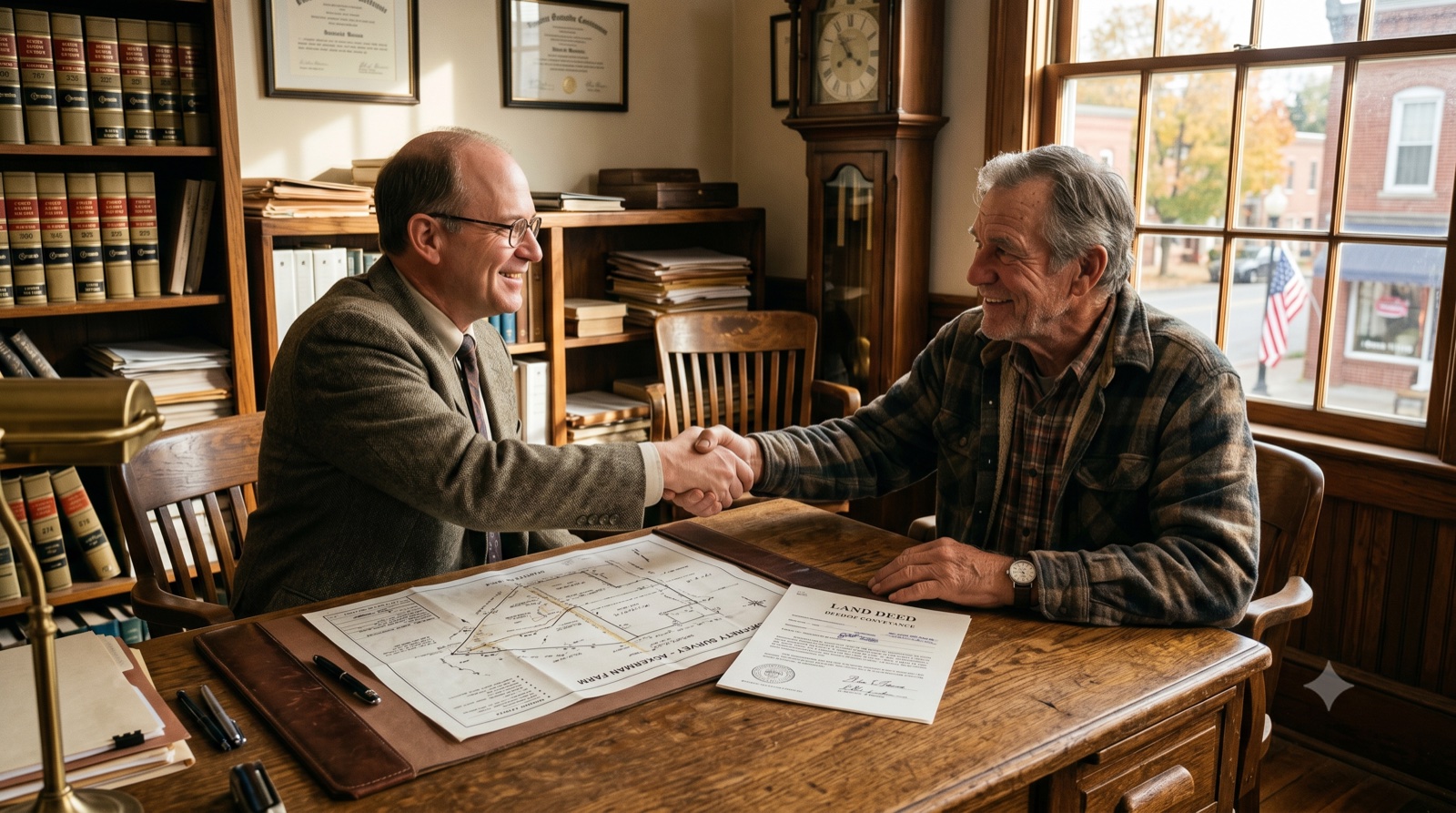
Do You Need a Lawyer to Sell Land?
Key Takeaways
- Whether you need a lawyer to sell land depends mostly on your state — a handful of "attorney states" legally require an attorney to handle or supervise the closing, while in "title states" a title or escrow company can manage the entire process without one
- Even where an attorney isn't required, the legal legwork still has to happen — a deed must be drafted and recorded, the title must be examined, and funds must be disbursed correctly, according to the American Bar Association and the CFPB
- A direct cash buyer coordinates the attorney, title company, and closing for you — so the seller isn't researching state rules, hiring a lawyer, or navigating the paperwork alone
Do You Need a Lawyer to Sell Land?
For most landowners, the honest answer is: not necessarily — but it depends on where the land sits and how complicated the title is. A few states require a licensed real estate attorney to handle or supervise every closing. Many others let a title or escrow company run the entire transaction without a lawyer at all. And in either case, the legal work — drafting the deed, examining the title, disbursing the money — still has to be done correctly by someone.
The good news is that selling land is usually less complicated than selling a house. There's no mortgage to assume, no inspection contingencies, no appliances or HVAC to negotiate. This guide explains the difference between attorney states and title/escrow states, what a real estate attorney actually does, what's legally required either way, and why a direct cash buyer handles and coordinates that legwork so you're not navigating it on your own.
Attorney States vs. Title/Escrow States
The single biggest factor in whether you need a lawyer to sell land is your state's closing rules. The country divides roughly into two camps, according to the Consumer Financial Protection Bureau and industry closing guides.
In an attorney state, state law (or a state bar rule) requires a licensed attorney to conduct or supervise the closing. The attorney examines the title, prepares the deed and closing documents, and oversees the transfer of funds. In a title/escrow state, a title company or escrow agent can perform those same functions — title search, document handling, and disbursing money — without an attorney involved, according to HomeLight and REtipster.
The practical difference for a seller is who runs the table at closing and where the cost goes. In an attorney state, you'll see an attorney fee. In a title state, you'll see a title or escrow fee instead. Either way, someone neutral is making sure the deed is valid and the money moves correctly.
Where the States We Buy In Land
Several of the states where Jerez Land buys are attorney-involved states, which is exactly why working with an experienced buyer matters:
| State | Closing Type | What It Means for a Seller |
|---|---|---|
| Georgia | Attorney required | A licensed Georgia attorney must control the closing from start to finish |
| South Carolina | Attorney required | An attorney must supervise the closing and handle key legal steps |
| North Carolina | Attorney required | A licensed attorney must oversee the closing and prepare/review documents |
| Mississippi | Attorney involved | An attorney typically examines and certifies the title and prepares the deed |
| Alabama | Attorney involved | Attorneys must prepare the legal documents, though owners may otherwise self-handle a simple sale |
Sources: HomeLight, REtipster. If you're in one of these states, our state-specific guides walk through the local process — see how to sell land in Georgia, how to sell land in South Carolina, how to sell land in North Carolina, how to sell land in Mississippi, and how to sell land in Alabama.
The takeaway: in these states the attorney involvement isn't optional, but it also isn't something you have to organize yourself when you sell to a buyer who already works with local closing attorneys.
What Does a Real Estate Attorney Actually Do?
Whether your state requires one or you simply choose to hire one, a real estate attorney's job in a land sale is fairly specific. They are licensed to give legal advice and to prepare the legal instruments that transfer ownership — things a real estate agent or title clerk cannot legally do, according to Zillow and the American Bar Association.
Examine and Clear the Title
The attorney (or a title company in a title state) reviews the public record chain of title to confirm you have the legal right to sell and to surface any liens, easements, or competing claims. If something turns up — an old unreleased mortgage, a judgment, a boundary question — that's where legal help earns its fee. For a deeper look at title complications, see our guide on selling land with a lien or cloud on title.
Draft the Deed and Closing Documents
A deed is the legal instrument that actually transfers ownership of real property, and it must be drafted, signed, and recorded correctly to be valid, according to Cornell Law School's Legal Information Institute. The attorney prepares the deed — whether a warranty deed or quitclaim deed — along with the settlement statement and any affidavits. Our guide on quitclaim vs. warranty deeds when selling land explains the difference and when each is used.
Oversee Closing and Disburse Funds
At closing, the attorney or settlement agent confirms the documents are in order, collects and disburses the funds (paying off any liens, then sending the seller their proceeds), and ensures the deed gets recorded with the county. The CFPB describes this neutral settlement role as the backbone of a clean transfer. For an overview of the documents involved, see what paperwork is needed to sell land.
Provide Legal Advice You Can Rely On
Unlike an agent, an attorney can advise you on the actual legal consequences of the transaction — how to handle a co-owner who won't sign, what a particular easement means for your rights, or how to structure a sale of inherited property. That's the real value of legal counsel: someone in your corner who can answer the "what does this mean for me?" questions.
Can You Sell Land Without a Lawyer?
In a title/escrow state with a clear title, yes — many landowners sell without ever hiring their own attorney. The title company performs the title search, prepares the deed, handles escrow, and records the transfer. You sign, the funds are disbursed, and the sale closes.
That said, there are situations where having legal help is wise even when it's not strictly required:
- The title isn't clean — a lien, a clouded chain of title, or a missing heir's interest usually calls for an attorney
- The property is inherited or jointly owned — multiple owners or an unsettled estate add legal layers
- There's a boundary dispute or unclear legal description — these can require a survey and sometimes a court action
- You're using a non-standard deed or seller financing — the structure needs to be drafted correctly to protect you
If none of those apply and you're in a title state, the transaction can be genuinely simple. If you're in an attorney state, the attorney involvement is built into the closing regardless — it's not an extra step you have to go find.
How Much Does It Cost?
Attorney fees for a residential or land closing vary widely by state, market, and complexity — commonly a few hundred to roughly a thousand dollars or more for a straightforward transaction, sometimes structured as a flat closing fee. Title and escrow fees in title states fill a similar role. Who pays these costs is negotiable and varies by local custom; our guide on who pays closing costs when selling land breaks down the typical splits.
The point isn't the exact dollar figure — it's that these are normal, predictable transaction costs, not a reason a sale can't happen. And when you sell to a cash buyer, much of this coordination is handled on your behalf.
Do You Have to Use an Agent? It's a Separate Question
A lot of sellers conflate "do I need a lawyer" with "do I need a real estate agent." They're different decisions — an agent markets and negotiates, while an attorney handles the legal transfer. You can use one, both, or neither depending on your state and situation. Our guide on whether you need a realtor to sell land covers that side of the equation.
Your Options for Handling the Legal Side of a Land Sale
When it comes to the legal and title legwork, you have three main paths:
Option 1: Hire your own attorney. Engage a real estate attorney to examine the title, draft the deed, and handle closing. This gives you independent legal counsel and is the standard route in attorney states — though it's on you to find the attorney, coordinate the title work, and manage the timeline.
Option 2: Use a title/escrow company. In a title state with clean title, a title or escrow company can run the whole closing. You'll still want to confirm the deed and settlement statement are correct, but you may not need a separate attorney.
Option 3: Sell directly to a cash buyer. If you'd rather not research your state's rules or assemble a team yourself, a direct cash buyer like Jerez Land coordinates the legal and title side for you. We work with closing attorneys and title companies in the states where we buy — including attorney states like Georgia, South Carolina, and North Carolina — so the deed, title examination, and closing are handled properly. We present a firm written cash offer on your specific parcel, and because we buy and hold the risk ourselves, we absorb the carrying, marketing, and resale costs that a retail sale would expose you to.
Request a no-obligation cash offer and we'll review your property and walk through exactly how the closing will work in your state. There are no commissions or listing fees, and you won't be left navigating the legal paperwork on your own.
Dealing with a more complicated situation? Our guides on selling land with a lien or cloud on title and the paperwork needed to sell land cover the extra layers. For more guides on selling land, visit our blog.
Frequently Asked Questions
Do I need a lawyer to sell my land?
It depends on your state. In "attorney states" such as Georgia, South Carolina, and North Carolina, a licensed real estate attorney is legally required to handle or supervise the closing. In "title/escrow states," a title or escrow company can manage the closing without an attorney. Even where one isn't required, the deed still has to be drafted and recorded and the title examined — a title company can do that work in most title states.
I'm selling in a state that requires an attorney — what does that mean for me?
In an attorney state, state law or a bar rule requires a licensed attorney to conduct or oversee real estate closings — examining title, preparing the deed, and disbursing funds. In a title or escrow state, a neutral title company or escrow agent can perform those same closing functions without an attorney. The main difference for a seller is who runs the closing and whether you pay an attorney fee or a title/escrow fee.
What will an attorney do for me when I sell land?
A real estate attorney examines the title to confirm you can legally sell, drafts the deed and closing documents, oversees the closing, disburses the funds (paying off any liens and sending you your proceeds), and ensures the deed is recorded with the county. They can also give legal advice on issues like co-owners, easements, or inherited property — advice a real estate agent cannot legally provide.
Can I sell land without a lawyer if I'm in a title state?
Often, yes. In a title/escrow state with a clear title, many landowners sell using only a title company, which handles the title search, deed preparation, escrow, and recording. Hiring your own attorney is still wise if the title isn't clean, the property is inherited or co-owned, there's a boundary dispute, or you're using seller financing or a non-standard deed.
How much will I have to pay a lawyer to sell my land?
Attorney fees for a land or home closing vary by state, market, and complexity — commonly a few hundred dollars to around a thousand or more for a straightforward sale, sometimes charged as a flat closing fee. In title states, a comparable title or escrow fee covers the closing instead. Who pays these costs is negotiable and depends on local custom.
Does a cash buyer handle the legal and title work for me?
Yes. A cash buyer like Jerez Land coordinates the closing attorney and title company on your behalf — including in attorney states where one is legally required. We arrange the title examination, deed preparation, and closing so you're not researching your state's rules or assembling a team yourself. We present a firm written cash offer on your specific parcel and handle the legwork through to recording.
Disclaimer: This article is for informational purposes only and does not constitute legal, financial, or professional advice. Laws and regulations vary by jurisdiction and change over time. Always consult a licensed real estate attorney before making decisions about title issues or property transactions. Jerez Land is not responsible for actions taken based on this information.