
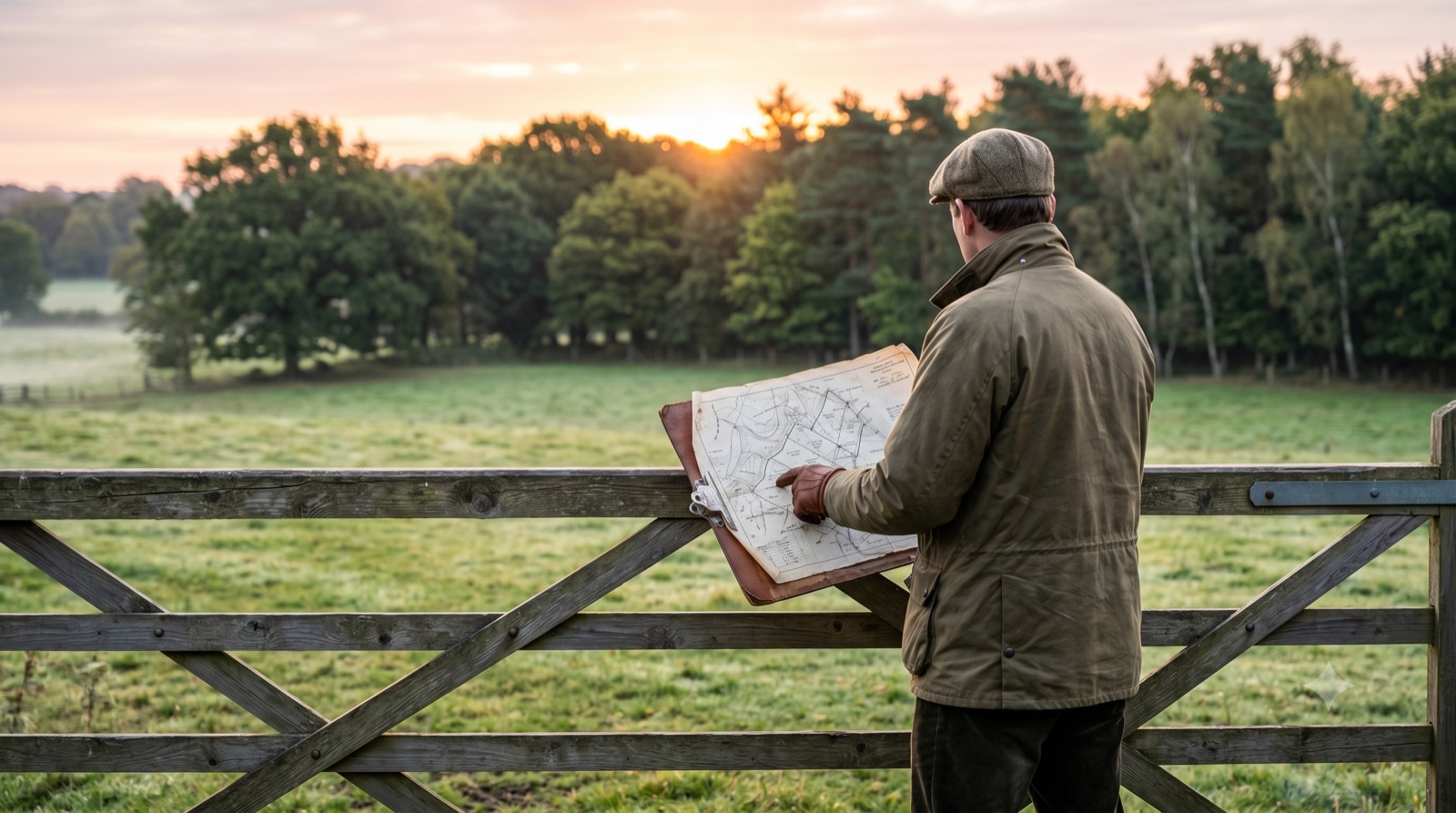
How to Sell Land by Owner: A Complete FSBO Guide for Landowners
Key Takeaways
- Land agents typically charge 5–10% commission — higher than residential home commissions — because land takes longer to sell and attracts a more specialized buyer pool, according to Landmodo's analysis of land closing costs
- FSBO land sellers can save the listing-side commission of 2.5–3%, but the National Association of Realtors' 2024 Profile of Home Buyers and Sellers found the median FSBO sale price was $380,000 versus $435,000 for agent-assisted sales — a gap driven partly by pricing mistakes and limited marketing exposure
- Selling land without a realtor works best when the parcel is priced under $100,000, you have clear title and an existing survey, and you're willing to manage inquiries, showings, and closing logistics yourself
How Do You Sell Land by Owner Without a Realtor?
Yes, you can sell land by owner by handling pricing, marketing, negotiations, and closing yourself — saving the 5–10% listing agent commission, though it typically takes 3–12 months and requires managing all inquiries, showings, and closing paperwork personally. Selling land by owner means taking on the tasks that an agent would otherwise handle. For vacant land, the process is often simpler than selling a house: there are no staging requirements or home inspections, and buyers are typically searching specific platforms rather than driving neighborhoods. This guide walks through every step, the real costs involved, the mistakes that sink FSBO land deals, and how to decide whether the FSBO route, an agent, or a direct cash buyer is the right fit for your situation.
What Documents and Preparations Do You Need Before Listing?
Getting your paperwork in order before you list protects you from delays at closing and signals to buyers that you are a serious seller. Most title companies will not open escrow until you can confirm clear ownership, so gathering these items first saves weeks.
Essential Documents to Gather
The deed. Locate the deed that conveyed the property to you — this is the document that establishes your ownership and contains the legal description. If you cannot find the original, contact the county recorder's or register of deeds office where the property is located; recorded deeds are public record and can typically be obtained for a small copying fee. The legal description on the deed (not the street address) is what will be used in the purchase agreement and transfer deed.
Property tax records. Obtain the most recent tax bill or pull records from the county assessor's website. Buyers will want to know the annual tax burden, and title companies verify that taxes are current before insuring the transaction. Delinquent taxes attach to the land, not the prior owner, so any unpaid balance must be satisfied at closing — our guide to selling land with back taxes explains exactly how the title company handles delinquent balances from seller proceeds.
Survey. An existing boundary survey showing exact parcel lines, acreage, and corner monuments is a major selling advantage. If your parcel has never been surveyed or the existing survey is more than 10–15 years old, buyers may request a new one. According to Rocket Mortgage, citing Angi industry data, a standard boundary survey costs $1,200–$5,500 depending on location, size, and terrain complexity. In some rural counties, costs can be lower; heavily wooded or large parcels push toward the higher end.
Title history. If you received a title insurance policy when you purchased the property, locate it — it documents the chain of title and any exceptions. A title company will run a fresh search at closing, but knowing about any existing easements, rights-of-way, or liens ahead of time lets you address them proactively. For a full checklist of every document involved — from the deed type to the closing statement — see our guide to the paperwork needed to sell land.
Perc test results (if applicable). For parcels where residential development is plausible, buyers may ask whether a percolation test (soil suitability for a septic system) has been conducted. If one exists, include it in your listing materials. If not, you can disclose that the parcel is untested.
Setting the Right Price
Overpricing is the most common reason FSBO land listings stagnate, according to industry analysis from ListingSpark. Without MLS access, land sellers often rely on online automated valuations that don't account for access, soil quality, timber value, or local market conditions. Our guide to how much your land is worth walks through the seven factors that actually drive rural land value and how to find meaningful comps. If you'd rather have a firm written number before you commit to a listing strategy, you can request a no-obligation cash offer from Jerez Land and use it as a baseline for comparison.
Research comparable sales (comps) by searching recent transactions in the same county at the county recorder's office or on public sites like Zillow, Redfin, or LandWatch. Focus on parcels sold within the past 12–18 months that are similar in size, zoning, road access, and terrain. If you cannot find at least three meaningful comps, consider hiring a licensed appraiser ($300–$600 for a vacant land appraisal) — the fee is small relative to the risk of mispricing.
How Do You Market and List Land Without an Agent?
You market land by owner on specialized platforms like Land.com and LandWatch where rural buyers actively search, combined with general sites like Zillow and Realtor.com, free options like Facebook Marketplace, flat-fee MLS listings, strong photography with 10–15 high-resolution images, and GPS coordinates. Land buyers are not browsing Zillow the same way homebuyers are.
Where to List
Land.com Network (Land.com, LandWatch, Land And Farm). The Land.com Network is the largest online marketplace for rural real estate in the United States. Standard listing plans include display across all three sites, real-time lead alerts, photo uploads, and a custom mapping tool. According to the Land.com Network's advertised listing plans, individual listing options are available for landowners without an agent affiliation. Because agent commissions are excluded from owner-direct listings, you retain more proceeds while reaching a targeted buyer pool.
Zillow and Realtor.com. Both platforms accept vacant land listings and reach a broad general audience. They are particularly useful for parcels near suburban growth edges where residential developers and individual buyers are active.
Facebook Marketplace and Facebook Groups. Free to list, and rural land buying groups on Facebook are active in most states. Include GPS coordinates, acreage, access description, and multiple photos. Craigslist remains a viable option for lower-priced parcels under $30,000 where buyers are looking for affordable entry-level land.
A flat-fee MLS service. For $50–$300 depending on the provider, a flat-fee MLS listing places your parcel on the same database real estate agents use, significantly widening exposure. According to ListWithClever's FSBO closing costs research, budget plans range from $50–$200 with basic features, while full-service flat-fee plans with additional marketing tools can reach $200–$3,000.
Photography and Presentation
Photos determine whether a buyer clicks deeper or keeps scrolling. At minimum, provide 10–15 high-resolution photos: the parcel's frontage along the road, any water features, tree canopy, cleared areas, views from the property, and any improvements (fencing, utilities, etc.). If the parcel is over 10 acres, aerial or drone photography — typically $150–$400 from a local drone operator — adds significant value by showing scale, access, and surrounding land use.
Include GPS coordinates for all corners or at least the main entry point, the county parcel identification number (APN), and a link to the county GIS map so buyers can do their own research.
Handling Inquiries and Showings
For vacant land, showings are simpler than residential: buyers typically walk the property themselves after you share coordinates. Always confirm the buyer's identity before providing detailed access instructions, and consider asking interested parties to sign a brief property access agreement to limit your liability.
What Are the Real Costs of Selling Land by Owner?
The commission savings are real, but FSBO land sellers still carry meaningful closing costs. According to Landmodo's analysis of land closing costs, a $50,000 FSBO land sale might have $1,500 in seller costs — versus $6,000 or more with an agent charging 6% commission. Here is a breakdown of what sellers actually pay.
FSBO Cost Breakdown
| Cost Item | Typical Range | Notes |
|---|---|---|
| Boundary survey (if needed) | $1,200–$5,500 | Per Rocket Mortgage/Angi data; varies by size and terrain |
| Land listing platforms | $0–$300 | Craigslist/FB free; Land.com/LandWatch paid plans available |
| Flat-fee MLS listing | $50–$300 | Optional; significantly expands buyer reach |
| Drone/aerial photography | $150–$400 | Strongly recommended for parcels over 10 acres |
| Title search | $75–$250 | Ordered through title company or closing attorney |
| Owner's title insurance | 0.5–1% of sale price | Per Old Republic Title; one-time premium paid at closing |
| Attorney or closing fees | $500–$1,500 | Required in attorney states; recommended everywhere |
| Recording fees | $25–$200 | Varies by county |
| Transfer taxes | Varies by state | Some states have $0 transfer tax (e.g., Mississippi); others charge 0.1–2% |
| 1099-S reporting | No cost to seller | Closing agent files; seller receives copy |
Commission Savings Math
Land agent commissions range from 5–10% of the sale price, according to Landmodo — higher than residential home commissions because land takes longer to sell and demands specialist knowledge. Real estate commission in the broader market totals 5–6% on average, split between listing and buyer's agents, according to Opendoor citing 2024–2025 industry data.
On a $100,000 land sale with a 7% total commission, that's $7,000 paid to agents. The listing-side portion (approximately 3%) represents roughly $3,000 in savings if you sell FSBO. However, you may still offer a buyer's agent concession of 2–3% to attract represented buyers — a practice most FSBO sellers continue even after the August 2024 NAR settlement changed how buyer-agent compensation is disclosed.
The net FSBO savings on that $100,000 parcel: approximately $1,500–$3,000 after accounting for your own marketing and closing costs.
What Are the Most Common FSBO Land Mistakes to Avoid?
Selling without representation is feasible, but specific mistakes kill deals or create legal exposure. According to ListingSpark's analysis of FSBO failure patterns, the following are the most consequential errors land sellers make.
Overpricing the Parcel
Without MLS sales data, FSBO sellers often set prices based on what they need to net rather than what comparable parcels have sold for. An overpriced listing sits — and the longer it sits, the more buyers assume something is wrong with it. Price aggressively from day one based on actual comps, then reduce quickly if you get no inquiries in the first 30 days.
Using an Inaccurate or Ambiguous Legal Description
The purchase agreement and deed must use the parcel's exact legal description from the recorded deed — not the address, not the APN alone. Errors in the legal description can void a deed or delay recording. Copy the description verbatim from your existing deed and have your closing attorney verify it matches county records.
Ignoring Title Issues Before Listing
Undisclosed liens (unpaid property taxes, mechanic's liens, judgment liens), easements that restrict use, or gaps in the chain of title will surface during the title search and can kill a deal days before closing. Order a preliminary title report or abstract before you list — many title companies offer this for $75–$200 — so you know what you are working with.
Attempting Seller Financing Without Proper Counsel
Owner financing (where you act as the lender) can make your land more accessible to buyers who cannot qualify for conventional loans. However, structuring a land contract, promissory note, or deed of trust without an attorney creates serious risk: inadequate default provisions, improper lien priority, and potential violations of state lending laws. According to The Land Geek's owner financing guide, each state has specific legal requirements for owner-financed transactions that must be followed for the agreement to be enforceable.
Mishandling the Earnest Money Deposit
Earnest money should never go directly into the seller's personal bank account. It must be held by a neutral third party — typically the title company or a licensed escrow agent — until closing. Commingling funds creates legal complications if the deal falls through.
What Are Your Three Options for Selling Land, and Which Is Right for You?
Every land seller has three viable paths, and the right choice depends on your timeline, the parcel's complexity, and how much work you want to do.
| Factor | FSBO | Real Estate Agent | Direct Cash Buyer (e.g., Jerez Land) |
|---|---|---|---|
| Commission / fees | No listing commission; buyer's agent concession possible | 5–10% total commission typical for land | No commission; buyer covers closing costs |
| Timeline to close | 3–12 months typical | 3–12 months typical | 2–4 weeks typical |
| Marketing effort | High — seller manages all platforms | Agent manages; limited control | None — no listing required |
| Price | Full market value if well-priced | Market value, minus commission | Below full market value; reflects speed and certainty |
| Best for | Clear title, simple parcel, motivated seller with time | Complex parcel, premium pricing goals, large acreage | Inherited land, problem title, fast timeline, no desire to manage process |
FSBO makes the most sense when the parcel is under $150,000, you have an existing survey and clean title, you are comfortable managing inquiries and paperwork, and you have months to wait for the right buyer.
An agent makes the most sense when the parcel is large, heavily wooded timber or agricultural land, significantly over $200,000 in value, or located in a tight market where agents have active buyer networks.
A direct cash buyer like Jerez Land makes the most sense when you have inherited the land and need to close quickly, the title has complications you do not want to resolve yourself, carrying costs (taxes, insurance, maintenance) are accumulating, or you simply want the transaction handled for you without listing, showings, or uncertainty. Jerez Land handles all paperwork and closing costs — you receive a cash offer and choose the closing date. To see what your land is worth as a cash offer, request a cash offer or explore more land selling topics on our blog.
Frequently Asked Questions
I'm planning to sell land myself — how long will this realistically take?
The timeline varies widely by parcel type, price, and marketing reach. Rural recreational and raw land can take 3–12 months on the market even when priced correctly, according to analysis from multiple land marketplace platforms. Smaller, road-accessible parcels in growing areas sell faster. Overpriced or difficult-access parcels can sit for years. FSBO sellers should plan for a longer marketing period than a direct cash sale.
I want to sell my land without hiring an attorney — can I do that, or does my state require one?
It depends on your state. According to DocJacket's 50-state attorney closing requirements list, states including Georgia, South Carolina, Massachusetts, New York, North Carolina, Connecticut, Delaware, West Virginia, Virginia, and several others legally require an attorney to conduct or supervise real estate closings. In title/escrow states like Texas, California, Florida, and Colorado, a title company can close the transaction without attorney involvement, though using an attorney is always recommended for FSBO sellers navigating the paperwork independently.
What taxes do I owe when I sell land?
If you held the land for more than one year, any gain is taxed as a long-term capital gain — at 0%, 15%, or 20% depending on your taxable income, according to Bankrate's 2025–2026 capital gains rate tables. If held for less than one year, the gain is taxed as ordinary income (10–37%). The closing agent is also required to file IRS Form 1099-S reporting the gross proceeds of most land sales, according to the IRS Instructions for Form 1099-S (Rev. December 2026). Unlike a principal residence sale, vacant land does not qualify for the Section 121 exclusion. Consult a tax professional before closing.
Can I list land on the MLS without a real estate agent?
Yes, through a flat-fee MLS service. These services list your parcel in the local MLS database for a one-time fee ($50–$300 depending on the provider and plan), giving it the same database visibility as agent-listed properties. You remain the seller of record and handle all inquiries yourself. This is one of the most effective ways to expand reach without paying a listing commission.
My deed has a legal description instead of a street address — why is that important for selling my land?
A legal description is a precise written identification of a parcel — either as metes and bounds (compass bearings and distances from a starting point), lot and block (subdivision plat reference), or the government rectangular survey system. It is more precise than a street address and is what actually gets recorded in the deed. According to Zwiren Title Agency, while a street address may be sufficient to pass title in some circumstances, title insurers require a precise legal description for the policy to be issued. Always use the exact legal description from your recorded deed in the purchase agreement.
What if I sell land I inherited? Are there extra steps?
Yes. Inherited land may require additional documentation before you can convey clear title. For a complete walkthrough of the probate process, stepped-up tax basis, and heir-agreement issues, see our dedicated guide on how to sell inherited land. In brief: if the estate went through probate, you typically need a copy of the probate court order or letters testamentary establishing your authority to sell. If the estate was small and no probate was filed, some states allow an Affidavit of Heirship — a sworn statement identifying the decedent's heirs — to be recorded as a substitute. According to Texas Law Help and the J Nichols Law analysis of affidavits of heirship, this document must be signed and notarized by a disinterested party who knew the decedent, then filed with the county recorder where the land is located. Requirements vary significantly by state, and an attorney should review the chain of title before you list inherited land.
Disclaimer: This article is for informational purposes only and does not constitute legal, financial, or professional advice. Laws and regulations vary by jurisdiction and change over time. Always consult with qualified professionals before making land purchase decisions. Jerez Land is not responsible for actions taken based on this information.