
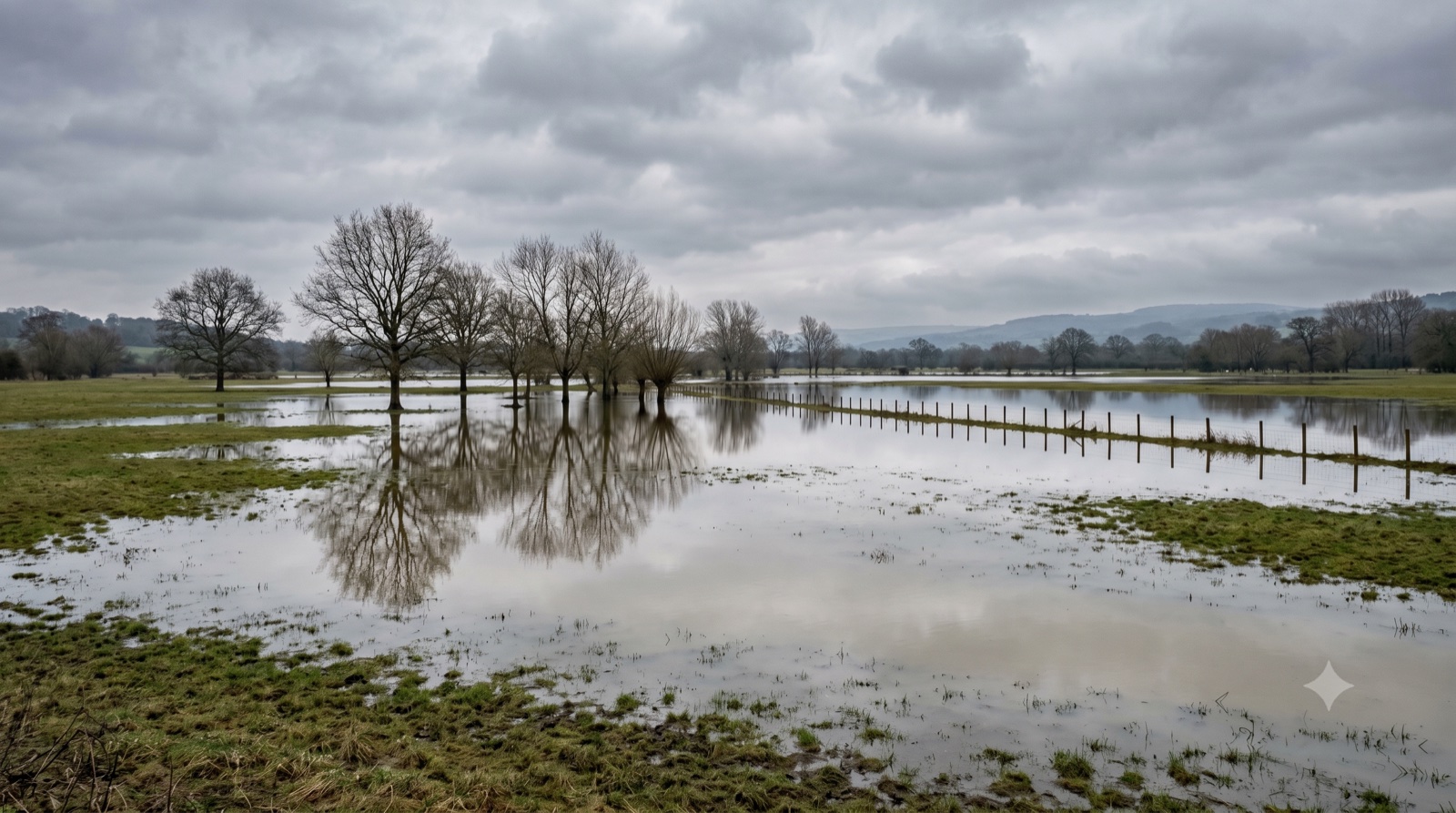
How to Sell Land in a Flood Zone
Key Takeaways
- FEMA's Special Flood Hazard Area designation (Zone A, AE, VE) requires mandatory flood insurance for federally backed mortgages: Buyers using conventional, FHA, VA, or USDA financing on land in a FEMA-designated SFHA must purchase flood insurance before closing, according to the Consumer Financial Protection Bureau — a requirement that eliminates most retail financed buyers
- Sellers must disclose flood zone status in most states: Flood zone location is a material fact in nearly every state's seller disclosure framework; failure to disclose can expose sellers to rescission and fraud claims
- Cash buyers bypass both the financing and insurance barriers entirely: Because direct cash buyers do not use lender financing, flood insurance requirements, FEMA elevation certificate conditions, and loan-level flood determinations do not apply to their purchase process
How to Sell Land in a Flood Zone
Yes, you can sell land in a FEMA flood zone, though the process differs from standard sales: the designation creates financing and insurance barriers for retail buyers, but cash buyers, agricultural operators, and recreational investors regularly purchase flood-zone parcels as-is without mortgage contingencies or insurance requirements. The FEMA designation is a genuine obstacle for retail buyers who need financing — federally backed loans require mandatory flood insurance, and some lenders refuse to finance certain high-risk zones at all. But cash buyers, agricultural operators, recreational buyers, and investors purchase flood-zone parcels regularly, often as-is, without insurance contingencies or lender approvals.
This guide explains what FEMA flood zones mean, what disclosure obligations apply to sellers, what financing and insurance hurdles face retail buyers, how wetland rules layer on top, and who actually buys flood-zone land.
What Is a FEMA Flood Zone and What Does It Mean for Your Land?
FEMA's National Flood Insurance Program (NFIP) divides flood risk into zones that appear on Flood Insurance Rate Maps (FIRMs). The FEMA Flood Map Service Center at msc.fema.gov allows anyone to look up a parcel's flood zone designation by address or coordinates.
FEMA Flood Zone Categories
Special Flood Hazard Areas (SFHAs) — High Risk
- Zone A: Subject to inundation by the 1-percent-annual-chance flood (commonly called the "100-year flood"). No base flood elevation determined. This is the most commonly designated zone for rural land.
- Zone AE: Same 1-percent-annual-chance standard, but base flood elevation (BFE) is determined. The BFE tells you how high floodwater is projected to reach during a 100-year event.
- Zone AO: Sheet-flow flooding (shallow flooding on sloping terrain), average depth of 1–3 feet.
- Zone AH: Pond-type flooding, 1-percent-annual-chance, average depth 1–3 feet.
- Zone VE: Coastal high-hazard area subject to wave action in addition to flooding. Highest-risk category.
Moderate and Low Risk Zones
- Zone X (shaded): 0.2-percent-annual-chance flood area (the "500-year flood" zone). Flood insurance not mandatory for federally backed loans but still advisable.
- Zone X (unshaded): Minimal flood hazard. Standard zone for most land outside floodplains.
Important context: The 1-percent annual chance means roughly a 26% probability of flooding at least once over a 30-year mortgage, according to FEMA actuarial data — not that flooding happens once per century. FEMA flood maps also have a known accuracy limitation: they are based on studies that may be decades old, and the maps do not capture all local drainage conditions.
What Are the Disclosure Obligations for Flood-Zone Sellers?
Flood zone location is treated as a material fact under seller disclosure laws in most states. Specific requirements vary by state:
- Several states (including Louisiana, Texas, and California) have explicit statutory requirements to disclose FEMA flood zone designation and any history of flood-related insurance claims or government assistance
- Other states require disclosure of "known material defects" or "conditions that materially affect value or desirability," which courts and regulatory agencies have consistently held to include FEMA SFHA designation
- NFIP-required flood insurance policies are transferable from seller to buyer in some circumstances, and the seller's claims history can affect the new buyer's premium
What sellers should gather before listing:
- Pull the FEMA FIRM panel number and zone designation from msc.fema.gov
- Obtain any existing elevation certificate (FEMA Form 086-0-33) for the parcel — if one exists, it stays with the property
- Review your state's seller disclosure form for specific flood-related questions
- Consult a real estate attorney in your state if the parcel has had flood insurance claims or prior FEMA disaster assistance
For more on the selling process and typical timelines, see how long does it take to sell land.
How Do Flood Zones Affect Financing and Insurance for Retail Buyers?
Flood zones affect retail buyers through one specific mechanism, and it is the mechanism that makes flood-zone land difficult to sell through conventional MLS channels: the mandatory purchase flood insurance requirement applies to every federally backed mortgage on property in a FEMA SFHA.
The Mandatory Purchase Requirement
Under the Flood Disaster Protection Act of 1973 and subsequent amendments, any loan originated, backed, or regulated by a federal agency — including conventional loans sold to Fannie Mae or Freddie Mac, FHA loans, VA loans, and USDA loans — requires the borrower to purchase and maintain NFIP flood insurance (or a private flood policy meeting NFIP equivalency standards) if the improved structure is in a SFHA, according to the CFPB.
For land-only parcels with no structures, the mandatory purchase requirement technically applies to structures, not bare land. However, lenders have wide discretion to decline to finance land in high-risk flood zones as a policy matter, regardless of the technical requirement. Many community banks and credit unions that make land loans simply will not originate loans on parcels in Zone A or AE, because their secondary market buyers (Fannie, Freddie, USDA) apply strict flood zone underwriting overlays.
NFIP Flood Insurance Costs
FEMA's Risk Rating 2.0 pricing methodology (implemented in October 2021) prices policies based on each property's specific flood risk characteristics rather than solely on flood zone designation, according to FEMA's Risk Rating 2.0 technical documentation. Annual NFIP premiums can range from a few hundred dollars for low-elevation, low-risk properties to several thousand dollars per year for high-risk coastal or riverine properties. These are recurring costs that affect a financed buyer's debt-to-income ratio and overall affordability.
| Buyer Type | Flood Zone Impact | Insurance Requirement |
|---|---|---|
| Conventional mortgage (Fannie/Freddie) | May be declined in Zone A/AE | Mandatory NFIP or equivalent |
| FHA / VA / USDA loan | Subject to agency overlays; often declined for land | Mandatory NFIP |
| Community bank land loan | Lender discretion; often declined in SFHA | Often required by lender policy |
| Cash buyer (no lender) | No lender restrictions apply | None required |
| Agricultural lender (Farm Credit) | Evaluated on farm use; may proceed with conditions | Varies by lender policy |
Do Wetland Regulations Apply to Flood-Zone Land?
Often, yes — though wetland jurisdiction and flood zone designation are separate regulatory programs that frequently overlap on the same parcel.
FEMA flood zones identify inundation risk. Wetlands are defined and regulated by the U.S. Army Corps of Engineers and the EPA under Section 404 of the Clean Water Act. The Corps' jurisdictional determination process identifies whether a parcel contains "waters of the United States" (WOTUS) subject to federal jurisdiction. Wetland presence does not automatically appear on FEMA maps and does not automatically disqualify a property from a flood zone designation — or vice versa.
Landowners planning any ground-disturbing activity (filling, grading, dredging) in or near wetlands must obtain a Section 404 permit from the Corps of Engineers before proceeding, according to USACE regulatory guidance. Unpermitted fill of wetlands can result in enforcement orders requiring restoration plus civil penalties.
For a parcel that sits in both a FEMA SFHA and contains Corps-jurisdictional wetlands, the combined effect is:
- Financing difficulty due to FEMA zone designation
- Development restriction due to Section 404 wetland protection
- Possible state-level wetland protection layered on top (many states have independent wetland programs that extend beyond federal jurisdiction)
See our companion guide on how to sell unbuildable land for more on parcels where multiple regulatory restrictions apply.
Who Buys Flood-Zone Land?
Flood-zone land is bought by agricultural operators, recreational and hunting buyers, timber buyers, and direct cash land companies. What these buyers share is that none of them need a mortgage, so the financing and insurance barriers that stop retail buyers never reach them — which is why flood-zone parcels keep selling in markets where lenders will not lend on them.
If you want to skip the disclosure and financing complexity and sell your flood-zone parcel as-is, request a no-obligation cash offer from Jerez Land — we buy flood-zone parcels in any condition, nationwide.
Cash buyers who regularly purchase flood-zone land include:
Agricultural operators: Bottomland and floodplain soils are often among the most fertile in any region, given centuries of silt deposition. Farmers and ranchers purchasing land for row crops, hay production, or grazing do not need a mortgage and frequently accept FEMA zone designation as an inherent feature of productive bottomland.
Recreational and hunting buyers: Floodplain land near rivers and bottomland hardwood areas is prime whitetail deer, waterfowl, and turkey habitat. Cash buyers seeking hunting ground or fishing access are rarely deterred by FEMA designation — in many cases they seek it out.
Timber buyers: Bottomland hardwoods (cottonwood, sycamore, oak, pecan in the South) have commercial timber value. Timber investors and timber REITs purchase flood-zone land based on the standing timber inventory and rotation cycle, not on the financing conditions.
Cash investors and land companies: Direct buyers such as Jerez Land purchase flood-zone land as-is. We account for the zone designation in our offer, absorb the carrying costs, and handle resale or long-term hold ourselves. You receive a firm written number and a defined closing timeline without financing contingencies.
For more on how direct cash buyers operate, see are we buy land companies legit.
How Do I Sell My Flood-Zone Land As-Is?
The most direct path out of a flood-zone parcel you no longer want is a cash sale to a direct buyer. The process eliminates the primary barrier that makes flood-zone land hard to sell through MLS: there is no lender, no mandatory flood insurance requirement, and no appraisal contingency.
Steps for a smooth as-is sale:
- Confirm zone designation at msc.fema.gov and print or save the FIRM panel
- Pull any existing elevation certificate from your county's floodplain administrator or prior title files
- Review state disclosure requirements with a local real estate attorney
- Gather back-tax status — outstanding tax liens complicate closing in any transaction; see sell land with back taxes
- Request a direct offer from a cash buyer who already accounts for flood zone in their offer calculations
Jerez Land makes firm written offers on flood-zone parcels of all sizes and types, in any state. No flood insurance is required. No lender approval. No inspection contingencies. Request a no-obligation cash offer and get a number in days, not months.
Frequently Asked Questions
I own land in a FEMA flood zone — is it still worth anything?
Yes. Flood zone designation affects financing options and insurance costs for retail buyers but does not eliminate all value. Agricultural bottomland, timber ground, hunting parcels, and conservation properties regularly sell despite FEMA designation. The buyer pool is narrower than non-flood-zone land, but cash buyers, agricultural operators, and recreational investors still purchase flood-zone parcels. See our guide on how much is my land worth.
Do I have to disclose that my land is in a flood zone?
In most states, yes. Flood zone designation is widely treated as a material fact under seller disclosure statutes. Several states (including Louisiana, Texas, and California) have explicit statutory requirements. Sellers who fail to disclose known FEMA SFHA designation can face rescission claims or fraud liability. Consult a real estate attorney in your state for specific requirements.
I'm trying to get financing on my flood-zone land — what are my options?
It depends on the lender and zone. For federally backed loans (conventional Fannie/Freddie, FHA, VA, USDA), mandatory flood insurance purchase is required for property in a FEMA SFHA. Many lenders apply additional underwriting overlays that make land-only loans in Zone A or AE difficult or impossible to obtain. Cash purchases bypass all of these restrictions.
What is a FEMA SFHA?
A Special Flood Hazard Area is any FEMA-designated zone (A, AE, AO, AH, VE, and related subdivisions) subject to the 1-percent-annual-chance flood — commonly called the "100-year floodplain." Property in an SFHA triggers the mandatory flood insurance purchase requirement for federally backed loans, according to FEMA. You can look up any parcel's designation at msc.fema.gov.
My land is in a FEMA flood zone and also has wetlands — how does this impact my sale?
Wetland jurisdiction and flood zone designation are separate regulatory frameworks that frequently overlap. Wetlands are regulated under Section 404 of the Clean Water Act by the U.S. Army Corps of Engineers. A parcel can be in a FEMA flood zone without containing regulated wetlands, or contain regulated wetlands without being in a mapped FEMA zone — or both. Each restriction operates independently.
Who buys flood-zone land near me?
Cash buyers, agricultural operators, timber investors, recreational hunters and fishermen, and conservation organizations are the primary buyers for flood-zone land. Direct land buying companies such as Jerez Land purchase flood-zone parcels nationwide with no financing contingencies. See our blog for more guides on selling land with challenging characteristics.
Disclaimer: This article is for informational purposes only and does not constitute legal, financial, or professional advice. Laws and regulations vary by jurisdiction and change over time. Always consult with qualified professionals before making land purchase or sale decisions. Jerez Land is not responsible for actions taken based on this information.