
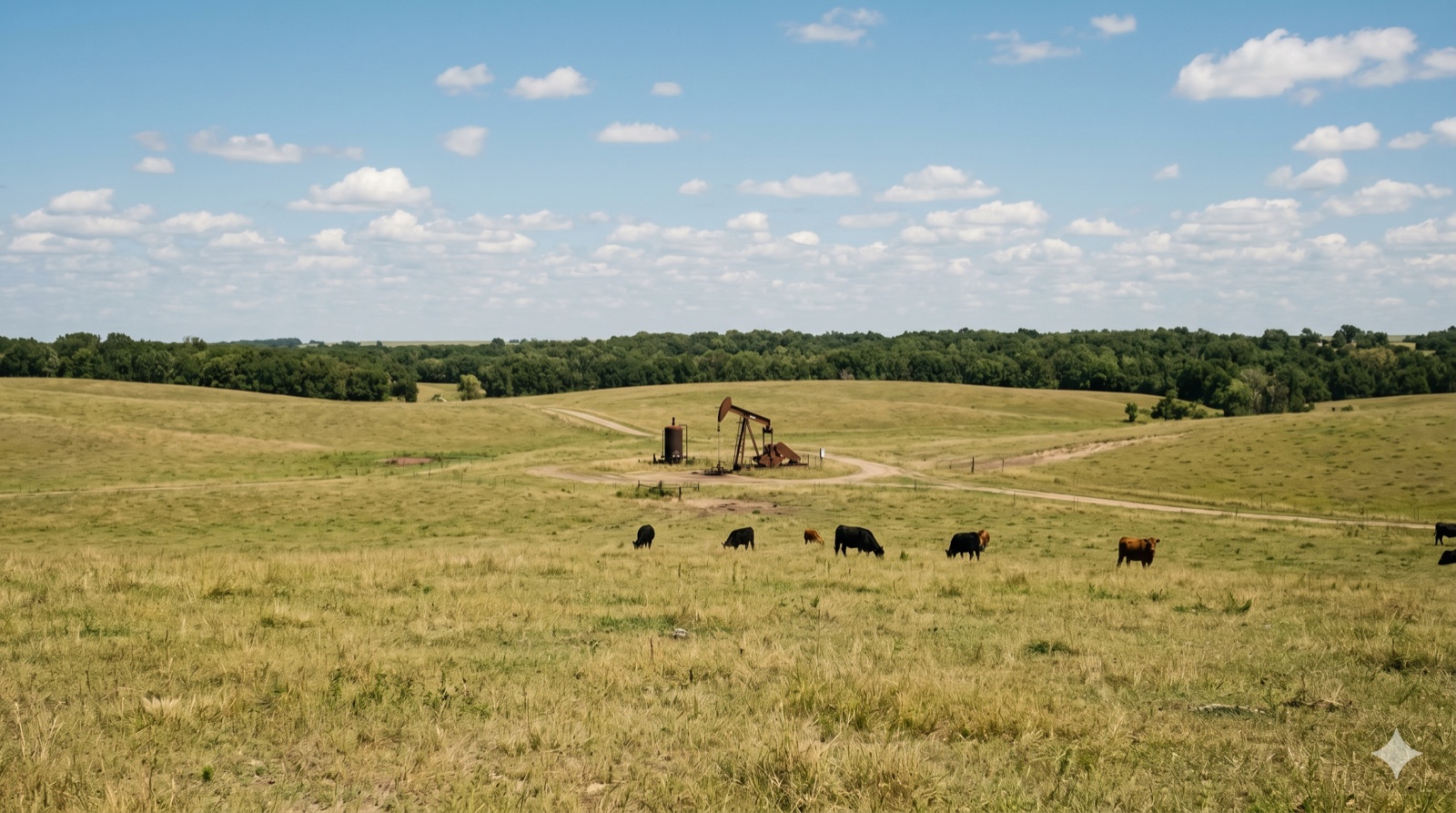
Selling Land That Has an Active Oil or Gas Lease
Key Takeaways
- Leasing your minerals doesn't sever them, and it doesn't lock up your land — you still own the surface and the minerals; you've only granted an operator the right to develop them for a term. You can sell the land, and the buyer simply takes title subject to the recorded lease, according to mineral-ownership guidance from Pheasant Energy and USLegal
- The lease runs with the land, and your deed decides who gets the royalties — a recorded lease binds the new owner, who generally steps into your shoes for future royalties unless you expressly reserve the mineral or royalty interest in the deed. That reservation must be written into the final deed, per USLegal's overview of exceptions and reservations
- An active lease affects your buyer pool more than your right to sell — operator surface-use rights and any wellsite, pad, road, or pipeline on the ground can deter some buyers, while others value the royalty potential. The lease will show as a title exception, so disclosure is the clean path
Can You Sell Land That Has an Active Oil or Gas Lease?
Yes. Leasing your minerals to an operator is not the same as selling them — you still own the land and the minerals, just encumbered by the operator's lease. You can sell the property, and the buyer takes title subject to the recorded lease, which runs with the land. Your main decisions are whether the minerals and future royalties convey to the buyer or you reserve them in the deed, and how the lease and any surface facilities affect who will buy and at what price.
This guide is for the landowner who signed an oil-and-gas lease — a Marcellus lease in Pennsylvania, a lease in Oklahoma or Texas, wherever — and now wants to sell the surface. We'll cover how the lease transfers, who collects the royalties afterward, how a producing "held by production" lease behaves, and how a direct buyer sizes up leased land. Oil-and-gas law is highly state-specific, so treat this as general background and have a local oil-and-gas attorney or landman review your actual lease and deed. If your minerals were already sold off by a prior owner, that's a different situation — see selling surface land when the minerals were already severed. To get a number on your parcel, you can request a no-obligation cash offer, or browse more guides on our blog.
What Does an Active Oil or Gas Lease Actually Mean for Your Ownership?
An oil-and-gas lease is a contract that grants an operator the right to explore for and produce the minerals under your land for a stated term, in exchange for a bonus, rentals, and a production royalty — it is not a sale of your minerals. You keep the mineral estate and receive royalties; you've only granted a working interest to develop it, per mineral-ownership guidance from Pheasant Energy. That's a crucial distinction from a severance, where minerals are permanently deeded to a separate owner, creating a split estate. A leased-but-intact tract can be sold whole — the minerals go with it — unless you choose to reserve them, which would itself create a severance at closing.
Several lease clauses travel with the land and matter to a sale. The primary term plus "held by production" (HBP) provision means that once there's production in paying quantities, the lease is held indefinitely — potentially for decades — for as long as the well keeps producing, per MineralView. A Pugh clause, if your lease has one, limits how much acreage or depth a single well can hold, releasing the rest at the end of the primary term, according to Pointer Minerals. Pooling or unitization lets the operator combine your tract with neighboring lands into a drilling unit, so production anywhere in the unit holds your lease and royalties are allocated by your share, per USLegal. And surface-use provisions define — and sometimes limit — the operator's right to enter and use your surface.
How Does the Lease Transfer When You Sell, and Who Gets the Royalties?
The lease is a recorded encumbrance that runs with the land, so a buyer takes the property subject to it and can't void it — but who collects future royalties depends entirely on your deed. If you convey the property without reserving the minerals, the buyer generally steps into your shoes and becomes entitled to future royalties and rentals attributable to that interest, once they notify the operator, per USLegal. If you reserve the mineral or royalty interest in the deed, you keep the checks. That reservation must appear in clear language in the final recorded deed — not just the purchase contract — or the minerals are typically deemed conveyed.
There's a meaningful distinction between reserving the full mineral interest (which carries leasing and executive rights) and reserving only a royalty interest (a share of production with no control over leasing), according to MineralView — they're not the same, and the wording matters. Because this decision is consequential and often permanent, have an oil-and-gas attorney or landman draft the deed language. After closing, whoever now owns the interest sends the recorded deed to the operator's owner-relations department, which issues a new or amended division order confirming the decimal interest before royalties are paid — the division order confirms ownership for payment; it doesn't itself transfer ownership.
Leased vs. Severed vs. Free-and-Clear: What Actually Conveys
The three most common mineral situations behave very differently at a sale. This table summarizes the practical difference; it is general, and your deed and state law control the specifics.
| Your situation | Do you own the minerals? | What conveys by default | Effect on the sale |
|---|---|---|---|
| Minerals owned but leased | Yes — subject to an operator's lease | Surface + minerals, subject to the recorded lease | Buyer takes subject to lease; you may reserve minerals/royalty |
| Minerals already severed (prior owner) | No — surface only | Surface only | Sell surface as-is; lease/royalty belongs to the mineral owner |
| Minerals owned free and clear | Yes — no lease | Surface + minerals | Cleanest conveyance; you may still reserve minerals |
For the middle case, see selling surface land when the minerals were already severed and our explainer on mineral rights vs. surface rights. Before advertising what conveys, confirm from your deed history — a courthouse search, landman, or title company running the chain of title — whether a prior owner already reserved a fraction, so you don't promise more than you own.
How Does an Active Lease Affect What Your Land Is Worth to Buyers?
An active lease affects salability more than it affects your legal right to sell, and the effect cuts both ways. Because the mineral estate (and its lessee) is generally the dominant estate, the operator holds an implied right to use as much of the surface as is reasonably necessary to reach the minerals — enter, drill, build pads, roads, pipelines, and tank batteries — which constrains how a surface buyer can use the land, per the Railroad Commission of Texas. Some states soften this with the accommodation doctrine, which balances the operator's surface use against a landowner's existing uses, according to the Texas Real Estate Research Center; whether and how it applies varies by state, so ask a local attorney.
The physical footprint matters most. An existing wellsite, pad, access road, or pipeline occupies part of the surface and narrows where a buyer can build, shrinking the pool of interested buyers — a concern our guides on selling land with a pipeline or utility easement and selling land that has an old oil or gas well on it address in detail. On the other hand, some buyers actively want the royalty stream to convey with the land and will pay attention to a producing lease. Either way, the lease appears as an exception on the buyer's title commitment — it's a recorded encumbrance — so it will surface regardless, which is exactly why disclosing it up front is the cleaner path. If your encumbrance is a surface lease rather than a mineral lease, our guide on selling land with a wind or solar lease covers that parallel situation.
What Are Your Options and Steps for Selling Leased Land?
Selling leased land is mostly about doing your homework first, then choosing a buyer comfortable with the encumbrance. A sensible sequence: locate and read your lease and any recorded memorandum of lease (check the primary term, HBP status, any Pugh clause, pooling, and surface-use terms); confirm from your deed history whether the minerals are intact or already partially severed; and decide — with an oil-and-gas attorney or landman — whether to convey or reserve the minerals or royalty. Reserving is a significant, often irreversible step because it creates a severance, so it deserves professional drafting. Then disclose the lease and any surface facilities to buyers, and after closing, notify the operator and handle the division or transfer order so royalties flow to the right party. Our guide on the paperwork needed to sell land covers the deed and title documents involved, and out-of-state owners should see selling land as an out-of-state owner.
For the sale itself, you have the usual paths. Listing with a land-specialized agent reaches the broadest audience but takes time, and a lease or surface facilities can lengthen a listing as buyers and their lenders work through the encumbrance. Selling by owner saves commission but puts the lease research, disclosure, and deed decisions on you. And selling to a direct cash buyer who routinely handles leased and mineral-encumbered parcels lets you skip the listing period entirely. Jerez Land buys land in exactly these situations — each offer is parcel-specific and made in writing, and as the buyer we take on the carrying costs, marketing, and resale risk. We don't quote a formula; we look at your specific parcel, its lease, and any surface facilities, and respond with a firm number. Request a cash offer to see it.
Frequently Asked Questions
I leased my mineral rights to a gas company two years ago and now want to sell the land — can I?
Yes. A lease doesn't sever or lock up ownership — you still own the land and minerals, just subject to the operator's lease. You can sell; the buyer simply takes title subject to the recorded lease, which runs with the land. Your key decision is whether the minerals and future royalties convey to the buyer or you reserve them in the deed. Read your lease and talk to an oil-and-gas attorney or landman before drafting deed language, since the reservation wording controls what you keep.
If I sell my land, who gets the royalty checks — me or the new owner?
It depends on your deed. If you convey the property without reserving the minerals or royalty, future royalties generally go to the new owner once they notify the operator and a new division order is issued. If you reserve the mineral or royalty interest in the deed, you keep the checks. The reservation must be clearly written in the final recorded deed, not just the contract. How any payments that accrued before closing are split is deal-specific, so spell it out in the purchase agreement and confirm it with an attorney.
There's a gas well and access road on my property from an old lease — will that scare off buyers?
It can narrow your buyer pool. A wellsite, pad, or access road physically occupies part of the surface and limits where a buyer can build, and the operator retains surface-use rights. That said, some buyers are comfortable with it — including cash land buyers who handle leased and encumbered parcels routinely — and some value the royalty potential. Disclose the facilities and share your lease; the encumbrance will appear on a title commitment anyway, so getting ahead of it keeps the deal clean.
I want to sell the surface but keep my royalties — how do I do that?
You reserve the mineral or royalty interest in the deed. There's an important difference between reserving the full mineral interest, which includes leasing and executive rights, and reserving only a royalty interest, which is just a share of production — they carry different rights. The reservation language must be precise and appear in the final recorded deed, not only the purchase contract. Because it's a consequential and often permanent step, have an oil-and-gas attorney or landman draft it.
My Pennsylvania land has a Marcellus lease that's "held by production" — does that ever expire so I can sell free of it?
Generally not while the well keeps producing. Held by production means production in paying quantities holds the lease past its primary term, potentially for decades. It can end if production permanently ceases or other lease-saving conditions fail, and a Pugh clause, if present, may already have released un-produced acreage. But you usually don't need the lease to expire to sell — you can sell the land subject to it. Have a Pennsylvania oil-and-gas attorney review your lease's habendum, cessation-of-production, and Pugh terms for your specific situation.
Do I have to tell buyers about the oil and gas lease on my vacant land?
Disclosure rules vary by state, and many residential disclosure statutes exempt vacant land — but a buyer can request disclosure, and a recorded lease will surface as a title exception regardless. Practically, disclosing the lease and any surface facilities up front is the safer, cleaner path and avoids a deal falling apart late. Confirm your state's specific requirements with a local attorney, and share a copy of the lease and any memorandum of lease with serious buyers.
Disclaimer: This article is for informational purposes only and does not constitute legal, financial, or professional advice. Laws and regulations vary by jurisdiction and change over time. Always consult with qualified professionals before making land selling or purchasing decisions. Jerez Land is not responsible for actions taken based on this information.