
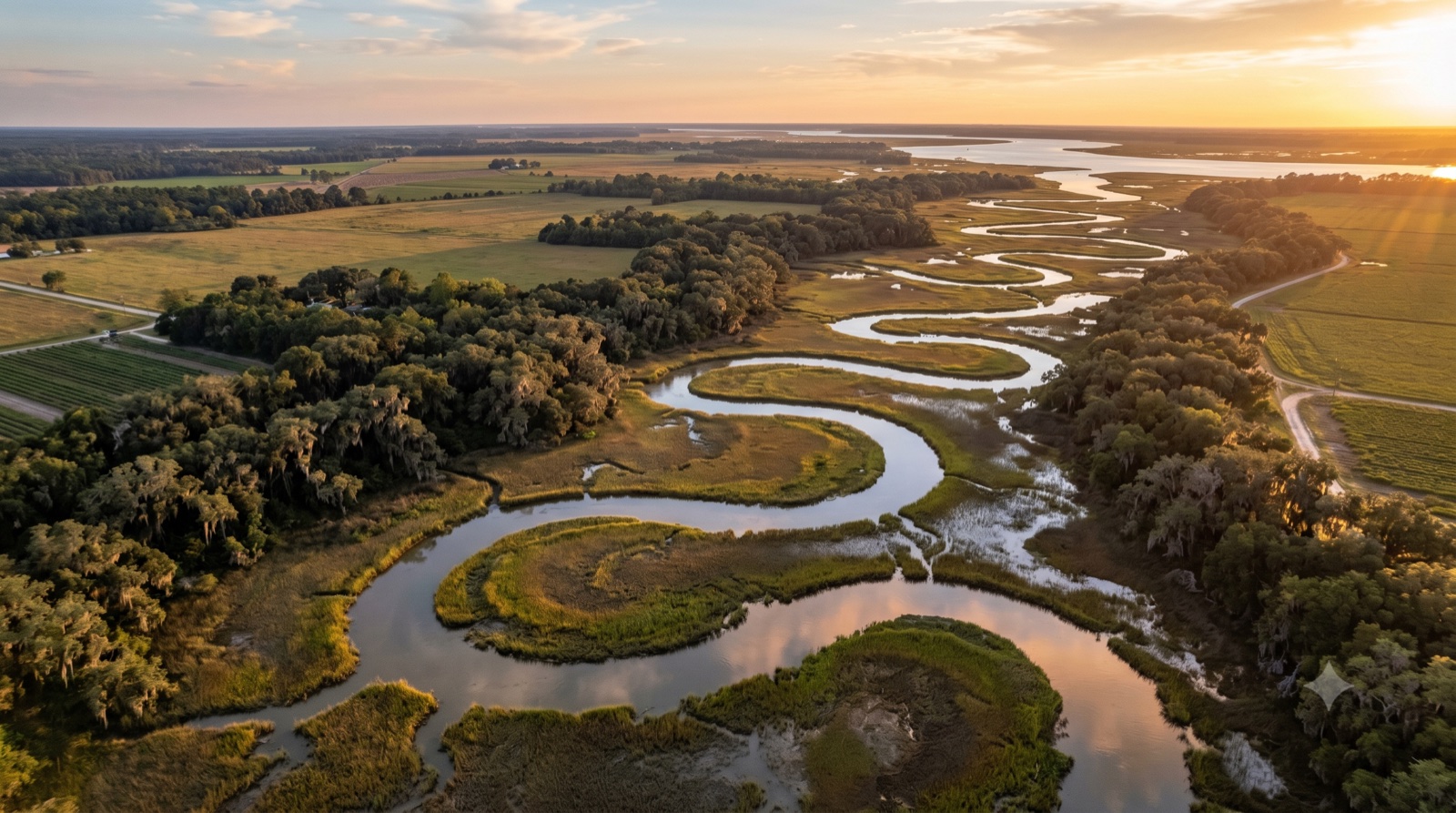
Sell My Land in Marlboro County SC - What Landowners Need to Know
Key Takeaways
- Marlboro County's population has declined from 28,933 in 2010 to 26,667 in 2020 to an estimated 25,488 by 2025, a loss of more than 3,400 residents over 15 years, according to U.S. Census Bureau data — one of the steeper sustained declines among South Carolina's 46 counties
- South Carolina's deed recording fee is $1.85 per $500 of sale price, with a $1.30 state portion and $0.55 county portion, customarily paid by the seller, according to the SC Department of Revenue Deed Recording Fee Manual 2024
- Vacant and non-owner-occupied land is assessed at 6% of fair market value in South Carolina under SC Code § 12-43-220, compared to 4% for primary residences — a material cost difference for landowners holding agricultural or vacant parcels without income
How Can You Sell Land in Marlboro County South Carolina?
To sell land in Marlboro County, confirm your property's legal title and tax status with the Marlboro County Register of Deeds and Treasurer, then hire a licensed South Carolina attorney to supervise the closing—a legal requirement in the state—and choose your sales method: list with an agent, use an online land platform, or request a cash offer directly from a buyer. Selling land in Marlboro County, South Carolina means working inside a state framework built on attorney-supervised closings, a deed recording fee that functions as a transfer tax, and a rural agricultural economy shaped by Pee Dee cotton country. The county covers approximately 480 square miles along South Carolina's northern border with North Carolina, with Bennettsville as its county seat.
The land market here is thin. A shrinking population — down more than 3,400 residents since 2010 — narrows the pool of local buyers. Most active farmland is operated by established farm families or large commodity producers. Vacant and inherited parcels often sit for years without a transaction. For landowners looking to convert idle acreage to capital, understanding the legal requirements, tax obligations, and realistic market conditions is the necessary starting point. For a broader look at South Carolina's rules, see our South Carolina land selling guide.
What Are the Tax and Carrying Costs of Holding Vacant Land in Marlboro County?
South Carolina uses a tiered assessment ratio system under SC Code § 12-43-220. Owner-occupied primary residences are assessed at 4% of fair market value, while all other real property — including vacant land, investment parcels, and non-owner-occupied lots — is assessed at 6% of fair market value. This means a vacant parcel in Marlboro County carries a 50% higher assessment ratio than a home the owner lives in.
Marlboro County's effective property tax rate is approximately 0.61% of home value, according to tax-rates.org, which places it among the lower-rate counties statewide — a reflection of modest assessed values rather than low millage rates. The county millage rate is reported among the SC Association of Counties' annual property tax reports. When school district and fire district levies are added, the combined millage rate for unincorporated areas is higher than the county-only figure.
How Property Tax Bills Add Up for Vacant Land
For a vacant parcel assessed at $50,000 market value, the 6% assessment ratio produces an assessed value of $3,000. At a combined millage rate in the range typical for rural Pee Dee counties, the annual tax bill can quickly become a recurring cost for absentee landowners who receive no farm income from the parcel. For larger parcels — 50, 100, or 200 acres — these costs compound across years of holding without any productive use.
South Carolina requires countywide reassessments every five years. Taxes are due by January 15 each year; unpaid taxes accrue penalties and can result in a tax sale. For absentee landowners — particularly those who have inherited land without a will and lack clear title — monitoring due dates from out of state adds another layer of complexity.
If the land qualifies for agricultural use under SC Code § 12-43-232 (at least five acres actively farmed or producing timber), it may receive the 4% agricultural assessment ratio based on use value rather than market value. Landowners should verify eligibility directly with the Marlboro County Assessor's Office (105 Main Street, Marlboro County Courthouse, Bennettsville, SC 29512; 843-479-5602).
For more on how back taxes affect a land sale, see our guide on selling land with back taxes.
What Closing and Zoning Requirements Apply to Land Sales in Marlboro County?
South Carolina is an attorney-closing state. Under the precedent established in State v. Buyers Service Co., 357 S.E.2d 15 (S.C. 1986), the South Carolina Supreme Court held that real estate closings constitute the practice of law. Every deed transfer — including vacant land, cash transactions, and inherited property conveyances — must be supervised by a licensed South Carolina attorney. There are no exceptions for cash sales or simple transactions.
The closing process in South Carolina follows this sequence:
- Title search: The attorney examines records at the Marlboro County Register of Deeds (105 Main Street, PO Box 996, Bennettsville, SC 29512; 843-479-5613) to confirm the seller holds clear, marketable title — particularly important where heirs' property or intestate succession is involved
- Deed preparation: The attorney drafts the warranty or quitclaim deed based on the chain of title
- Closing: Buyer, seller, and attorney meet (or sign remotely) to execute documents and transfer funds
- Recording: The attorney records the deed and pays the deed recording fee — $1.85 per $500 of sale price — to the Register of Deeds; the $1.30 state portion and $0.55 county portion are both remitted at recording
- Disbursement: The attorney disburses proceeds to the seller, less any outstanding liens, taxes, or legal fees
For sellers who need to understand what documents are required, our paperwork needed to sell land guide covers the typical set — deed, survey (if required), any easement disclosures, and property tax clearance letters.
Zoning and Land Use in Marlboro County
Marlboro County administers land use regulations for unincorporated areas of the county, with separate municipal zoning applying within Bennettsville, McColl, Clio, Blenheim, and Tatum. Before any sale or development project, buyers and sellers should verify the current zoning designation and any applicable use restrictions — particularly for parcels near incorporated municipalities, flood-prone areas along the Great Pee Dee River, or wetlands associated with Pee Dee bottomlands. Contact the Marlboro County offices at marlborocounty.sc.gov or call the main county line at 843-479-5639 to confirm applicable zoning before closing.
How Does Marlboro County Compare to Neighboring South Carolina Counties?
Marlboro County's population has declined from 28,933 in 2010 to 26,667 in 2020, with estimates continuing downward toward approximately 25,488 as of 2025, according to U.S. Census Bureau data. The county's poverty rate exceeds 26%, and median household income is substantially below the South Carolina statewide median. The median age is rising as younger residents leave for economic opportunities elsewhere.
| Factor | Marlboro County | Dillon County | Darlington County | Chesterfield County |
|---|---|---|---|---|
| Population (2024 est.) | ~25,700 | ~27,900 | ~62,400 | ~44,000 |
| Population trend | Declining | Declining | Stable/slight decline | Slight growth |
| County seat | Bennettsville | Dillon | Darlington | Chesterfield |
| Top land use | Cotton/row-crop farmland | Cotton/tobacco | Tobacco/cotton | Timber/row crops |
| Distance to Florence | ~45 min | ~30 min | ~20 min | ~60 min |
| Key land market signal | Thin market, heirs' property | Very thin market | Somewhat broader market | Timber investment active |
Marlboro County's agriculture is dominated by upland cotton and soybeans. City-data.com records approximately 28,800 harvested acres of upland cotton and 20,300 harvested acres of soybeans in the county, with wheat and corn rounding out the principal row crops. The Pee Dee region's loamy soils and flat topography suit large-scale commodity production, but most active farmland is under long-term lease or family operation — vacant parcels that reach the open market are the exception, not the rule.
Heirs' Property and Absentee Ownership
Marlboro County is part of South Carolina's Pee Dee region, an area with a significant concentration of heirs' property — land passed down informally through generations without a recorded will, leaving multiple co-owners on a single parcel without clear title. The Center for Heirs' Property Preservation estimates more than 108,000 acres of heirs' property remain across its 15-county South Carolina service area, which includes this region. Selling heirs' property typically requires a quiet-title action or agreement among all co-owners before a deed can transfer. Our selling inherited land with multiple heirs guide explains the process in detail.
For more county-level land analysis across South Carolina, explore our blog.
What Are Your Options for Selling Land in Marlboro County?
Marlboro County landowners holding vacant or non-producing parcels face a widening gap between carrying costs and potential future value. A shrinking population reduces the pool of local buyers year over year. The 6% assessment ratio means higher tax bills than owner-occupied properties. And heirs' property complications can stall even willing sellers for months while co-owners are located and agreements negotiated.
Before selling, confirm your property's legal description and tax status through the Marlboro County Register of Deeds (105 Main Street, PO Box 996, Bennettsville, SC 29512; 843-479-5613) and verify any delinquent taxes through the County Treasurer's Office (PO Box 505, Bennettsville, SC 29512; 843-479-5603). If the parcel was inherited without a will, consult a South Carolina real estate attorney about clearing title before listing.
Sellers have several paths. Listing with a local agent provides exposure but involves commission costs and extended timelines in a thin market. Online land platforms reach out-of-state buyers interested in hunting, timber, or investment land. For landowners who want a specific number — not a listing — request a cash offer from Jerez Land. We provide firm, parcel-specific written offers, handle the attorney-supervised closing, and can close in weeks without commissions or listing fees.
Understanding who pays closing costs when selling land and how much your land is worth before negotiating puts you in a stronger position regardless of which path you choose.
Frequently Asked Questions
How do I sell vacant land in Marlboro County SC?
Confirm your property's legal description and any delinquent taxes through the Marlboro County Register of Deeds (105 Main Street, PO Box 996, Bennettsville, SC 29512; 843-479-5613) and the County Treasurer (843-479-5603). South Carolina requires a licensed attorney to supervise the closing, including title examination, deed preparation, and recording with the Register of Deeds. You can list with a local or regional land agent, use land-focused online platforms, or request a direct cash offer from a land buyer like Jerez Land.
I own vacant land in Marlboro County SC — what will my annual property taxes be?
Vacant and non-owner-occupied land is assessed at 6% of fair market value under SC Code § 12-43-220, compared to 4% for primary residences. Marlboro County's effective property tax rate is approximately 0.61% of home value per tax-rates.org, though total bills reflect combined county, school district, and special district millage rates. Actively farmed parcels of five or more acres may qualify for the agricultural use-value classification at the lower 4% ratio under SC Code § 12-43-232.
What is South Carolina's deed recording fee and who pays it?
South Carolina charges $1.85 per $500 of sale price — a $1.30 state portion plus $0.55 county portion — recorded at closing as the Deed Recording Fee, according to the SC Department of Revenue Deed Recording Fee Manual 2024. By custom, the seller pays this fee, though parties may negotiate otherwise in the purchase contract. The fee is paid to the Marlboro County Register of Deeds at the time the deed is recorded.
I'm selling my Marlboro County land and the buyer wants to use a title company for closing — can't they handle it instead of an attorney?
No. Under State v. Buyers Service Co., 357 S.E.2d 15 (S.C. 1986), the South Carolina Supreme Court held that real estate closings are the practice of law. Every deed transfer — including vacant land and cash transactions — must be supervised by a licensed South Carolina attorney, who handles title examination, deed preparation, and recording with the Marlboro County Register of Deeds. There are no exceptions for simple or low-value transactions, and title companies cannot substitute for attorney supervision in South Carolina.
I inherited land in Marlboro County with my siblings but there's no will — can I sell it without locating all the heirs?
Heirs' property is land passed down informally through generations without a recorded will, resulting in multiple co-owners on a single parcel — often without any one person holding clear title. In Marlboro County's rural communities, this pattern is widespread. The Center for Heirs' Property Preservation estimates more than 108,000 acres of heirs' property remain across its 15-county South Carolina service area, which includes the Pee Dee region. Selling heirs' property typically requires a quiet-title action or agreement among all co-owners before a deed can transfer, and a licensed South Carolina attorney is essential for this process — you cannot sell without clear title from all owners.
I'm considering selling my Marlboro County land — is the market strong enough for a quick sale?
Marlboro County's population has declined from 28,933 in 2010 to 26,667 in 2020, with estimates approaching 25,488 as of 2025, according to U.S. Census Bureau data — a loss of more than 3,400 residents over 15 years. Out-migration driven by limited economic opportunity, a poverty rate exceeding 26%, and a median household income well below the state average all contribute. For land sellers, this contraction means a thinner pool of local buyers and longer timelines for vacant land transactions, so patience or direct cash offers are typically necessary.
Disclaimer: This article is for informational purposes only and does not constitute legal, financial, or professional advice. Laws and regulations vary by jurisdiction and change over time. Always consult with qualified professionals before making land purchase decisions. Jerez Land is not responsible for actions taken based on this information.