
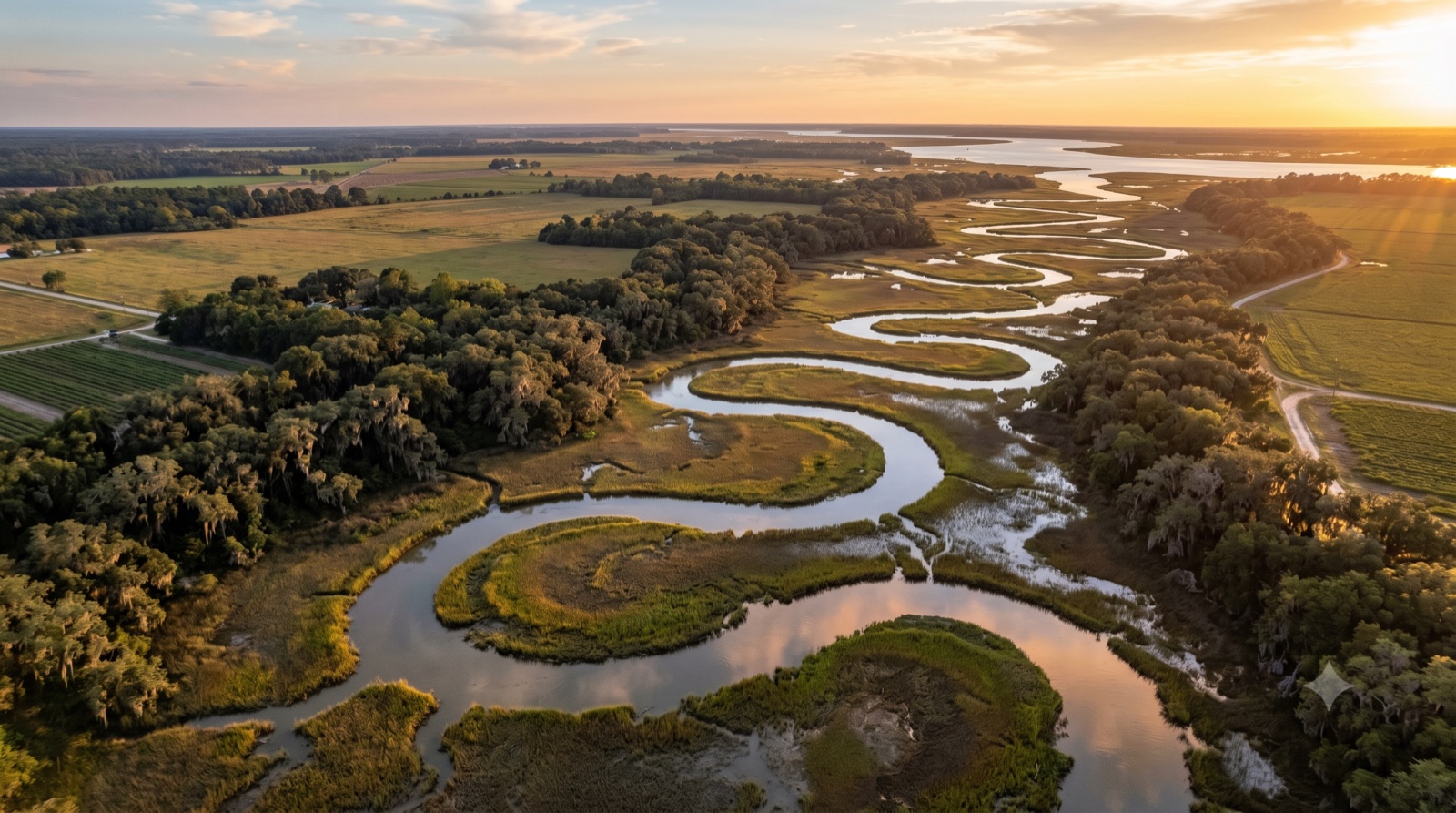
Sell My Land in Edgefield County SC - What Landowners Need to Know
Key Takeaways
- Edgefield County's population fell from 26,985 in 2010 to 25,657 in 2020, then rebounded to roughly 29,500 by 2024 as spillover from the growing Aiken–Augusta metro reached the county's southern edge — yet the rural, wooded land market inland from that growth remains thin and slow, according to U.S. Census Bureau data
- South Carolina's deed recording fee is $1.85 per $500 of sale price, with a $1.30 state portion and $0.55 county portion, customarily paid by the seller, according to the SC Department of Revenue Deed Recording Fee Manual 2024
- Vacant and non-owner-occupied land is assessed at 6% of fair market value in South Carolina under SC Code § 12-43-220, compared to 4% for primary residences — making it a higher-cost category to hold
How Can You Sell Land in Edgefield County South Carolina?
Selling land in Edgefield County, South Carolina means navigating the state's attorney-supervised closing requirement, a deed recording fee that functions as a transfer tax, and a rural western Piedmont economy built around peaches, pine and hardwood timber, and poultry. The county covers about 500 square miles on the Sumter National Forest edge, with $105,511,000 in agricultural product sales in 2022, according to the USDA 2022 Census of Agriculture.
For landowners considering a sale, this guide covers the full tax picture for vacant parcels, how attorney-supervised closings work in South Carolina, how Edgefield compares to its neighbors, and why timber, orchards, and absentee ownership define this thin inland market. For a broader look at the state's rules, see our South Carolina land selling guide.
What Are the Tax and Carrying Costs of Holding Vacant Land in Edgefield County?
South Carolina uses a tiered assessment ratio system under SC Code § 12-43-220. Owner-occupied primary residences are assessed at 4% of fair market value, while all other real property — including vacant land, investment parcels, and non-owner-occupied lots — is assessed at 6% of fair market value. This means a vacant parcel carries a 50% higher assessment ratio than a home the owner lives in.
Edgefield County's effective property tax rate is approximately 0.54% of fair market value, according to Ownwell — among the lowest in South Carolina and well below the state median, reflecting the county's low median values. The county's median property tax bill runs roughly $578 per year on a median-value home, per the same source. As with every South Carolina county, the total bill depends on the combined millage of the county, school district, and any special fire or service districts layered onto a given parcel's location.
How Property Tax Bills Add Up for Vacant Land
For a vacant parcel assessed at $50,000 market value, the 6% assessment ratio produces an assessed value of $3,000. The annual tax bill is then the assessed value multiplied by the combined local millage rate. For larger holdings — 50 or 100 acres of pine ridge, hardwood bottom, or old orchard ground at higher valuations — these costs compound year after year while the land produces no income.
South Carolina requires countywide reassessments every five years. Taxes are due by January 15 each year; unpaid taxes accrue penalties and can result in a tax sale. For absentee landowners — particularly those who have inherited timberland or old family tracts and now live out of state — monitoring due dates from a distance adds another layer of complexity.
If the land qualifies for agricultural use under SC Code § 12-43-232 (generally at least five acres actively farmed or producing timber), it may be taxed on its agricultural use value rather than fair market value, at the 4% ratio. Timberland held by individuals or family partnerships is eligible for this agricultural-use classification — a meaningful benefit in Edgefield County, where woodland covers 32,065 of the 68,671 acres in farms, according to the USDA 2022 Census of Agriculture. Dormant vacant parcels that don't qualify remain at the 6% rate. If the classification later changes — for example, when farmland or timberland is converted to residential or commercial use — South Carolina imposes a rollback tax, recapturing the difference between use-value and market-value taxes for up to the prior three years. Landowners should verify eligibility with the Edgefield County Assessor (206 Penn Street, Suite 1, Edgefield, SC 29824; 803-637-4066).
For more on how back taxes affect a land sale, see our guide on selling land with back taxes.
What Closing and Zoning Requirements Apply to Land Sales in Edgefield County?
South Carolina is an attorney-closing state. Under the precedent established in State v. Buyers Service Co., 357 S.E.2d 15 (S.C. 1986), the South Carolina Supreme Court held that real estate closings constitute the practice of law. Every deed transfer — including vacant land, cash transactions, and inherited property conveyances — must be supervised by a licensed South Carolina attorney. There are no exceptions for cash sales or simple transactions.
The closing process in South Carolina follows this sequence:
- Title search: The attorney examines records at the Edgefield County Register of Deeds, part of the Clerk of Court's office (129 Courthouse Square, Edgefield, SC 29824; Register of Deeds 803-637-4049), to confirm the seller holds clear, marketable title — particularly important where old family timber tracts or intestate succession are involved
- Deed preparation: The attorney drafts the warranty or quitclaim deed based on the chain of title
- Closing: Buyer, seller, and attorney meet (or sign remotely) to execute documents and transfer funds
- Recording: The attorney records the deed and pays the deed recording fee — $1.85 per $500 of sale price — to the Register of Deeds; the $1.30 state portion and $0.55 county portion are both remitted at recording
- Disbursement: The attorney disburses proceeds to the seller, less any outstanding liens, taxes, or legal fees
For sellers who need to understand what documents are required, our paperwork needed to sell land guide covers the typical set — deed, survey (if required), any easement disclosures, and property tax clearance letters.
Zoning and Land Use in Edgefield County
Edgefield County administers land use through its planning function, with much of the rural county lightly regulated compared to fast-growing metro counties. Parcels bordering the Sumter National Forest carry particular considerations — access, boundary lines, and adjacent federal land can all affect how a tract is used or resold. The towns of Edgefield, Johnston, and Trenton maintain separate municipal zoning. Before any sale or development project, buyers and sellers should verify the current zoning designation and any use restrictions. Contact the Edgefield County Assessor's Office (803-637-4066) or the county's planning staff to confirm applicable rules, especially for parcels near incorporated areas, floodplains, or the national forest boundary.
How Does Edgefield County Compare to Neighboring South Carolina Counties?
Edgefield County's population declined from 26,985 in 2010 to 25,657 in 2020, then rebounded to an estimated 29,500 by 2024, according to U.S. Census Bureau QuickFacts and Census estimates — a recovery driven largely by suburban spillover from the growing Aiken–North Augusta corridor into the county's southern communities. That growth, however, concentrates near the metro edge; the wooded, rural interior of the county still sees a thin, slow market for larger tracts, with few local cash buyers for timber and recreational acreage.
| Factor | Edgefield County | Aiken County | Saluda County | McCormick County |
|---|---|---|---|---|
| Population (2020) | 25,657 | 168,808 | 18,862 | 9,526 |
| Population (2024 est.) | ~29,500 | ~179,000 | ~19,100 | ~9,500 |
| Population trend | Growing (metro edge) | Growing | Stable | Stable/slight decline |
| Effective tax rate (approx.) | ~0.54% | ~0.49% | ~0.51% | ~0.56% |
| Land character | Peaches, pine/hardwood timber, pasture | Metro/suburban, equestrian, industrial | Timber, poultry, farms | Timber, lake, recreation |
| Sumter National Forest | Yes (Long Cane District edge) | No | No | Yes (Long Cane District) |
| Distance to Aiken/Augusta | ~30–40 min | In metro | ~45 min | ~40 min |
Edgefield County's agricultural economy is small but distinctive, anchored by fruit rather than row crops. Of $105,511,000 in total product sales in 2022, crops made up 71% — led by fruits, tree nuts, and berries at $51,377,000, which ranked 1st among all reporting South Carolina counties, reflecting Edgefield's long history as peach country. Livestock, poultry, and products contributed 29%, led by poultry and eggs at $26,748,000, according to the USDA 2022 Census of Agriculture. The county had 410 farms on 68,671 acres of farmland, with woodland (32,065 acres) and pastureland (9,423 acres) together accounting for the large majority of that land — a profile that fits the western Piedmont's pine, hardwood, orchard, and pasture landscape.
That land mix, combined with the Sumter National Forest edge, gives Edgefield County appeal to a specific kind of buyer: hunters, timber investors, and recreational owners looking for wooded upstate acreage near public land. Owners of standing pine or hardwood should understand their tract's timber value and management history before a sale; our selling timberland and selling hunting land guides walk through what buyers of wooded parcels look for.
Absentee and Inherited Land
A rural county whose growth is concentrated near the metro edge leaves a large share of its interior acreage in the hands of heirs and out-of-state owners. Family timber, orchard, and pasture tracts passed down over generations — sometimes without a recorded will or a clean chain of title — are common here. That pattern can complicate a sale: informal or divided ownership may require clearing title before a deed can transfer, and multiple heirs must typically agree before land changes hands.
For inherited-land situations, our guides on selling inherited land and selling farmland explain the process in detail.
For more county-level land analysis across South Carolina, explore our blog.
What Are Your Options for Selling Land in Edgefield County?
Edgefield County landowners holding vacant, wooded, or non-producing parcels face a widening gap between carrying costs and a thin pool of local buyers, especially away from the metro-edge growth. Suburban demand near Aiken and North Augusta does not reach most rural tracts; the 6% assessment ratio means higher tax bills than owner-occupied properties; and inherited-land complications can stall even willing sellers for months.
Before selling, confirm your property's legal description and tax status through the Edgefield County Register of Deeds (803-637-4049) and verify any delinquent taxes through the County Auditor (803-637-4034) and Treasurer (803-637-4069). If the parcel was inherited without a will, consult a South Carolina real estate attorney about clearing title before listing. Check current use restrictions with the Edgefield County Assessor (206 Penn Street, Suite 1, Edgefield, SC 29824; 803-637-4066) or county planning staff — especially for tracts bordering the Sumter National Forest.
Sellers have several paths. Listing with a local agent familiar with timber, orchard, and rural land provides exposure but involves commission costs. Online platforms reach out-of-state buyers interested in hunting, timber, or recreational land near public forest. For landowners who want a specific number — not a listing — request a cash offer from Jerez Land. We provide firm, parcel-specific written offers, handle the attorney-supervised closing, and can close in weeks without commissions or listing fees. The offer reflects our own assessment of the tract, and we absorb the carrying, marketing, and resale risk once we buy.
Understanding who pays closing costs when selling land and how much your land is worth before negotiating puts you in a stronger position regardless of which path you choose. If you're weighing whether to list at all, our guide on whether you need a realtor to sell land lays out the trade-offs.
Frequently Asked Questions
I inherited timberland in Edgefield County but live in another state — can I sell it without traveling back to South Carolina?
In most cases, yes. South Carolina requires a licensed attorney to supervise the closing, but many attorneys can arrange remote signing, so you rarely need to travel back. Start by confirming your property's legal description through the Edgefield County Register of Deeds, part of the Clerk of Court's office (129 Courthouse Square, Edgefield, SC 29824; Register of Deeds 803-637-4049), and check for any delinquent taxes through the County Auditor and Treasurer. If the tract was inherited without a will, title may need clearing first. You can list with a local agent, use land-focused platforms, or request a direct cash offer from a land buyer.
What is the property tax rate for vacant land in Edgefield County SC?
Vacant and non-owner-occupied land is assessed at 6% of fair market value under SC Code § 12-43-220. Edgefield County's effective property tax rate is approximately 0.54% of fair market value, according to Ownwell — among the lowest in the state — though the exact bill depends on the combined county, school, and special-district millage for a given parcel's location. Land in qualifying agricultural or timber use may instead be taxed on use value at the 4% ratio.
What is South Carolina's deed recording fee and who pays it?
South Carolina charges $1.85 per $500 of sale price — a $1.30 state portion plus $0.55 county portion — recorded at closing as the Deed Recording Fee, according to the SC Department of Revenue Deed Recording Fee Manual 2024. By custom, the seller pays this fee, though parties may negotiate otherwise in the purchase contract.
I have an old peach-orchard tract in Edgefield taxed at the farm rate — will I owe a rollback tax if I sell it to someone who won't farm it?
Possibly. South Carolina taxes qualifying farmland and timberland on their agricultural use value at the 4% ratio, but when that classification changes — such as when land is converted from agricultural to residential or commercial use — the county imposes a rollback tax. The rollback recaptures the difference between the use-value taxes paid and what would have been owed at market value, for up to the prior three years. Whether it applies depends on the buyer's use, not simply the sale itself. Confirm your parcel's status with the Edgefield County Assessor (803-637-4066) before closing.
I want to keep my Edgefield County land sale simple and direct — is an attorney required for land sales in Edgefield County SC?
Yes. Under State v. Buyers Service Co., 357 S.E.2d 15 (S.C. 1986), the South Carolina Supreme Court held that real estate closings are the practice of law. Every deed transfer — including vacant land and cash transactions — must be supervised by a licensed South Carolina attorney, who handles title examination, deed preparation, and recording with the Register of Deeds. There are no exceptions for cash sales or simple transactions.
Is Edgefield County SC population growing or declining?
Edgefield County's population declined from 26,985 in 2010 to 25,657 in 2020, then rebounded to an estimated 29,500 by 2024, according to U.S. Census Bureau QuickFacts and Census estimates. The recovery is driven largely by suburban spillover from the growing Aiken–North Augusta corridor into the county's southern communities. That growth concentrates near the metro edge, however, while the wooded rural interior still sees a thin, slow market for larger tracts.
Disclaimer: This article is for informational purposes only and does not constitute legal, financial, or professional advice. Laws and regulations vary by jurisdiction and change over time. Always consult with qualified professionals before making land purchase decisions. Jerez Land is not responsible for actions taken based on this information.