
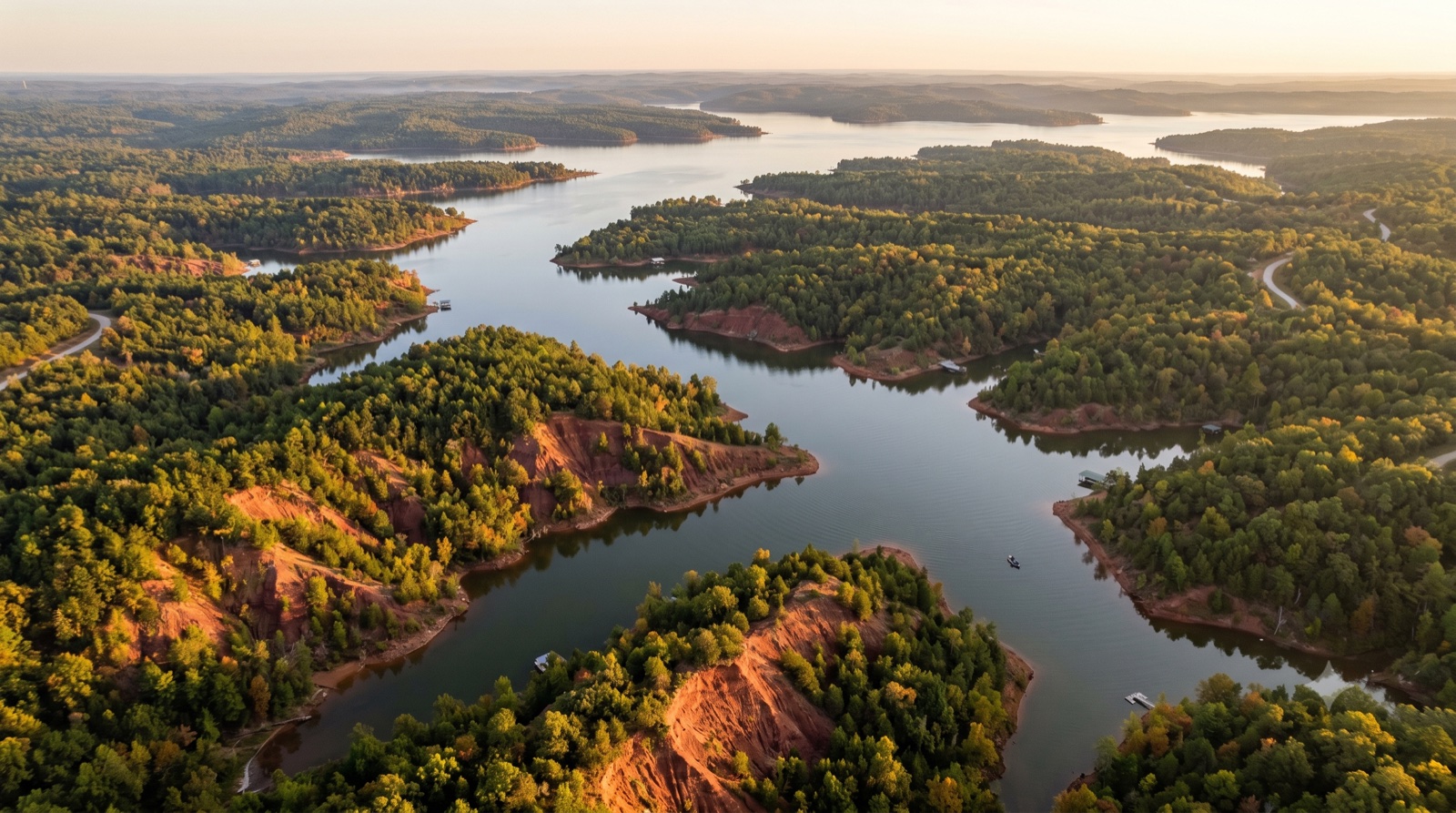
Sell My Land in McCurtain County OK - What Landowners Need to Know
Key Takeaways
- McCurtain County's population has declined 7.5% since 2010: The county's population fell from 33,204 in 2010 to 30,844 in 2020 and continued declining to approximately 30,778 by 2024, according to World Population Review data based on U.S. Census Bureau sources — a trend that constrains local buyer demand and is a leading reason why out-of-state investors target the area
- McCurtain County ranks ninth in Oklahoma for land acreage listed for sale: According to LandWatch, approximately 831 properties representing over $378 million in listings are currently offered in the county, making it one of southeastern Oklahoma's most active rural land markets driven by hunting, timber, and recreation buyers
- Oklahoma's documentary stamp tax applies at $0.75 per $500 of sales price: Unlike some states with no deed transfer tax, Oklahoma charges this fee at the time of recording, according to the Creek County Clerk's office — and sellers in McCurtain County should also budget for an abstract update, attorney title opinion, and recording fees before netting proceeds
How Can You Sell Land in McCurtain County Oklahoma?
To sell land in McCurtain County, Oklahoma, you can list with a licensed agent, market it yourself on land-specific platforms, or sell directly to a cash buyer — typically working through the state's abstract-of-title closing tradition with a closing attorney and paying a modest documentary stamp tax of $0.75 per $500 of sales price. Selling land in McCurtain County, Oklahoma means working through the state's abstract-of-title closing tradition, a modest documentary stamp tax, and a rural land market shaped by pine timber, the Beavers Bend resort corridor, and cattle operations. The county covers approximately 1,902 square miles — 1,850 of land — in the far southeastern corner of Oklahoma bordering Texas and Arkansas. With 1,177 farms spanning 331,493 acres and agricultural products valued at nearly $277 million, according to the 2022 USDA Census of Agriculture, McCurtain County has significant agricultural depth alongside growing recreational land demand.
This guide covers Oklahoma's property tax structure and how it applies in McCurtain County, the abstract-of-title process and what it costs sellers, how the county compares to neighboring markets, and your practical options for completing a land sale — whether through an agent, a private sale, or a direct cash buyer. For additional national land-selling resources, visit our blog.
What Are the Property Tax Costs of Holding Land in McCurtain County?
Oklahoma uses county-specific assessment ratios between 10% and 15% of fair cash value, set by each county assessor, according to SmartAsset. The taxable value is then multiplied by the county's mill rate — a combination of county, school district, and special district levies — to produce the annual tax bill. Mill rates in Oklahoma typically range from 90 to 110, according to the Oklahoma Policy Institute.
The median effective property tax rate in McCurtain County is approximately 0.78%, according to Ownwell — below both the Oklahoma state median of approximately 0.90% and the national median of 1.02%. The county's median annual property tax bill is approximately $492, compared with the $2,400 national median. McCurtain County's median home value of approximately $72,299 (Ownwell) reflects the area's rural character.
How Vacant and Agricultural Land Is Assessed
Oklahoma law caps annual increases in assessed value at 3% for residential and agricultural property and 5% for other real property. This cap protects long-term landowners from sudden reassessment spikes but also means new buyers receive a reset to current fair cash value, producing higher early-year bills.
Importantly, Oklahoma Statutes §68-2817 allows agricultural land and nonresidential improvements necessary for agricultural purposes to be assessed based on actual use value rather than market value. In McCurtain County — where 98% of agricultural sales come from livestock and poultry, according to the 2022 USDA Census of Agriculture — landowners actively using parcels for cattle grazing, hay production, or timber operations may qualify for use-value assessment, which typically reduces the assessed value compared to the market approach applied to idle vacant land.
Property taxes in McCurtain County are due December 31 each year, with a half-payment option available. Late payments accrue penalties. The county holds an annual tax-resale auction for delinquent properties, a common risk for out-of-state landowners who lose track of payment obligations. If you are behind on taxes, see our guide on how to sell land with back taxes before making any listing decisions.
Beyond property taxes, vacant parcels in McCurtain County can carry significant ongoing costs: liability insurance, road and fence maintenance in mountainous terrain, and wildfire risk in the dense pine forests. For land with no income-generating use, these costs compound across years without any revenue offset. Our guide on how much land is worth explains how carrying costs affect net value calculations.
What Does the Oklahoma Abstract and Closing Process Look Like for McCurtain County Sellers?
Oklahoma's abstract-of-title tradition is one of the most distinctive elements of a real estate transaction in the state. An abstract is a chronological summary of every recorded document affecting a property — deeds, mortgages, liens, easements, court judgments, oil and gas leases, mineral reservations — compiled from McCurtain County records, according to the Oklahoma Bar Association. While an abstract is not legally mandated by statute (unlike, for example, attorney-required closings in some Southeastern states), it is the conventional standard that buyers, lenders, and title insurance underwriters expect before closing.
The typical McCurtain County land sale closing sequence proceeds as follows:
- Order the abstract: A licensed abstracting firm updates or compiles the chain of title from McCurtain County Clerk records. For a parcel with an existing abstract, a bring-to-current update often takes 24 to 72 hours; an initial search from territorial records can take 1 to 7 business days or longer
- Attorney title opinion: A closing attorney reviews the abstract and issues a written opinion on marketability, identifying any title defects, missing releases, or mineral severances that require curative action
- Curative work: Unresolved liens, judgments, probate chains, or boundary discrepancies are cleared. Complex probate or heirship situations can add weeks or months
- Closing and recording: Buyer and seller execute the deed and settlement documents, funds are disbursed, and the deed is recorded with the McCurtain County Clerk. Recording fees are $18 for the first page plus $2 for each additional page, according to Oklahoma Closing & Title Services
For inherited parcels — especially those passed down through multiple generations without formal probate — title complexity is a common obstacle. See our guide on how to sell inherited land for an explanation of your options. To understand what documents you will need in hand before closing, see our guide on paperwork needed to sell land.
Oklahoma's Documentary Stamp Tax and Closing Costs
Oklahoma charges a documentary stamp tax of $0.75 per $500 of the sales price at the time of deed recording, according to the Creek County Clerk — equivalent to $1.50 per $1,000, or 0.15% of the sale price. On a $75,000 parcel, that amounts to $112.50; on a $150,000 parcel, $225. Proof of purchase price must accompany the deed, and the seller typically bears this cost.
Additional closing costs for McCurtain County sellers include the abstract bring-to-current fee (variable by abstracting firm and chain length), a share of the closing service fee (typically $350 split between parties for standard transactions, per Oklahoma Closing & Title Services), and any lien payoffs. Buyers financing their purchase also pay a mortgage tax of $0.10 per $100 of the mortgage amount — a buyer cost, not a seller obligation.
If you want a firm written number before investing in an abstract update, you can request a no-obligation cash offer from Jerez Land. We handle the title research on our end so you do not need to front abstracting costs before knowing whether a sale is worth pursuing.
How Does McCurtain County Compare to Neighboring Counties?
McCurtain County's population trajectory is one of the most important market signals for landowners. The county declined from 33,204 residents in 2010 to 30,844 at the 2020 decennial census, and further to an estimated 30,778 in 2024 — a total decline of approximately 7.5% over 14 years, according to World Population Review. The county's median household income was approximately $51,929 in 2024, according to Oklahoma Demographics, and the median age is 37.7 years.
| Factor | McCurtain County | Choctaw County | Pushmataha County | Little River Co. (AR) |
|---|---|---|---|---|
| Population (2024 est.) | ~30,778 | ~14,500 | ~11,000 | ~12,800 |
| Population trend | Declining (-7.5% since 2010) | Declining | Declining | Declining |
| Effective tax rate | ~0.78% | ~0.65% | ~0.60% | ~0.50% (AR) |
| Land listings (LandWatch) | 831 listings | ~100 listings | ~100 listings | Comparable AR market |
| Top land use | Timber/hunting/recreation | Agriculture/timber | Timber/hunting | Timber/cattle |
| Key challenge | High listing volume, remote | Very small market | Extremely small | Different state rules |
McCurtain County's economy is anchored by three sectors: timber and forestry, agriculture (primarily cattle and poultry), and outdoor recreation tourism centered on Beavers Bend State Park, Broken Bow Lake, and the Hochatown resort corridor. According to the USDA 2022 Census of Agriculture, the county's 1,177 farms produced $277 million in total agricultural product value — 98% from livestock and poultry. The county's 35,617 parcels are tracked by the McCurtain County Assessor, according to DataScoutPro, across 1,850 square miles of land area.
The Beavers Bend and Hochatown tourism corridor near Broken Bow has drawn significant cabin and vacation rental investment since the mid-2010s. However, this demand is concentrated in specific ZIP codes and is largely separate from the broader market for remote timberland, pasture, and rural acreage that constitutes most of the county's land inventory.
Timber Land and Natural Resources
McCurtain County's woodland component is significant: 99,154 acres of farmland is classified as woodland in the 2022 USDA census, and the county borders the Little River National Wildlife Refuge. Timber has historically been the county's primary land-based industry, with Weyerhaeuser and other timber operations having a long presence in southeastern Oklahoma. The county seat of Idabel and the town of Broken Bow serve as the primary service hubs.
Mineral rights in this part of Oklahoma are less commonly severed than in the oil-producing counties of central or western Oklahoma, but oil and gas leases do exist in portions of McCurtain County. Any sale should include an abstract review to confirm whether mineral rights are intact or previously severed — a finding that can significantly affect a parcel's marketability.
For more county-by-county land analysis across Oklahoma and the Southeast, explore our blog.
What Are Your Options for Selling Land in McCurtain County?
With 831-plus active listings on LandWatch alone and a declining population of approximately 30,778, McCurtain County landowners face a market where supply significantly exceeds local buyer demand. Most transactions are driven by out-of-state buyers seeking hunting, recreational, or timber land — a buyer pool that requires patient, platform-based marketing over 12 to 24 months in many cases.
Before proceeding with any sale, verify your property's legal description and tax status through the McCurtain County Assessor (Bruce Short, 580-286-5272) and confirm any delinquent taxes with the McCurtain County Collector/Treasurer (Linda Laster, 580-286-5128). For questions about recorded instruments, liens, or deed history, contact the McCurtain County Clerk (Karen Bryan Conaway, 580-286-2370). All offices are located in the county seat of Idabel.
McCurtain County sellers have three main paths. Listing with a licensed Oklahoma land agent provides exposure across MLS, LandWatch, Land.com, and LandAndFarm — platforms that attract the out-of-state buyers most likely to purchase recreational land in southeastern Oklahoma. Agent commissions of 5% to 6% plus the documentary stamp tax, abstract update, and closing fees reduce net proceeds. Given the competition from 831-plus active listings, many parcels require extended marketing periods. Our guide on how long it takes to sell land explains what drives those timelines.
Selling by owner through land-specific platforms eliminates agent commissions but requires managing showings, buyer inquiries, and the abstract and closing process independently. See our guide on how to sell land by owner for a step-by-step walkthrough of the FSBO process in Oklahoma.
For McCurtain County landowners who want to avoid extended marketing timelines, the carrying costs of a non-producing parcel, and the upfront expense of an abstract update, Jerez Land provides direct cash offers. We research each parcel's title history and condition on our end, price it individually based on its specific characteristics — terrain, access, timber, encumbrances — and provide a firm written number. There are no commissions, no listing fees, and no obligation to accept. Request a cash offer for your McCurtain County land and receive a written number without commitment.
Frequently Asked Questions
I want to sell vacant land I own in McCurtain County OK — what are my options?
Contact the McCurtain County Assessor (580-286-5272) to confirm your property description and check for any delinquent taxes with the Collector/Treasurer (580-286-5128). Oklahoma uses an abstract-of-title tradition: a licensed abstracting firm updates your chain of title from County Clerk records, and a closing attorney typically issues a title opinion. You can then list with an agent, use platforms like Land.com or LandWatch, or request a direct cash offer from Jerez Land.
What is the property tax rate in McCurtain County Oklahoma?
McCurtain County's median effective property tax rate is approximately 0.78%, according to Ownwell — below Oklahoma's state median of approximately 0.90% and the national median of 1.02%. The median annual tax bill is approximately $492. Oklahoma assesses property using county-specific ratios of 10% to 15% of fair cash value, with the resulting assessed value multiplied by the county's mill rate set by the Excise Board each year.
Does Oklahoma charge a transfer tax on land sales?
Yes. Oklahoma imposes a documentary stamp tax of $0.75 per $500 of the sales price at the time of deed recording, according to the Creek County Clerk — equivalent to $1.50 per $1,000, or 0.15% of the sale price. Sellers must provide proof of purchase price with the deed. On a $100,000 sale, this amounts to $150. Additional seller costs include abstracting fees, attorney opinion fees, and a share of closing service charges.
I inherited land in McCurtain County without an abstract on file — do I need one to sell?
An abstract is not mandated by Oklahoma statute, but it is the conventional standard that buyers, lenders, and title insurance underwriters expect for establishing clear, marketable title, according to the Oklahoma Bar Association. Without an existing abstract, a title examiner must review county records from territorial days forward — increasing time and cost. Most transactions in rural counties like McCurtain proceed through the abstract-and-opinion workflow.
My land in McCurtain County is used for cattle grazing — can I get a lower tax assessment?
Yes, if your land is actively used for agricultural purposes. Oklahoma Statutes §68-2817 allows agricultural land to be assessed based on actual use value rather than market value, typically producing a lower tax bill than the market approach applied to idle vacant land. Qualifying uses include cattle grazing, hay production, and timber operations. Applications are made through the McCurtain County Assessor, and active use must be demonstrated.
Is McCurtain County Oklahoma's population growing or declining?
McCurtain County's population has declined steadily, from 33,204 in 2010 to 30,844 at the 2020 Census and approximately 30,778 in 2024, a drop of roughly 7.5% over 14 years, according to World Population Review. The trend reflects long-term out-migration driven by limited economic opportunities. The Hochatown and Beavers Bend tourism corridor near Broken Bow has drawn some in-migration, but has not reversed the county-wide population trend.
Disclaimer: This article is for informational purposes only and does not constitute legal, financial, or professional advice. Laws and regulations vary by jurisdiction and change over time. Always consult with qualified professionals before making land purchase decisions. Jerez Land is not responsible for actions taken based on this information.