
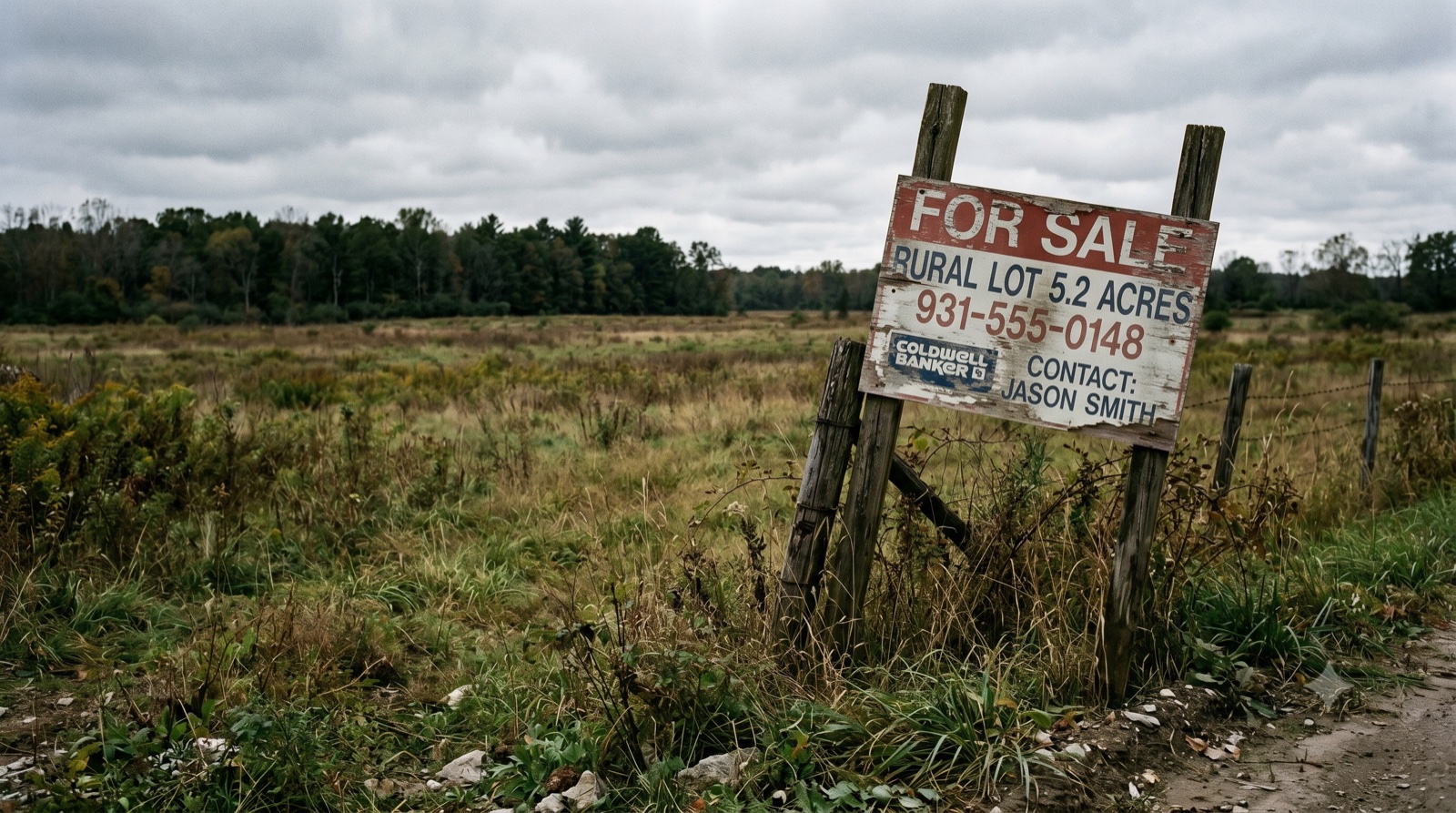
How to Price Land to Sell (Without Scaring Off Buyers)
Key Takeaways
- Overpricing — not poor marketing — is the leading reason listings sit for months, and a seller's best chance at full asking price comes in the first two weeks on market, after which buyer interest drops considerably, according to the National Association of Realtors
- Appraised value and market value are not the same thing — an appraisal is a professional estimate, but market value is simply what a willing buyer will actually pay, and on vacant land the gap can be wide because comps are scarce
- Every month an overpriced parcel sits, you keep paying carrying costs — property taxes and other holding expenses accumulate, while underpricing rarely scares buyers off; it just leaves money on the table, which is why many sellers trade top dollar for the speed and certainty of a cash buyer
How Do You Price Land to Sell Without Scaring Off Buyers?
Price your land against what comparable parcels have actually sold for—not what they're listed for—and set your number near the middle of that range, targeting the first two weeks when most-qualified buyers actively search your market, because this early window is when you have your best shot at full asking price before buyer interest diminishes. The most expensive mistake land sellers make isn't underpricing. It's overpricing, then watching the parcel sit for months or years while the carrying costs pile up and the eventual sale price drifts lower anyway.
This guide walks through how to price vacant land conceptually: how to read comps when there are few of them, how days-on-market signals whether your number is right, why an appraisal isn't the same as a sale price, and the real cost of aiming too high. If you want a deeper look at valuation itself, see our companion guide on how much your land is worth. This article is about the action — setting a number that actually closes.
Start With Sold Comps, Not List Prices
Pricing land begins with comparable sales — recently closed parcels similar to yours in size, location, access, and use. The single most common pricing error is anchoring to what nearby parcels are asking rather than what they actually sold for. Listing prices reflect seller hope; closed sales reflect buyer reality.
Vacant land makes this harder than housing for one structural reason: comps are scarce. A suburban home might have a dozen near-identical sales within a mile in the last six months. A rural parcel may have only two or three genuinely comparable closings within fifteen miles over the past year — and each of those may differ in road frontage, zoning, wetlands, slope, or utility access. With so few data points, a single outlier sale can distort your sense of the market in either direction.
Adjusting for What Makes Your Parcel Different
Because no two parcels are identical, raw comps have to be adjusted. The factors that move land value most:
- Access — does the parcel have legal, physical road frontage, or is it landlocked behind an easement?
- Utilities — is power, water, or septic feasibility at the lot line, or miles away?
- Zoning and use — buildable residential, agricultural, recreational, or restricted?
- Topography and usable area — how much is flat and dry versus floodplain, wetland, or unusable slope?
- Shape and frontage — a clean rectangular lot with road frontage is worth more than an irregular flag lot of the same acreage
The goal isn't a precise figure — it's an honest range that reflects what a real buyer in your specific market would pay. For a step-by-step look at the valuation inputs themselves, our guide on how much your land is worth breaks down each factor in detail.
Read Days on Market — It's Telling You Something
Days on market (DOM) is one of the clearest signals of whether your price is right. Buyers and their agents watch it closely: a long DOM tells them either the price is too high or something is wrong with the property, which invites lowball offers, according to Opendoor's analysis of market timing.
The timing window matters more than most sellers realize. According to the National Association of Realtors, a seller's strongest chance of getting full asking price comes in the first two weeks on the market; after about a month, that chance diminishes considerably. The early days draw the most-motivated, most-qualified buyers — the ones already searching your area. Price too high and you waste that window on people who scroll past.
Land Sits Longer Than Houses — But There's a Limit
Raw land legitimately takes longer to sell than a house. The buyer pool is smaller, financing is harder, and most purchases are discretionary rather than need-driven. So a few months of marketing isn't automatically a price problem.
But there's a threshold. When a parcel sits well past the normal absorption time for its market with little activity, the issue is almost always the price — not the photos or the listing description. The market is voting, and the vote is "too high." The NAR notes that a meaningful price adjustment of roughly 2% to 5% can revive showings and generate offers on a stalled listing, whereas a string of tiny cuts reads as desperation and trains buyers to wait for the next reduction.
Why Vacant Property Sells for Less
It's not just slower — vacant property tends to sell for less. Redfin found that vacant homes sell for less money and take longer to sell than comparable occupied homes. The same dynamic applies to raw land: with nothing to anchor an emotional connection and no occupant signaling care, buyers negotiate harder and bid lower. That reality should shape your starting number, not surprise you after three price cuts.
Appraisal Is Not the Same as Sale Price
Many sellers anchor their asking price to an appraisal or, worse, to the county's tax-assessed value. Both can mislead you.
An appraised value is a licensed appraiser's professional estimate based on comparable sales, condition, and location. Market value is simply what a willing buyer will actually pay in the current market, according to Rocket Mortgage. The two diverge because market value includes things an appraisal can't fully capture — buyer urgency, the size of the active buyer pool, financing conditions, and competition. On land, where comps are thin and appraisers may have little recent data to work from, that gap widens further.
The tax-assessed value is even less reliable as a pricing guide. It exists to calculate your property tax bill, not to predict a sale, and it often lags the real market by years in either direction. An appraisal tells you what one professional thinks; the market tells you what a buyer will do. Price to the second, not the first.
The Real Cost of Aiming Too High
Overpricing feels safe — "I can always come down." But the price you ask isn't free to carry. While an overpriced parcel sits unsold, you keep paying the holding costs of ownership: property taxes, and often weed abatement, liability exposure, road or HOA dues, and the opportunity cost of capital tied up in dirt. Vacant land carrying costs — property taxes chief among them — are a recognized, ongoing expense of holding raw land, as Nolo's overview of land tax treatment explains.
Run the arithmetic over a realistic timeline. A parcel priced 15% above market that takes an extra year to sell may net you less than a parcel priced correctly that closes in weeks — once you subtract another year of taxes, another year of carrying costs, and the price reductions you'll almost certainly make anyway. Underpricing, by contrast, rarely "scares off" buyers; it simply means you may leave some money on the table while selling quickly. The genuinely costly mistake is the slow bleed of overpricing.
For more on what actually drives speed, see how to sell land fast and our breakdown of why your land won't sell.
Your Options for Pricing and Selling Your Land
Once you understand the trade-offs, you have a few realistic paths:
Option 1: Price to the comps and list it yourself. Pull every recent sold comp you can find, adjust honestly for your parcel's strengths and weaknesses, set a number near the middle of the range, and commit to revisiting it within the first few weeks if showings don't come. This can net the most money if you have the time and patience to wait out a small, slow buyer pool. Our guide on how to sell land by owner covers the mechanics.
Option 2: List with a land-specialist agent. An agent who actually sells land — not just houses — can help you price against real comps and reach the right buyers, in exchange for a commission. See do you need a realtor to sell land to weigh whether it's worth it for your situation, and how long it takes to sell land for realistic timeline expectations.
Option 3: Sell directly to a cash buyer. If certainty and speed matter more than squeezing the last dollar, a direct cash buyer like Jerez Land trades top-of-market price for a fast, clean close. We evaluate your specific parcel, absorb the carrying, marketing, and resale risk ourselves, and present a firm written cash offer on that exact property — no formula applied to a spreadsheet, no waiting out a thin buyer pool, no months of accumulating taxes.
Request a no-obligation cash offer and we'll review your parcel and give you a real number to compare against your other options. There's no commission, no listing, and no pressure — just a straightforward figure you can weigh against the cost and uncertainty of waiting. For more guides on selling land, visit our blog, and if you're still deciding on a path, our overview of the best way to sell land lays out the trade-offs side by side.
Frequently Asked Questions
I want to sell my land in the next few months—what's the right pricing strategy?
Price it against recently sold comparable parcels — not active listings — and set your number near or slightly below the middle of that range. The first two weeks on market draw your most-qualified buyers, so the closer your price is to true market value from day one, the faster you'll sell. Overpricing with a plan to "come down later" usually backfires: you miss the early buyer interest and end up selling for less after months of carrying costs.
My land has been listed for weeks with little interest—what's probably wrong with the price?
The most common reason a parcel sits unsold is that it's priced above what buyers in that market will actually pay — usually because the asking price was anchored to other listings, an appraisal, or the tax-assessed value rather than to recent closed sales. Vacant land also sells more slowly than houses because the buyer pool is smaller and financing is harder. If your parcel has had little activity well past the normal selling time for your area, the price is almost always the issue.
I got an appraisal and looked up the county tax value—which one should I use for pricing my land?
Neither should be your asking price. An appraisal is one professional's estimate, and the tax-assessed value exists to calculate your property tax bill — both can be years out of step with the real market. Market value is what a willing buyer will actually pay today, which is best estimated from recent comparable sales, then adjusted for your parcel's access, utilities, zoning, and usable area.
I priced high thinking I could drop it later if needed—does overpricing really hurt that bad?
Yes. You lose the early window when the most-motivated buyers are looking, and a long days-on-market history signals to buyers that something is wrong, inviting lowball offers. A series of small reductions reads as desperation. Meanwhile you keep paying property taxes and other carrying costs every month it sits — so overpricing often nets you less than pricing correctly from the start.
I'm thinking about listing my land below market to attract buyers quickly—could that backfire?
Underpricing rarely "scares off" buyers the way overpricing does — at worst it means you may leave some money on the table while selling quickly. For some sellers, a fast, certain sale is worth more than holding out for the last few dollars. The bigger risk for most land sellers is the slow, expensive bleed of overpricing, not the occasional cost of selling a touch under market.
A cash buyer gave me an offer, but I'm also considering listing traditionally—which path makes more sense?
A cash buyer typically offers below the highest possible retail price because they absorb the risks and costs you'd otherwise carry — the carrying costs while it sits, the marketing, the uncertainty of a thin buyer pool, and the resale risk. In exchange you get speed and certainty: a firm written offer on your specific parcel and a fast close, with no commission or listing fees. Whether that trade makes sense depends on how much you value time and certainty versus squeezing out top dollar.
Disclaimer: This article is for informational purposes only and does not constitute legal, financial, or professional advice. Real estate markets and tax rules vary by jurisdiction and change over time. Always consult a licensed real estate professional, appraiser, or tax advisor before making pricing or sale decisions about your property. Jerez Land is not responsible for actions taken based on this information.