
How to Sell Your Land to a Developer or Builder
Key Takeaways
- Most developer purchases run through a long contingent period — a 90- to 180-day due diligence or feasibility window is common, and rezoning or entitlement contingencies often stretch the deal to 6–18 months or longer, according to Williams Mullen and I&D Consulting
- The developer's offer is almost always conditional, not committed — it typically hinges on zoning approval, environmental clearances, engineering feasibility, and the developer's own financing, any of which can collapse the deal before you ever reach closing
- Only certain parcels actually qualify for a developer payday — location, existing zoning, utility access, road frontage, and the local growth path determine whether a builder is interested at all; when the developer route stalls, a firm as-is cash offer is the certain alternative
How Do You Sell Your Land to a Developer or Builder?
You sell land to a developer or builder by attracting one whose growth plans line up with your parcel, then negotiating a purchase agreement that almost always includes a contingency period for due diligence, entitlements, and financing. The hard truth most landowners don't hear up front: a developer's interest is not a sale, and a signed contract is not a closing. These deals are long, conditional, and they fall through more often than they close.
That doesn't mean the developer payday isn't real — it can be. But it pays to understand exactly how the process works, why it takes so long, and what has to go right before money changes hands. This guide walks through entitlements, contingencies, option contracts, and the reasons deals collapse, so you can decide whether to wait it out or take a certain path instead. For a broader overview of selling approaches, see our guide on the best way to sell land.
What Does a Developer Actually Buy — and Why Only Some Parcels Qualify
A developer or builder isn't buying your land for what it is today. They're buying what they can legally build on it tomorrow. That distinction is everything, and it's why only a fraction of vacant parcels ever attract a serious developer offer.
Before a builder will engage, your parcel usually has to clear several practical hurdles:
- Location in the growth path. Developers follow rooftops, jobs, and infrastructure. A parcel directly in the path of expanding suburbs is interesting; one forty minutes past the last subdivision usually is not.
- Zoning that allows the intended use — or a realistic chance of rezoning. Land zoned agricultural or low-density rural may need a zoning change before anything can be built.
- Access to utilities. Public water, sewer, and electric service nearby dramatically affect feasibility. Land requiring miles of utility extension is far harder to develop.
- Road frontage and legal access. Without adequate frontage and a recorded access route, a project may not be permittable.
- Buildable topography and clean environmental status. Wetlands, floodplains, steep slopes, and contamination can shrink or kill the developable area.
If your parcel checks these boxes, you may be a genuine candidate. If it doesn't, the developer payday many owners imagine simply may not materialize — and that's worth knowing before you turn down other offers and wait. To understand the factors that drive your land's value in any sale, see how much is my land worth.
The Entitlement and Rezoning Gauntlet
When people picture selling to a developer, they picture a check. What actually stands between the handshake and the check is the entitlement process — the sequence of approvals a developer must secure to make your land legally buildable for their project.
The entitlement process commonly involves plan submission, multiple rounds of municipal staff review, planning commission public hearings, and — for a rezoning or comprehensive plan amendment — a final vote by the elected city council or county commission, according to Fairfax County's development review overview and GatherGov's entitlement guide. At each hearing, the public can speak for or against the project, and the body can approve, deny, or approve with conditions that force a redesign.
How long does this take? It depends heavily on what the developer needs:
| Approval Path | Typical Timeline |
|---|---|
| By-right project (already complies with zoning) | 2–4 months |
| Project needing rezoning or environmental review | 12–24 months |
| Rezoning + environmental review + multiple hearings | 1–3 years or longer |
Source: Fairfax County and GatherGov entitlement timelines.
This is where the dream meets reality. A rezoning is a discretionary, political decision — neighbors can organize against it, a planning commission can recommend denial, and a city council can vote it down. Entitlement risk is the uncertainty that the project receives the necessary approvals on time, or at all, according to I&D Consulting. If approvals fail, the deal that looked like your payday quietly evaporates.
Due Diligence Periods, Option Contracts, and Contingencies
Because the entitlement gauntlet is slow and uncertain, developers almost never agree to a clean, fast closing. Instead, they structure the deal to protect their capital while they investigate. As a seller, this is the part that most directly affects whether — and when — you actually get paid.
The Due Diligence or Feasibility Period
A serious developer typically negotiates a 90- to 180-day due diligence period to study the parcel before committing, according to industry practice summarized by Williams Mullen. During this window they order surveys, soil and environmental studies, engineering feasibility work, and zoning conformance letters. In most contracts, the developer can walk away for almost any reason during this period and recover their deposit. Your land is effectively off the market the whole time, and you may have nothing to show for it if they cancel.
Option Contracts
Rather than buy outright, developers frequently propose an option agreement — the exclusive right to purchase your land within a set period in exchange for an option fee, according to I&D Consulting. Options let a developer pursue rezoning and approvals without owning the land yet. Some sellers negotiate escalating option payments that increase the longer the developer ties up the property, which compensates you for the wait but does not guarantee a purchase. If the developer's plans fall apart, they simply let the option expire.
Contingencies That Can End the Deal
A developer's purchase agreement is usually conditioned on several contingencies, any one of which can terminate it, according to Williams Mullen and Marsh & Partners:
- Zoning / entitlement contingency — the deal proceeds only if the rezoning or use approval is granted
- Environmental contingency — clean Phase I (and sometimes Phase II) environmental results
- Engineering and feasibility contingency — the site must be physically and economically buildable
- Financing contingency — the developer must secure a land development loan
That last one matters more than sellers expect. Land development loans are among the hardest financing to obtain, and lenders tighten quickly when markets shift, according to Crestmont Capital. A developer with a signed contract can still be unable to close if their lender pulls back. For how these timelines compare to other sale paths, see how long does it take to sell land.
Why So Many Developer Deals Fall Through
Deals collapse when rigid deadlines run into unpredictable approval processes, according to I&D Consulting. The most common causes:
- Rezoning is denied or approved with conditions that break the project's economics
- Environmental or engineering findings shrink the buildable area
- Infrastructure and site costs run 20–30% over the developer's estimate, per Crestmont Capital
- The developer's financing falls through or their lender's terms change
- Market conditions soften and the developer shelves the project
When any of these happens after months of waiting, you're back where you started — only later, and often after passing up other buyers. If your land isn't selling through conventional channels, our guide on why won't my land sell explores the common reasons.
Your Options for Selling Land When a Developer Is in the Picture
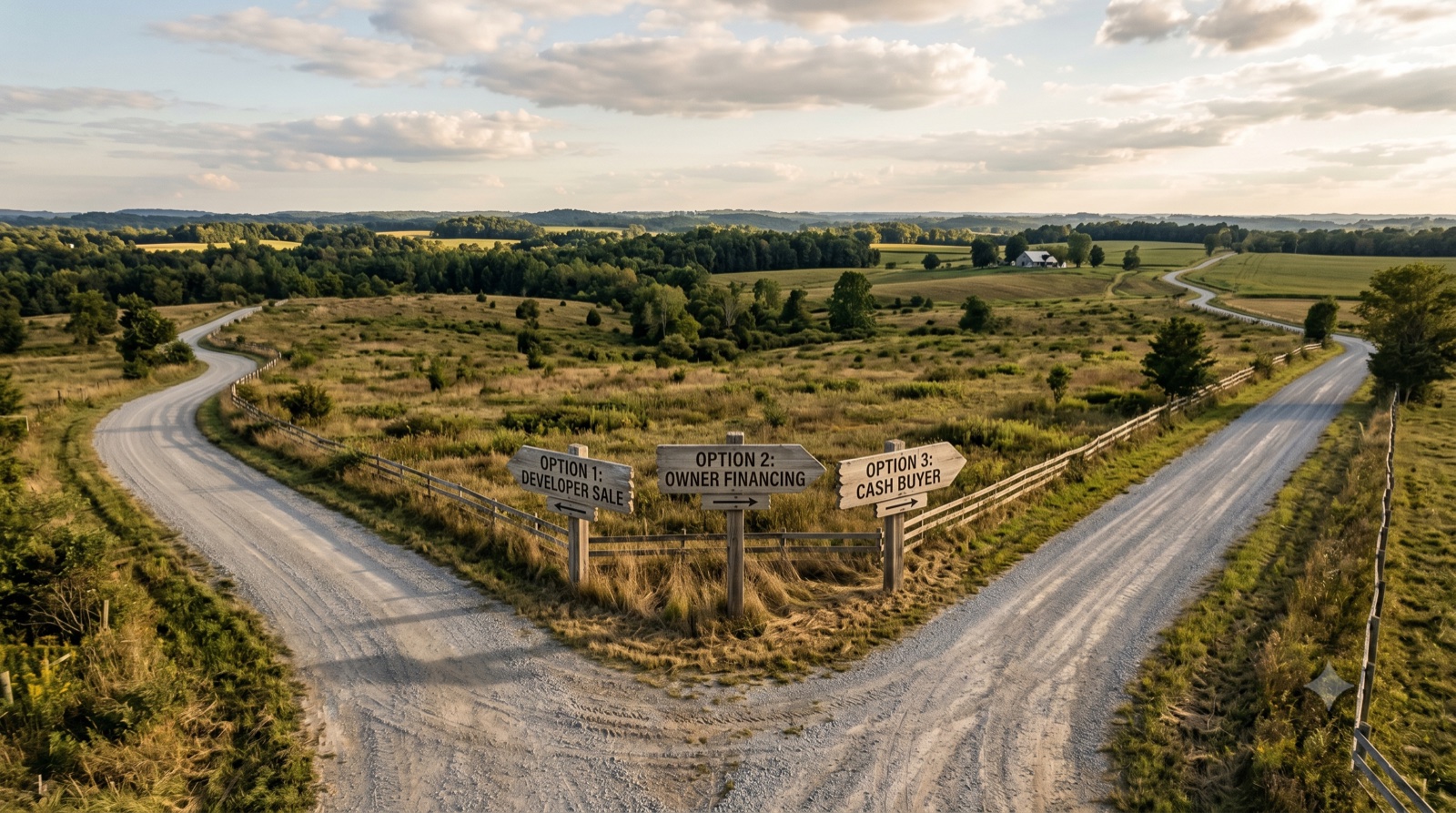
If a developer might be interested in your parcel, you generally have three paths:
Option 1: Pursue the developer deal and wait. Negotiate the option fee, due diligence terms, and contingencies carefully — ideally with a real estate attorney — and be prepared to wait 6–18 months or longer with no guarantee the deal closes. The upside can be meaningful; the uncertainty and the timeline are the price of admission.
Option 2: List on the open market. Marketing to retail buyers and smaller builders can work for some parcels, but it adds commissions, carrying costs, and time, and it doesn't remove the financing and contingency risk. Our guide on whether you need a realtor to sell land weighs that approach.
Option 3: Take a firm cash offer now. If you want speed and certainty instead of a maybe, a direct cash buyer like Jerez Land evaluates your specific parcel and presents a firm written cash offer with no contingencies on rezoning, entitlements, or financing. We absorb the carrying, marketing, and resale risk ourselves — so your closing doesn't hinge on a planning commission vote or a developer's lender. There are no commissions and no waiting on approvals that may never come.
Request a no-obligation cash offer and we'll review your property with you. A developer deal can still be worth pursuing if your parcel qualifies and you can afford to wait — but if the developer route stalls, or you simply want a certain close, an as-is cash sale is the dependable alternative.
Weighing structures and timelines? Our guides on cash offer versus owner financing, how to sell land fast, and selling part of your land cover the trade-offs. For more guides on selling land in complex situations, visit our blog.
Frequently Asked Questions
I'm considering selling to a developer — how long should I expect the process to take?
It varies widely, but plan on months, not weeks. A serious developer usually negotiates a 90- to 180-day due diligence period, and if the project requires rezoning or entitlements, the total timeline commonly runs 6–18 months or longer. By-right projects that already comply with zoning can move faster, while deals needing rezoning, environmental review, and multiple public hearings can take one to three years.
I've been waiting on a developer deal for months — why do these deals fall through so often?
Developer deals are conditional. They typically hinge on zoning approval, environmental and engineering feasibility, and the developer securing a land development loan. A rezoning can be denied, environmental findings can shrink the buildable area, costs can run over budget, or financing can collapse. Because the offer is contingent rather than committed, any of these can end the deal after months of waiting.
What is an option contract when selling land to a developer?
An option agreement gives a developer the exclusive right to buy your land within a set period in exchange for an option fee, without obligating them to purchase. It lets the developer pursue rezoning and approvals before committing. Some sellers negotiate escalating option payments that rise the longer the land is tied up, but an option still does not guarantee a sale — if the project fails, the developer simply lets it expire.
My land is in a rural area — does it qualify for a developer offer?
Not every parcel does. Developers look for land in the path of growth with zoning that permits their use (or a realistic chance of rezoning), access to utilities like water and sewer, adequate road frontage and legal access, and buildable topography free of wetlands, floodplains, or contamination. Rural parcels far from infrastructure often don't attract developer interest, even when the owner hopes they will.
Do I have to pay for the developer's rezoning or studies?
Usually not. In a well-structured contract, the developer bears the costs of their own due diligence, surveys, environmental studies, and rezoning applications, while the seller agrees to reasonably cooperate with applications. Sellers should clarify in writing that these costs are the buyer's responsibility, and a real estate attorney can make sure the agreement reflects that.
What's the alternative if the developer deal stalls or falls through?
A firm as-is cash sale. A direct cash buyer evaluates your specific parcel and makes a written offer that does not depend on rezoning, entitlements, or a developer's financing. Because the buyer absorbs the carrying, marketing, and resale risk, the closing is far more certain and far faster than a contingent developer deal — which makes it a dependable fallback when the developer route stalls.
Disclaimer: This article is for informational purposes only and does not constitute legal, financial, or professional advice. Laws, zoning rules, and entitlement processes vary by jurisdiction and change over time. Always consult a licensed real estate attorney before entering into an option agreement, purchase contract, or other land transaction. Jerez Land is not responsible for actions taken based on this information.