
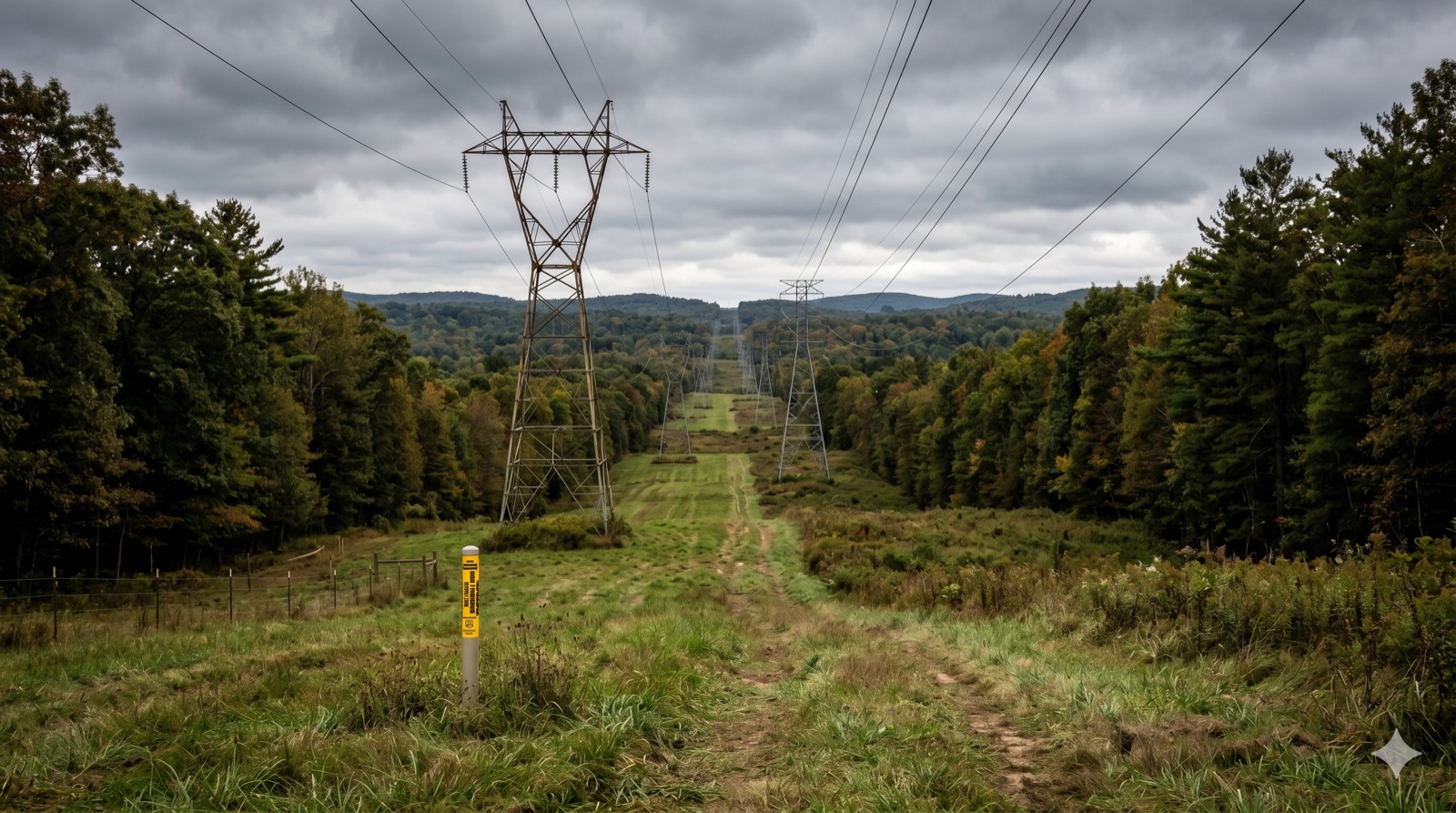
How to Sell Land With an Old Family Cemetery on It
Key Takeaways
- An old family cemetery or burial plot rarely stops you from selling the land — most states give descendants and the public a statutory right to reasonably access a private or abandoned cemetery, that access right runs with the land and binds whoever buys it, and the rest of the parcel outside the graves stays fully sellable, per NC State Extension and the Code of Virginia
- You generally cannot sell, build on, develop, or disturb the burial ground itself — graves are legally protected, and relocating remains requires next-of-kin consent, a health-department disinterment permit, and often a court order, which is expensive and rare, according to LegalClarity and the Tennessee Historical Commission
- A cash buyer purchases the parcel with the cemetery in place, as-is — an experienced land buyer underwrites the encumbrance, accommodates the access right, surveys and excepts the plot, and reflects all of it in a firm written cash offer on your specific parcel rather than walking away the way many retail buyers do, consistent with title-industry cemetery underwriting guidance
Can You Sell Land That Has an Old Family Cemetery on It?
Yes — a small family burial plot, a handful of weathered headstones in a fence row, or an abandoned cemetery tucked into the corner of a larger tract does not stop you from selling the property. The graves are legally protected and the burial area is effectively encumbered, but you still own the surrounding land, and the rest of the parcel remains sellable. The cemetery becomes something a buyer and a title company work around — surveyed out, disclosed, and protected by an access right — not a deal-killer. The real question isn't whether you can sell; it's how the burial ground is handled at closing and which type of buyer will move forward without flinching.
This guide explains what the law generally says about a cemetery on private land, who has the legal right to access it, why you can't build on or relocate the graves easily, how the burial plot is handled at sale, how it affects value and salability, and why a direct cash buyer is often better positioned than a retail buyer to purchase a parcel with one. Because cemetery and burial rules are set state by state — and the specifics vary a great deal — treat everything here as a general framework and confirm the details with a local real estate attorney. If you're dealing with the broader category of recorded rights across a parcel, start with our general guide on selling land with an easement; this post drills specifically into the burial-ground situation.
Can You Sell Land That Has a Family Cemetery on It?
You can sell the land. What you generally cannot do is sell, develop, or disturb the burial ground itself. Those are two different things, and keeping them separate is the key to understanding the whole situation.
An easement is a nonpossessory right that lets someone use part of another person's land for a defined purpose while the owner keeps the land, according to Cornell Law School LII. A cemetery on private property creates a closely related restriction: the graves are protected, and people with a connection to them hold a legal right to reach them. That right does not transfer the land to anyone — you still own the soil, still pay the property taxes on the whole parcel, and still control everything outside the burial area — but it does tie down the small piece where the graves sit.
The practical effect is that the cemetery acreage is effectively encumbered. You can't put a house, barn, septic field, pond, or road through marked or known graves, and a title company will not insure clean title over the burial ground itself. But that encumbrance is usually confined to a small, definable area — often a fraction of an acre in a corner or along a tree line of a much larger rural tract. The remaining acreage carries on as ordinary, sellable land. This is the same pattern that affects other problem parcels: the land isn't unsellable, a specific feature just has to be accounted for.
Who Has the Right to Access a Cemetery on Private Land?
Nearly every state gives certain people a legal right to reach a cemetery or grave located on someone else's private property — and, critically, that right runs with the land and binds a future buyer. The categories of who qualifies are remarkably consistent across states, even though the procedures differ.
In North Carolina, for example, descendants of those believed to be buried there, and any other person with a "special personal interest" in the grave or abandoned public cemetery, may enter the property to discover, restore, maintain, or visit it — with the landowner's consent, and through a court petition if consent is refused, according to NC State Extension's "Hallowed Ground" brief. Virginia's statute imposes a duty on the owner of private property containing a cemetery or graves to allow reasonable ingress and egress to family members, descendants, plot owners, and people doing genealogy research, for the purposes of visiting, maintaining the gravesite, or conducting research, per the Code of Virginia § 57-27.1. South Carolina similarly requires an owner to allow access by family members and descendants of those buried on the property, per the South Carolina Code Title 27, Chapter 43.
What the access right typically looks like in practice:
- Who gets in — descendants and relatives of those buried there, plot owners, and often genealogy researchers or others with a documented personal interest, per the Code of Virginia and NC State Extension
- For what purpose — visiting graves, maintaining or restoring the gravesite, and conducting genealogical research; not general use of the land
- On what terms — the landowner can usually set reasonable conditions: daylight hours, advance written notice, and a designated route across the property to minimize disruption, according to the Virginia REALTORS® summary
- If access is refused — most states provide a court remedy, where a descendant can petition a local court for an order specifying the terms of access, per NC State Extension
Because this right attaches to the land rather than to a particular owner, it conveys to the buyer along with the deed. A buyer needs to understand up front that strangers may have a lawful basis to cross a defined route to reach the graves — which is exactly why this is handled with a recorded, well-defined access easement rather than left vague.
Why Can't You Just Build On or Move the Graves?
Because graves are protected, and moving remains is tightly regulated, expensive, and rare. Disturbing, damaging, or vandalizing a cemetery or human remains is generally illegal, and knowingly doing so can carry criminal penalties, per NC State Extension. So building over, plowing through, or "cleaning up" a known burial ground is not an option — it has to be left in place and protected.
Relocating the graves is theoretically possible but practically difficult. Every state regulates disinterment tightly: moving buried remains generally requires consent from the legal next of kin, a disinterment permit (often from the state or county health department), and in many cases a court order when family members can't all agree, according to LegalClarity's overview of the disinterment process. Each jurisdiction ranks family members in a priority list that determines who can authorize disturbing a grave. The cost stacks up quickly — cemetery opening-and-closing fees at both the old and new site, permits, professional supervision, transportation, and reinterment — and for an old family plot the descendants are often scattered, unknown, or opposed. The realistic takeaway: assume the graves stay where they are.
There's also a preservation-law layer for older and abandoned burial grounds. Many states have unmarked-burial and historic-cemetery preservation statutes — Louisiana, for instance, protects abandoned cemeteries, unmarked graves, and human remains under its Unmarked Human Burial Sites Preservation Act and Historic Cemetery Preservation Act, administered by the state's Division of Archaeology, and Tennessee routes cemetery and burial questions through its State Historical Commission, per those agencies. If remains are unexpectedly discovered during work, the Society for Historical Archaeology notes that state burial-protection laws generally require stopping and notifying the proper authorities, and the state historic preservation office or state archaeologist may become involved. Separately, the federal Native American Graves Protection and Repatriation Act (NAGPRA) governs Native American remains and funerary objects on federal and tribal lands and triggers tribal consultation when such items are encountered, according to the National Park Service. The bottom line for a seller: the burial ground is a permanent, settled feature of the property — not something you can remove on your own before closing.
How Do You Handle the Burial Plot When You Sell?
The burial ground doesn't stop a sale — it gets defined, disclosed, and protected so the rest of the parcel can change hands cleanly. There's a well-worn playbook for this:
- Survey and legally describe the plot. A surveyor locates and stakes the burial area and writes a metes-and-bounds description for it. That lets everyone treat the cemetery as a precise, small piece rather than an undefined cloud over the whole tract. Our guide on whether you need a survey to sell land explains when ordering one is worth it.
- Except it or reserve it. The deed can "except" the burial parcel from what's conveyed, or the seller can reserve it, so the graves aren't part of the sale even though the surrounding land is.
- Record an access easement. A recorded easement gives descendants (and whoever holds the burial right) a defined route to reach the cemetery, satisfying the statutory access right in a clean, documented way.
- Disclose to the buyer. The cemetery is disclosed up front. Hiding a known burial ground invites exactly the kind of dispute and rescinded deal that disclosure prevents.
- Title exceptions. Title insurers will not insure clean title over the burial ground; their underwriting guidance directs that the cemetery's location be identified, excluded from coverage, and shown as a survey exception, along with exceptions for the claimed easement and the rights of ingress and egress to the graves, per Stewart Title's cemetery underwriting manual and the American Land Title Association's overview of how title coverage works.
- Possible subdivision. In some cases the burial ground is formally subdivided out as its own small parcel, leaving the balance of the land free and clear.
Four Ways to Handle the Cemetery at Sale — Compared
| Approach | What it does | Pros | Cons / Effort |
|---|---|---|---|
| Survey & except the plot | Surveyor defines the burial area; deed excepts it from the conveyance | Cleanest title on the rest of the land; precise boundary; buyer-friendly | Survey cost and time; needs a legal description |
| Record an access easement | Grants descendants a defined route to reach the graves | Satisfies the statutory access right cleanly; reduces dispute risk | Requires drafting and recording; defines a route across the parcel |
| Subdivide it out | Carves the cemetery into its own small parcel | Balance of the land is fully unencumbered and easy to sell | Most effort/cost; subject to local subdivision rules and approval |
| Sell whole with disclosure | Convey everything, disclose the cemetery, title takes exceptions | Fastest; least up-front cost | Title exceptions remain; smaller retail buyer pool; survey still advisable |
The right path depends on the size and location of the burial ground, your state's rules, and how the buyer plans to use the rest of the land. A small, well-defined plot in a corner of a large rural tract is the easiest version of this problem and is handled all the time.
How Does a Family Cemetery Affect a Parcel's Value and Salability?
The honest answer is that it depends on size, location, and the type of buyer. A small, fenced family plot in a far corner of a 40-acre wooded tract may have almost no effect on how the land would realistically be used or grazed. A burial ground sitting squarely on the only buildable bench, or one that complicates a planned subdivision, is a bigger drag because it dictates where future improvements can go and adds steps to any development plan.
The larger effect is usually on salability rather than a precise, provable dollar discount. Many retail buyers — especially those financing a purchase and represented by an agent — expect "perfect," unencumbered title and a clean slate. When a title commitment lists a cemetery exception and an ingress-egress easement, or when they learn descendants may have a legal right to cross the land to visit graves, the reaction is often hesitation, renegotiation, or walking away. Some buyers simply don't want a cemetery on a property they intend to call home. The result is that a parcel with a perfectly normal, recorded family burial ground can sit on the market longer or fall out of contract — even though the land itself is fine. A smaller buyer pool is the real cost, not the graves.
The reassuring part: well-defined small family plots are commonly handled, and the rest of the land stays marketable. Once the plot is surveyed, excepted, and protected by a recorded access easement, the cemetery becomes a known, bounded feature rather than an open-ended unknown — and that is what makes the surrounding acreage sellable.
Why Retail Buyers Sometimes Walk
A financed retail purchase runs through an appraisal, a lender, a title commitment, and often a nervous agent. Any one of them can stall on a cemetery: the appraiser flags it, the lender asks questions, the title commitment carries exceptions, and the buyer — who pictured a blank canvas — gets cold feet. None of that means the land can't be sold. It means the conventional buyer pool shrinks, the same way it does for unbuildable land or a parcel with a lien or cloud on title. The land isn't the problem; the financing-and-perception machinery around a retail sale is.
A Cash Buyer Buys It As-Is — Cemetery and All
A direct cash buyer approaches a family cemetery differently. Instead of expecting flawless title, the buyer reads the situation, accounts for the protected burial ground and the access right, plans for a survey and a recorded easement, and purchases the land with the cemetery in place, as-is. There's nothing for you to remove, relocate, or litigate. The buyer absorbs the curative work, the carrying costs, the marketing effort, and the resale risk that come with an encumbered parcel — including the smaller buyer pool on the back end — and reflects all of that in a firm written cash offer on your specific parcel.
What Are Your Options for Selling Land With a Cemetery?
You can list the property with full disclosure, attempt to relocate or subdivide the burial ground first, or sell to a cash buyer who will purchase it as-is and handle the survey and easement work. If your parcel contains an old family cemetery or burial plot, you have three main paths:
Option 1: List it and disclose the cemetery. Put the property on the open market, survey out the plot, and disclose the burial ground up front. This can work well when the cemetery is small and tucked in a corner and the rest of the land is easy to use — but be prepared for some retail buyers to hesitate, ask for price concessions, or walk when the title commitment shows a cemetery exception and an access easement.
Option 2: Try to relocate or formally subdivide the graves first. In limited cases an owner pursues a relocation. But moving remains requires next-of-kin consent, a health-department permit, and often a court order, and it's expensive and slow — for an old family plot with scattered or unknown descendants it's frequently impossible. Subdividing the plot out is more realistic but still takes time, cost, and local approval before you ever reach a buyer.
Option 3: Sell directly to a cash buyer. If you want speed and certainty, a direct cash buyer like Jerez Land purchases land with the cemetery in place, as-is. We account for the protected burial ground and the access right, plan for the survey and the recorded easement, factor all of it into our underwriting, and present a firm written cash offer on your specific parcel — no formulas, no guessing, and no expectation of perfect title.
Request a no-obligation cash offer and we'll review your property and its burial ground together. There are no commissions or listing fees, and we can often move faster than a traditional sale — even when an old family cemetery sits in a corner of the land.
Dealing with related complications? Our guides on how to sell inherited land, selling heirs' property with no clear title, and the paperwork needed to sell land cover the situations that often appear alongside an old family plot. For more guides on selling land in less-than-perfect situations, visit our blog.
Frequently Asked Questions
I inherited land with a family cemetery on it — can I still sell it?
Yes. A family cemetery or old burial plot rarely prevents a sale. You still own the land around the graves, and the rest of the parcel stays sellable. What you generally cannot do is sell, build on, or disturb the burial ground itself — graves are legally protected. At closing, the cemetery is typically surveyed, legally described, excepted or reserved, disclosed to the buyer, and protected by a recorded access easement, while the title company takes specific exceptions for the burial area. The graves usually stay exactly where they are.
Who has the legal right to access a cemetery on my property?
In most states, descendants and relatives of those buried there, cemetery plot owners, and often people conducting genealogy research have a statutory right to reasonable access — to visit, maintain, or research the graves. Landowners can usually set reasonable conditions like daylight hours, advance notice, and a designated route. Because this access right runs with the land, it binds a future buyer too. If a landowner refuses access, most states let a descendant petition a local court for an order specifying the terms. The exact rules vary by state, so confirm yours with a local attorney.
I found an old cemetery on my land — can I move or remove the graves before selling?
Usually not easily. Moving buried remains generally requires consent from the legal next of kin, a disinterment permit from the health department, and in many cases a court order — and it's expensive, with fees at both the old and new site plus permits and professional supervision. For an old family plot with scattered or unknown descendants, relocation is often impractical or impossible. Many states also have unmarked-burial and historic-cemetery preservation laws, and the state historic preservation office may get involved with older graves. In practice, plan on the cemetery staying in place.
A cemetery sits on my land — will this hurt its value or resale?
It depends on the size and location of the burial ground. A small, fenced family plot in a corner of a large rural tract often has little practical effect on how the land would be used, while a cemetery on the only buildable area or one that complicates a subdivision matters more. The bigger effect is usually on salability rather than a precise discount: some retail buyers hesitate or walk when they see a cemetery exception and an access easement on the title. Once the plot is surveyed and excepted, the surrounding acreage stays marketable.
Do I have to maintain the graves on my land?
Generally, no — most states do not require a private landowner to maintain a cemetery on their property. However, you typically cannot knowingly disturb, damage, or destroy the graves or headstones, and doing so can be illegal. You also generally have to allow lawful access by descendants and others entitled to reach the graves. The rules vary by state, so check your state's cemetery statutes or ask a local real estate attorney about your specific obligations.
Will a cash buyer purchase land with a family cemetery on it?
Many experienced cash land buyers — including Jerez Land — purchase land with the cemetery in place, as-is. We account for the protected burial ground and the descendants' access right, plan for a survey and a recorded access easement, and factor all of it into a firm written cash offer on your specific parcel. There's nothing for you to relocate or litigate, and we absorb the curative work and resale risk that come with an encumbered parcel and a smaller retail buyer pool.
Disclaimer: This article is for informational purposes only and does not constitute legal, financial, or professional advice. Laws and regulations vary by jurisdiction and change over time. Always consult a licensed real estate attorney before making decisions about cemeteries, burial grounds, easements, or property transactions. Jerez Land is not responsible for actions taken based on this information.