
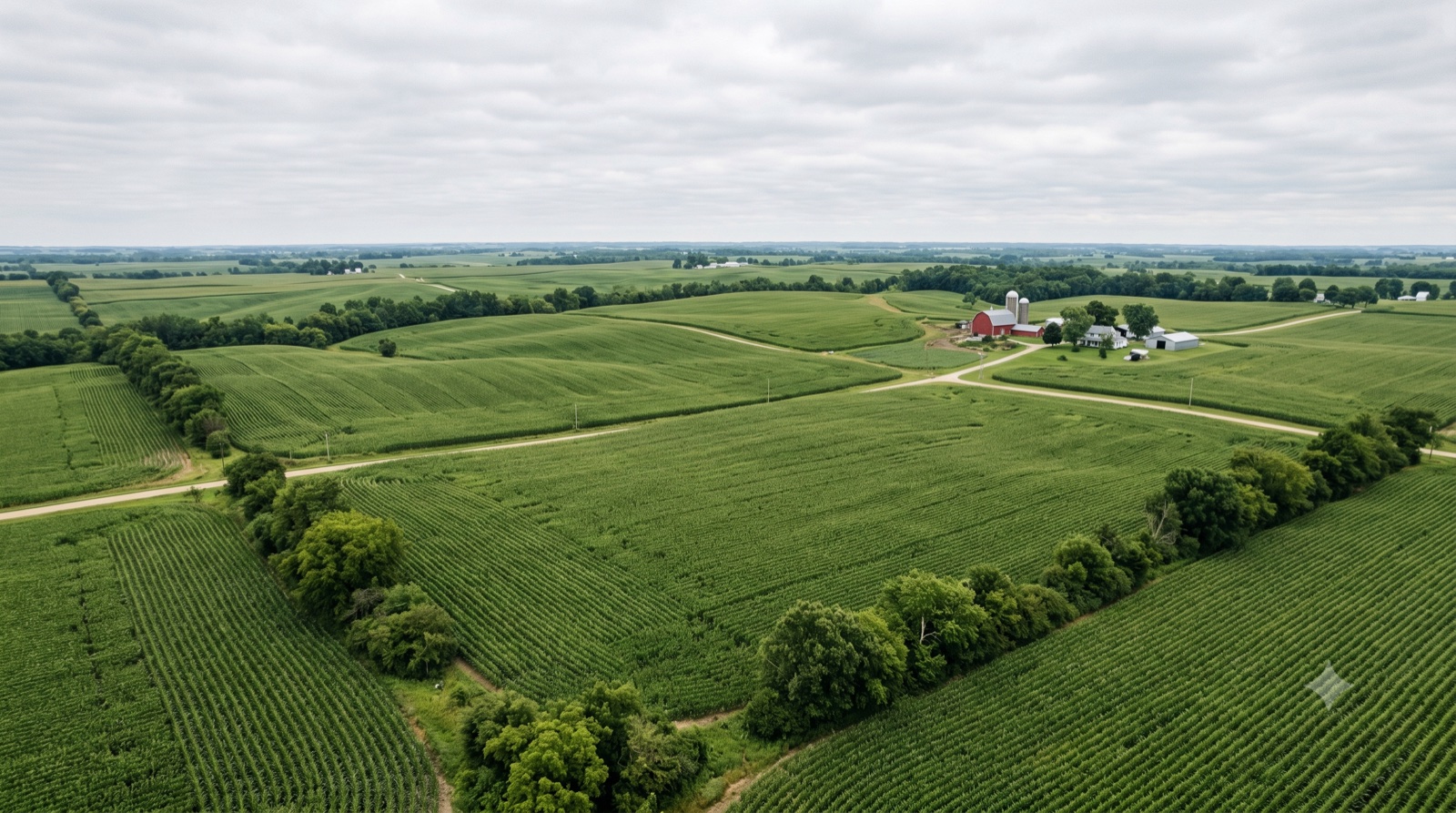
How to Sell Farmland: Buyer Types, Tax Traps, and Your Real Options
Key Takeaways
- Retiring farmers represent a growing and time-sensitive seller pool: The USDA 2022 Census of Agriculture reports the average age of U.S. farm operators is 58.1 years, and more than 40% of all U.S. farmland is expected to change hands in the next two decades — creating both opportunity and transition complexity for sellers
- Idle farmland is an expensive asset to hold: A parcel generating no farm income still carries property taxes, liability insurance, and potential lien or maintenance costs — in many states, losing the agricultural use classification triggers a rollback tax on prior years' tax savings that surprises sellers at closing
- Farmland buyers range from neighboring operators to institutional investors to conservation organizations: Each buyer type has different requirements, timelines, and motivations — aligning with the right one for your parcel is the difference between a smooth sale and a prolonged negotiation
How Do You Sell Farmland Without Leaving Money on the Table?
Selling farmland successfully requires understanding your buyer options—adjoining farmers, institutional investors, conservation organizations, and cash buyers—while managing tax risks like rollback taxes on agricultural use valuations and choosing the right sales channel based on your timeline and parcel profile. Farmland is one of the most economically significant land asset classes in the United States, and selling it involves decisions that affect not just the sale price but your tax bill, your neighbors, and in some cases your eligibility for programs you may have enrolled years ago. Farmers and landowners who approach a farmland sale without understanding these layers often encounter rollback taxes they didn't budget for, buyer pools that don't match their land's profile, or closing timelines that disrupt farm operations.
This guide covers the full picture: who buys farmland and why, the real costs of holding idle ground, how agricultural use tax valuation creates rollback risk at sale, and when a direct cash sale is a better option than listing with an agent or putting the property up for auction.
For context on the general land-selling process, see how long it takes to sell land and who pays closing costs when selling land.
Who Buys Farmland, and What Does Each Buyer Type Want?
Four buyer types dominate the farmland market: adjoining farmers expanding an existing operation, non-operating investors who lease the ground back to operators, conservation buyers and land trusts, and direct cash land buyers. Each segment has distinct motivations, capital structures, and requirements — and each produces a different kind of offer and transaction experience.
Adjoining Farmers and Operators
The most common buyer for a rural farmland parcel is the farmer who already operates adjacent ground. An adjoining farmer buying your parcel eliminates a boundary and adds acreage to an existing operation, producing economies of scale — shared equipment passes, shared field access, and a lower cost per acre for inputs and harvesting. These buyers often pay at or above market because the operational synergy justifies the premium.
The key advantage for sellers: adjoining farmer transactions are often relationship-driven and can close without a broker, reducing transaction costs on both sides. The key risk: if the adjoining farmer is not interested or cannot qualify for financing, the seller loses the easiest path to sale and needs to enter the broader market.
Non-Operating Investors
Institutional farmland investors — pension funds, sovereign wealth funds, and dedicated farmland investment vehicles — have become significant buyers of U.S. agricultural land over the past two decades. According to USDA ERS Farmland Ownership and Tenure data, non-operator landlords owned approximately 39% of all U.S. farmland as of the most recent survey. These investors typically lease the land back to operators and hold it for long-term appreciation and lease income.
Private non-operating investors — individuals and families investing in farmland as an asset class — are also active. They generally require clean title, current leases (or a plan for leasing), and parcels of a manageable size for a single-buyer transaction.
Institutional buyers move methodically and may have minimum acreage thresholds. Private investors are more flexible but still require the parcel to pencil as an investment.
Conservation Buyers and Land Trusts
Some farmland — particularly ground with significant soil quality, water resources, or proximity to natural areas — attracts conservation buyers. Land trusts may acquire farmland outright or purchase conservation easements that restrict development permanently while leaving the seller (or new buyer) with title. Conservation transactions require the property to meet specific conservation criteria and can take twelve to twenty-four months to complete due to funding cycles and appraisal requirements.
The Conservation Reserve Program (CRP), administered by USDA Farm Service Agency, is a separate but related consideration: if your farmland is currently enrolled in CRP, that contract transfers to the buyer or must be addressed at closing.
Direct Cash Land Buyers
Cash buyers — companies that buy rural land directly for cash — represent the fastest and most certain path for sellers who need to close on a defined timeline, who have land that does not fit neatly into institutional buyer criteria, or who want to avoid the costs and complexity of a listed or auctioned sale.
How Does Retiring From Farming Change the Way I Should Sell?
Retiring changes the sale in two ways: you are exiting alongside a large cohort of owners doing the same thing, and you probably care whether the ground keeps being farmed afterward. The USDA 2022 Census of Agriculture places the average age of U.S. farm operators at 58.1 years, and a significant share of American farmland is owned by operators who are approaching or past traditional retirement age. That transition wave shapes the farmland market — and creates specific selling considerations for farmers who are winding down.
When the Farm Has Been in the Family for Decades
Family farmland carries emotional weight that purely financial assets do not. Sellers who have farmed ground for thirty or forty years — or inherited it from parents who did — often want to ensure the land continues to be farmed after the sale. This is not a preference that every buyer pool can honor: institutional investors will lease to whoever makes the highest bid, and developers will not farm at all.
For sellers who prioritize continued agricultural use, an adjoining farmer buyer or an agricultural land trust may be the best fit even if they are not the highest nominal bidder, because they can offer commitments about land use that other buyers will not.
The Succession Alternative
Not every farm sale is the intended outcome — sometimes sellers are farmers who tried to find a successor within the family and couldn't, or who are resolving a farmland holding between heirs who disagree about what to do with it. For inherited farmland situations, see how to sell inherited land for a detailed walkthrough of the process.
The key practical decision for retiring farmers is whether to sell now or continue leasing. The next section addresses that trade-off directly.
What Does It Actually Cost Me to Hold Idle Farmland Instead of Selling?
Idle farmland still costs you property taxes, liability insurance, and ongoing maintenance while producing no income — and letting ground fall out of active agricultural use can also cost you the ag-use tax classification that was keeping those taxes low. Leasing is often the right answer to that problem, but it comes with real carrying costs and complications that sellers should understand before defaulting to it.
What Idle Farmland Actually Costs to Hold
Farmland generates income when it is farmed or leased; it generates costs when it is not. The carrying cost of idle farmland typically includes:
- Property taxes: Farmland under active agricultural use may be assessed at use value (what the land earns as farmland) rather than market value in states with agricultural use valuation programs. But if the land becomes idle — if it stops being actively farmed — the property may be reclassified to market value assessment, triggering higher tax bills going forward and potentially a rollback on prior years. More on this below.
- Liability insurance: Rural landowners face liability exposure from trespassers, equipment operations by tenants, and environmental conditions. Maintaining liability coverage on idle ground costs money without generating income.
- Maintenance and compliance: Fencing, drainage tile, erosion control, and weed management do not stop because farming stops. Neglected ground deteriorates and reduces future sale value.
The Lease Option: Pros and Cons
| Factor | Cash Lease | Share Crop Lease | Sale |
|---|---|---|---|
| Income certainty | Fixed payment | Varies with yield/price | One-time lump sum |
| Management burden | Low (tenant manages) | Moderate (shared decisions) | None after close |
| Liquidity | Ongoing | Ongoing | Immediate at closing |
| Rollback tax exposure | None while ag use continues | None while ag use continues | Possible at sale |
| Tenant relationship risk | Yes | Yes | None |
| Upside from crop price increases | None | Partial | None |
A cash lease provides predictable income and keeps the land in agricultural use — preserving the ag-use tax classification. A share crop lease provides upside exposure to commodity prices but requires more management involvement. Both options defer the rollback tax question; the sale does not.
Request a no-obligation cash offer from Jerez Land if you want to compare a lump-sum exit against the projected income stream from a lease before deciding which path makes more sense.
Will I Owe a Rollback Tax If I Sell Land That's Been Under Agricultural Use Valuation?
Possibly. In many states, selling farmland out of agricultural use valuation triggers a rollback tax that recaptures the previous three to ten years of property tax savings, plus interest. Whether it fires depends on your state's rules and on the buyer's intended use — and it is the closing cost that surprises long-time ag-use landowners most often.
How Ag-Use Tax Valuation Works
Many states allow farmland that meets certain activity requirements to be assessed for property tax purposes at its agricultural use value — what the land would sell for based solely on its income-producing capacity as farmland — rather than its full fair market value. The difference between use value and market value can be substantial, particularly in high-growth areas where land has appreciated significantly as a result of development pressure rather than agricultural productivity.
The practical benefit: lower annual property tax bills for landowners who actively farm or lease their land for farming.
The Rollback Tax Trap
When a farmland parcel under agricultural use valuation is sold and the new use is not agricultural — or when the agricultural classification is removed for any reason — many states impose a rollback tax that recaptures the tax savings from the previous three to ten years (the specific lookback period varies by state). The rollback tax is calculated as the difference between what was paid under agricultural assessment and what would have been paid under market value assessment, for each year in the lookback period, plus interest.
For land that has been under ag-use valuation for many years in a county where market values have risen substantially, the rollback tax can represent a material closing cost that sellers did not anticipate when they set their asking price.
Critically, whether the rollback tax is triggered depends on the new buyer's intended use. A sale to an adjoining farmer who will continue farming may not trigger rollback in some states. A sale to a residential developer almost certainly will. A sale to an investor who plans to lease to a farmer may or may not — the rules are state-specific.
Review your state's ag-use valuation rollback rules before pricing your land and before entering negotiations with buyers whose intended use might trigger the tax. The National Agricultural Law Center maintains resources on agricultural use valuation statutes by state. Your county assessor's office can confirm whether your parcel is currently under an ag-use classification and what the rollback exposure is.
Listing, Auction, and Cash Sale: Which Path Fits Your Farmland?
Farmland sellers typically have three sale mechanisms to choose from: listing with a land broker, selling at auction, or selling directly to a cash buyer. Each has strengths and weaknesses that depend on the parcel's profile and the seller's priorities.
Listing With a Land Broker
A broker with agricultural land experience — ideally with Accredited Land Consultant (ALC) credentials from the REALTORS Land Institute — can market your farmland to a regional and national buyer pool, negotiate offers, and manage the transaction. Listing makes the most sense for large parcels, highly productive ground in active farming regions, or tracts where competitive bidding is likely to generate a premium.
Listing timelines for farmland vary from three months to over a year, and broker commissions typically run 4% to 7% on rural land. You can review the trade-offs in more detail at do you need a realtor to sell land.
Farmland Auction
Agricultural land auctions — conducted by licensed auction companies with rural land experience — are common in the Midwest and other active farming regions. Auctions create competitive price discovery and set a definitive sale date, which can be valuable for estates that need a clean timeline. According to Iowa State University Extension, auctions work best when there are multiple motivated bidders; a single-bidder auction typically produces a below-expectation result. Auction fees — typically 5% to 10% paid by buyer, seller, or split — add to transaction costs.
Direct Cash Sale
A cash buyer offers certainty and speed. For farmland with title complications, back taxes, probate issues, or a seller who simply needs to close on a specific date, the direct path eliminates the variables that make listed and auctioned sales uncertain. There are no commissions, no contingencies pending financing approval, and no auction day risk.
For farmland that is not attracting strong buyer interest through traditional channels — idle ground, marginal soil, small parcels, or land in regions where the institutional buyer pool is thin — a direct cash sale is often the most realistic path to closing in a reasonable timeframe.
See how much is my land worth for context on what drives farmland valuation, sell land with back taxes if delinquent taxes are in the picture, and the blog for more land-selling guides.
Request a no-obligation cash offer — we buy farmland in any condition, any state, and we handle the closing paperwork.
Frequently Asked Questions
I'm selling farmland—what types of buyers typically approach properties like mine?
The most common farmland buyers are adjoining farmers seeking to expand existing operations, non-operating investors (both institutional and private) who lease land to operators, conservation organizations and land trusts, and direct cash land buyers. The most active buyer type for a given parcel depends on its size, soil quality, location, and current lease status. Adjoining farmers are often the first and most motivated buyers because the acquisition eliminates a field boundary and produces immediate operational efficiency.
I've held my farmland under ag-use valuation—what's the rollback tax risk when I sell?
Agricultural use valuation (sometimes called current use valuation, greenbelt exemption, or ag-use assessment) is a state tax program that allows qualifying farmland to be assessed at its income-producing value as farmland rather than at full market value. When farmland under ag-use valuation is sold to a non-agricultural buyer, many states impose a rollback tax that recaptures several years of tax savings. The lookback period and interest rate vary by state. Review your specific state's rules with your county assessor before pricing your land.
I own farmland I no longer farm myself—should I lease it out or just sell it?
Leasing keeps the land in agricultural use, preserves the ag-use tax classification, and provides ongoing income without triggering a rollback tax. Selling provides immediate liquidity and eliminates carrying costs but may trigger rollback taxes depending on the buyer's intended use. The right answer depends on your income needs, your tax situation, the quality of the lease market in your area, and how much management responsibility you want to retain. Iowa State University Extension and University of Illinois Extension both publish practical guidance on farmland leasing options.
My siblings and I inherited our parents' farm and we don't all agree on what to do—how does an inherited farmland sale work?
Inherited farmland often comes with a stepped-up tax basis, which can significantly reduce capital gains exposure on a sale. However, it also frequently involves multiple heirs with different opinions about whether to sell, lease, or continue farming. See how to sell inherited land for a detailed walkthrough of the probate, title, and consent considerations. A cash buyer is often the fastest path when heirs need to reach a clean exit on a defined timeline.
I'm selling farmland without a current survey—do I really need one?
A current survey is not always legally required, but it is strongly advisable — particularly for farmland where boundary disputes with neighboring operators are more common than in other land categories. Buyers financing through a lender will almost always require a survey as a loan condition. Cash buyers may not require one but will factor boundary uncertainty into their offer. Resolving boundary questions before listing avoids last-minute complications at closing.
My farmland is enrolled in the Conservation Reserve Program—how does that affect selling it?
The Conservation Reserve Program (CRP), administered by USDA Farm Service Agency, is a voluntary program where landowners receive annual payments in exchange for keeping eligible land out of agricultural production and enrolled in conservation practices for a contract term (typically 10 to 15 years). If your land is in a CRP contract, that contract may transfer to the buyer, or it may need to be terminated at sale — with potential repayment obligations depending on how far into the contract term the sale occurs. Disclose CRP status early and contact your local FSA office to understand your specific contract's transfer and termination terms before pricing your land.
Disclaimer: This article is for informational purposes only and does not constitute legal, financial, or professional advice. Agricultural use valuation rules, rollback tax provisions, and CRP contract terms vary significantly by state and jurisdiction. Always consult with a qualified attorney, tax advisor, and land professional before making farmland sale decisions. Jerez Land is not responsible for actions taken based on this information.