
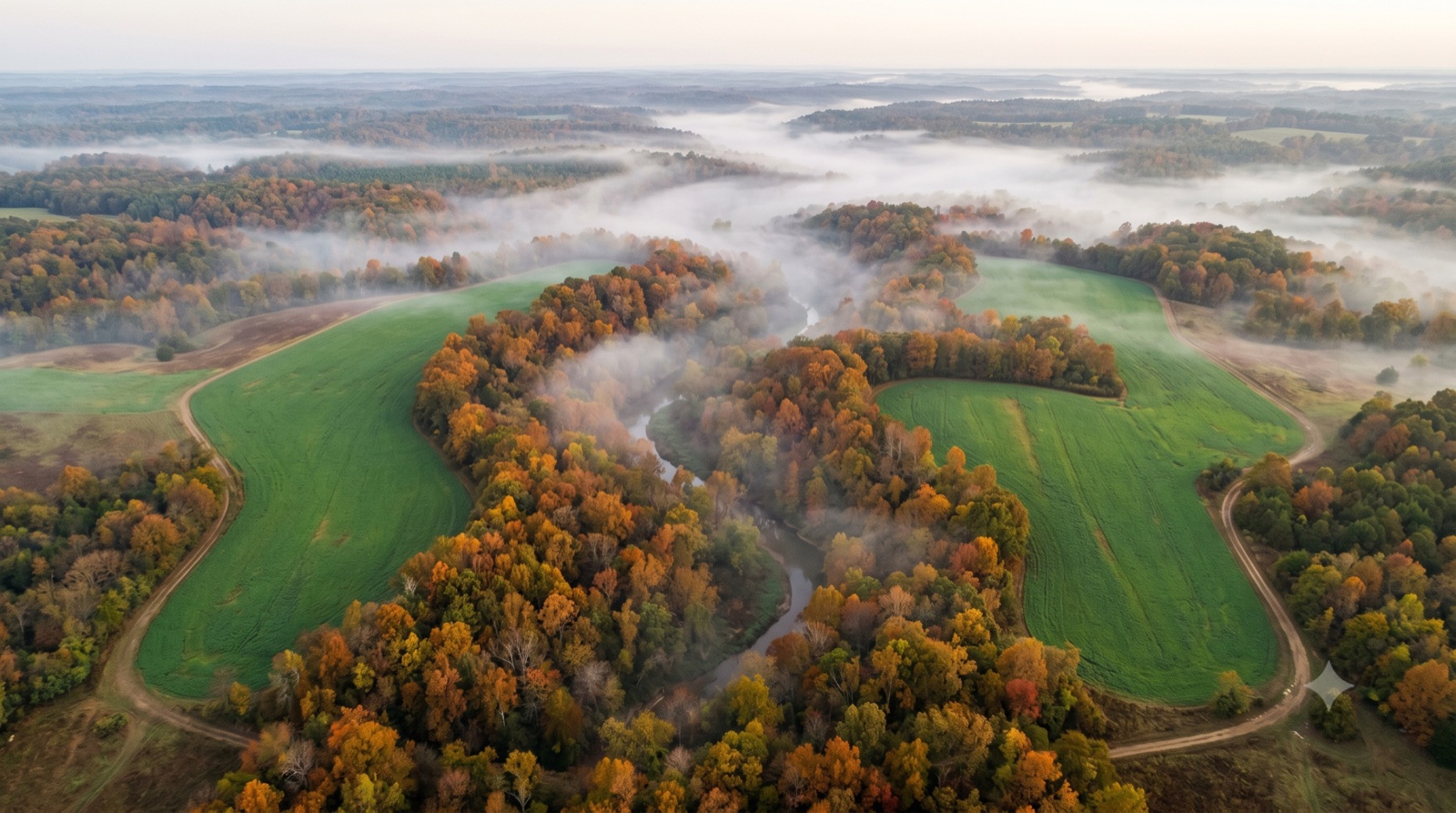
How to Sell Hunting Land: What Buyers Want and How to Get Paid
Key Takeaways
- Habitat quality drives buyer interest more than acreage alone: Hunting land buyers evaluate deer and turkey habitat, water sources, food plot potential, and neighboring land use before they consider any other factor — parcels with documented wildlife history attract more competitive offers
- The buyer pool concentrates in fall and thins sharply in spring: According to the REALTORS Land Institute's 2024 Land Market Survey, recreational land demand peaks from August through November and slows significantly between January and May, meaning sellers who list in winter often wait months for qualified interest
- A cash buyer sidesteps seasonal timing entirely: Direct land buyers purchase hunting tracts year-round based on parcel-specific criteria, without depending on a hunting-motivated buyer appearing at the right moment
How Do You Sell Hunting Land for the Best Outcome?
Selling hunting land successfully requires three approaches: understanding what habitat features buyers actually value most, timing your listing to peak demand windows when buyers want to close before deer season opens, and comparing the listing path against the year-round certainty and speed of a direct cash buyer. Selling hunting land requires understanding a buyer pool that thinks in seasons, evaluates parcels through a hunter's lens, and places a premium on features that don't show up on a deed — food plots, bedding areas, established trails, and neighboring land use. The process is different from selling a subdivision lot or a commercial parcel, and sellers who don't account for those differences often sit on the market longer than necessary or accept offers that undervalue the property's actual appeal.
This guide covers what hunting land buyers look for, how seasonal demand affects your timeline, how to present your parcel to attract serious interest, and when a direct cash buyer is the faster, simpler path to closing.
For a broader look at the selling process and what to expect from timelines, see our guide on how long it takes to sell land.
What Do Hunting Land Buyers Actually Look For?
Most hunting land buyers are not simply buying acreage — they are buying a specific combination of habitat features that support the species they pursue. Deer and turkey hunters, the two largest buyer segments for recreational tracts in the Southeast and Midwest, evaluate parcels against a consistent checklist.
Deer and Turkey Habitat Indicators
Mature hardwood timber — particularly white oak, red oak, and mast-producing species — is among the strongest habitat signals a parcel can carry. White oak acorns are the primary fall food source for white-tailed deer across much of the country, and buyers who hunt seriously know which tree species are present, not just that there is "some timber." A parcel with identifiable mast-producing hardwoods will draw more attention than one described generically as wooded.
Turkey habitat requires open travel corridors — fields, field edges, and open hardwood stands where birds can strut and feed — combined with roosting timber (tall, mature trees near water). Buyers looking for multi-species hunting will pay for properties that serve both deer and turkey needs simultaneously.
Food Plots, Water, and Bedding Cover
Established food plots tell a buyer three things: the soil can sustain them, someone invested in the property's hunting value, and deer are already using those areas. Even small plots — half an acre to two acres — that show evidence of regular planting are a positive signal. Buyers will ask about soil type and whether plots are on level ground that can be worked with standard equipment.
Permanent water — a creek, pond, or spring — extends a property's value year-round and is especially important in drier regions. A reliable water source in or adjacent to the tract is a feature that competing parcels often lack.
Dense thermal bedding cover — thickets, pine plantations with brush understory, or CRP fields adjacent to timber — rounds out the habitat picture. Deer need secure daytime cover within a short travel distance from food and water. Parcels that offer all three in close proximity outperform those that require deer to cross roads or open fields to meet their needs.
Neighboring Land Use
A buyer will ask what surrounds your parcel before they ask how much you want for it. Agricultural ground adjacent to timber creates natural transition zones that concentrate wildlife. A neighboring landowner who does not hunt — a crop farmer, a timber company — is a significant selling point because it reduces hunting pressure on your property. Conversely, a neighboring parcel that is heavily hunted or subdivided into small residential lots is a negative that buyers will factor into their offer.
Why Does My Hunting Land Sit Unsold From January Through May?
Because the recreational land buyer pool contracts sharply once deer season closes. Serious hunting land buyers concentrate their purchases in August through November so they can take possession before opening day; from January through May, most have either already bought or decided to wait another year. The recreational land market operates on a hunting calendar, and that calendar creates predictable demand windows that affect how long your parcel sits before you find the right buyer.
Peak Season: August Through November
Serious hunting land buyers are most active in late summer and early fall. They want to complete purchases and take possession before deer season opens, giving them time to scout, hang stands, and prepare food plots for the upcoming year. This is the window when demand is highest, buyers are most motivated, and offers are most likely to be at full asking price or close to it.
The REALTORS Land Institute's 2024 Land Market Survey notes that recreational land transactions cluster heavily in the third quarter, with deal flow beginning to slow after the first hard frost of the season as buyers shift their attention from land acquisition to hunting itself.
The Dead Season: January Through May
From January through May, the hunting land buyer pool contracts sharply. Deer season is closed across most of the country, turkey season is over by May in most states, and buyers who were motivated in the fall have either purchased or decided to wait another year. A listing that enters the market in February may generate little traffic until August.
This seasonal pattern creates a real risk for sellers who need liquidity: a property listed in January may require a seven- to nine-month wait for the active buyer pool to return. During that window, property taxes continue to accrue, liability insurance remains due, and any deferred maintenance compounds.
| Selling Approach | Peak Season (Aug–Nov) | Off-Season (Dec–Jul) |
|---|---|---|
| Listing with land broker | High traffic, motivated buyers | Low traffic, long wait |
| Online marketplace (Land.com, LandWatch) | Moderate traffic | Very low traffic |
| Cash buyer (direct) | Year-round, season-independent | Year-round, season-independent |
If you need to sell outside the peak window, or if your timeline can't wait for the next hunting season to arrive, exploring a direct cash offer is worth comparing against the cost of holding the property through a slow season.
Request a no-obligation cash offer from Jerez Land — we purchase hunting tracts year-round and can give you a written number within days regardless of season.
How Should I Present My Hunting Land to Attract Serious Buyers?
Give buyers documented evidence rather than adjectives: organized trail camera history, a current survey or plat showing boundaries and easements, documented road access, and clear answers on any timber lease, hunting lease, mineral rights, or deed restrictions. The difference between a hunting tract that sells in two months and one that lingers for a year often comes down to how the seller presents it. Buyers are making a major purchase based on information you provide — the more credible and specific that information, the more confidence they have.
Trail Camera History
Trail camera photos and videos are among the most persuasive marketing tools available to hunting land sellers. A catalog of buck photos — organized by date, location on the property, and estimated age — tells a serious buyer more about the property's wildlife value than any written description. If you have years of trail camera history, organize it chronologically and make it available to interested buyers.
Photos of turkey activity, doe and fawn groups, and turkey poults are also valuable — they confirm that the property supports diverse wildlife, not just mature bucks.
Plat, Access, and Property Lines
Hunting land buyers need to understand exactly what they are buying. A current survey or plat showing property boundaries, easements, and access points is essential. Boundary disputes are one of the most common complications in rural land transactions, and buyers who cannot confirm what they own before closing will either walk away or demand a price reduction to offset their uncertainty.
Road access — whether by public road, recorded easement, or deeded access — must be documented. A parcel that is accessible only by a handshake agreement with a neighbor is a liability, not an asset.
What to Disclose Proactively
Experienced hunting land buyers will ask about timber leases, hunting leases, oil and gas rights, pipeline easements, and any deed restrictions. Having clear answers to these questions — and relevant documents in hand — builds trust and accelerates the closing process. For guidance on closing costs and who typically pays them, see who pays closing costs when selling land.
Should I List With a Land Broker or Sell Direct to a Cash Buyer?
Every hunting land seller faces the same core trade-off: a listed property reaches more potential buyers but takes longer and costs more in commissions, while a direct cash sale closes faster with fewer moving parts.
The Case for Listing
A land broker with a recreational specialty — particularly one with REALTORS Land Institute credentials (ALC designation) — can market your property to a database of qualified buyers across multiple states. For a parcel with exceptional habitat, unique features, or significant acreage, this broader exposure can produce a higher final sale price than a direct buyer would offer. The trade-off is time: listing periods for hunting land commonly run three to twelve months, and broker commissions typically run 6% to 10% on rural parcels.
If your parcel is highly distinctive, you have no time pressure, and you can absorb the carrying costs of a long listing period, a broker relationship may maximize your proceeds.
The Case for a Cash Buyer
A direct cash buyer — a company that buys rural land directly, without financing contingencies — offers certainty and speed that a listed property cannot match. The closing timeline is typically two to six weeks rather than three to twelve months. There are no commissions, no listing fees, and no parade of unqualified lookers tramping through your property before hunting season.
For sellers who have inherited a hunting tract, need to settle an estate, face carrying costs they no longer want to absorb, or simply don't want to manage the listing process, a direct sale often produces the better net outcome when total costs are counted honestly. See our related guides on selling inherited land and selling land with back taxes for more context on those situations.
The right choice depends on your timeline, your financial position, and how much uncertainty you can absorb. The two paths are not mutually exclusive: you can get a written cash offer as a baseline before deciding whether to list.
When Does a Direct Cash Offer Make More Sense Than Listing?
When the cost of waiting — financially and emotionally — exceeds whatever premium a listed sale might theoretically produce. Some hunting land sellers are genuinely well-served by listing — their property is exceptional, they are patient, and they want maximum exposure. But many are not in that position.
Signs a Direct Sale Makes More Sense
You are paying property taxes on a tract you no longer hunt. You inherited the land and don't live in the state where it sits. The property has a cloudy title, back taxes, or a timber lease expiring that complicates a retail listing. You need to close before the next tax bill arrives, before probate closes, or before a family dispute over the land's future escalates.
In each of these cases, the cost of waiting — financially and emotionally — often exceeds whatever premium a listed sale might theoretically produce. A written, no-obligation cash offer gives you a concrete number to evaluate against those costs.
You can also compare against what brokers and real estate agents bring to the table for land specifically — our guide on whether you need a realtor to sell land walks through that decision in detail.
Request a no-obligation cash offer — we buy hunting tracts in any condition, any season, and we cover closing costs.
Frequently Asked Questions
What do hunting land buyers look for most?
Hunting land buyers prioritize habitat quality over raw acreage. The most consistently valued features are mast-producing hardwoods (especially white oak), established food plots, a reliable water source, dense bedding cover, and neighboring land use that supports rather than disrupts wildlife movement. Trail camera history documenting deer and turkey activity is among the most persuasive supporting evidence a seller can provide.
When is the best time to sell hunting land?
The peak window is August through November, when buyers want to complete purchases before deer season opens. Deal flow slows sharply from January through May and does not typically recover until midsummer. Sellers who list in winter face a meaningful wait. A direct cash buyer purchases year-round and does not depend on seasonal buyer motivation.
How do I determine what my hunting land is worth?
Value is driven by habitat quality, access, neighboring land use, water resources, timber composition, and regional demand. A local land appraiser or a broker with recreational land experience can provide a formal valuation. Online platforms like Land.com and LandWatch allow you to compare active listings for similar parcels in your area. For a discussion of valuation factors, see how much is my land worth.
I have an active hunting lease on my property — does this affect my ability to sell or the price?
It can. An active hunting lease — particularly a multi-year lease that does not expire until after the buyer wants to take possession — reduces the pool of buyers willing to purchase. Some buyers will not bid on a leased property at all. Others will discount their offer to account for the lease term. If you have a hunting lease, disclose it early and have the lease documents available for review.
I've never done a survey on my hunting land — do I need one to sell?
A current survey is not always legally required, but it is strongly recommended. Buyers of recreational land are purchasing based on the boundaries, and any uncertainty about what those boundaries are will either kill a deal or reduce the offer. A survey also reveals any encroachments, easements, or access issues before they become problems at closing.
I inherited hunting land with back taxes on it — can I still sell?
Yes. Back taxes do not prevent a sale — they are typically paid out of proceeds at closing. However, if the tax delinquency has advanced to a tax sale or redemption period, the timeline and process become more complicated. See sell land with back taxes for a detailed walkthrough. A cash buyer who works regularly with rural parcels is generally more comfortable navigating back-tax situations than a buyer seeking traditional financing.
Disclaimer: This article is for informational purposes only and does not constitute legal, financial, or professional advice. Laws and regulations vary by jurisdiction and change over time. Always consult with qualified professionals before making land sale decisions. Jerez Land is not responsible for actions taken based on this information.