
Sell My Land in Latimer County OK - What Landowners Need to Know
Key Takeaways
- Oklahoma's documentary stamp tax is $0.75 per $500 of consideration: Paid at the county clerk's office when the deed is recorded, this transfer tax costs $150 on a $100,000 sale. Unlike most closing costs, it is typically negotiable between buyer and seller, though sellers customarily pay it in Oklahoma.
- Latimer County's effective property tax rate is approximately 0.52%, below Oklahoma's statewide average effective rate of about 0.67%, according to TaxByCounty data. Oklahoma — a low-tax state overall — assesses most real property at approximately 11–13.5% of fair cash value under its ad valorem system.
- The county is defined by rugged Ouachita Mountain timber and grazing land: Latimer County covers approximately 729 square miles of steep, heavily forested southeast Oklahoma terrain — the Sans Bois Mountains across the north and the Winding Stair Mountains in the south. Of 178,901 acres reported in farms in 2022, roughly 96,511 acres are pastureland and 49,417 acres are woodland, and 98% of agricultural sales come from livestock, according to the USDA 2022 Census of Agriculture.
How Can You Sell Land in Latimer County Oklahoma?
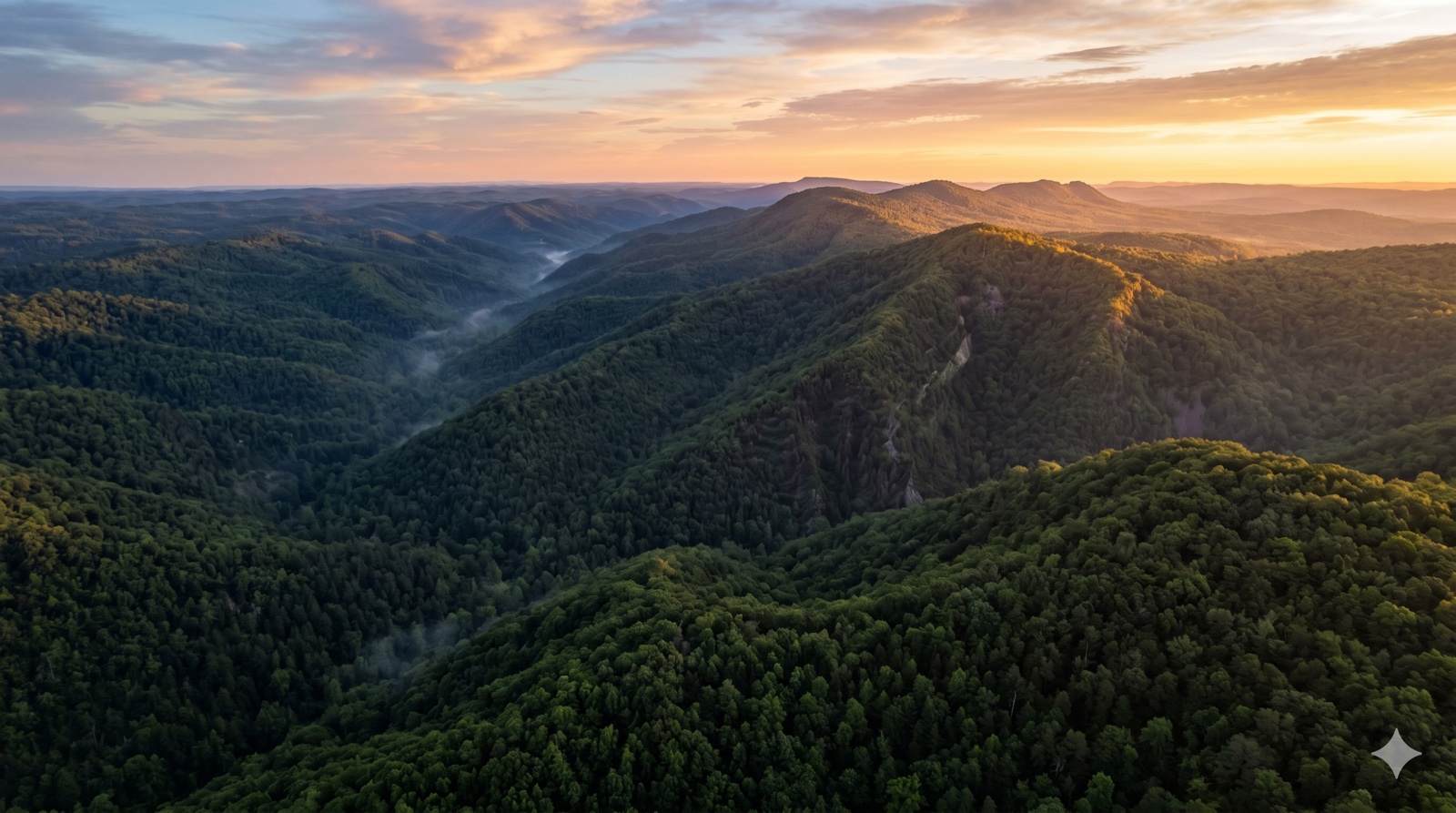
Selling land in Latimer County, Oklahoma involves a documentary stamp tax of $0.75 per $500, an abstract-of-title tradition rooted in Oklahoma's unique land record history, and a rural market shaped by cattle grazing, timber, oil and gas, and rugged recreational terrain. The county seat is Wilburton. Latimer County sits in the heart of the Ouachita Mountain country of southeast Oklahoma — the Sans Bois Mountains rising across the north and the Winding Stair Mountains in the south — a landscape of steep hardwood-and-pine ridges, deep hollows, and remote, hard-to-access tracts that make it one of the most distinctive rural land markets in the state.
This guide covers Oklahoma's ad valorem property tax system, the abstract-of-title process, how Latimer County compares to its southeast Oklahoma neighbors, and practical steps for landowners ready to sell. For a full overview of the Oklahoma land sale process, see our guide on how to sell land in Oklahoma.
What Are the Tax Costs of Holding Land in Latimer County?
Oklahoma's property tax system is administered at the county level. Each county assessor determines fair cash value for all real property, then applies the state-mandated assessment percentage to arrive at taxable assessed value. For most real property in Oklahoma — including vacant land, timberland, and rural acreage — the assessment ratio runs between approximately 11% and 13.5% of fair cash value, depending on the assessor's determination and any applicable exemptions, according to the Oklahoma Tax Commission's ad valorem guidelines.
Latimer County's millage rate, applied to the assessed value, produces an effective tax rate of approximately 0.52% of fair market value — below Oklahoma's statewide average of about 0.67% and well under the national average of roughly 0.9%, according to TaxByCounty data. Reported median annual property tax figures for the county are modest, in the low hundreds of dollars for typical residential parcels, reflecting the county's low home values and rural assessment base.
For a vacant 80-acre parcel in Latimer County, the math works as follows at a simplified level: a parcel with a fair cash value of $80,000, assessed at 11% ($8,800 assessed value), at a representative millage rate, produces an annual tax bill well under $500. The exact figure depends on the specific millage rates for the school district, county, and any special levies applicable to the parcel's location.
Oklahoma's Ad Valorem Calendar and Delinquency
Oklahoma property taxes are assessed as of January 1 each year. Tax bills are issued in the fall and are due in two equal installments: the first by December 31, and the second by March 31 of the following year. Taxes not paid by the March 31 deadline begin accruing interest. After three years of delinquency, the county treasurer can offer the property for resale — a process distinct from a tax lien sale in other states.
Out-of-state landowners holding Latimer County parcels sometimes fall behind on tax payments because Oklahoma does not require lenders to escrow property taxes on rural land loans the way residential mortgage servicers do. If your property has accumulated back taxes, our guide on whether you need a realtor to sell land covers how a direct sale can resolve delinquent amounts at closing without a listing period.
Beyond taxes, holding costs for Latimer County land include liability insurance for hunting or recreation access, access road maintenance on steep terrain, and any required erosion controls. For large timberland parcels, consulting a registered forester every few years is standard practice to track timber growth and potential harvest timing.
What Closing Requirements and Land Traditions Apply in Latimer County?
Oklahoma has no mandatory attorney-required closing law for real estate transactions. Closings are commonly handled by title insurance companies, escrow officers, or abstract companies — with attorneys often involved when title issues arise. What makes Oklahoma distinctive is its deep abstract-of-title tradition, which predates the widespread adoption of title insurance in the state.
An abstract of title is a chronological summary of every recorded document in the chain of title for a specific parcel — deeds, mortgages, judgments, liens, and court records — compiled by a licensed abstracter from county records. In many Oklahoma rural counties, especially in southeast Oklahoma, buyers still request an abstract rather than a title commitment for initial due diligence. An attorney then renders a title opinion based on the abstract before title insurance is issued or the transaction closes.
For Latimer County land, abstracting fees for a standard land transaction run approximately $575, with a title examination fee of approximately $200 for the attorney review, according to the Old Republic Title fee schedule for Oklahoma. These costs are typically split between buyer and seller or negotiated in the contract.
Deeds in Latimer County are recorded with the Latimer County Clerk at 109 N Central, Room 103, Wilburton, OK 74578, (918) 465-4002. The County Clerk acts as the agent of the Oklahoma Tax Commission for documentary stamp tax collection. Stamps are affixed to the deed at recording.
Documentary Stamp Tax: The Calculation
Oklahoma's documentary stamp tax is $0.75 per $500 of consideration (or fraction thereof), per the Oklahoma Tax Commission's Chapter 30 rules. The formula: divide the sale price by 500, round up to the nearest whole number, multiply by $0.75. For example:
- $50,000 sale: $50,000 ÷ 500 = 100 × $0.75 = $75
- $100,000 sale: $100,000 ÷ 500 = 200 × $0.75 = $150
- $250,000 sale: $250,000 ÷ 500 = 500 × $0.75 = $375
The tax is negotiable between buyer and seller but is customarily paid by the seller. Certain transfers are exempt, including transfers to government entities, gifts with no consideration, and some foreclosure-related conveyances. If you are weighing whether to keep or sell the surface and minerals separately, see our guide on mineral rights vs. surface rights — a relevant question in this oil-and-gas-active county.
Property tax questions and current assessed value can be confirmed through the Latimer County Assessor at 109 North Central, Wilburton, OK 74578, (918) 465-3031.
How Does Latimer County Compare to Neighboring Oklahoma Counties?
Latimer County's 2020 census population of 9,444 reflects a decline from 11,154 in the 2010 Census — a loss of roughly 1,710 residents, or about 15.3%, over the decade, according to U.S. Census Bureau data. The county's median household income is approximately $41,000, with a poverty rate near 16.6% — figures that underscore a small, slow-growth rural economy where most land demand originates outside the county.
| Factor | Latimer County | Pittsburg County | Le Flore County | Haskell County |
|---|---|---|---|---|
| Population (2020 Census) | 9,444 | 43,773 | 48,129 | 11,561 |
| Population trend (2010–2020) | Declining | Stable/slight decline | Declining | Declining |
| Effective tax rate | ~0.52% | ~0.52% | ~0.65% | ~0.46% |
| County seat | Wilburton | McAlester | Poteau | Stigler |
| Primary land character | Ouachita timber / cattle | Mixed lake / timber | Ouachita / Winding Stair | Arkansas River / farm |
| Key public land | Robbers Cave State Park | Eufaula Lake | Ouachita NF (large portions) | Robber's Cave area / WMAs |
All four counties share southeast Oklahoma's heavily forested, rural character and flat-to-declining populations — a regional trend driven by outmigration of working-age residents to Oklahoma City and Tulsa metro areas. Latimer County's defining feature relative to its neighbors is the sheer ruggedness of its terrain: large portions of the county are steep, timbered, and remote, with limited or seasonal road access into the Sans Bois and Winding Stair high country.
Le Flore County to the east shares the Winding Stair range and has a larger population and the Ouachita National Forest. Pittsburg County to the west is anchored by McAlester and Lake Eufaula recreation. Latimer's smaller population and tougher access mean its land market behaves differently from these neighbors — a point that matters a great deal for sellers, as the next section explains.
Economy and Major Employers
Latimer County's economy has historically centered on coal mining — by 1912 the county had 27 operating mines before the industry collapsed in the 1920s–1930s — and today rests on cattle ranching, lumbering, and oil and gas production, according to historical and Census records. Eastern Oklahoma State College in Wilburton, founded in 1909 as the Oklahoma School of Mines and Metallurgy, anchors local education and employment, alongside public schools, county government, and healthcare.
Agriculture in the county is overwhelmingly livestock-based: the USDA 2022 Census of Agriculture reported 528 farms covering 178,901 acres at an average size of 339 acres, with 98% of the county's $52.4 million in agricultural sales coming from livestock, poultry, and products. Of the land in farms, roughly 96,511 acres are pastureland and 49,417 acres are woodland — a profile that reflects cattle grazing on the lower ground and timber on the steep ridges.
For more county-level land analysis across Oklahoma and neighboring states, explore our blog.
What Are Your Options for Selling Land in Latimer County?
Latimer County land falls into a few primary categories for sellers: cattle pasture and hay ground on the gentler bottoms, timber tracts on the slopes, and remote recreational and hunting parcels marketed to out-of-state buyers seeking seclusion. The distinctive challenge here is the terrain itself. Much of Latimer County is steep, heavily timbered, and genuinely remote — Sans Bois and Winding Stair country where access roads may be unimproved, seasonal, or shared, and where some interior tracts are effectively landlocked. Retail buyers frequently shy away from this ruggedness: a parcel that looks large and inexpensive on a map can be hard to reach, hard to build on, and hard to resell.
That reality shapes realistic seller expectations. The county's small local population (under 10,000 residents) means most demand comes from buyers outside the county, and reaching that audience requires either listing with a land-specialized broker, using platforms like Land.com or LandWatch, or selling directly to a land investment company. A steep, access-challenged tract can sit on the market far longer than a clean roadside parcel — and rugged, timbered ground is precisely the kind of land that conventional buyers pass over.
If your tract is heavily wooded, our sell timberland guide covers what affects timber value, and for recreational ground see sell hunting land. If your parcel has poor or no legal road access — a common situation in the high country here — our sell landlocked land guide explains the issue and your options. For a grounded understanding of what factors affect your parcel's value before requesting any offer, see our how much is my land worth guide.
The annual carrying cost on even a low-taxed Latimer County parcel adds up over time: at the county's approximate 0.52% effective rate, a parcel with a fair cash value of $100,000 generates roughly $520 per year in taxes — modest individually, but a decade of non-productive holding equals $5,200+ in taxes alone before insurance and access-road maintenance on difficult terrain.
Jerez Land buys Oklahoma land for cash, including the steep, timbered, and hard-to-access tracts that other buyers avoid. We provide parcel-specific written offers — not ranges or per-acre formulas — based on the specific acreage, location, access, terrain, timber, and legal status of your parcel, and we absorb the carrying, marketing, and resale risk on our side. No agent commissions, no listing periods, and we coordinate the abstract and closing process. Request a cash offer and we will respond with a firm written number.
Frequently Asked Questions
How do I sell vacant land in Latimer County Oklahoma?
Start by confirming your parcel's legal description and checking for any liens or delinquent taxes through the Latimer County Clerk (918) 465-4002 and Assessor (918) 465-3031, both in Wilburton. Oklahoma uses an abstract-of-title tradition, so a licensed abstracter compiles the chain-of-title record before closing. You can list with a land broker, use online platforms, or request a direct cash offer from a land buyer — often the simplest route for steep, remote, or access-challenged tracts.
I own land in Latimer County Oklahoma — what property taxes will I owe?
Latimer County's effective property tax rate is approximately 0.52% of fair market value — below Oklahoma's statewide average of about 0.67% and well under the national average. Oklahoma assesses real property at approximately 11–13.5% of fair cash value, and the county's millage rates applied to that assessed value produce the relatively low effective rate the county is known for.
How much is Oklahoma's documentary stamp tax?
Oklahoma's documentary stamp tax is $0.75 per $500 of consideration, or fraction thereof. To calculate: divide the sale price by 500, round up to the nearest whole number, and multiply by $0.75. On a $100,000 land sale the tax is $150; on a $200,000 sale it is $300. The tax is collected by the County Clerk when the deed is recorded and is customarily paid by the seller, though it is negotiable.
What is the abstract-of-title tradition in Oklahoma?
An abstract of title is a compiled chronological history of every recorded document in a property's chain of title — deeds, mortgages, judgments, and liens — prepared by a licensed abstracter from county courthouse records. In rural southeast Oklahoma, including Latimer County, buyers often request an abstract for initial due diligence before title insurance is issued. An attorney then renders a title opinion based on the abstract. Abstracting fees run approximately $575 and attorney title opinion fees approximately $200, according to the Old Republic Title Oklahoma fee schedule.
My land in Latimer County is steep and heavily timbered — why is it harder to sell?
Much of Latimer County lies in the Sans Bois and Winding Stair Mountains — steep, heavily timbered terrain with deep hollows and limited or seasonal road access. Some interior tracts are effectively landlocked. Conventional retail buyers often avoid this ruggedness because the land is hard to reach, hard to build on, and hard to resell, which can leave such parcels on the market far longer than clean roadside ground. That same difficulty is why many sellers of remote timbered tracts prefer a direct cash sale to a buyer who specializes in difficult terrain.
Is Latimer County Oklahoma population growing or declining?
Latimer County's population declined from 11,154 in 2010 to 9,444 in the 2020 Census — a loss of approximately 1,710 residents, or about 15.3%, over that decade, according to U.S. Census Bureau data. The county's small and shrinking population base means most land buyers come from outside the county, making regional and national marketing essential for sellers — and direct cash offers an attractive alternative for owners of remote or hard-to-market tracts.
Disclaimer: This article is for informational purposes only and does not constitute legal, financial, or professional advice. Laws and regulations vary by jurisdiction and change over time. Always consult with qualified professionals before making land selling or purchasing decisions. Jerez Land is not responsible for actions taken based on this information.