
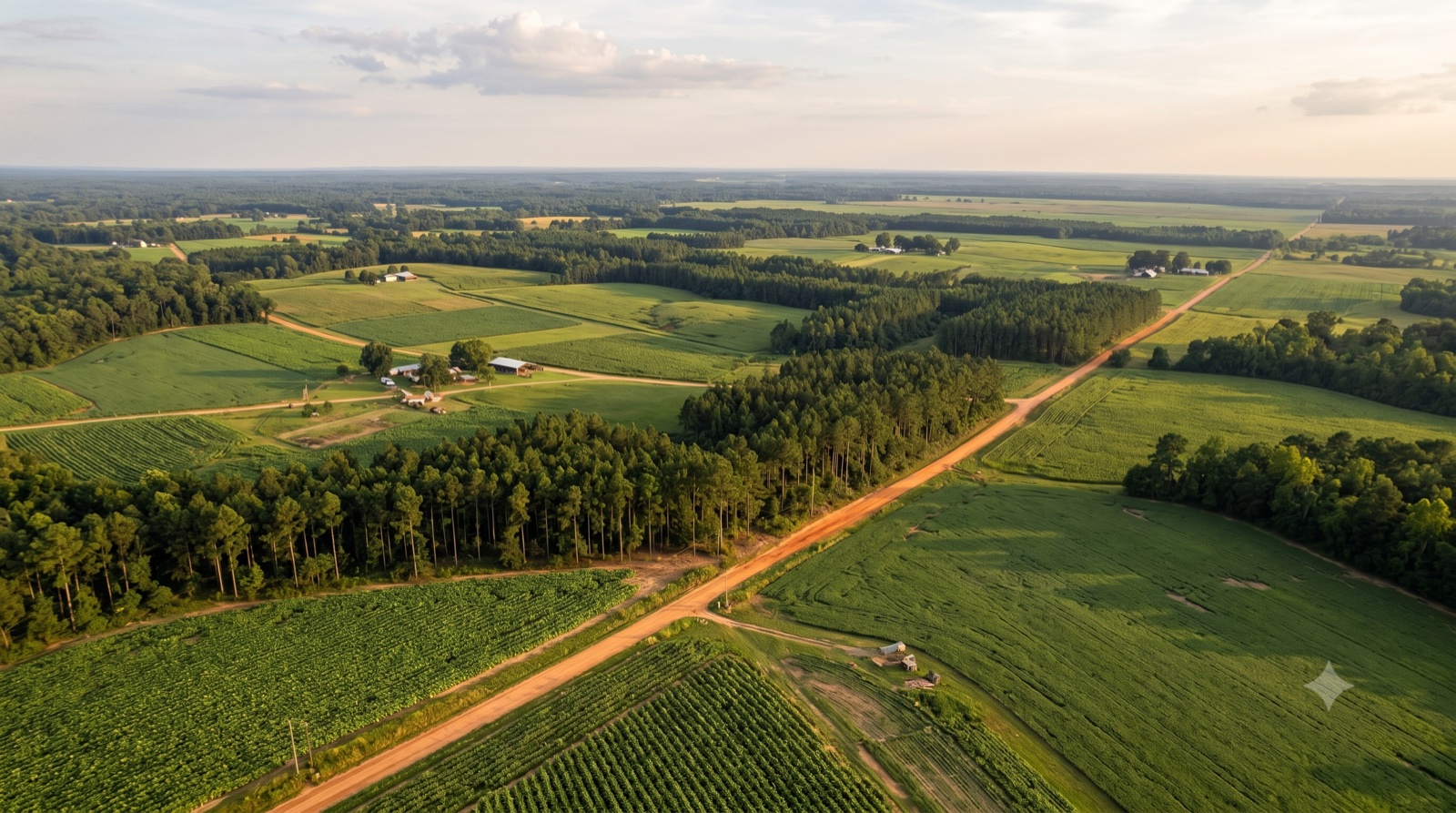
Sell My Land in Swain County NC - What Landowners Need to Know
Key Takeaways
- About 86% of Swain County is owned or controlled by government or tribal land: Between Great Smoky Mountains National Park, the Nantahala National Forest, the TVA Fontana Reservoir, and the Cherokee Qualla Boundary, less than 25% of the county's land is taxable, according to the Swain County Tax Assessors Office — which means private, sellable tracts are genuinely scarce
- North Carolina charges a $2-per-$1,000 excise tax on deeds: Sellers pay $1 per $500 of the conveyed property value (equivalent to $2 per $1,000) to the Register of Deeds at closing, per N.C. Gen. Stat. § 105-228.30, according to HomeLight's North Carolina transfer tax guide
- Swain County's population has held roughly flat near 14,000: The county grew slightly from 13,981 residents in 2010 to 14,117 in 2020 and sits at an estimated 14,024 in 2025, according to U.S. Census Bureau data — a small, isolated far-western mountain market rather than a growth corridor
How Can You Sell Land in Swain County North Carolina?
You can sell land in Swain County through three primary paths: listing with a real estate agent for broad MLS exposure, selling by owner via online platforms, or working with a direct cash buyer to skip the listing period and close faster. In all cases, your closing must be supervised by a licensed North Carolina attorney under state law.
Selling land in Swain County, North Carolina means selling in one of the most land-constrained markets in the state. This far-western county in the heart of the Great Smoky Mountains is nearly surrounded by public land: roughly 86% of its area is national park, national forest, TVA reservoir, or Cherokee tribal trust land, so less than a quarter of the county can even be privately owned and taxed, according to the Swain County Tax Assessors Office. For landowners, that scarcity cuts both ways — private mountain tracts are limited, but the terrain, access, and title on a specific parcel matter enormously to what it is worth and how it sells.
This guide covers North Carolina's property tax system and the Present-Use Value deferral program used by qualifying forestland, the state's attorney-closing requirement and what it means for your timeline, how Swain County compares to neighboring Graham, Jackson, and Macon counties, and the practical steps for completing a land sale. For a broader overview of the process across the state, visit our guide on how to sell land in North Carolina.
What Are the Property Tax and Carrying Costs of Holding Land in Swain County?
North Carolina assesses all real property — including vacant land — at 100% of fair market value, unlike states that apply fractional assessment ratios. The county then applies its rate per $100 of that assessed value, a figure the Swain County Board of Commissioners sets each year and the NCDOR publishes in its annual schedule. Swain County's most recent countywide reappraisal took effect January 1, 2021, and its median effective property tax rate runs approximately 0.49%, according to Ownwell — modest by national standards, where the average sits near 1.02%.
The county's unusual land ownership shapes its whole tax picture. Because national park, national forest, TVA lakebed, and Cherokee trust lands make up the large majority of Swain County and are not on the tax rolls, the county collects from a comparatively small private base. For a landowner, the practical takeaway is simple: your parcel is one of the relatively few taxable tracts in the county, and its assessed value, road access, and buildability are examined closely.
How the Present-Use Value (PUV) Program Can Reduce Your Tax Bill
North Carolina's Present-Use Value program, authorized under N.C. Gen. Stat. §§ 105-277.2 through 105-277.7, allows qualifying agricultural, horticultural, and forestland to be assessed on its income-producing value rather than market value. According to the NC Forest Service, this program can reduce property taxes by up to 90% for eligible parcels. The NCDOR's use-value manual caps agricultural land rates at no more than $1,200 per acre for the best classification tier, and forestland is capitalized at a fixed 9% rate set by statute. In a heavily wooded mountain county like Swain, forestland PUV is the relevant category for most large private tracts.
To qualify under the forestry classification, a parcel must generally include at least 20 acres of managed timberland under a sound forest management plan; agricultural land requires 10 acres, and horticultural land 5 acres, with a $1,000 minimum gross annual income test for the farm categories. Applications are due by January 31 each year with the county Tax Assessor. If ownership changes or the land is converted to a non-qualifying use, deferred taxes from the current year plus the three prior years become immediately due with interest — a "rollback" that is an easily overlooked cost when an enrolled timber tract changes hands.
For landowners carrying back taxes on a Swain County parcel, resolving delinquency before listing is important because a tax lien will appear in any title search and must be satisfied at closing.
Swain County Tax Office Contact
Swain County Tax Office | Courthouse Building, 101 Mitchell St. (PO Box 2321), Bryson City, NC 28713 | Tax Administrator/Assessor: April Hampton, (828) 488-9273 ext. 2249 | Tax Collector: Kim Dossey, (828) 488-9273 ext. 2224 | Website: swaincountync.gov/tax-office
What Closing and Zoning Requirements Apply in Swain County?
North Carolina is an attorney-close state. Under established North Carolina case law and State Bar opinions, a licensed North Carolina attorney must conduct or supervise every real estate closing — including reviewing title, preparing the deed, coordinating payoffs, and recording the deed with the Register of Deeds. A title company can issue title insurance but cannot replace the attorney's legal role.
The closing sequence for a Swain County land sale typically works as follows: the buyer's (or seller's, if agreed) attorney orders a title search through Swain County's deed records, resolves any clouds on title, prepares a warranty deed, and schedules the closing. The seller pays the excise tax — $1 per $500 of the sale price, or $2 per $1,000 — directly to the Register of Deeds when the deed is recorded. This tax is conventionally a seller cost in North Carolina transactions, according to HomeLight's transfer tax analysis. For a parcel selling at $50,000, the excise tax obligation would be $100.
In mountain terrain like Swain's, title and access review deserve special attention. Many private tracts here are reached by unpaved forest roads, easements across neighboring land, or deeded rights-of-way that touch national forest boundaries, so confirming legal access early is critical. If your parcel has no recorded road frontage, our guide on selling landlocked land explains how access issues affect a sale.
Zoning and Permitting in Swain County
Swain County administers planning, permitting, and building inspections through its county offices, and much of the private land outside Bryson City carries no zoning district or a broad rural designation. What governs development instead is topography and infrastructure: steep slopes, floodplain along the Tuckasegee and Little Tennessee rivers and Fontana Lake, septic suitability, and proximity to protected federal land all shape what can be built. Any proposed use change — subdividing, placing a manufactured home, or constructing a building — requires permits from the county inspection office, and steep-slope or stream-adjacent parcels may face additional state environmental review.
Swain County Register of Deeds | 101 Mitchell Street, Bryson City, NC 28713 | Phone: (828) 488-9273 ext. 2205 | Register of Deeds: Diana Williamson Kirkland
How Does Swain County Compare to Neighboring Counties?
Swain County's population edged up from 13,981 in the 2010 Census to 14,117 in 2020 and is estimated at about 14,024 in 2025, according to U.S. Census Bureau data — essentially flat, and among the smallest county populations in North Carolina. Its immediate neighbors range from tiny Graham County, one of the least-populous counties in the state, to Jackson and Macon counties, which are larger and growing on the strength of Western Carolina University, Highlands-area second homes, and steady retiree in-migration.
| Factor | Swain County | Graham County | Jackson County | Macon County |
|---|---|---|---|---|
| Population (latest est.) | ~14,000 | ~8,100 | ~43,800 | ~37,900 |
| Population trend | Flat | Flat / slight decline | Growing | Growing |
| Median effective tax rate | ~0.49% | ~0.59% | ~0.41% | ~0.39% |
| Land character | Park & forest surrounded | Most-forested, remote | University & lakes | Highlands second homes |
| Key selling challenge | Scarce private tracts; steep, access-limited land | Very thin, remote market | Values inflated near campus/lakes | Second-home price expectations |
Effective tax rates above are median figures reported by Ownwell and tax-rates.org and will differ from any single parcel's bill; the statutory per-$100 rate is set annually by each county's Board of Commissioners and published by the NCDOR. What the table shows is that the far-western mountain counties all run comparatively low effective rates on a small rural base, and that Swain stands apart less on taxes than on how little of it can be privately owned at all.
Motivated-Seller Signals in Swain County
Several patterns concentrate motivated sellers in Swain County. Because so much of the county is public land, many private holdings are legacy family tracts — a wooded mountainside, a cove parcel above Fontana Lake, or an inherited lot down a forest-service road — passed to heirs who have long since moved away. Out-of-state owners who inherit rugged, hard-to-reach acreage often have no plan to build on it, no easy way to visit it, and a standing property-tax bill. Steep slopes, questionable access, and the cost of a survey in mountain terrain make some of these tracts slow to move on the open market. Delinquent-tax and foreclosure matters are administered through the Swain County Tax Office.
For more county-level land analysis across North Carolina and the Southeast, explore our blog.
What Are Your Options for Selling Land in Swain County?
In a county where the private land supply is tightly limited and much of the terrain is steep and forested, the value of a specific tract turns almost entirely on its particulars — legal access, slope, buildable area, water frontage, and title. That makes a Swain County parcel harder to price with a quick comparison than a flat lot in a subdivision. Understanding your options helps you choose the path that fits your timeline and financial goals.
Listing with a real estate agent gives your parcel the broadest market exposure through the MLS and land-specific platforms. Agents who know the western North Carolina mountain market can reach recreational buyers, cabin builders, hunters, and investors. Agent commissions typically run 5–6% of the sale price, plus the state excise tax and other closing costs, and remote or access-challenged mountain tracts can sit listed for many months. If you own timberland or hunting land, an agent with genuine mountain-land experience matters more than a general residential broker.
For Sale By Owner (FSBO) and online platforms like Land.com, LandWatch, and LandAndFarm let you list directly. These platforms have active audiences of land buyers, but marketing a mountain parcel effectively — with boundary surveys, access documentation, slope and floodplain notes, and PUV status — requires time and knowledge of what western-NC buyers look for. If your parcel sits far from town or is difficult to reach, see our guide on selling landlocked land.
Working with a direct cash buyer like Jerez Land means skipping the listing period, agent commissions, and the uncertainty of buyer financing. We make parcel-specific, firm written offers based on a full review of your property — location, access, encumbrances, slope, and condition — and we absorb the carrying costs, marketing expense, and resale risk. Our offers are not formulas; they reflect what we can actually do with your specific land. If you have inherited land, are an out-of-state owner, or face PUV rollback exposure, we are experienced working through those situations.
Request a cash offer to get a specific number on your Swain County parcel, or read our full guide on whether you need a realtor to sell land before deciding.
Frequently Asked Questions
How do I sell my land in Swain County fast?
The fastest path to closing on a Swain County parcel is working with a direct cash buyer who does not require mortgage financing. Cash closings eliminate lender timelines and can often close in two to four weeks once title is clear. Before any sale, confirm your property's legal description and recorded access with the Swain County Register of Deeds, verify there are no delinquent taxes, and check whether the land is enrolled in Present-Use Value, since deferred-tax rollback may come due at closing.
I inherited a mountain tract near Bryson City that borders the national park and I live in Florida — can I sell it?
Yes. Out-of-state owners sell inherited Swain County land regularly, and you do not need to travel to North Carolina to close. A licensed NC attorney supervises the closing, and documents can be signed remotely and notarized in your state. The key first steps are confirming clear title, recorded legal access to the tract, and whether any deferred Present-Use Value taxes will roll back at sale. A parcel bordering Great Smoky Mountains National Park can appeal to recreational buyers, but access and boundary clarity drive the value.
I own a forested tract enrolled in Present-Use Value in Swain County — how does that affect my sale?
North Carolina's PUV program lets qualifying forestland be taxed on its income-producing value rather than market value — potentially reducing taxes by up to 90%, according to the NC Forest Service. If you sell PUV-enrolled land and it leaves the program, deferred taxes from the current year and the three prior years can become due immediately at closing, with interest. This rollback obligation is a real cost that affects your net proceeds and should be factored into any offer evaluation before you sign.
I'm selling mountain land in North Carolina — do I have to hire an attorney to close?
Yes. North Carolina requires a licensed attorney to supervise every real estate closing — this is not optional or waivable by the parties. The attorney conducts the title examination, prepares the deed, coordinates the disbursement of funds, and records the deed with the county Register of Deeds. A title company can issue title insurance but cannot complete the closing alone. In steep, access-dependent Swain County, thorough title and easement review is especially valuable.
I own land in Swain County — what will I pay in property taxes?
Swain County assesses land at 100% of market value and applies a per-$100 rate set annually by the Board of Commissioners; its median effective property tax rate runs about 0.49%, according to Ownwell. The county's most recent reappraisal took effect January 1, 2021. Land enrolled in the Present-Use Value program may be taxed on its income-producing capacity rather than market value, which can substantially lower the bill on qualifying forest or farm tracts.
My tract is steep, wooded, and hard to reach — is it hard to sell in Swain County?
It can be. Swain's private land supply is small, but much of it is steep, forested, and reached only by forest-service roads or easements, which narrows the buyer pool for any given parcel. Tracts with unclear access, no survey, or difficult topography can sit on the market for long periods. That combination is why many owners of remote or access-limited mountain tracts choose a direct cash sale over an extended listing.
Disclaimer: This article is for informational purposes only and does not constitute legal, financial, or professional advice. Laws and regulations vary by jurisdiction and change over time. Always consult with qualified professionals before making land purchase decisions. Jerez Land is not responsible for actions taken based on this information.