
How to Sell Land in Mississippi: A Landowner's Guide
Key Takeaways
- Mississippi charges $0 in state deed transfer tax: Mississippi has no state-level deed transfer tax, making it one of the most cost-effective states for completing a land sale — average seller closing costs run approximately 2.89% of the sale price before agent commissions, according to ListWithClever
- Attorney involvement is required for real estate closings: Mississippi requires a licensed attorney to examine and certify the title, prepare the deed, and oversee the closing process — per The Mississippi Bar and MS Code § 81-12-165 — making attorney coordination an unavoidable step in every land sale
- Vacant land is assessed at 15% of fair market value: Under Mississippi's property tax system, non-owner-occupied property — including vacant rural land — is assessed at 15% of fair market value, compared to 10% for owner-occupied homes, according to Mississippi State University Extension
How Do You Sell Land in Mississippi?
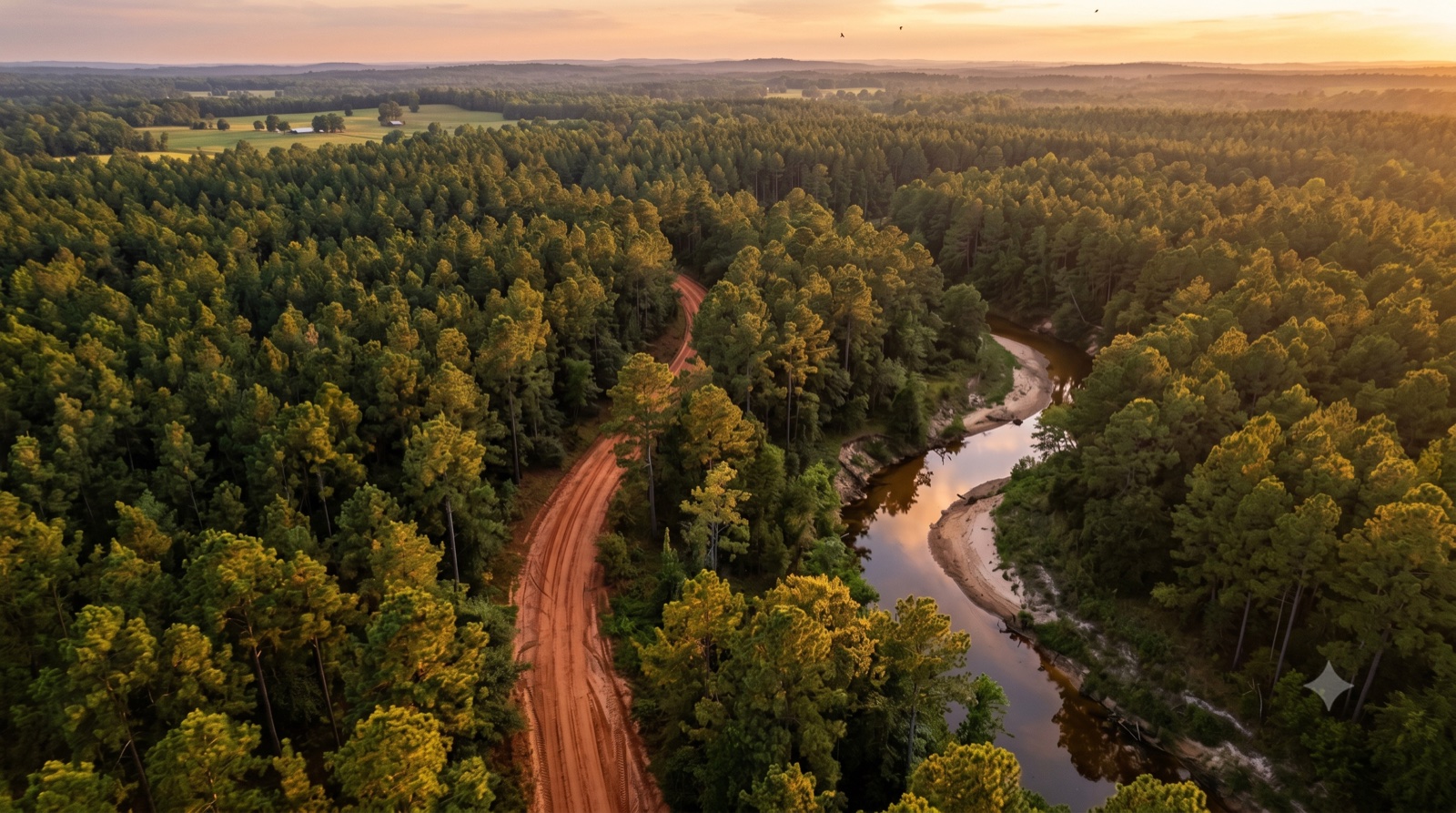
Selling vacant land in Mississippi involves an attorney-managed closing process, no state transfer tax, and a property tax structure that assesses vacant parcels at 15% of fair market value. Mississippi is one of only a handful of states that charges no state deed transfer tax — a meaningful advantage for sellers compared to most other Southeastern states. The state's Piney Woods, Delta farmland, Gulf Coast, and hill country each have distinct land markets, but the legal framework for how closings work is uniform statewide. Understanding the attorney requirement, the tax structure, and what drives rural land timelines gives you a realistic foundation before beginning the sale process.
Who Handles Closings in Mississippi and What Does the Process Look Like?
Mississippi requires a licensed attorney to be involved in real estate closings. According to The Mississippi Bar and consistent with MS Code § 81-12-165, a licensed Mississippi attorney must examine and certify the title, prepare the deed, and oversee the closing. This is not optional — it applies to all land sales statewide, regardless of parcel size or transaction type.
The Mississippi attorney-required closing process for vacant land typically works as follows:
- Purchase agreement: Buyer and seller execute a purchase contract specifying price, earnest money, contingency periods, and closing date. For rural land, contracts often address timber rights, access easements, and any outstanding hunting or agricultural leases.
- Title search: The closing attorney searches public records through the county Chancery Clerk's office — Mississippi's equivalent of a circuit court clerk — to trace the chain of title and identify any encumbrances, liens, or tax delinquencies that must be cleared before closing.
- Deed preparation: The attorney prepares the warranty deed (or other deed type as agreed). Mississippi deeds are recorded with the county Chancery Clerk, not a separate recorder of deeds office.
- Transfer tax: Mississippi charges $0.00 in state deed transfer tax. There is no state-level transfer tax form required for deed recordation — a significant simplification compared to states like Georgia that require e-filed PT-61 forms.
- Closing: The attorney schedules and conducts the closing, coordinates the signing of all documents, and disburses proceeds.
- Recording: After closing, the attorney records the deed with the county Chancery Clerk. Recording fees vary by county but are generally modest.
Mississippi's Chancery Courts have jurisdiction over real property matters, which is why the Chancery Clerk's office is the recording authority — not a county Register of Deeds as in Tennessee or a Probate Court as in Alabama.
For a comprehensive overview of closing documents for any land sale, see our guide on paperwork needed to sell land.
What Are the Transfer Taxes and Seller Closing Costs in Mississippi?
Mississippi's $0 state deed transfer tax is a genuine advantage for sellers. In states like South Carolina, Georgia, or Tennessee, transfer taxes add hundreds of dollars to the cost of closing — in Mississippi, that cost simply does not exist.
Typical seller closing costs in Mississippi include:
- State deed transfer tax: $0.00 — Mississippi has no state deed transfer tax
- Attorney fees: Title search, deed preparation, closing coordination, and recording — amounts vary by attorney and transaction complexity
- Title insurance: Optional for sellers; often required by buyers using financing; protects the buyer from title defects not discovered in the title search
- Recording fees: Paid to the Chancery Clerk at the time of recording; typically a per-page fee
- Outstanding property taxes: Delinquent taxes must be resolved at or before closing; Mississippi tax sales occur annually
- Agent commission: If listed with a real estate agent, typically 5–6% of sale price
- Timber harvesting credits or obligations: If a timber sale or harvest preceded your land sale, ensure all severance tax obligations are settled
Average seller closing costs in Mississippi (excluding agent commissions) run approximately 2.89% of the sale price, according to ListWithClever. This is among the lower closing cost structures in the Southeast, largely due to the absence of a transfer tax.
If delinquent taxes are a factor in your situation, see our guide on how to sell land with back taxes. Mississippi tax sales occur on the last Monday of August — an important deadline for landowners with overdue accounts.
How Long Does It Take to Sell Land in Mississippi, and What Makes Rural Parcels Slow to Move?
Mississippi's land market is concentrated around several distinct use types: Piney Woods timber land in the south-central region, Delta farmland in the northwest, hunting tracts statewide, and Gulf Coast land in the south. Each has a different buyer pool and transaction timeline.
Mississippi's property tax structure for vacant land
According to Mississippi State University Extension, the state uses a tiered assessment system:
- Owner-occupied residential property: 10% of fair market value
- All other real estate (including vacant land): 15% of fair market value
This 50% higher assessment ratio means vacant land carries a proportionally greater tax burden than owner-occupied property. For a landowner holding non-productive vacant land, the annual tax bill — applied to 15% of assessed fair market value, multiplied by the local millage rate — is a recurring cost without offsetting rental or timber income.
Mississippi reassesses property at least once every four years. Property taxes take effect October 1 and must be paid by February 1 to avoid late fees. Delinquent accounts proceed to tax sale on the last Monday of August.
Mississippi's Reforestation Tax Credit
Mississippi offers a Reforestation Tax Credit equal to 50% of approved reforestation costs, with a lifetime cap of $75,000 per taxpayer, according to the Conservation Finance Center. Federal reforestation deductions of up to $10,000 per year are also available, with amounts above $10,000 amortizable over 84 months. Standing timber in Mississippi is not subject to ad valorem property tax until it is harvested, at which point a severance tax applies.
For landowners with timber value on their parcels, getting a timber cruise (inventory) before listing is an important step — buyers who can see documented timber value make better-informed and faster decisions.
Why rural Mississippi land can be slow to sell:
- Population decline in rural counties: Many Mississippi counties have experienced sustained population loss over the past several decades. A smaller local population means fewer local buyers — most rural land demand comes from out-of-state investors, hunting clubs, and timber companies.
- Heirs' property complications: Mississippi has a significant concentration of heirs' property — land that has passed between generations informally, without probate or recorded deeds. Resolving multiple heirs' ownership interests requires legal work before a clean title sale can occur.
- Access issues: Landlocked parcels or those with informal or unrecorded access arrangements are difficult to sell to buyers using financing. Buyers with cash can sometimes navigate this, but it narrows the buyer pool.
- Timber and hunting lease terms: Active leases can complicate sales if the lease agreement gives the lessee rights that survive a sale. Sellers should review any outstanding leases with their attorney before listing.
For realistic context on land sale timelines generally, see how long it takes to sell land.
Counties We Buy Land In Across Mississippi
Jerez Land buys vacant land across rural Mississippi. We make firm written cash offers based on your parcel's location, acreage, access, timber, and title status — and we handle the attorney closing coordination. You don't need to arrange anything. Here are three Mississippi counties where we actively purchase land:
Tishomingo County, MS — A far-northeast corner county around the seat of Iuka where Mississippi meets Tennessee and Alabama, and where Pickwick Lake frontage draws a recreational buyer pool that ordinary interior hill-country acreage a few miles inland does not inherit. Learn more about selling land in Tishomingo County, MS.
Itawamba County, MS — A northeast Mississippi county around the seat of Fulton and one of the few in our coverage area whose population is actually growing, where a barge terminal on the Tennessee-Tombigbee Waterway supports an industrial market that ordinary interior timber and pasture acreage a few miles inland does not share. Learn more about selling land in Itawamba County, MS.
Jasper County, MS — A southeast Mississippi Piney Woods county with dual county seats at Bay Springs and Paulding — each judicial district keeping its own separate land records — where poultry drives roughly 98% of farm sales and woodland exceeds cropland and pasture combined. Learn more about selling land in Jasper County, MS.
Scott County, MS — A central Mississippi county around the seat of Forest that ranks 2nd in the state for poultry and egg sales, yet where that income comes from contracted broiler houses on a small footprint — leaving the woodland and pasture that make up most of its farm acreage with a buyer pool as thin as any rural county's. Learn more about selling land in Scott County, MS.
Neshoba County, MS — An east-central Mississippi county around the seat of Philadelphia, where poultry drives 98% of a $256.9 million farm economy and both farm count and land in farms fell 20% in five years, leaving ordinary pasture and timber ground with a narrow buyer pool. Learn more about selling land in Neshoba County, MS.
Prentiss County, MS — A northeast Mississippi hill county around the seat of Booneville, where soybean ground and pine-and-hardwood uplands trade in a consolidating farm market, and Natchez Trace Parkway scenic easements restrict what some adjoining tracts can build or cut. Learn more about selling land in Prentiss County, MS.
Union County, MS — A north Mississippi county around the seat of New Albany, where a genuine furniture-manufacturing employment base and a growing population sit alongside a farm market consolidating into fewer, larger soybean operations. Learn more about selling land in Union County, MS.
Winston County, MS — An east-central Mississippi county around the seat of Louisville, where roughly three-quarters of the land is forest and poultry drives 97% of farm sales, leaving a rural land market shaped almost entirely by timber, pasture, and hunting demand. Learn more about selling land in Winston County, MS.
Tippah County, MS — A north Mississippi hill-country county around the seat of Ripley on the Tennessee line, where loblolly pine and hardwood timber, cattle pasture, and small farms trade in a thin, steadily depopulating rural land market. Learn more about selling land in Tippah County, MS.
Calhoun County, MS — A north-central Mississippi red-clay hill county around the seat of Pittsboro, where Vardaman's nationally known sweet potato ground and row-crop bottoms give way to upland pine and hardwood in a thin, steadily depopulating rural land market. Learn more about selling land in Calhoun County, MS.
Chickasaw County, MS — A north-central Mississippi hill-country county with dual seats at Houston and Okolona, where soybean and hay ground, broiler and hog operations, and scattered pine and hardwood trade in a thin, steadily depopulating rural land market. Learn more about selling land in Chickasaw County, MS.
Yalobusha County, MS — A north-central Mississippi hill-country county with dual seats at Water Valley and Coffeeville, where loblolly pine and hardwood timber, cattle pasture, and small row-crop farms trade in a thin, steadily depopulating rural land market. Learn more about selling land in Yalobusha County, MS.
Attala County, MS — A central Mississippi hill-country county around the seat of Kosciusko, where loblolly pine and hardwood timber, cattle pasture, and small farms trade in a thin, steadily depopulating rural land market. Learn more about selling land in Attala County, MS.
Montgomery County, MS — A north-central Mississippi hill-country county around the seat of Winona, where loblolly pine and hardwood timber, pasture, and small farms trade in a thin, steadily depopulating rural land market. Learn more about selling land in Montgomery County, MS.
Carroll County, MS — A north-central Mississippi Delta-edge county with dual seats at Carrollton and Vaiden, where Delta-side row crop gives way to hill-country timber and pasture in a thin, steadily depopulating market with deep absentee ownership. Learn more about selling land in Carroll County, MS.
Jefferson Davis County, MS — A southeast Mississippi pine-belt county around the seat of Prentiss, where pine timber and cattle pasture trade in a deeply depopulating market with a thin local buyer pool. Learn more about selling land in Jefferson Davis County, MS.
Franklin County, MS — A southwest Mississippi county around the seat of Meadville within the Homochitto National Forest, where pine and hardwood timber, river-bottom tracts, and pasture trade in a small, steadily declining rural market with deep absentee ownership. Learn more about selling land in Franklin County, MS.
Webster County, MS — A north-central Mississippi hill-country county around the seat of Walthall, where loblolly pine and hardwood timber and cattle pasture trade in a thin, steadily depopulating rural land market. Learn more about selling land in Webster County, MS.
Wilkinson County, MS — A southwest Mississippi county around the seat of Woodville, where loess-hills hardwood and pine timber, cattle pasture, and Mississippi River bottomland trade in a deeply depopulating market with extensive absentee ownership. Learn more about selling land in Wilkinson County, MS.
Tunica County, MS — A Mississippi Delta county around the seat of Tunica along the river, where soybean, cotton, rice, and corn bottomland row crop trades in a deeply depopulating market with extensive absentee ownership. Learn more about selling land in Tunica County, MS.
Benton County, MS — A small north Mississippi hill-country county around the seat of Ashland near the Holly Springs National Forest, where pine and hardwood timber, pasture, and small farms trade in a thin, steadily depopulating market with deep absentee and heirs' ownership. Learn more about selling land in Benton County, MS.
Tallahatchie County, MS — A Delta-and-hills county split between the dual seats of Charleston and Sumner, where cotton, soybean, and corn row-crop ground and catfish ponds trade in a thin, steadily depopulating market with deep absentee and heirs' ownership. Learn more about selling land in Tallahatchie County, MS.
Kemper County, MS — An east-central county around the seat of De Kalb where pine timber and cattle pasture stretch toward the Alabama line at the edge of the Black Prairie, traded in a thin, steadily depopulating rural market. Learn more about selling land in Kemper County, MS.
Noxubee County, MS — An east-central Black Prairie county around Macon along the Alabama line, where cattle pasture, hardwood and pine timber, and managed quail-and-deer hunting plantations trade in a thin, steadily depopulating market with deep absentee and heirs' ownership. Learn more about selling land in Noxubee County, MS.
Simpson County, MS — A central Mississippi Piney Woods county known for pine and hardwood timber, poultry operations, and rural parcels with interstate access. The county is bordered by I-55, I-20, and I-59, making it accessible despite its rural character. Learn more about selling land in Simpson County, MS.
Amite County, MS — One of Mississippi's more rural southern counties, Amite County is characterized by dense timber, hunting tracts, and rolling hill terrain along the Louisiana border. The county's low density and timber quality appeal to out-of-state land investors. Learn more about selling land in Amite County, MS.
Wayne County, MS — Located in southeast Mississippi near the Alabama border, Wayne County offers productive pine timberland, recreational hunting properties, and agricultural parcels. The Chickasawhay River provides water frontage on select parcels. Learn more about selling land in Wayne County, MS.
Choctaw County, MS — A north-central Mississippi hill county around Ackerman with Tombigbee National Forest inholdings and pine plantation tracts — affordable, low-basis, long-hold timberland. Learn more about selling land in Choctaw County, MS.
Holmes County, MS — A Delta-edge county around Lexington of flat row-crop fields and Yazoo River bottomland timber, long depopulating, where smaller farm tracts can sit before the right buyer appears. Learn more about selling land in Holmes County, MS.
Humphreys County, MS — The heart of the Mississippi Delta around Belzoni, known as the Farm-Raised Catfish Capital of the World, with flat row-crop fields, decommissioned aquaculture pond tracts, steep depopulation, and absentee-owner land sitting in one of the state's most rural markets. Learn more about selling land in Humphreys County, MS.
Sharkey County, MS — A deep Mississippi Delta county around Rolling Fork where 60,898 acres of Delta National Forest — the only bottomland hardwood national forest in the country — anchors a thin land market of large row-crop farms and bottomland hunting tracts, serving a county that lost nearly a quarter of its population between 2010 and 2020. Learn more about selling land in Sharkey County, MS.
Issaquena County, MS — Mississippi's least-populous county, a sparsely settled Delta county around Mayersville along the Mississippi River where soybean, corn, and cotton bottomland and hunting tracts trade in one of the thinnest land markets in the state. Learn more about selling land in Issaquena County, MS.
Quitman County, MS — A Mississippi Delta county around Marks along the Coldwater River, where flat soybean, cotton, and corn cropland trades in a steeply depopulating market with deep absentee ownership and a thin local buyer pool. Learn more about selling land in Quitman County, MS.
Jefferson County, MS — One of the poorest and most steeply depopulating counties in the country, in the southwest Mississippi loess hills around Fayette along the Natchez Trace, where big-woods hardwood and pine timber and deer hunting land trade in an exceptionally thin buyer pool. Learn more about selling land in Jefferson County, MS.
Claiborne County, MS — A deeply depopulating southwest Mississippi county around Port Gibson, where steep loess-bluff hardwood and pine timber meets flat Mississippi River bottom cropland, and where the lowest median household income of any U.S. county leaves an exceptionally thin local buyer pool. Learn more about selling land in Claiborne County, MS.
Montgomery County, MS — A north-central Mississippi hill-country county around Winona where loblolly pine plantations, hardwood bottoms, cattle pasture, and cotton and hay ground define a thin, steadily depopulating rural land market. Learn more about selling land in Montgomery County, MS.
Newton County, MS — An east-central Mississippi county around the seat of Decatur, where poultry drives about 97% of a $176.6 million farm economy and pasture, pine, and hardwood timber trade in a slowly depopulating rural market. Learn more about selling land in Newton County, MS.
Alcorn County, MS — Mississippi's smallest county by land area, around the regional hub of Corinth on the Tennessee line, where a comparatively dense population still leaves a thin market for the row-crop and timber acreage of the county interior. Learn more about selling land in Alcorn County, MS.
Pontotoc County, MS — A growing north Mississippi county around the seat of Pontotoc in the New Albany–Ecru–Tupelo furniture-manufacturing corridor, where a consolidating farm base of fewer, larger row-crop operations shapes who buys rural acreage. Learn more about selling land in Pontotoc County, MS.
Leake County, MS — A central Mississippi county around the seat of Carthage where poultry drives about 98% of farm sales and pasture, Pearl River bottoms, and timber trade alongside Choctaw reservation trust land. Learn more about selling land in Leake County, MS.
Smith County, MS — A south-central Mississippi Piney Woods county around the seat of Raleigh with no interstate highway crossing it at all, where poultry drives 98% of farm sales but most of the acreage most sellers actually own — pine plantation, cattle pasture, and hay ground — trades in a thin, locally driven market. Learn more about selling land in Smith County, MS.
Explore more county guides and topical resources on our blog.
Should You List with an Agent, Sell FSBO, or Request a Cash Offer in Mississippi?
Mississippi landowners have three realistic paths to a sale. The right choice depends on your timeline, land complexity, and what carrying costs you're willing to absorb while waiting for the right buyer.
Listing with a licensed real estate agent provides MLS exposure and connects you with buyers from across the region. This approach works best when your land has clear access, a clean title, documented timber value, and attributes that market well online — water features, road frontage, proximity to recreation areas. Commission costs of 5–6% plus attorney and closing costs reduce your net, and rural listings in low-demand counties can take months or years to attract a buyer at your target price.
For Sale By Owner is common for Mississippi land sales, particularly when the seller has a direct relationship with potential buyers — neighboring farmers, hunting clubs, or timber companies. FSBO eliminates the agent commission but still requires an attorney for the closing. Sellers need to handle their own marketing, buyer qualification, and contract negotiation.
A direct cash offer from Jerez Land eliminates the listing timeline, the uncertainty of waiting for a retail buyer, and the ongoing carrying costs of a parcel that's generating no income. We make a specific written offer based on your parcel's characteristics. We handle the attorney coordination, pay our own closing costs, and work on a timeline that fits your situation — including landowners dealing with heirs' property issues, back taxes, or inherited parcels they've never been to.
To understand what factors determine land value before you decide, see how much is my land worth. For Mississippi land you've inherited, see our guide on how to sell inherited land.
Request a cash offer for your Mississippi land
Frequently Asked Questions
I need to sell my Mississippi land quickly — what's the fastest approach?
The fastest path is requesting a direct cash offer from a land buyer like Jerez Land. We evaluate your parcel, make a firm written offer, coordinate with the closing attorney, and can close in weeks — without waiting for a listing to generate buyer activity. For landowners with heirs' property issues, delinquent taxes, or parcels that have sat without income, speed eliminates ongoing carrying costs.
Do I need an attorney to sell land in Mississippi?
Yes. Mississippi requires a licensed attorney to examine and certify the title, prepare the deed, and oversee the closing and recording process, according to The Mississippi Bar. This applies to all land sales statewide. The deed is recorded with the Chancery Clerk in the county where the property is located.
Does Mississippi charge a deed transfer tax?
No. Mississippi has a $0.00 state deed transfer tax, making it one of the most cost-effective states in the Southeast for completing a land transaction. Average seller closing costs (excluding agent commissions) run approximately 2.89% of the sale price, according to ListWithClever — primarily covering attorney fees, title insurance, and recording fees.
I own vacant land in Mississippi — how are property taxes calculated?
Vacant, non-owner-occupied land is assessed at 15% of fair market value in Mississippi, according to Mississippi State University Extension. Owner-occupied residential property is assessed at the lower rate of 10%. Mississippi reassesses property at least once every four years. Property taxes become due October 1 and must be paid by February 1 to avoid penalties.
I have timber on my land in Mississippi — what tax benefits apply?
Mississippi offers a Reforestation Tax Credit equal to 50% of approved reforestation costs, with a lifetime cap of $75,000 per taxpayer, according to the Conservation Finance Center. Federal deductions of up to $10,000 per year in reforestation expenses are also available, with amounts above $10,000 amortizable over 84 months. Standing timber is not subject to ad valorem (property) tax in Mississippi — it becomes taxable via severance tax only when harvested.
I'm selling vacant land in Mississippi — how long will the process take?
Timeline depends heavily on location, access, and timber value. Land near population centers or with strong hunting or timber attributes can sell in weeks when marketed to the right buyers. Rural parcels in counties with declining populations and limited local demand may sit for months to years. Common delays include heirs' property complications, landlocked access situations, and limited buyer pools in low-density counties.
I want to sell my Mississippi land without a realtor — is that possible?
Yes. There is no legal requirement to use a real estate agent to sell land in Mississippi. Many rural Mississippi land sales happen directly between sellers and buyers — through FSBO platforms, direct outreach to hunting clubs or timber companies, or by requesting a cash offer from land investors. You will still need a licensed Mississippi attorney to conduct the closing.
Who pays closing costs when selling land in Mississippi?
Closing cost allocation is negotiable. In a typical Mississippi land sale, the seller pays attorney fees and any outstanding property taxes; the buyer often pays for title insurance and recording fees. Since Mississippi has no deed transfer tax, neither party pays that cost. Cash buyers like Jerez Land cover their own closing costs, making the seller's net proceeds more predictable.
Disclaimer: This article is for informational purposes only and does not constitute legal, financial, or professional advice. Laws and regulations vary by jurisdiction and change over time. Always consult with qualified professionals before making land purchase decisions. Jerez Land is not responsible for actions taken based on this information.