
How to Sell Land in Alabama: A Landowner's Guide
Key Takeaways
- Alabama's deed recording tax is $0.50 per $500: Under Alabama Code § 40-22-1, sellers pay a deed transfer tax of $0.50 per $500 of consideration (or fraction thereof) — one of the lowest transfer tax rates in the Southeast, according to the Alabama Department of Revenue
- Vacant land is Class II, assessed at 20% of fair market value: Alabama classifies all non-owner-occupied property — including vacant rural land — as Class II at a 20% assessment ratio; agricultural and forest land enrolled in Current Use drops to Class III at 10%, according to Alabama Code § 40-8-1
- Alabama is among the lowest property-tax states in the nation: Alabama consistently ranks in the bottom two or three states for effective property tax rates, making carrying costs for vacant land relatively modest compared to most other states
How Do You Sell Land in Alabama?
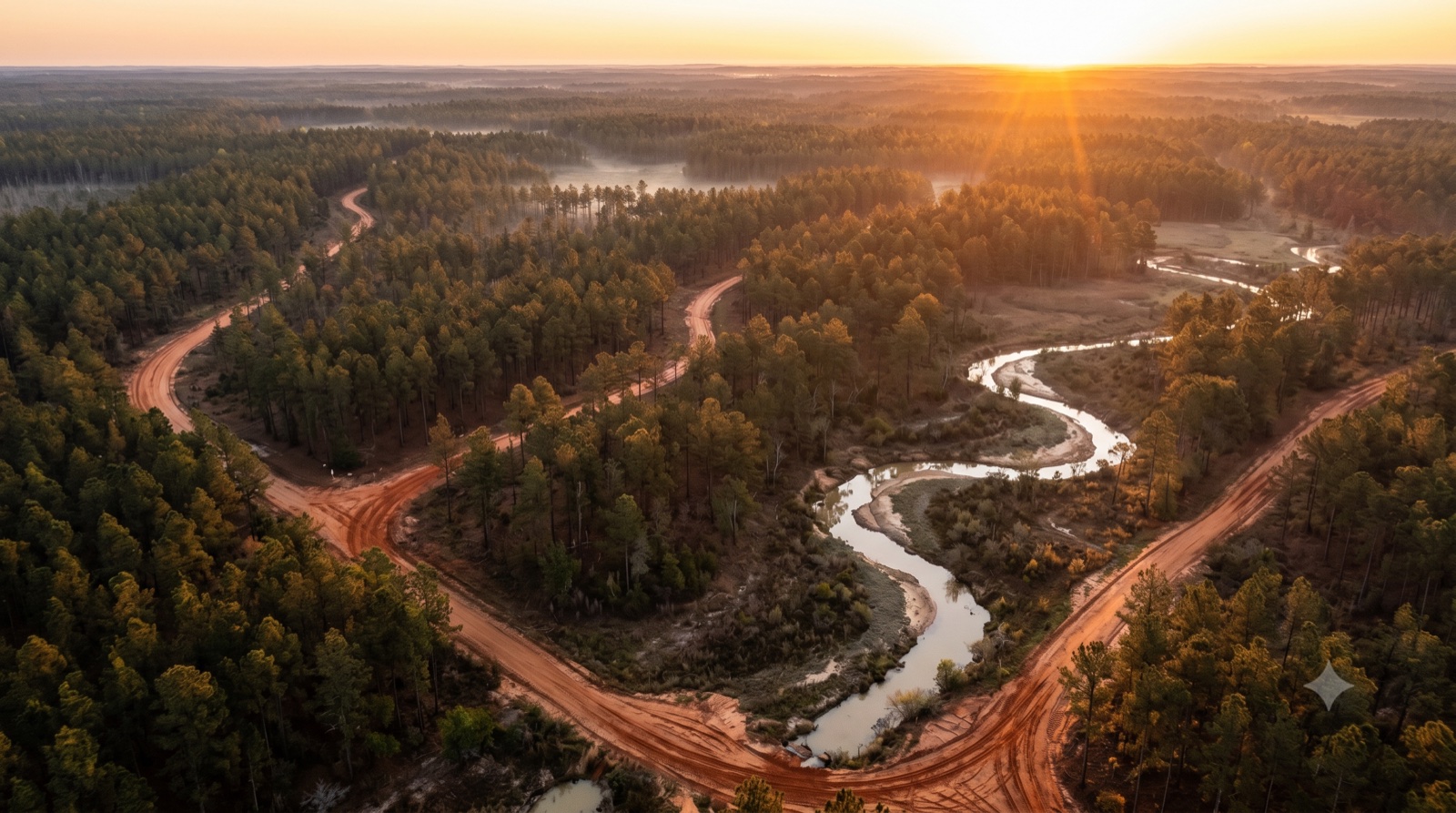
Selling vacant land in Alabama involves attorney coordination at closing, a low state deed recording tax, and one of the most favorable property tax environments in the country. The state's roughly 22 million acres — approximately 70% of which is forested or timber-producing — creates a market where timber companies, hunting club operators, agricultural investors, and out-of-state buyers are all active participants. Understanding Alabama's closing requirements, tax structure, and what determines how quickly land sells gives you a realistic foundation before entering the market.
Who Handles Closings in Alabama and What Does the Process Look Like?
Alabama law restricts the practice of law, including real estate title work and closing procedures, to licensed Alabama attorneys under Alabama Code § 34-3-6. While title companies can perform administrative functions, preparing deeds, examining abstracts of title, and certifying clear title are legal activities that require attorney oversight in Alabama.
In practice, a standard Alabama vacant land sale typically follows this sequence:
- Purchase agreement: Buyer and seller execute a contract specifying purchase price, earnest money, contingency periods, and closing date. For raw land, contracts are often simpler than residential transactions but should still address access rights, mineral rights status, and any timber or hunting leases.
- Title search and abstract review: An attorney or abstractor searches the chain of title through county probate court records. Alabama has a strong abstracting tradition — many counties have abstract companies that maintain continuous title plants for efficient searches.
- Deed preparation: The closing attorney prepares the warranty deed (or special warranty deed, or quitclaim deed depending on the circumstances) and any ancillary documents.
- Deed recording tax: Alabama Code § 40-22-1 imposes a recording tax of $0.50 per $500 of consideration, or fractional part thereof, on deeds conveying real property. This is collected at the probate judge's office in the county where the property is located, at the time of recording.
- Recording: The deed is recorded with the county Probate Court (Alabama's equivalent of a recorder of deeds). Recording fees are set by individual counties.
One practical note: Alabama's deed recording tax is computed on consideration, not on assessed value. On a $50,000 land sale, the tax is $50.00. This is a seller-friendly structure compared to states that base transfer taxes on assessed values or use higher rate schedules.
For a full checklist of documents involved in any land sale, see our guide on paperwork needed to sell land.
What Are the Transfer Taxes and Seller Closing Costs in Alabama?
Alabama's seller closing costs are among the lowest in the Southeast. Key cost components include:
- Deed recording tax: $0.50 per $500 of consideration under Alabama Code § 40-22-1 (e.g., $100 on a $100,000 sale)
- Attorney fees: Title examination, deed preparation, and closing coordination — amounts vary by complexity and attorney
- Title insurance: Optional but commonly purchased by buyers using financing; sellers may also be asked to provide a title insurance commitment
- Recording fees: Set by the county Probate Court; typically $5–$20 per page
- Outstanding property taxes: Any unpaid taxes must be satisfied at or before closing
- Real estate agent commission: If listed with an agent, typically 5–6% of sale price; not applicable in cash buyer transactions
Alabama does not impose a separate state-level transfer tax beyond the deed recording tax. There is no mortgage tax component for land sales where no financing is involved, which simplifies the cost structure for cash transactions.
If your land has delinquent property taxes, those must be resolved before or at closing — see our guide on how to sell land with back taxes for more detail.
How Long Does It Take to Sell Land in Alabama, and What Makes Rural Parcels Slow to Move?
Alabama's land market is heavily segmented by intended use. Timber land, hunting tracts, cropland, and development parcels each attract different buyer pools with different financing mechanisms and timelines.
Factors that affect how quickly vacant land sells in Alabama:
- Timber value: Alabama's Coastal Plain and hill country regions contain significant standing timber. A land survey alone doesn't capture timber value — buyers want a timber cruise (inventory) to properly assess what's there. Sellers who don't have a recent timber appraisal often leave value on the table or fail to attract serious buyers.
- Access: Landlocked parcels or those with informal access arrangements can sit on the market indefinitely. Recorded easements and paved or all-weather road access are the single biggest driver of marketability in rural Alabama.
- Hunting lease income: Many Alabama rural parcels generate annual hunting lease income. Land with an active, assumable hunting lease is often easier to sell than bare land with no income history.
- Heirs' property: Alabama has a significant concentration of heirs' property — land passed between generations without formal probate or deed transfers. Resolving ownership among multiple heirs takes time and legal work before a clean title sale can occur.
- Market depth: Counties in Baldwin County along the Gulf Coast have deep demand and fast-moving markets. Interior counties like Barbour County and Randolph County in the eastern Black Belt and Piedmont have narrower buyer pools, which extends typical sale timelines.
For context on realistic land sale timelines, see our guide on how long it takes to sell land.
Alabama's property tax system and its impact on carrying costs
Alabama's Class II assessment ratio of 20% means vacant land is taxed on 20% of its estimated fair market value, according to Alabama Code § 40-8-1. However, Alabama's millage rates are low by national standards, and the effective property tax rate in most Alabama counties is well under 1% of market value — often significantly under. This makes the annual carrying cost of holding vacant land in Alabama relatively modest compared to Midwestern or Northeastern states.
If your land qualifies for agricultural or forest classification, the Class III Current Use assessment drops to 10% of use value rather than 20% of fair market value, according to the Alabama Department of Revenue's Current Use program. This can substantially reduce annual tax obligations for working timber or agricultural parcels.
Counties We Buy Land In Across Alabama
Jerez Land buys vacant land across rural Alabama. We make firm written cash offers based on your parcel's specific characteristics, handle all closing coordination with the attorney, and work on your timeline. Here are three Alabama counties where we actively purchase land:
Escambia County, AL — A southwest Alabama county on the Florida line around the seat of Brewton, where 91% of farm sales come from crops — the inverse of every livestock-and-poultry neighbor — and a 25% drop in farm count alongside a 36% rise in average farm size marks the most consolidated land market in the region. Learn more about selling land in Escambia County, AL.
Covington County, AL — A southeast Alabama Wiregrass county on the Florida line around the seat of Andalusia, where nearly half the farmland is woodland and a $196 million farm economy that is 86% poultry generates almost no demand for ordinary raw acreage. Learn more about selling land in Covington County, AL.
Geneva County, AL — A southeast Alabama Wiregrass county on the Florida line around the seat of Geneva, where peanut, cotton, and poultry ground along the Choctawhatchee River trades in a stable-population but steadily consolidating farm market with a narrow pool of operator-buyers. Learn more about selling land in Geneva County, AL.
Coffee County, AL — A southeast Alabama Wiregrass county with two courthouses at Elba and Enterprise, where broiler poultry drives roughly 90% of farm sales and a growing population near Fort Rucker sits alongside a much thinner rural land market to the west. Learn more about selling land in Coffee County, AL.
Cleburne County, AL — An east Alabama county around the seat of Heflin on the Georgia line, where a small private land base of pasture, broiler operations, and mixed woodland sits wrapped around the Talladega National Forest and Cheaha Mountain, the state's highest point. Learn more about selling land in Cleburne County, AL.
Monroe County, AL — A southwest Alabama county around the seat of Monroeville, where managed pine plantation and mixed hardwood woodland, cotton and peanut ground, and cattle pasture trade in a thin, depopulating rural land market anchored by a single large pulp mill. Learn more about selling land in Monroe County, AL.
Clarke County, AL — A southwest Alabama county around the seat of Grove Hill between the Tombigbee and Alabama rivers, where pine and hardwood timber and small farms cover a heavily forested, steadily depopulating rural land market with a thin, out-of-area buyer pool. Learn more about selling land in Clarke County, AL.
Bibb County, AL — A central Alabama county around the seat of Centreville along the Cahaba River, where pine and hardwood timber, cutover timberland, and small farms trade in a thin, slow rural land market on the southern edge of the Birmingham metro. Learn more about selling land in Bibb County, AL.
Lamar County, AL — A northwest Alabama hill-country county around the seat of Vernon, where pine and hardwood timber, broiler-poultry operations, cattle pasture, and small hay farms trade in a thin, steadily declining rural land market. Learn more about selling land in Lamar County, AL.
Fayette County, AL — A northwest Alabama hill-country county around the seat of Fayette, where pine and hardwood timber covers a heavily forested landscape alongside poultry operations and small farms in a thin, steadily declining rural land market. Learn more about selling land in Fayette County, AL.
Marion County, AL — A northwest Alabama hill-country county around the seat of Hamilton, where pine and hardwood timber covers a heavily forested, depopulating county alongside broiler-poultry operations and small farms. Learn more about selling land in Marion County, AL.
Washington County, AL — A southwest Alabama county around the seat of Chatom between the Tombigbee and Mobile rivers, where pine timber covers one of the state's most heavily forested, depopulating counties alongside river-bottom tracts held largely by absentee and timber-company owners. Learn more about selling land in Washington County, AL.
Butler County, AL — A south-central Alabama county around the seat of Greenville, where managed longleaf and loblolly pine timber covers roughly 80% of a heavily forested, depopulating county alongside poultry and cattle ground and recreational hunting tracts. Learn more about selling land in Butler County, AL.
Coosa County, AL — An east-central Alabama county around the seat of Rockford, where loblolly and longleaf pine timber and cattle pasture cover one of the state's smallest, steepest-declining rural land markets with deep absentee and heirs' ownership. Learn more about selling land in Coosa County, AL.
Crenshaw County, AL — A south-central Alabama county around the seat of Luverne, where loblolly and longleaf pine timber, cattle pasture, and poultry ground trade in a thin, depopulating market with deep absentee and heirs' ownership. Learn more about selling land in Crenshaw County, AL.
Pickens County, AL — A west Alabama county around the seat of Carrollton between the Tombigbee and Sipsey rivers, where pine and hardwood timber, poultry and cattle operations, and row-crop bottomland trade in a thin, depopulating market with deep absentee and heirs' ownership. Learn more about selling land in Pickens County, AL.
Dallas County, AL — A Black Belt county around the historic seat of Selma on the Alabama River, where catfish aquaculture, cotton and cattle ground, and hardwood timber trade in one of west-central Alabama's steepest-declining rural land markets with deep absentee and heirs' ownership. Learn more about selling land in Dallas County, AL.
Conecuh County, AL — A south Alabama county around Evergreen on the longleaf-pine belt near the Conecuh National Forest, where pine timberland, cattle pasture, and recreational hunting tracts trade in a thin, depopulating market with deep absentee and heirs' ownership. Learn more about selling land in Conecuh County, AL.
Bullock County, AL — A Black Belt county around Union Springs renowned for its bobwhite-quail plantations and bird-dog field trials, where longleaf-pine hunting preserves, hardwood timber, and cattle pasture trade in a thin, depopulating market with deep absentee and heirs' ownership. Learn more about selling land in Bullock County, AL.
Baldwin County, AL — Alabama's fastest-growing county along the Gulf Coast, Baldwin County attracts buyers seeking recreational, residential, and investment land. Proximity to Gulf Shores and Foley makes this market particularly active. Learn more about selling land in Baldwin County, AL.
Barbour County, AL — Located in the southeastern Black Belt, Barbour County is known for hardwood and pine timber, quail hunting, and agricultural land. The county seat of Eufaula sits on Lake Eufaula, adding recreational appeal to certain waterfront parcels. Learn more about selling land in Barbour County, AL.
Randolph County, AL — A Piedmont county in east-central Alabama bordering Georgia, Randolph County is characterized by hardwood ridges, small farms, and rural parcels appealing to timber investors and hunting enthusiasts. Learn more about selling land in Randolph County, AL.
Macon County, AL — In the heart of the Black Belt around Tuskegee, Macon County is prized for fertile soils, trophy-whitetail hunting, and hardwood creek bottoms, with significant absentee and heirs' ownership. Learn more about selling land in Macon County, AL.
Marengo County, AL — A Black Belt prairie and Tombigbee River county anchored by Linden and Demopolis, Marengo offers large hunting plantations and hardwood timber tracts where big parcels can be slow to move. Learn more about selling land in Marengo County, AL.
Greene County, AL — One of Alabama's smallest and most rural counties, Greene County's 631 square miles of Black Belt prairie, cattle pasture, catfish ponds, and Sipsey River swamp bottomland sit in a market with one of the thinnest buyer pools anywhere in the state. Learn more about selling land in Greene County, AL.
Sumter County, AL — A west Alabama Black Belt county around Livingston with large hardwood-and-pine hunting tracts and Tombigbee-bottom timberland, where big rural parcels draw a thin, selective buyer pool. Learn more about selling land in Sumter County, AL.
Choctaw County, AL — A depopulating southwest Alabama county between the Tombigbee River and the Mississippi line, anchored by Butler, where pine timber plantations, cattle pasture, and a deep Gilbertown oil-and-gas heritage define a market with a thin big-tract buyer pool. Learn more about selling land in Choctaw County, AL.
Perry County, AL — One of Alabama's poorest and most rapidly depopulating counties, Perry County's Black Belt cropland and pasture in the south and forested ridge terrain in the north attract a very thin buyer pool, with properties routinely taking a year or more to sell. Learn more about selling land in Perry County, AL.
Wilcox County, AL — One of Alabama's poorest and most rapidly depopulating Black Belt counties, centered on Camden along the Alabama River, where bottomland hardwood timber and trophy-whitetail hunting plantations dominate a thin market with deep absentee and heirs' ownership. Learn more about selling land in Wilcox County, AL.
Lowndes County, AL — A Black Belt prairie county around Hayneville along the Alabama River, where fertile dark-soil cropland and pasture trade in a thin, depopulating market with deep absentee and out-of-county ownership. Learn more about selling land in Lowndes County, AL.
Hale County, AL — A Black Belt county around Greensboro where catfish-pond aquaculture leads the state, alongside dark-soil prairie cropland and pasture, trading in a thin, depopulating market with deep absentee and heirs' ownership. Learn more about selling land in Hale County, AL.
Winston County, AL — A northwest Alabama hill-country county around Double Springs anchored by the Bankhead National Forest and Sipsey Wilderness, where poultry houses, small pasture farms, and pine-and-hardwood timber trade in a thin, slowly shrinking rural market. Learn more about selling land in Winston County, AL.
Walker County, AL — A former Warrior Coal Field mining county in north-central Alabama around the seat of Jasper, now covered largely in oak and pine timber with a stretch of Bankhead National Forest and Lewis Smith Lake shoreline, where coal-history title issues and a population declining since 2020 shape a slower rural land market. Learn more about selling land in Walker County, AL.
Henry County, AL — A Chattahoochee River Wiregrass county on the Georgia line around the seat of Abbeville, where timber is the largest export alongside working peanut, cotton, and poultry farms, and a small population near 17,000 keeps the buyer pool thin. Learn more about selling land in Henry County, AL.
Lawrence County, AL — A Tennessee Valley county in northwest Alabama around the seat of Moulton, where row crops and one of north Alabama's largest poultry industries dominate the farm economy on the valley floor while the county's southern edge borders the Bankhead National Forest, and a population that stabilized after a 2010-2020 decline keeps this market meaningfully different from Alabama's Black Belt counties. Learn more about selling land in Lawrence County, AL.
Explore more of our county coverage and guides on our blog.
Should You List with an Agent, Sell FSBO, or Request a Cash Offer in Alabama?
Alabama landowners have three realistic paths to a sale.
Listing with a licensed real estate agent familiar with Alabama land transactions provides MLS exposure and connects you with buyers who are actively searching. This approach works best when your land has clear title, good access, recent timber cruise data, and attributes that can be marketed broadly. Commissions of 5–6% plus closing costs reduce your net proceeds, and rural listings in lower-demand counties can sit for extended periods.
For Sale By Owner eliminates commissions but requires you to handle marketing, buyer qualification, and contract negotiation yourself. You still need an attorney for the closing. FSBO land sales in Alabama are common and feasible when the parcel is straightforward — good access, clean title, no outstanding leases or encumbrances.
Direct cash offers are the fastest path when time, certainty, or complexity matters. Jerez Land makes specific written offers based on your parcel's location, acreage, access, and title status. We absorb our own closing costs and handle the attorney coordination. For landowners dealing with heirs' property situations, tax delinquencies, or land that has been in the family for decades without recent activity, a cash offer eliminates most of the moving parts.
For guidance on understanding what your land may be worth before deciding, see how much is my land worth. For inherited Alabama land, see our guide on how to sell inherited land.
Request a cash offer for your Alabama land
Frequently Asked Questions
I need to sell my land in Alabama fast — what's my quickest option?
The fastest path to a land sale in Alabama is requesting a direct cash offer from a land buyer like Jerez Land. We evaluate your parcel, make a firm written offer, and can close in weeks — without waiting for an MLS listing to generate buyer activity. If you need speed, avoiding the traditional listing process eliminates months of carrying costs and uncertainty.
Do I need an attorney to sell land in Alabama?
Under Alabama Code § 34-3-6, the practice of law — including examining title, preparing deeds, and certifying clear title — is restricted to licensed Alabama attorneys. While you don't need an attorney to sign a purchase agreement, the closing process requires attorney involvement for title work and deed preparation. Your buyer's lender (if financing is involved) will also require an attorney-certified title.
What is Alabama's deed transfer tax rate?
Alabama charges $0.50 per $500 of consideration, or fractional part thereof, under Alabama Code § 40-22-1, collected at the county Probate Court at the time of recording. This is one of the lowest deed recording tax rates in the Southeast. There is no separate state transfer tax beyond this recordation tax.
How is vacant land taxed in Alabama?
Vacant, non-owner-occupied land is classified as Class II property and assessed at 20% of fair market value, according to Alabama Code § 40-8-1. If your land qualifies for the Current Use program — agricultural or forest land actively used and enrolled — it can be reclassified as Class III at 10% of current use value, substantially reducing annual tax obligations. Alabama's overall effective property tax rates are among the lowest in the nation.
I've been trying to sell my vacant land in Alabama — how long should it realistically take?
Timeline depends heavily on location, access, and timber value. Land in high-demand coastal or metro-adjacent counties can sell quickly; rural parcels in interior counties may sit on the market for six months to over a year. The most common causes of delays are lack of legal access, heirs' property complications, and the absence of recent timber or soil data that buyers need to make confident offers.
I don't want to pay an agent commission — can I sell my Alabama land without a realtor?
Yes. There is no legal requirement to use a real estate agent to sell land in Alabama. You can market your land through FSBO platforms, Land.com, direct outreach to neighbors, or by requesting offers from land buyers directly. You will still need a licensed Alabama attorney to handle the title examination, deed preparation, and closing.
Who pays closing costs when selling land in Alabama?
Closing cost responsibility is negotiable. Typically, the seller pays the deed recording tax ($0.50 per $500), any outstanding property taxes, and their own attorney fees. The buyer often pays for their title insurance and recording fees. In cash buyer transactions with Jerez Land, we cover our own closing costs — the offer we make is the amount you receive at the closing table, before any taxes or fees you owe.
Disclaimer: This article is for informational purposes only and does not constitute legal, financial, or professional advice. Laws and regulations vary by jurisdiction and change over time. Always consult with qualified professionals before making land purchase decisions. Jerez Land is not responsible for actions taken based on this information.