
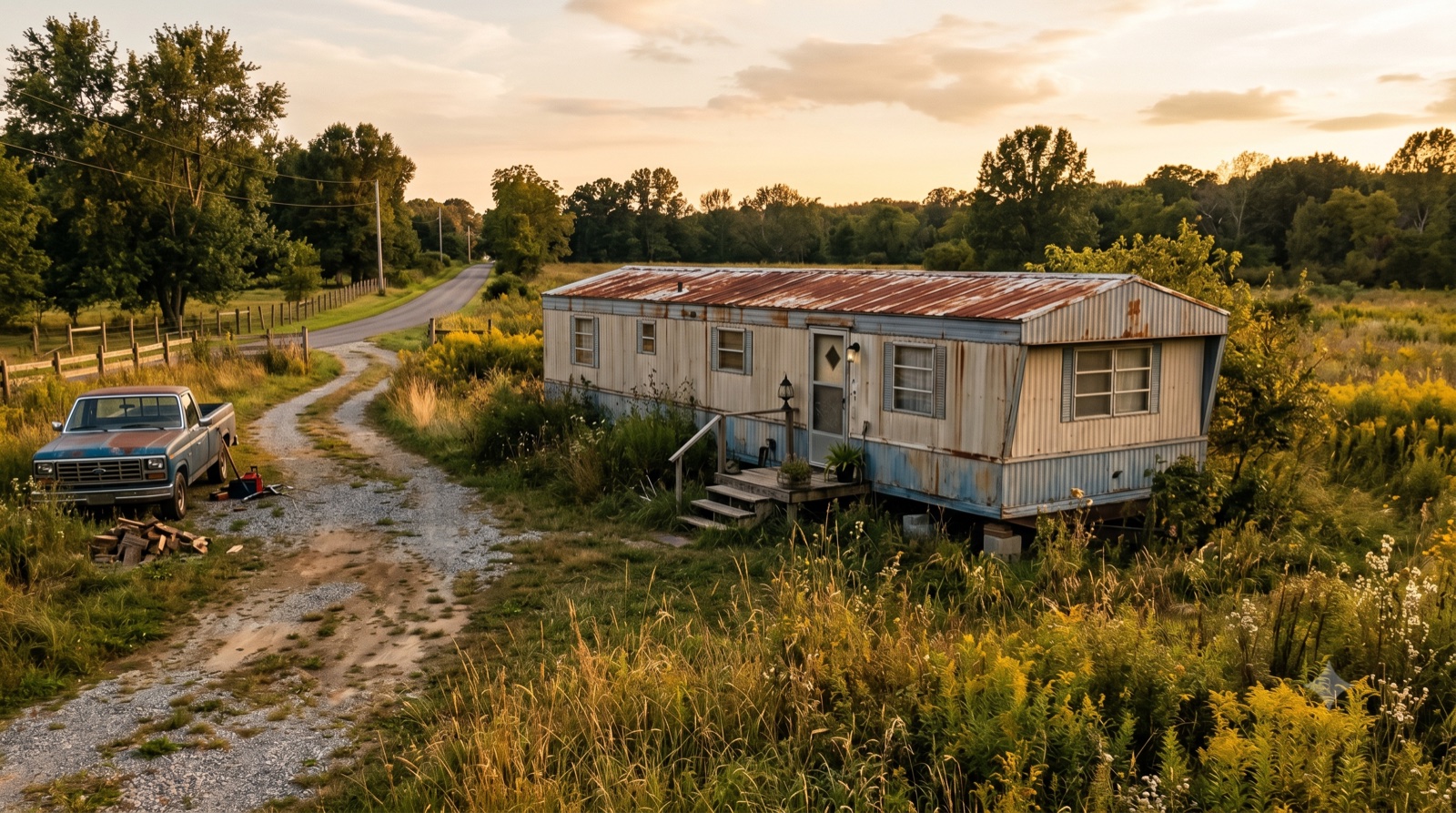
How to Sell Swamp or Bottomland That Floods
Key Takeaways
- Wet land is hard to sell because the obstacles stack — under FEMA's National Flood Insurance Program, a Special Flood Hazard Area is the area inundated by the 1-percent-annual-chance ("100-year") flood, and structures in it carry roughly a 26% chance of flooding over a 30-year mortgage, according to FEMA; that designation, plus possible Clean Water Act wetland jurisdiction, shrinks the retail buyer pool to almost nothing
- It's restricted, not worthless — bottomland hardwood is among the best timber and waterfowl-habitat land there is, according to the USDA Forest Service, and chronically wet ground can also fit conservation programs like USDA's Wetland Reserve Easements or, in some cases, wetland mitigation banking
- A cash buyer absorbs the uncertainty — an experienced land buyer takes on the flood-zone designation, the wetland-delineation question, the thin buyer pool, and the long marketing timeline, and presents a firm written cash offer on your specific parcel instead of asking you to navigate the regulations yourself
How Do You Sell Swamp or Bottomland That Floods?
You sell it the same way any hard-to-finance land sells: by setting honest expectations, disclosing what you know, and matching the parcel to the narrow group of buyers who actually want wet ground — or by selling directly to a cash buyer who takes the whole problem off your hands. Chronically wet land — swamp, river bottom, sloughs, pocosin, seasonally flooding acreage — is legal to own and legal to sell. What makes it hard is that retail buyers can't easily finance or insure it, and that scares off most of the market.
If you've inherited a soggy river-bottom tract, bought a "buildable" lot that turned out to flood every spring, or held low ground for years that never panned out, this guide covers why wet land is hard to sell, how FEMA flood zones and wetland rules affect a sale, what wet land is genuinely worth keeping or selling for, and the most realistic paths to a sale. This is a close cousin of two other situations we cover in depth — selling wetlands you can't build on and selling land in a FEMA flood zone — so we'll link out to those rather than repeat them, and focus here on wet, low-lying acreage as a whole. For more guides on difficult parcels, see our blog.
Why Is Swamp and Bottomland So Hard to Sell?
The core problem is that wet land fails the test most buyers and lenders apply: can it be financed, insured, and built on? For swamp and bottomland, the answer is usually "not easily," and that pushes demand off a cliff.
A few forces compound:
- A tiny buyer pool. Most people shopping for rural land want to build, camp, or hold a dry, usable lot. Chronically wet ground rules out most of them on sight. The buyers who remain — farmers, timber operators, hunters, conservation groups — buy for narrow, specific reasons.
- Lender reluctance. Banks and credit unions that make land loans frequently decline parcels in high-risk flood zones as a matter of policy, because their secondary-market buyers apply strict flood-zone underwriting. No financing means no financed buyers.
- Insurance friction and cost. Where there are structures, flood insurance can be mandatory and expensive, which weighs on any financed buyer's affordability.
- Regulatory uncertainty. If part of the parcel is jurisdictional wetland, what a buyer can do with it is limited under federal law — and just figuring out where those limits fall takes a specialist.
- Long marketing timelines. Put it all together and wet parcels routinely sit unsold for a long time, with carrying costs (taxes, upkeep) ticking the whole while.
This is the same demand collapse that hits land that simply won't sell or that's unbuildable for other reasons. Expectations need to come down before you list — that's not pessimism, it's the market.
How Do FEMA Flood Zones and Insurance Affect a Wet-Land Sale?
FEMA's National Flood Insurance Program (NFIP) maps flood risk into zones that appear on Flood Insurance Rate Maps. Anyone can look up a parcel's designation by address at the FEMA Flood Map Service Center (msc.fema.gov). For wet, low-lying land, the designation usually lands in one of these categories:
- Zone A — Within a Special Flood Hazard Area subject to the 1-percent-annual-chance flood, but no base flood elevation has been determined. This is the most common designation for rural low ground.
- Zone AE — Same 1-percent-annual-chance standard, but with a determined base flood elevation, and it's the zone where a designated floodway typically appears.
- The floodway — The channel of the river plus the adjacent land that must be kept clear to carry the base flood. According to FEMA, encroachments such as fill and construction are prohibited in the regulatory floodway unless it's demonstrated they won't raise flood levels. River-bottom land often sits partly or wholly in a floodway, which is about the most development-restricted ground there is.
- Zone X — Moderate-to-minimal risk; shaded Zone X is the 0.2-percent-annual-chance ("500-year") area, and unshaded Zone X is outside the mapped floodplain.
A Special Flood Hazard Area (SFHA) is the area that will be inundated by the 1-percent-annual-chance flood — the "base flood" or "100-year flood" — and a structure in an SFHA has roughly a 26% chance of flooding during a standard 30-year mortgage, according to FEMA. That "1-percent annual chance" is a yearly odds, not a once-a-century promise.
Why this matters for selling: an SFHA designation triggers the mandatory flood-insurance purchase requirement for federally backed mortgages on improved property, and lenders frequently won't finance high-risk land at all. We cover the financing-and-insurance mechanics in detail in our flood-zone selling guide. The short version for a wet-land seller: most of the financed, insured retail market is unavailable to you, which is exactly why cash buyers dominate this corner of the land market.
What Wetland Rules Apply, and Do You Need a Delineation?
Flood-zone designation and wetland jurisdiction are two separate regulatory programs that often land on the same wet parcel. The flood map tells you about inundation risk; wetland rules tell you what you can legally do with the ground.
Under the Clean Water Act, Section 404 requires a federal permit before dredged or fill material may be discharged into jurisdictional wetlands — those that qualify as "waters of the United States" — unless an activity is specifically exempt, according to the EPA. A wetland delineation is the field study that maps where wetlands begin and end on a parcel, and a jurisdictional determination is the Army Corps of Engineers' decision about which of those wetlands fall under federal authority. We walk through that whole process in our wetlands guide.
One important recent shift: in Sackett v. EPA (2023), the U.S. Supreme Court narrowed the definition of "waters of the United States," holding that the Act's wetland coverage reaches only wetlands with a "continuous surface connection" to a covered water body, and the EPA and Army subsequently amended the WOTUS rule to conform, according to the EPA. At a high level, that means fewer isolated wetlands fall under federal jurisdiction than before — but this is genuinely complex, jurisdiction is still being litigated and clarified, many states run their own wetland programs that reach further than the federal one, and only a qualified consultant or the Corps can tell you what applies to your specific parcel. Don't assume Sackett took your land out of regulation.
For a seller, the practical wrinkle is a chicken-and-egg problem: many retail buyers won't make an offer until a delineation exists, but they also won't pay to commission one on land they don't own. That stalemate keeps a lot of wet parcels sitting on the market.
Should You Disclose Flooding and Wetland Status?
Generally, yes — and in most states you're required to. Flood history and flood-zone designation are widely treated as material facts under seller-disclosure laws, and several states have explicit statutory flood-disclosure requirements. Disclosing what you know (flood-zone designation, flooding history, any wetland determination on file) protects you from later rescission or fraud claims. Requirements vary by state, so confirm yours with a local real estate attorney. Honesty here also tends to attract the right buyer faster — the people who buy wet land already expect it to be wet.
What Is Wet, Low-Lying Land Actually Worth Keeping or Selling For?
Wet land isn't worthless — it's valuable to a different buyer than the one who wants a dry building lot. Understanding those uses helps you set expectations and find the right buyer.
- Timber. Bottomland hardwood (oak, sycamore, cottonwood, sweetgum, cypress) is prime timber ground; one of the best-known values of bottomland hardwood stands is timber production, and species like oak and black walnut can be grown for high-value saw logs and veneer, according to USDA Forest Service material. Timber buyers value standing inventory and rotation, not buildability. See our timberland selling guide.
- Hunting and waterfowl. Marsh, swamp, and seasonally flooded bottoms are premier habitat for ducks, geese, deer, and turkey. The federal government has leaned on this for decades — the Federal Duck Stamp program has supported conservation of millions of acres of wetland habitat, according to the U.S. Fish & Wildlife Service. Genuine recreational appeal overlaps with the market for hunting and recreational land.
- Conservation easements (USDA WRE). USDA's Natural Resources Conservation Service runs Wetland Reserve Easements under the Agricultural Conservation Easement Program, which help landowners protect, restore, and enhance previously degraded wetlands — often on marginal, frequently flooded former cropland. According to NRCS, for permanent easements the agency pays the easement value plus a share of restoration costs. It's a real option for owners who want to keep title while retiring wet ground from production, but it's a permanent restriction, not a quick cash-out.
- Wetland mitigation banking. A mitigation bank is restored or preserved wetland that generates credits, which developers buy to offset permitted impacts elsewhere under Section 404; only approved bank sponsors can sell those credits to permittees, according to the EPA. In theory a landowner can profit by establishing or selling into a bank — but it's a specialized, multi-year process requiring regulatory approval, ecological assessment, a perpetual easement, and demand from nearby permitted projects. It is not a fast or simple exit.
- Farming the bottoms. Floodplain soils are often the most fertile around thanks to centuries of silt deposition, and cash-buying farmers frequently accept flood-zone designation as a feature of productive bottomland cropland.
The honest read: building is restricted, financing is scarce, delineation is expensive and usually has to come first, and the alternative values are either modest or require years of specialized work to unlock. That's why wet parcels routinely sell for a small fraction of what a comparable dry, buildable lot would bring. If you want a grounded sense of where you stand, start with how much your land is worth.
What Are Your Options for Selling Wet Land?
Here's how the realistic disposition paths compare for chronically wet, flood-prone acreage:
| Option | Typical Timeline | Buyer Pool | Cost to You | Best For |
|---|---|---|---|---|
| List with an agent (MLS) | Long; wet parcels often sit | Narrow — most financed buyers screened out by zone/lender | Commission + carrying costs while it sits | Dry-edge parcels with a real buildable portion |
| Sell by owner (FSBO) | Long and uncertain | Whoever you can reach yourself | Your time, marketing, no commission | Owners who already know a likely buyer (neighbor, hunter, farmer) |
| Conservation / mitigation (USDA WRE, mitigation bank) | Years; specialized process | Government program or bank sponsor | Consultants, permits, perpetual easement | Owners who want to keep title or preserve the land |
| Direct cash buyer | Days to weeks | One ready buyer (e.g. Jerez Land) | No commission, no studies, no contingencies | Owners who want speed and certainty, land sold as-is |
There's no single "right" answer — it depends on how much usable dry ground you have, how fast you want out, and whether you'd rather maximize a long-shot retail price or take a firm number now. For more on the agent-versus-direct question, see our guides on whether you need a realtor to sell land and how to sell land by owner.
How to Sell Your Wet Parcel As-Is
If you want to skip the disclosure complexity, the lender screening, and the long wait for a buyer who's comfortable with swamp, the most direct path is a cash sale to a buyer who already accounts for all of it.
A direct cash buyer like Jerez Land purchases swamp, river-bottom, and other chronically wet land as-is. We absorb the flood-zone designation, the wetland-delineation question, the thin buyer pool, the carrying and marketing costs, and the resale risk — and we present a firm written cash offer on your specific parcel. No formulas, no per-acre table, no asking you to commission studies or navigate the regulations yourself. Because there's no lender involved, there's no mandatory flood insurance, no appraisal contingency, and no financing approval to wait on.
A few quick steps make any wet-land sale smoother:
- Look up your flood zone at msc.fema.gov and save the FIRM panel.
- Gather any wetland determination or delineation already on file for the parcel.
- Note your flooding history and check your state's disclosure requirements with a local attorney.
- Confirm your back-tax status — unpaid taxes complicate any closing.
- Request a direct offer from a buyer who already prices the flood and wetland situation in.
Request a no-obligation cash offer and we'll review your parcel and its situation together. There are no commissions or listing fees, and we can typically close faster than a traditional sale — even on ground most buyers won't touch. Wondering whether you'll even need paperwork like a survey first? We can walk you through what's actually required. For more guides on selling difficult land, visit our blog or head home.
Frequently Asked Questions
I own swamp or bottomland that floods — can I actually sell it?
Yes. Wet, low-lying, and flood-prone land is legal to own and legal to sell. What makes it hard is that retail buyers usually can't finance or insure it easily, which shrinks the buyer pool. You can still sell to cash buyers, farmers, timber operators, hunters, or conservation programs — and a direct cash buyer will purchase it as-is without lender financing.
I have river-bottom land, but lenders won't finance it — why?
Banks and credit unions that make land loans frequently decline parcels in high-risk FEMA flood zones as a policy matter, because their secondary-market buyers apply strict flood-zone underwriting. On top of that, flood insurance can be mandatory and costly where there are structures. With financing off the table, most financed retail buyers simply can't purchase the land, which is why cash buyers dominate this market.
Do I need a wetland delineation to sell flood-prone land?
Not strictly, but many retail buyers will require one before making an offer, and they typically won't pay to commission it on land they don't own — a stalemate that keeps wet parcels unsold. A wetland delineation maps where wetlands begin and end, and a jurisdictional determination is the Army Corps of Engineers' decision about which fall under federal authority. A cash buyer like Jerez Land can often proceed without making you commission one first.
Do I have to disclose that my land floods or is wet?
In most states, yes. Flood history and FEMA flood-zone designation are widely treated as material facts under seller-disclosure laws, and several states have explicit statutory flood-disclosure requirements. Disclosing what you know protects you from later rescission or fraud claims. Requirements vary by state, so confirm yours with a local real estate attorney.
I've got 20 acres of bottomland — what is it actually good for?
Plenty — just not building. Bottomland hardwood is prime timber and waterfowl-and-deer hunting habitat, according to USDA Forest Service material and the U.S. Fish & Wildlife Service. Chronically wet ground can also fit conservation programs like USDA's Wetland Reserve Easements, and in some cases wetland mitigation banking. Floodplain soils are also among the most fertile for farming. These uses appeal to specific cash buyers rather than the general building market.
Did Sackett v. EPA mean my wetland is no longer regulated?
Not necessarily. In Sackett v. EPA (2023), the Supreme Court narrowed federal "waters of the United States" to wetlands with a continuous surface connection to a covered water body, and the EPA amended its rule to conform — so fewer isolated wetlands fall under federal jurisdiction. But the law is still being clarified, and many states run their own wetland programs that reach further than the federal one. Only a qualified consultant or the Army Corps can tell you what applies to your parcel.
Disclaimer: This article is for informational purposes only and does not constitute legal, financial, environmental, or professional advice. Flood-zone designations, wetland jurisdiction, and disclosure requirements vary by location and change over time. Always consult a licensed environmental consultant, real estate attorney, or the U.S. Army Corps of Engineers before making decisions about wet, flood-prone, or wetland property. Jerez Land is not responsible for actions taken based on this information.