
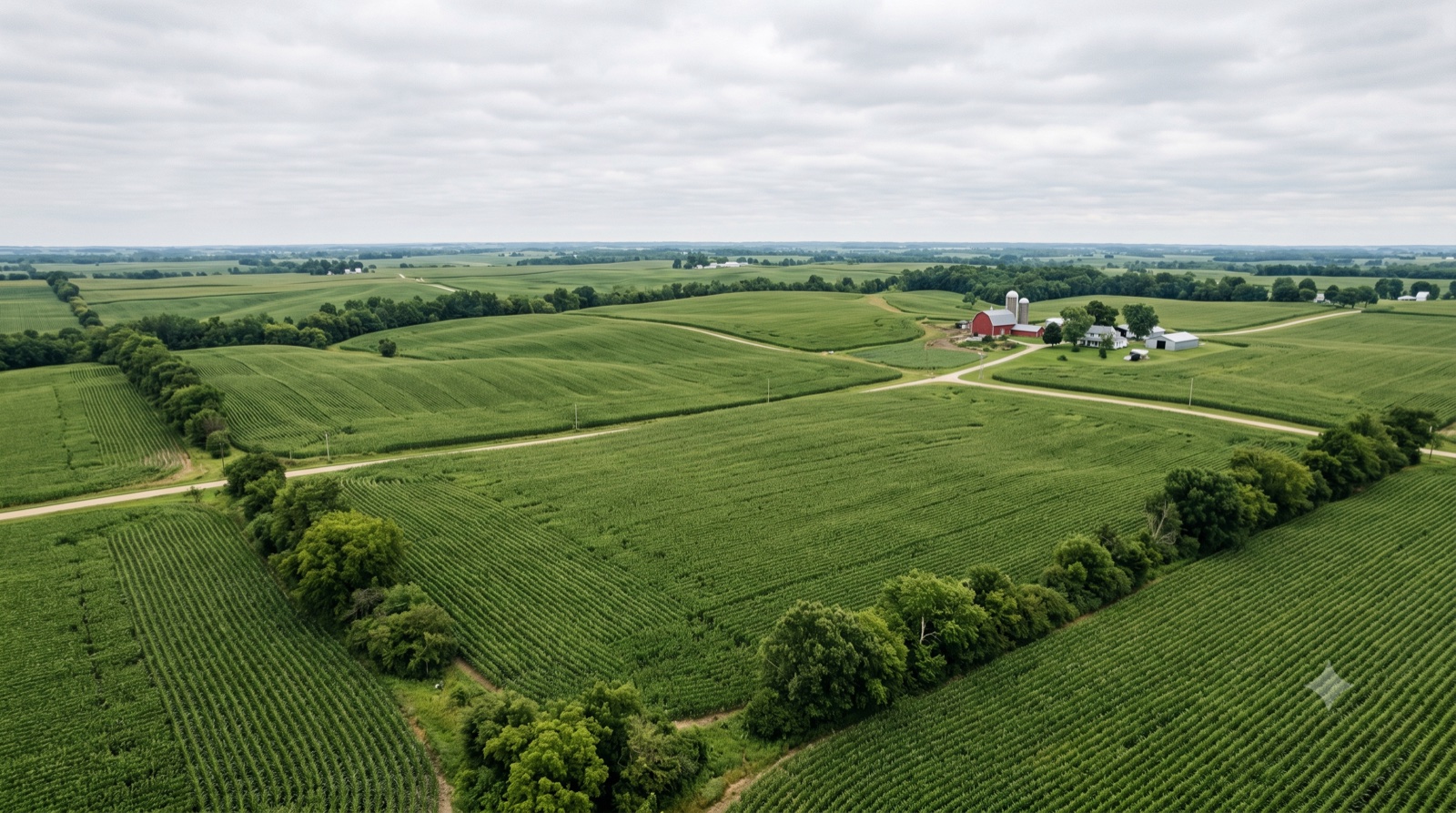
Selling Idle Pasture or Grazing Land That's No Longer Farmed: Tax Rollback Risk and Your Options
Key Takeaways
- Letting pasture go idle can quietly cost you the tax break that made it cheap to hold: Most state current-use programs require active agricultural use, and many recapture several years of deferred taxes when the land stops qualifying or sells to a non-farm buyer — Tennessee's Greenbelt rollback covers 3 years for agricultural land, North Carolina's present-use value rollback covers the current year plus 3 prior years, and Pennsylvania's Clean and Green clawback runs up to 7 years plus 6% interest (Tennessee Comptroller; NC DOR; WeConservePA)
- Idle grassland doesn't stay open on its own: Without grazing or hay cutting, pasture undergoes secondary succession — broadleaf weeds first, then woody brush, then eventual reversion toward forest — which shrinks usable acreage and can leave you on the hook under state noxious-weed laws (Beef Cattle Research Council; National Agricultural Law Center)
- The buyer pool for idle pasture is real but specific: Neighboring ranchers expanding their grazing base remain the predominant buyers of agricultural land, alongside hobby farmers, recreational/hunting buyers, homesite buyers, and cash land buyers — and many of these deals close in cash (Swan Land Company; Mirr Ranch Group)
How Do You Sell Pasture or Grazing Land That Nobody Is Farming Anymore?
The main challenge is managing the agricultural-use tax break that has kept your property taxes low — most states will recapture several years of deferred taxes when idle land stops qualifying or converts to a non-farm use. Your best paths forward are leasing the land to a neighbor to keep it qualified until you're ready to sell, or selling directly to a cash buyer who can absorb any rollback exposure.
If you own cattle pasture, hayground, or grazing land that has gone quiet — the herd is sold, the operation wound down, you aged out, or you inherited it and never ran livestock — selling it raises questions that don't come up with active farmland. The single biggest one is what happens to the agricultural-use tax classification that has been keeping your property tax bill low. In most states, that break is tied to active farming or grazing, and letting the land sit idle can trigger a rollback (or "recapture") of several years of deferred taxes, often at the worst possible moment: closing.
This guide is scoped specifically to land that is no longer being actively farmed or grazed. We cover what idleness does to your current-use tax classification, whether you can keep it qualified until you sell, what happens to the land physically as it sits, who actually buys idle pasture, and what it costs to keep holding it.
For the broader picture on actively farmed ground, see our general guide on how to sell farmland and the keep-versus-sell decision in should I sell my farmland. If a conservation contract is involved, selling land in a conservation easement or CRP contract covers that separately. Start with the blog for the full library.
What Happens to the Ag-Use Tax Break When Land Stops Being Farmed?
This is the central issue, and it surprises owners constantly. Most states offer some form of current-use (also called use-value) property tax assessment for farmland — Greenbelt in Tennessee, Clean and Green in Pennsylvania, present-use value (PUV) in North Carolina, agricultural use in South Carolina, CUVA in Georgia, and similar programs elsewhere. These programs assess qualifying land on what it earns as farmland rather than its full market value, which can dramatically lower the annual tax bill.
The catch built into almost all of them: the favorable assessment is a deferral, not a forgiveness. The state is letting you postpone the difference between use-value tax and market-value tax, and it reserves the right to collect that postponed amount back if the land stops qualifying.
What "Stops Qualifying" Actually Means
Two things commonly disqualify a parcel and trigger recapture:
- The use changes — the land stops being actively farmed or grazed, falls below the program's activity or income threshold, or the owner formally withdraws.
- The land is sold and converted to a non-agricultural use (a homesite, a subdivision, commercial use, or simply a buyer who won't keep it in production).
Tennessee's Greenbelt program is a clean illustration. When a Greenbelt parcel becomes disqualified — because the use no longer meets the qualifications, the owner withdraws in writing, the land is platted for subdivision, or it's sold and converted to another use — the owner can owe rollback taxes, defined as the difference between the Greenbelt assessment and the market-value assessment. For agricultural and forest land the rollback period is 3 years (the current year plus the two preceding); for open-space land it's 5 years (Tennessee Comptroller; Shelby County Trustee; Tennessee Farm Bureau).
The Rollback Math Varies a Lot by State
The mechanics are similar everywhere, but the lookback window and interest differ:
- Tennessee (Greenbelt): 3 years for ag/forest land (Tennessee Comptroller).
- North Carolina (PUV): when a tract is disqualified, deferred taxes plus interest for the current year and the 3 prior years become due. To even qualify, agricultural land generally needs at least 10 acres in production and a 3-year average gross income of $1,000/year — a bar that idle pasture can quietly fall below (NC State Extension; NC DOR).
- South Carolina (agricultural use): rollback equals the difference between ag-use tax and what would have been owed at market value with the 6% assessment ratio. Effective January 1, 2021, the lookback was shortened from 5 years to 3 years (Burr & Forman; Jasper County).
- Pennsylvania (Clean and Green): breaching the covenant exposes the owner to up to 7 years of rollback taxes at 6% simple interest per year (Commonwealth of PA; WeConservePA).
Because the rules are this state-specific, confirm your own exposure with the county assessor before you price the land or sign anything. The takeaway for an idle-pasture owner is simple: the tax advantage you've been enjoying may already be eroding, and a sale to the wrong kind of buyer can convert years of quiet savings into a lump-sum bill.
Can You Keep Idle Pasture Enrolled Until You Sell?
Often, yes — and it's frequently worth doing, because the cheapest way to handle rollback risk is to not trigger it. The common thread across current-use programs is that they reward continued agricultural activity. Idle pasture can usually stay qualified if you put it back to a qualifying use without running your own operation.
Keep It Working Without Working It Yourself
The practical levers most owners use:
- Lease it to a neighbor for grazing. A grazing lease with a local cattle operator who runs livestock commercially can keep the land in agricultural use. Compensation can be modest or even structured as a trade (for example, the grazier maintaining fence) — the point is that the parcel is supporting a commercial operation (National Agricultural Law Center, Ranchers' Leasing Handbook).
- Lease or hire out hay cutting. If the ground is suitable, leasing it to a hay producer for cutting and baling can also satisfy ag-use requirements. Many programs expect a real cutting schedule, and leases generally need to be in force as of the assessment date (often January 1) with documentation.
- Document everything. Assessors increasingly want evidence: a written lease, sales receipts, or proof of cutting. Several states require annual renewal of the classification, so a handshake won't always hold.
Keep-Enrolled-and-Lease vs. Let It Lapse
| Factor | Keep Enrolled + Lease to a Grazier/Hay Cutter | Let It Lapse (Sit Idle) |
|---|---|---|
| Property tax basis | Stays at low ag use-value | Reverts toward market-value assessment |
| Rollback / recapture risk | Deferred while qualifying use continues | Can be triggered by idleness alone in some programs |
| Land condition | Brush kept down, forage maintained | Woody encroachment, fence/water decline |
| Income while you decide | Modest lease income (or in-kind upkeep) | None — pure carrying cost |
| Effort required | Find and manage a tenant; annual paperwork | None until sale |
| Effect at sale | Cleaner parcel, fewer surprises for buyer | Possible lump-sum rollback at closing |
Leasing isn't free of friction — you take on a tenant relationship and ongoing paperwork — but it preserves the classification, keeps the land open, and buys you time to sell deliberately. Just note the limit: leasing defers the rollback question; the eventual sale to a non-farm buyer can still trigger it depending on the new use and your state's rules.
What Happens to Pasture Physically When It Sits Idle?
Idle grassland is not a stable state. Grazing and haying are what hold a pasture open; remove that pressure and the land begins to revert. Ecologists describe this as secondary succession or woody plant encroachment: previously grazed or cropped land, once abandoned, is recolonized by woody plants and trends back toward forest over time (Wikipedia, Woody Plant Encroachment).
The sequence is predictable. The pasture first grows more diverse with broadleaf and grassy weeds, then fills in with shrubs and larger woody species, and eventually the open ground closes in. As brush density rises, usable grazing acreage falls — a real economic cost baked into the parcel a buyer is evaluating (Beef Cattle Research Council).
Condition Issues That Affect a Sale
- Forage degradation. Desirable grasses get crowded out by weeds and brush, lowering the land's productive value to a grazier or hay buyer.
- Fence and water infrastructure. Idle pasture usually means neglected perimeter fence and unused or failing water sources — both things a livestock buyer will price into an offer or ask you to address.
- Noxious-weed obligations. Nearly every state has a noxious-weed law assigning landowners responsibility to control listed weeds. Where a county finds a violation, it can move to control the weeds and bill the owner — in some jurisdictions adding a penalty and, if unpaid, a lien on the property (National Agricultural Law Center). Letting pasture go isn't always cost-free in the eyes of the county.
- Open-range and fence law. Whether you're obligated to fence livestock in or out is governed by state and county "fence law," which varies widely — relevant if a neighbor's stock has been drifting onto your idle ground (National Agricultural Law Center).
The longer pasture sits, the more reclamation work a future buyer faces, and the more that expected work shows up as a discount in what they'll pay.
Who Buys Idle Pasture and Grazing Land?
The buyer pool for idle pasture is narrower than for turnkey cropland, but it is real — and it skews toward people who can either put the land back to work or use it for something other than production.
The Main Buyer Types
- Neighboring ranchers and farmers expanding. This is the predominant buyer for agricultural land generally, and especially for grazing ground. Acquiring an adjacent idle parcel lets an existing operator expand their grazing base, gain access control, and absorb the reclamation cost as part of a larger operation. These are often relationship-driven, cash-heavy deals (Swan Land Company; Mirr Ranch Group).
- Hobby farmers and lifestyle buyers. Buyers wanting a few head of livestock, horses, or a small homestead are natural fits for modest pasture tracts — they value the open ground and rural setting more than peak forage productivity.
- Recreational and hunting buyers. Idle pasture reverting to brush and edge habitat can appeal to hunters and outdoor buyers; the early-succession cover that hurts grazing value can actually add wildlife value. See selling hunting land.
- Homesite buyers. Open, accessible pasture with road frontage is attractive for a rural homesite — though note this is exactly the kind of conversion that tends to trigger ag-use rollback.
- Cash land buyers. Companies that buy rural land directly for cash — including idle, marginal, or reclamation-needed pasture that doesn't fit a financed buyer cleanly.
Pasture Buyers vs. Cropland Buyers
| Consideration | Idle Pasture / Grazing Land | Active Cropland |
|---|---|---|
| Primary buyer | Neighboring rancher, hobby/recreational, homesite | Adjoining operator, farmland investor |
| What they value | Forage potential, fence/water, frontage, cover | Soil productivity, drainage, current lease/yield |
| Reclamation needed | Often (brush, fence, water) | Usually minimal if in production |
| Financing | Frequently cash or high equity | Mix of cash and ag lending |
| Ag-use rollback at sale | Likely if converted to homesite/rec | Varies by buyer's intended use |
A useful interim play while you find the right buyer: lease the idle pasture back to a grazier. It keeps the classification alive, holds brush down, and presents the next buyer with a cleaner parcel. Selling to the operator next door is often the smoothest path of all — see selling land to a neighbor.
The Real Cost of Holding Idle Pasture
When pasture is grazed or hayed, it generates income (or at least in-kind upkeep). When it sits idle, it only generates costs:
- Property taxes with no offsetting income. If idleness drops you out of the current-use program, your assessment can climb toward market value — a higher annual bill with nothing coming in to cover it.
- Mowing and bush-hogging. Keeping the field open enough to stay marketable (and to control brush before it becomes trees) is an ongoing expense once livestock aren't doing the job.
- Noxious-weed compliance. As above, ignoring listed weeds can become a county-imposed cost or lien in some states.
- Insurance and liability. Rural ground carries liability exposure whether or not it produces income.
These costs compound quietly. A parcel that felt "free" to hold while the herd grazed it can turn into a steady drain within a couple of idle seasons — which is what pushes many owners to decide between leasing it back out or selling.
Selling Idle Pasture for Cash Without the Reclamation and Rollback Headache
For owners who don't want to chase a tenant, mow it for another few years, or risk a rollback surprise mid-listing, a direct cash sale is often the most realistic path. Jerez Land buys idle pasture and grazing land for cash, in any condition and any state — including overgrown ground, parcels with aging fence and water, and land carrying potential rollback exposure.
We give you a parcel-specific, firm written number with no obligation. There are no commissions, no listing photos, no waiting on a financed buyer, and no requirement that you clean the place up first. The buyer absorbs the carrying costs, the marketing effort, and the resale risk — including the work of putting brushy ground back into shape. If a rollback or back-tax issue is in the mix, we'll factor it into a clean closing rather than letting it derail the deal.
Curious what the parcel is worth before deciding? See how much is my land worth and what to consider when selling land. If back taxes are part of the picture, read selling land with back taxes; if you inherited the pasture, how to sell inherited land walks through it.
Request a no-obligation cash offer — we buy idle pasture, hayground, and grazing land as-is, and we handle the closing paperwork.
Frequently Asked Questions
I stopped farming my pasture years ago — will I owe rollback taxes when I sell it?
Possibly. Most state current-use tax programs (Greenbelt, Clean and Green, present-use value, ag-use) defer the difference between use-value tax and market-value tax, and they recapture several years of that deferral when the land stops qualifying or sells to a buyer who converts it. The lookback varies — Tennessee Greenbelt is 3 years for ag land, North Carolina PUV is the current year plus 3 prior, South Carolina is 3 years (since 2021), and Pennsylvania Clean and Green can reach 7 years plus 6% interest. Ask your county assessor what your specific exposure is before you sell.
I want to keep my ag-use tax break on idle pasture until I sell — can I do that?
Usually only if it's put back to a qualifying agricultural use. The most common way owners keep idle pasture enrolled is by leasing it to a neighbor for grazing or to a hay producer for cutting, with a documented lease in place by the program's deadline (often January 1). The key is that the land supports a commercial agricultural operation. Simply leaving it to sit can drop you below activity or income thresholds and disqualify the parcel, depending on the state.
I have overgrown idle pasture — what kind of buyer actually wants to buy it?
Neighboring ranchers and farmers expanding their operation are the predominant buyers, followed by hobby and lifestyle farmers, recreational and hunting buyers, homesite buyers, and cash land-buying companies. Many of these deals are done in cash or with significant equity. The right buyer for your parcel depends on its size, location, road frontage, and how much reclamation the idle ground needs.
What if I just leave my idle pasture sitting for the next few years?
It reverts. Without grazing or hay cutting to hold it open, the field first fills with broadleaf and grassy weeds, then woody brush, and over time trends back toward forest — a process ecologists call woody encroachment. Usable grazing acreage shrinks, desirable forage gets crowded out, and fence and water infrastructure deteriorate. In many states you may also be responsible under noxious-weed law for controlling listed weeds, with county-imposed costs or liens if you don't.
Should I lease my idle pasture to a neighbor or just sell it?
Leasing to a grazier or hay cutter preserves the ag-use tax classification, keeps brush down, and provides modest income or in-kind upkeep while you decide — but you take on a tenant relationship and annual paperwork, and a later sale to a non-farm buyer can still trigger rollback. Selling delivers immediate liquidity and ends the carrying costs and reclamation burden entirely. The right call depends on your timeline, how much management you want, and your local lease and buyer markets.
Can I sell my pasture without cleaning it up and fixing the fence first?
Not if you sell to a cash buyer. Listed and financed sales often expect the ground to show well — open, fenced, with working water — which can mean mowing, brush clearing, and fence repair before you go to market. A cash land buyer purchases idle, overgrown, or reclamation-needed pasture as-is and absorbs that work into their offer, so you can close without spending money fixing the place up first.
Disclaimer: This article is for informational purposes only and does not constitute legal, financial, or professional advice. Agricultural use valuation rules, rollback and recapture tax provisions, noxious-weed obligations, and fence laws vary significantly by state and jurisdiction. Always consult with a qualified attorney, tax advisor, and land professional before making decisions about idle pasture or grazing land. Jerez Land is not responsible for actions taken based on this information.