
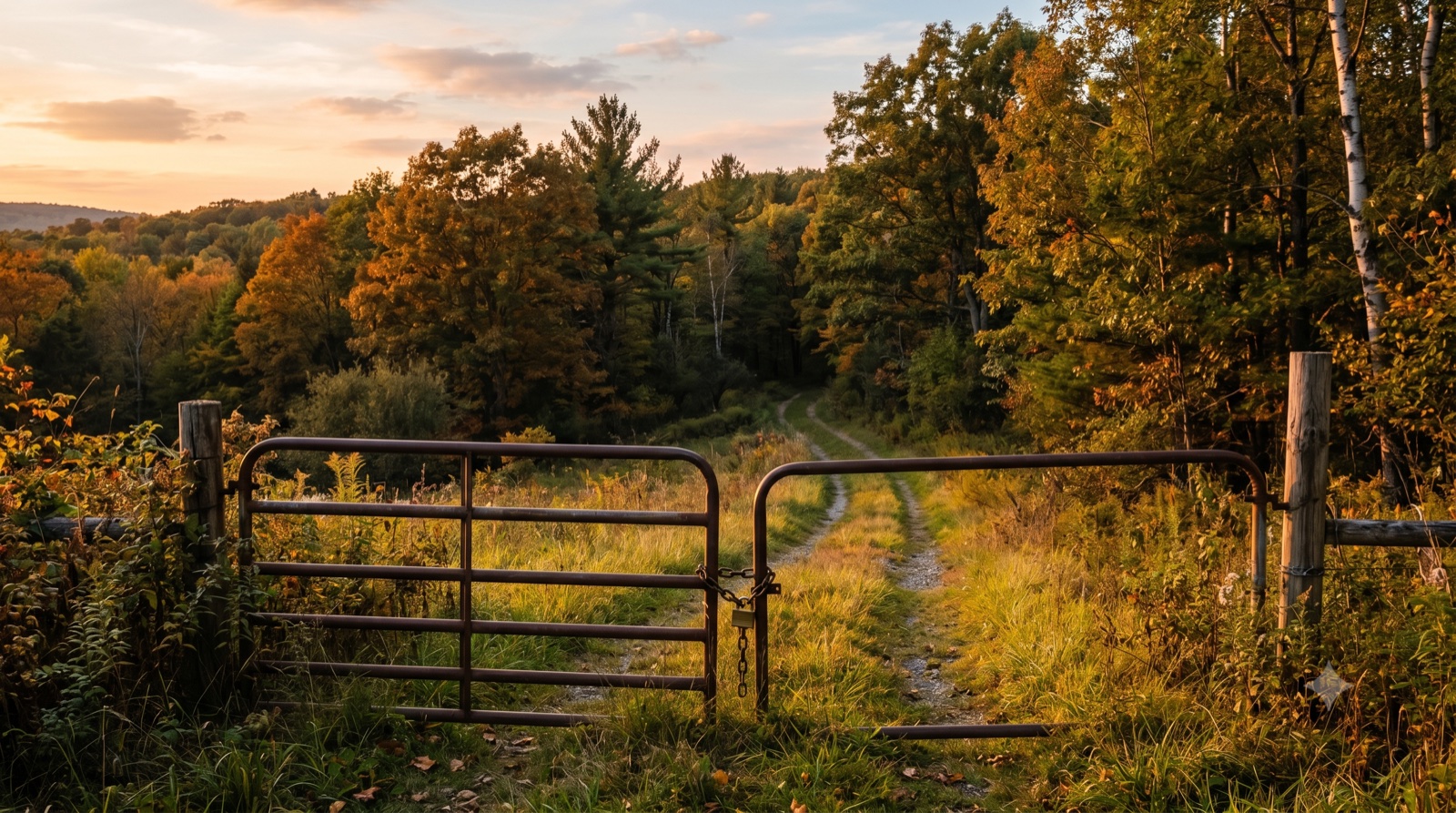
Selling Land After a Railroad Removes or Restricts Your Private Crossing
Key Takeaways
- No single regulator has to approve a railroad removing a private crossing: the FRA treats private crossings as primarily under the railroad's own jurisdiction, and the FHWA's Railroad-Highway Grade Crossing Handbook states plainly that "responsibilities for private highway-rail crossings are not clearly understood or consistently applied" — we found no state DOT or utility-commission process in Alabama, Georgia, Michigan, Mississippi, North Carolina, Pennsylvania, South Carolina, or Tennessee that requires approval before a private crossing is restricted or removed
- Federal rail preemption is broad, but a landowner's routine crossing claim isn't automatically wiped out by it: in Franks Investment Co. v. Union Pacific Railroad Co., 593 F.3d 404 (5th Cir. 2010, en banc), the Fifth Circuit held that a state-law claim over "routine, non-conflicting" private crossing use is not categorically preempted by 49 U.S.C. § 10501(b), even though the Surface Transportation Board otherwise holds exclusive jurisdiction over rail transportation, per Slover & Loftus LLP's summary of the case
- Oklahoma is the one state in our footprint with a standalone statute forcing a railroad to maintain a crossing: Oklahoma Statutes Title 66, § 66-127 requires a railroad to "make and keep in good repair one causeway or other safe and adequate means of crossing" whenever a person owns land on both sides of the track — a protection we could not verify in Alabama, Georgia, Michigan, Mississippi, North Carolina, Pennsylvania, South Carolina, or Tennessee
Can You Sell Land After a Railroad Removes or Restricts Your Private Crossing?
Yes, you can sell it, but you are in a different legal position than an ordinary landlocked or neighbor-dispute parcel: the party controlling your access is a common carrier railroad operating under broad federal rail-safety preemption, not a private neighbor or a missing piece of paperwork. Your leverage depends almost entirely on three things — what the original right-of-way deed says, how long the crossing has actually existed, and whether your state happens to have a statute like Oklahoma's protecting it.
This is a specific situation, and it is worth naming the three closely related posts it is not. It is not general landlocked land with no cause identified, where the parcel is simply surrounded by other private owners. It is not a missing recorded roadway easement, where the gap is a paperwork problem rather than an active third party. And it is not a neighbor blocking a recorded easement, where the servient landowner is a private individual subject to ordinary state easement law. Here, the party removing or conditioning your access is a railroad, acting under a federal regulatory and preemption framework that does not apply to a neighbor's fence line, and the legal tools available to you are correspondingly different.
Who Actually Controls Whether Your Private Crossing Stays Open?
No single regulator holds general authority to approve or veto the removal of a private railroad crossing — the FRA treats private crossings as falling mainly under the jurisdiction of the railroad that owns the track, state highway-crossing programs are built almost entirely around public road crossings, and in practice the railroad's own safety and liability policy decides your crossing's fate. The FRA has acknowledged that not every state exercises jurisdiction over private crossings at all, and where a state does have some authority, how far it reaches varies state by state.
The FHWA's official Railroad-Highway Grade Crossing Handbook goes further and names the gap directly: "responsibilities for private highway-rail crossings are not clearly understood or consistently applied," calling it "an institutional problem that has impeded safety improvement programs at private crossings." The handbook's own recommended first step for a railroad addressing a private crossing is closure — "every effort" should be made to close it — and it states outright that "there is no legal precedent for public agency involvement" in consolidating or closing private crossings, even describing a North Carolina corridor-wide closure effort that ran into exactly that gap.
We confirmed the same public-crossing-only pattern in three of our footprint states. Pennsylvania's PUC "Crossing Closures" process is scoped to "public highway-rail crossings" and does not address private ones. Georgia's crossing-elimination regulation (Ga. Comp. R. & Regs. 672-16-.03) applies to a railroad seeking to eliminate a crossing "on any public road," filed with GDOT or a local government — private crossings are outside its scope. North Carolina's G.S. § 62-39 gives the Utilities Commission authority to order and regulate crossings, but its own text says it "shall not be construed to limit the right and duty conferred by law with respect to crossing of railroads and highways" — language aimed at utility-to-utility crossings rather than a documented private-crossing removal process. We did not find a private-crossing-specific statute in Alabama, Michigan, Mississippi, South Carolina, or Tennessee either.
What About the Surface Transportation Board (STB)?
The STB holds exclusive federal jurisdiction over rail "transportation," and 49 U.S.C. § 10501(b) preempts state laws or remedies that would manage or unreasonably interfere with it — but that preemption is not automatic proof the railroad wins a crossing fight. In Franks Investment Co. v. Union Pacific Railroad Co., the Fifth Circuit sitting en banc held that a Louisiana landowner's state-law possessory action to stop Union Pacific from unilaterally closing four crossings that had provided access for more than 80 years was not categorically preempted, because a "routine, non-conflicting" crossing use that merely incidentally touches rail transportation is a different thing from a state law that actually manages or governs it. The court's broader point, as Slover & Loftus LLP summarizes it, is that a rail carrier does not have "unfettered ability to close any and all crossings at will, with no regard to the protected rights of property owners." That is a Fifth Circuit holding built on Louisiana property law — it establishes the principle that preemption has a limit here, not that every state provides the same vehicle (possessory action, quiet title, or injunction) to enforce it.
Does a Class I Railroad Have More Power Than a Short Line to Remove Your Crossing?
Legally, no — the same federal preemption framework and the same absence of a private-crossing approval process apply whether the track belongs to a national Class I carrier or a small short line, but the two behave differently in practice and that difference matters for your options. National carriers like Norfolk Southern publish standing private-crossing policy: a new signed agreement is required before crossing work begins, and — critically for a long-used farm crossing — that agreement requirement generally applies even to an existing crossing when the property changes hands, "except in some cases where the crossing is prescribed in the original deed to the railroad or required by applicable law." Short-line and regional operators such as Genesee & Wyoming publish similarly standardized insurance terms for private crossing users, commonly $2,000,000 per occurrence and $6,000,000 aggregate liability coverage naming the railroad as an additional insured, with the license terminating automatically if the policy lapses.
This is not a hypothetical drawn from one state. In 2026, agricultural producers in Montana reported that BNSF Railway — a Class I carrier — was eliminating century-old homestead-era farm crossings, forcing some farm equipment onto a six-mile paved-highway detour, and proposing new crossing agreements that would make individual farmers liable for accidents at the crossing, according to the Bozeman Daily Chronicle. The pattern is the same one described in the AgTalk threads this post is drawn from: a decades-old, informally maintained crossing suddenly becomes a signed contract with insurance minimums, or gets removed outright, citing safety and liability rather than any change on the ground.
What Legal Rights Might You Already Have to Keep the Crossing?
Your strongest source of leverage is usually the original deed the railroad's predecessor used to acquire its right-of-way through the property, because even Norfolk Southern's own policy carves out an exception for a crossing "prescribed in the original deed to the railroad or required by applicable law" — a documented reservation can survive where a fresh agreement demand otherwise would apply. Pull that instrument, and any later crossing agreement, before you do anything else.
Beyond the deed, three other bases show up in this fact pattern, with real state-by-state limits:
- A recorded or referenced crossing agreement. If any prior owner signed one, its terms (including any renewal, insurance, or termination language) govern, and it is likely to control over an informal handshake arrangement.
- A state private-way or prescriptive-use statute. Georgia's O.C.G.A. § 44-9-54 provides that a private way in "constant and uninterrupted use for seven or more years" with no legal steps taken to abolish it may not lawfully be interfered with. We could not verify whether Georgia courts have applied this statute specifically against a common-carrier railroad crossing rather than a private landowner's way, so treat it as a lead for an attorney to test rather than a settled answer.
- A state statute compelling the railroad to maintain access, which — in our nine states — we could only confirm in Oklahoma. § 66-127's causeway requirement applies "when any person owns land on both sides of any railroad." It does not spell out an enforcement or removal-dispute process, so how a landowner would actually invoke it is itself a question for Oklahoma counsel.
An implied easement by necessity, the doctrine that resolves most ordinary landlocked-parcel cases, is a harder fit here. Cornell's Legal Information Institute defines it as requiring "unity of ownership" of both resulting parcels before they were severed — typically one landowner selling off a landlocked piece of their own tract. A railroad's right-of-way was usually acquired from the original farm owner decades or a century ago, not carved out of common ownership between the two current neighbors, so whether necessity doctrine reaches this specific severance history is a question the original conveyance and your state's case law would have to answer — not something to assume either way.
How Does a Railroad-Controlled Crossing Compare to a Blocked Easement or True Landlocked Land?
| Factor | Railroad restricts/removes a private crossing | Neighbor blocks a recorded easement | Land was never granted an easement (landlocked) |
|---|---|---|---|
| Who controls the decision | The railroad, inside a federal rail-preemption framework with little routine state or federal oversight of private crossings | A private neighbor (the servient landowner) | No single party — access was never established across any neighboring tract |
| Owner's main source of leverage | The original right-of-way deed, any recorded crossing agreement, a state statute like Oklahoma's § 66-127, or a state-law possessory/routine-use claim (per Franks Investment) | The recorded easement instrument itself, plus state injunction/quiet-title law | Easement by necessity, prescriptive easement, or a negotiated purchase of access |
| Governing framework | Mostly federal (49 U.S.C. § 10501(b) preemption) layered over a thin patchwork of state law | State property and easement law | State property law |
| Formal process to challenge it | No standard petition process found for private crossings in our footprint states; recourse runs through ordinary civil claims, not an agency filing | Injunction, quiet title, or declaratory judgment action | Court action to establish necessity or prescription, or a negotiated easement purchase |
| Effect on buyer pool before resolution | Severe and immediate — an active removal or new-agreement notice on railroad letterhead reads as a live threat to lenders and title companies even before anything is decided | Narrows, especially once a lis pendens is recorded | Narrow from the outset — no conventional financing |
What Should You Do If the Railroad Sends a Closure or New-Agreement Notice?
Work the list in order, because each step gives the next one something concrete to work from.
- Confirm the crossing's DOT inventory number. Private crossings are included in the FRA's National Highway-Rail Crossing Inventory and are assigned a unique DOT number just like public ones — having it makes every later inquiry to the railroad, an attorney, or a title company faster.
- Pull the original deed that conveyed the right-of-way to the railroad, and any later crossing agreement on record. This is the single most important document in the file, per the deed-reservation exception railroads themselves publish.
- Read exactly what's being demanded before you sign anything. A "renewal" agreement can quietly convert a free, historic crossing into a paid license with insurance minimums (commonly $1–2 million per occurrence in published railroad policy terms) that automatically terminates the crossing if coverage lapses.
- Document historical use — dated photographs, tax or farm records referencing the crossing, and historical aerial imagery — to support whatever state-law claim (possessory, prescriptive, or statutory) turns out to be available in your state.
- Consult a real estate attorney licensed in the property's state before responding. Whether Georgia's private-way statute, Oklahoma's causeway statute, or a Franks Investment-style possessory claim actually applies to your parcel is a state-specific legal question this post cannot answer for you.
- Check whether any alternate practical route exists across your own land or a cooperating neighbor's, since that changes both your negotiating position and your minimum acceptable outcome.
- Assume your buyer pool has already shrunk, whether or not the dispute resolves in your favor, and plan your sale timeline around that rather than around a best-case legal outcome.
How Does an Active Crossing Restriction Affect Selling the Parcel Right Now?
A private crossing under active threat of removal shrinks your buyer pool immediately, before any court, regulator, or negotiation resolves anything, because conventional lenders and title companies want assurance of physical, insurable access — and a removal or new-agreement notice on the railroad's own letterhead is the opposite of that assurance. As with a blocked deeded easement, a standard title policy insures that a recorded right of access exists; it does not guarantee the access stays physically passable, and closing that gap generally requires a specific access endorsement that a sophisticated buyer or lender will ask for once they see the railroad's correspondence, according to WFG National Title. Disclose the situation, assemble the deed and correspondence into one file, and expect the realistic buyer pool to be smaller and more cash-heavy than for an ordinary parcel until the crossing question is settled one way or the other.
If you'd rather not spend months chasing down a right-of-way deed or negotiating liability insurance with a railroad before you can sell, companies like Jerez Land buy parcels with active access disputes, including railroad-crossing situations, and make direct cash offers priced individually to the parcel — a firm written number, not a range or a formula. We absorb the carrying costs and the resolution risk. Request a cash offer, or browse our blog for more on selling parcels other buyers pass on.
Frequently Asked Questions
I just got a letter from the railroad saying it's removing the crossing my grandfather used for sixty years, and now my 90 acres has no way in — can I still sell it?
Yes, but expect a much smaller buyer pool while the notice is active. Pull the original deed that conveyed the right-of-way to the railroad and any past crossing agreement, since a documented reservation is your strongest leverage — even railroads' own published crossing policies carve out an exception for crossings "prescribed in the original deed." Talk to a real estate attorney about whether your state recognizes a possessory or prescriptive claim for a crossing this long-established, and disclose the notice to any buyer rather than hoping it goes unnoticed during title work.
I got a letter from a short line railroad demanding I sign a new private-crossing agreement and carry two million dollars of liability insurance just to keep using my own crossing — do I have to sign it?
Not automatically, but read the deed history before you decide either way. Railroads commonly require a new signed agreement, plus liability insurance commonly in the range of $2,000,000 per occurrence and $6,000,000 aggregate naming the railroad as additional insured, and the license typically terminates automatically if that coverage lapses. If your original right-of-way deed already reserved the crossing, or your state has a statute like Oklahoma's causeway law, you may have a basis to push back rather than simply accept new terms — that determination needs a state-specific legal review.
My family has always just driven across the tracks to reach our land — there was never anything in writing — do we have any rights at all?
Possibly, but you can't assume it and you can't assume the opposite either. No writing does not automatically mean no rights: some states recognize a prescriptive claim after long, uninterrupted use — Georgia's statute sets a seven-year threshold for private ways generally — and the Fifth Circuit has held that a state-law claim over routine, long-established crossing use is not automatically preempted by federal rail law. Whether any of that actually applies to an unwritten farm crossing in your specific state is a question for a real estate attorney, not something this general information can settle for you.
Does the FRA have to approve a railroad closing a private crossing?
No. The FRA generally treats private crossings as falling under the railroad's own jurisdiction rather than requiring federal sign-off, and it has acknowledged that not every state even exercises independent authority over them. The FHWA's own Railroad-Highway Grade Crossing Handbook states that private-crossing responsibilities are "not clearly understood or consistently applied" and that there is "no legal precedent for public agency involvement" in closing them — which is why the decision, in practice, sits mostly with the railroad rather than with any regulator you could formally petition.
Is this the same situation as land crossed by an old, abandoned railroad corridor?
No, and the distinction matters for what process applies. This post covers a crossing over an active, operating rail line, where the railroad itself is restricting or removing your access point while the tracks stay in service — there is no line-abandonment filing or public comment process involved, because the line isn't being abandoned. An abandoned or railbanked corridor is a different situation entirely — the track has stopped operating, and whether you already own the strip depends on the original 1800s-era deed and whether the corridor was railbanked under federal trails law, which our guide on selling land crossed by an abandoned or railbanked rail corridor covers in detail.
Can the railroad make me pay for or insure a crossing my family has used for free for generations?
Often yes, in practice, even if the underlying legal right to use the crossing is still yours. Railroads' published private-crossing policies commonly require a signed agreement plus specified liability insurance before continued use, regardless of how long the crossing has informally existed, and that requirement is separate from the question of whether you have an underlying legal right to the crossing itself. If your deed or a recognized state-law claim already establishes that right, an attorney may be able to push back on new insurance or fee demands rather than have you simply accept them — but confirm that basis first rather than assuming it exists.
Disclaimer: This article is for informational purposes only and does not constitute legal, financial, or professional advice. Laws and regulations vary by jurisdiction and change over time. Always consult with qualified professionals before making land purchase decisions. Jerez Land is not responsible for actions taken based on this information.