Sell My Land in Clare County MI - What Landowners Need to Know
Key Takeaways
- Clare County's effective property tax rate is approximately 1.21%: According to Ownwell, Clare County's median effective rate exceeds Michigan's 1.05% median — making annual holding costs on vacant land meaningfully higher than in many surrounding counties
- Michigan's transfer tax totals $4.30 per $500 of sale price: The state levies $3.75 per $500 and each county adds $0.55 per $500, for a combined rate of $4.30 per $500 — customarily paid by the seller — under MCL 207.521 and MCL 207.501, according to Ottawa County and Lenawee County official transfer tax guides
- 288+ active land listings compete for the same buyer pool: According to Land.com, Clare County currently has more than 288 land listings active on that platform alone — a competitive supply environment that extends average days-on-market for interior wooded and recreational parcels
How Can You Sell Land in Clare County Michigan?
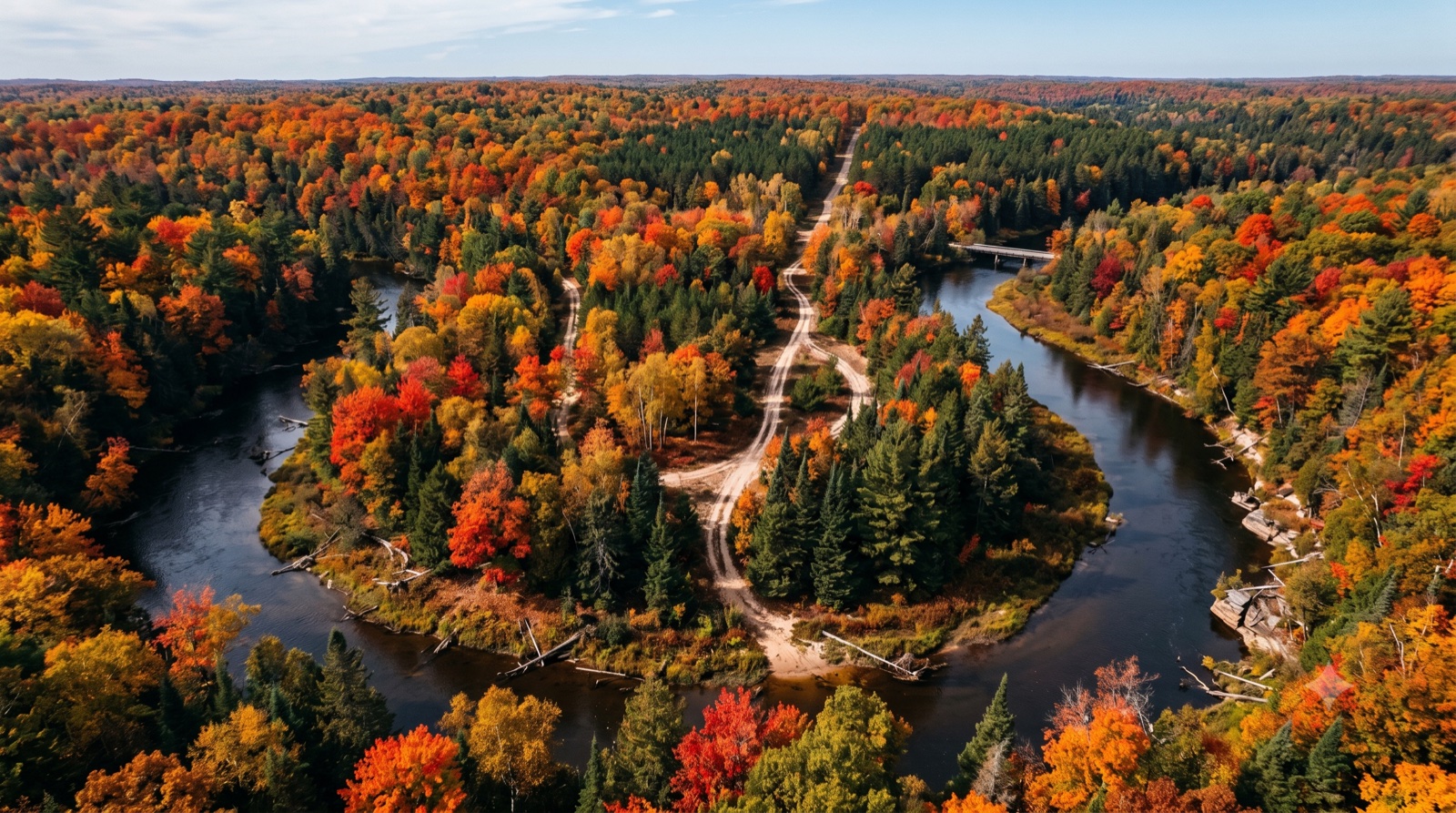
You can sell land in Clare County, Michigan through a title company closing — Michigan does not require an attorney for the transaction. Your options include listing with an agent on MLS platforms, selling by owner through online land marketplaces, or requesting a direct cash offer from a land buyer. Selling land in Clare County, Michigan means navigating a market shaped by outdoor recreation, modest local incomes, and one of the highest concentrations of rural land listings in central Michigan. The county covers 569 square miles of north-central Michigan, bisected by the Muskegon River — offering more than 1,200 feet of frontage in some recreational parcels — and encompassing numerous inland lakes, state forest acreage, and hunting land that draws buyers from downstate and out of state.
Clare County's economy is heavily dependent on tourism and seasonal recreation, according to the Clare County Convention and Visitors Bureau, with healthcare, manufacturing, and retail rounding out the top employment sectors, according to Data USA. The county seat is Harrison. Understanding how Michigan's property tax system, closing process, and competitive land market interact is essential to setting realistic expectations for a land sale.
This guide covers Michigan's SEV and Taxable Value framework as it affects Clare County landowners, the county's zoning structure, how the closing process works with a title company, and how Clare County compares to its neighbors.
What Are the Tax Costs of Holding Land in Clare County?
Michigan assesses all real property annually at 50% of true cash (market) value — a figure called the State Equalized Value (SEV). Under Proposal A (1994), your Taxable Value — the number your taxes are actually calculated on — is capped at annual increases of 5% or inflation, whichever is lower, as long as you own the property. When you sell, Taxable Value uncaps to match the current SEV, which can significantly increase the tax bill for the next owner, according to Michigan's State Tax Commission.
For vacant land not adjacent to your homestead, Michigan's non-homestead school millage applies — approximately 18 mills of school operating taxes that homestead properties do not pay — according to the Michigan Department of Treasury. This distinction is significant: out-of-state landowners holding a Clare County recreational parcel pay a materially higher effective rate than local owner-occupants living on adjoining property.
Clare County's median effective tax rate is approximately 1.21%, according to Ownwell — above Michigan's 1.05% median and above the national median of 1.02%. The highest rates within the county reach approximately 1.25% in the Harrison area; rural townships run somewhat lower. The county's Equalization Department applies a County Equalization Factor when the average assessment level for a property class deviates from 50% of true cash value, a standard Michigan equalization procedure.
How Tax Bills Add Up for Clare County Vacant Land
For a vacant parcel with a Taxable Value of $30,000 (SEV reflecting $60,000 market value), applying a combined non-homestead millage of approximately 40 mills produces an annual tax bill of about $1,200. At $50,000 Taxable Value, the same millage rate produces a $2,000 annual bill — a recurring fixed cost that landowners holding non-productive parcels must cover from other income.
Michigan tax payments are divided into summer (July 1) and winter (December 1) installments. Under the General Property Tax Act (MCL 211.78), delinquent taxes are turned over to the county treasurer on March 1 following delinquency. After one year of delinquency, property is forfeited; by the third year of delinquency, it is subject to foreclosure. Out-of-state owners who do not keep a current mailing address on file with the township are particularly vulnerable — the county's notice obligations are limited to the address of record. For context on how delinquency affects a sale, see our guide on selling land with back taxes.
Michigan's Qualified Forest Program (QFP), administered by the Michigan Department of Agriculture and Rural Development, can exempt enrolled parcels from up to 18 mills of school operating taxes annually. Parcels of 20–39.99 acres must be at least 80% productive forest; parcels of 40+ acres must be at least 50% productive forest, according to MDARD. Given Clare County's extensive hardwood and mixed-forest cover, many rural parcels may qualify. The Commercial Forest Act (CFA) offers deeper tax reductions for 40+ contiguous acres of publicly accessible productive timber land, but requires public access in exchange.
What Zoning Rules and Closing Requirements Apply in Clare County?
Clare County land use is governed at the township level under Michigan's Zoning Enabling Act (PA 110 of 2006). Clare County has 16 townships, each with its own zoning ordinance or lack thereof — some rural townships operate with minimal land-use regulation beyond state environmental requirements, while others have adopted ordinances governing lot minimums, setbacks, and permitted uses. The county seat, Harrison, maintains its own municipal zoning.
For parcels near the Muskegon River, Crooked Lake, Lake George, or any of Clare County's inland lakes, Michigan Part 303 (Wetlands Protection) and Part 301 (Inland Lakes and Streams) may restrict clearing, grading, or development within setback distances from the ordinary high-water mark. Before listing, verify any applicable shoreline restrictions with the Michigan Department of Environment, Great Lakes, and Energy (EGLE) and the relevant township.
If you have received the parcel through an estate or are dealing with multiple heirs on title, our guide to selling inherited land covers the specific steps Michigan requires for probate-involved transfers.
For a practical checklist of the paperwork involved in a Michigan land transaction, see our guide on paperwork needed to sell land.
Michigan's Title Company Closing Process
Michigan does not require an attorney for real estate closings. Licensed title companies handle the complete process — title search, title insurance commitment, deed preparation, transfer tax calculation, and recording — according to Hirzel Law. The typical closing sequence for a Clare County land sale:
- Purchase agreement: Signed by buyer and seller, specifying price, earnest money, contingencies, and closing date
- Title examination: Title company searches Clare County Register of Deeds records for liens, encumbrances, easements, and delinquent taxes
- Title insurance: Owner's and lender's policies issued once title is cleared
- Transfer tax: Seller pays Michigan's combined real estate transfer tax at closing — $3.75 per $500 (state, MCL 207.521) plus $0.55 per $500 (county, MCL 207.501) = $4.30 per $500 — customarily seller-paid, according to Ottawa County's official transfer tax page
- Deed execution: Warranty or covenant deed signed by seller and notarized
- Recording: Deed recorded with the Clare County Register of Deeds (contact: 989-539-7131; P.O. Box 438, Harrison, MI 48625), establishing constructive notice of the transfer
For a $75,000 land sale, the combined transfer tax totals $645 ($562.50 state + $82.50 county). Total seller closing costs including title insurance and recording fees typically fall in the 1.5%–2.5% range before any agent commissions.
To explore your options without committing to anything, request a no-obligation cash offer on your Clare County parcel — it takes under two minutes and involves no listing fees.
How Does Clare County Compare to Neighboring Michigan Counties?
Clare County's population has remained relatively stable compared to many northern Michigan counties — from 30,926 in 2010 to 30,856 in 2020, according to U.S. Census Bureau data, with a 2024 estimate of approximately 31,218, according to Michigan-Demographics.com. This modest stability contrasts with counties further north that have experienced steeper declines. However, Clare County's median age of 49.0 years is still among the higher ranges for working-age Michigan counties, and the poverty rate of 16.7% — above both the state and national averages — reflects limited local economic opportunity, according to Michigan-Demographics.com.
Employment in Clare County declined at a rate of approximately -1.42% from 2022 to 2023, falling from about 11,000 to 10,900 jobs, according to Data USA. The county's top employment sectors are health care and social assistance (approximately 1,541 workers), manufacturing (approximately 1,519), and retail trade (approximately 1,355), according to Data USA.
| Factor | Clare County | Osceola County | Isabella County | Gladwin County |
|---|---|---|---|---|
| Population (2020 Census) | 30,856 | 22,891 | 64,394 | 25,386 |
| Population trend (2010–2020) | Stable (-0.2%) | Declining | Growing (CMU) | Declining |
| Median age (approx.) | 49.0 years | ~48 years | ~30 years (college) | ~53 years |
| Effective tax rate (approx.) | ~1.21% | ~1.14% | ~1.32% | ~1.23% |
| LandWatch active listings | ~222 | ~120 | ~60 | ~90 |
| Primary economy | Recreation/Healthcare | Agriculture/Timber | CMU / Healthcare | Recreation/Timber |
| Distance to Mt. Pleasant | ~35 min | ~50 min | In county | ~40 min |
| Key selling challenge | High supply/competition | Small buyer pool | Mostly farmland | Aging population |
Clare County's competitive advantage for land sellers is access. US-127 bisects the county north-south, providing direct routes to Lansing (90 minutes) and the Detroit metro (2.5 hours). This accessibility makes Clare County parcels more attractive to downstate recreational buyers than more remote counties in the upper Lower Peninsula — but it also means more sellers competing for the same buyer pool.
Isabella County to the south is dominated by Central Michigan University's enrollment, which inflates population figures but does not translate to rural land demand. Osceola County to the west runs lower tax rates and more agricultural land. Gladwin County to the east shares Clare County's recreational character but with an older median age and smaller overall population.
The Muskegon River, which enters Clare County from the east and flows west through the county, is a significant driver of land value for riverfront parcels. Hunting land — particularly white-tailed deer and wild turkey habitat — draws buyers from urban areas of Michigan and neighboring states. If you're uncertain what your parcel might be worth to different buyer types, our guide on how much your land is worth explains the factors that matter most.
For more Michigan and Midwest county land guides, explore our blog.
What Are Your Options for Selling Land in Clare County?
With more than 288 active land listings competing for buyers on Land.com alone, Clare County sellers face real supply pressure. An effective tax rate above the state median, modest local incomes, and a buyer pool that is disproportionately seasonal and recreational mean that landlocked interior parcels can sit on the market for six months to well over a year at full asking price — accumulating tax bills, maintenance obligations, and opportunity cost throughout.
Before listing, verify your position. Confirm parcel ownership and legal description through the Clare County Register of Deeds (989-539-7131, Harrison, MI 48625). Check tax status through the Clare County Equalization Department (225 W. Main St., Harrison, MI 48625; 989-539-7894) to identify any delinquent amounts. Review township zoning if you plan to market the parcel with development potential. If the land has marketable timber, a forester's estimate of standing value strengthens your negotiating position.
Clare County landowners have several paths to a sale:
Real estate agent: An agent with northern Michigan land experience can place your parcel on MLS and platforms like LandWatch and Land.com, reaching buyers from across the state and out of state. Agent commissions for vacant land typically run 5%–7%, and land-specific agents are preferable to residential agents unfamiliar with recreational buyer behavior.
FSBO and online land platforms: LandWatch (222 active listings in Clare County), Land.com (288 listings), and LandSearch (97 undeveloped listings) all allow seller-direct postings. Our guide on how to sell land by owner explains how to price, photograph, and describe a parcel to attract qualified buyers without agent representation.
Timeline considerations: If you want to understand how long land typically takes to sell before committing to a strategy, our guide on how long it takes to sell land covers median timelines by property type and market conditions.
Direct cash buyer: Companies like Jerez Land purchase Clare County land directly for cash, priced individually to each parcel based on location, road access, timber, legal description, and resale path. The offer is a firm written number. The buyer absorbs carrying costs, marketing time, and resale risk. Closings typically complete in 2–4 weeks through a licensed title company, with no commissions, listing fees, or repairs required. To get a no-obligation written offer, request a cash offer here.
Frequently Asked Questions
I want to sell my vacant land in Clare County MI — what are my options?
Verify your parcel description and tax status through the Clare County Register of Deeds and Equalization Department. Michigan does not require an attorney — a title company handles the title search, deed preparation, transfer tax collection, and recording at closing. You can list with an agent on MLS and land platforms, sell by owner, or request a direct cash offer from a land-buying company.
What is the property tax rate in Clare County MI?
Clare County's median effective property tax rate is approximately 1.21%, according to Ownwell — above Michigan's 1.05% median and the national median of 1.02%. For non-homestead vacant land, Michigan adds approximately 18 mills of school operating taxes that homestead properties do not pay. Taxable Value — the basis for calculation — is capped annually at 5% or inflation under Proposal A and uncaps to 50% of market value when the property sells.
I'm selling land in Michigan — what transfer taxes will I owe?
Yes, Michigan levies a state real estate transfer tax of $3.75 per $500 of sale price (MCL 207.521) plus a county transfer tax of $0.55 per $500 (MCL 207.501), for a combined rate of $4.30 per $500. On a $75,000 sale, the total transfer tax is $645. The tax is customarily paid by the seller and collected at closing by the title company, according to Ottawa County's official transfer tax guide.
I inherited land in Michigan — do I need a lawyer to close the sale?
No. Michigan does not require an attorney for real estate closings. Title companies manage the complete process — title search, title insurance, deed preparation, transfer tax collection, and recording at the county Register of Deeds — according to Hirzel Law. Attorneys may be retained optionally, particularly for probate-related transfers, disputed title, or complex easement situations.
What is Michigan's Qualified Forest Program and how does it apply to Clare County land?
Michigan's Qualified Forest Program (QFP), administered by MDARD, can exempt enrolled parcels from up to 18 mills of school operating taxes annually. Parcels of 20–39.99 acres must be at least 80% productive forest; parcels of 40+ acres must be at least 50% productive forest. Given Clare County's extensive hardwood and mixed-forest cover, many rural parcels may qualify. Enrollment is perpetual, so removal requires formal delisting, according to MDARD.
Is Clare County Michigan population growing or declining?
Clare County's population has been largely stable: 30,926 in 2010 and 30,856 in 2020, according to U.S. Census Bureau data — a decline of only 70 residents over the decade. The 2024 estimate of approximately 31,218, per Michigan-Demographics.com, suggests marginal growth. The county's median age of 49.0 years and poverty rate of 16.7% reflect an economy dependent on seasonal recreation and healthcare rather than growing industries.
Disclaimer: This article is for informational purposes only and does not constitute legal, financial, or professional advice. Laws and regulations vary by jurisdiction and change over time. Always consult with qualified professionals before making land sale decisions. Jerez Land is not responsible for actions taken based on this information.