
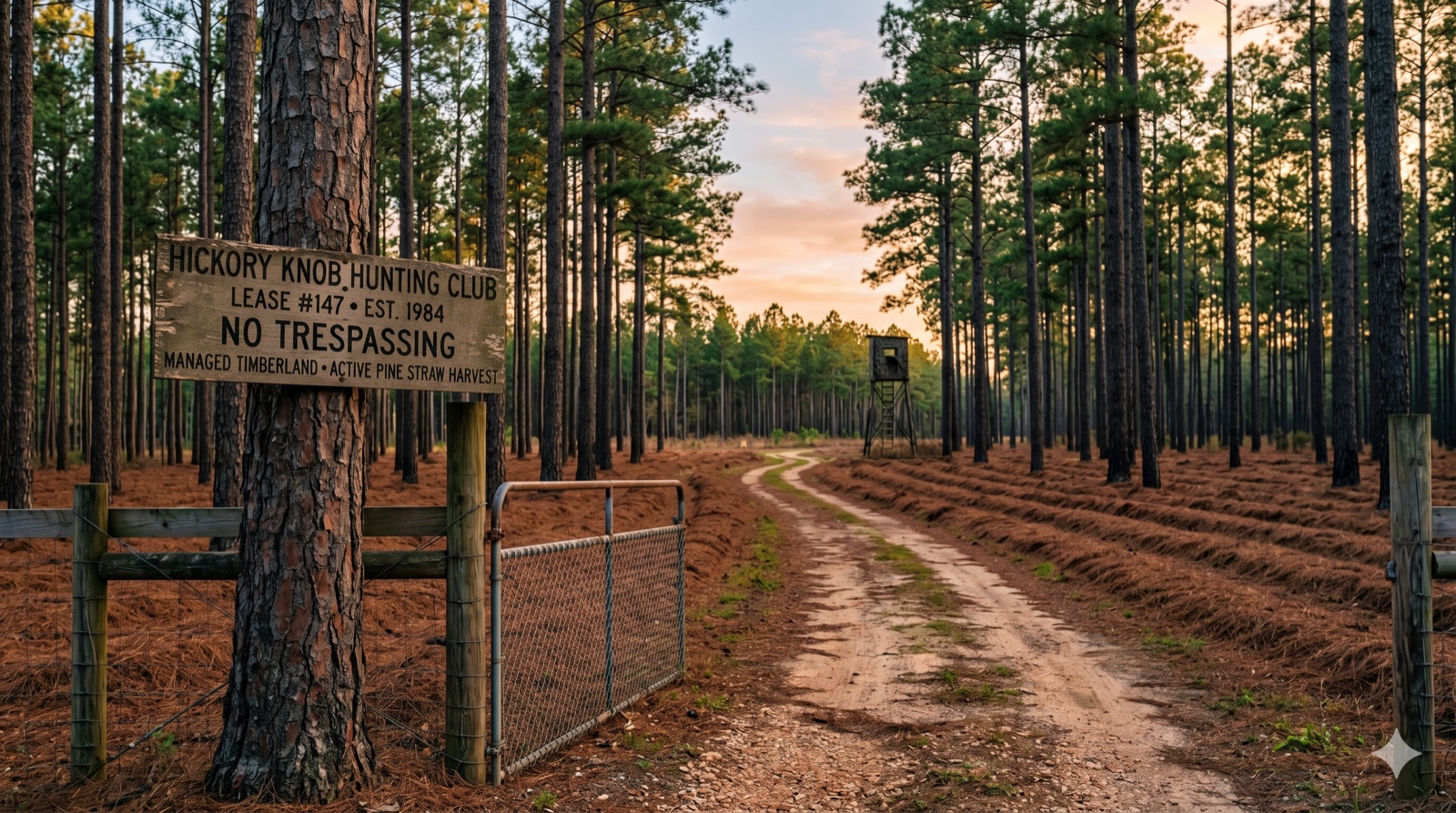
Can I Sell Land With a Severed or Recorded Timber Deed on It?
Key Takeaways
- A recorded timber deed conveys ownership of the trees, not just permission to cut them. Under Pennsylvania's timber-conveyance statute, 21 P.S. § 521, an instrument granting standing timber "shall be taken and deemed as a deed, conveyance or contract conveying and vesting an interest in land" — a real-property transfer, not a lease.
- The Uniform Commercial Code carves out a special rule for timber contracts. UCC § 2-107(2), as published by Cornell Law School's Legal Information Institute and adopted in Georgia as O.C.G.A. § 11-2-107, treats a contract for timber to be cut as a sale of goods "even though it forms part of the realty at the time of contracting" — a genuine legal split between how the deed is recorded and how the sale itself is classified.
- Recording protects the timber owner against you selling the land out from under them. Pennsylvania's 21 P.S. § 522 says a recorded timber deed gives notice to later purchasers "notwithstanding" whatever cutting-removal term is written into it — meaning the deed's own language, not a fixed statutory clock, controls how long the holder's rights last.
Can I Sell Land With a Severed or Recorded Timber Deed on It?
Yes — you can sell land where a prior owner recorded a timber deed conveying the standing timber itself, because a timber deed transfers ownership of the trees as a real-property interest separate from the land, and your sale proceeds subject to whatever cutting rights that recorded instrument still grants. This is fundamentally different from a lease: a lease is a contract that expires on a schedule, while a recorded timber deed is a conveyance that shows up in your chain of title and can remain outstanding for years or decades after the sale that created it, regardless of who currently owns the surface.
This is not the same situation as a timber lease or cutting contract, where a buyer pays for a time-limited right to enter and harvest but never owns the trees outright — see selling land with an active timber or hunting lease for how a lease terminates on its own schedule instead of surviving in title indefinitely. It's also not a mineral severance, even though both create a split estate recorded against your land — our guide on selling surface land when the minerals were already severed covers that parallel but legally distinct situation. And if the timber is already gone, you're not dealing with a title question at all — that's a valuation question covered in selling a cutover or recently logged timber tract.
This is the specific case where a title search turns up a recorded conveyance of standing timber — an instrument that actually transferred ownership of the trees, sometimes with a cutting window measured in years, sometimes with no stated end date at all. Knowing which situation you're actually in changes everything about how you approach a sale — if you're still weighing whether to harvest before you list at all, our guides on how to sell timberland and whether to sell the timber or sell the land cover that separate decision. For more guides on selling land with complications like this one, see the Jerez Land blog.
What's the Difference Between a Timber Deed and a Timber Lease on My Land?
A timber deed conveys actual ownership of the standing timber as a real-property interest, while a timber lease or cutting contract only grants a time-limited right to enter and harvest trees the landowner still owns. Pennsylvania's statute makes the distinction explicit: an instrument that grants "all or any right, title, claim or interest" in standing or growing timber "shall be taken and deemed as a deed, conveyance or contract conveying and vesting an interest in land," under 21 P.S. § 521 — language that treats a timber deed the same way the law treats a deed to a parcel of ground.
A lease, by contrast, is a contract for services or access — it terminates on the date or condition the lease itself specifies, and once it ends, the landowner's ownership of every tree on the property (cut or uncut) was never in question to begin with. A timber deed does the opposite: it removes trees from the landowner's ownership for as long as the deed's own terms say, and that removal is recorded, indexed, and binding on whoever buys the land next. If your land has a lease instead of a deed, this different set of rules doesn't apply to you the same way — see selling land with an active timber or hunting lease instead.
Why Is Standing Timber Legally Part of the Land Until It's Cut, and Why Does That Matter for My Sale?
Standing timber is treated as a constituent part of the real estate itself for as long as it remains rooted and uncut, which is exactly why a conveyance of standing timber has to be executed and recorded the way a land deed is. Georgia's property code, at O.C.G.A. § 44-1-2, defines realty to include "all things permanently attached to land," and the case annotations to that section describe standing timber as a "constituent element of the land itself" — while noting that a contract to sell timber that is to be severed before title passes is treated as an executory sale of personal property in the meantime. That dual character — real property while it's standing, something closer to personal property once a sale contemplates cutting it — is the source of nearly every practical question a seller runs into.
It's also why a timber deed gets recorded in the same office and against the same tract index as any other deed. Pennsylvania's 21 P.S. § 522 allows a timber conveyance to be recorded "in the same manner and subject to the same rights and restrictions" as an ordinary deed, and once recorded it becomes notice to subsequent purchasers "notwithstanding" any time limit the deed places on cutting and removal. In plain terms: recording doesn't erase or shorten the timber owner's rights just because the surface changes hands — it's the mechanism that protects those rights against exactly that kind of sale.
Reading the Deed's Own Exceptions and Reservations
Because a severed timber interest is recorded like any other conveyance, it typically gets carried forward as an exception or reservation in every deed that comes after it — the same way a mineral reservation follows a parcel through decades of resales. If your land has ever changed hands since the original timber deed was recorded, look for language in your own deed (or the deed just before it) excepting "timber heretofore conveyed" or reserving rights previously granted. That single sentence is often the fastest way to learn a severance exists without pulling the full chain of title yourself.
How Do I Find Out Whether My Land Has a Recorded Timber Deed Against It?
A title search is the reliable way to find a recorded timber deed, because the instrument is indexed against your parcel the same way any other deed, easement, or mineral conveyance would be. A title company or attorney doing a full chain-of-title search — the same kind of search that surfaces old liens or a cloud on title, judgments, or a mineral severance — will turn up a recorded timber deed if one exists, including its grantor, grantee, recording date and book/page, and, most importantly, whatever language the deed itself uses to describe the cutting window or its duration.
Short of ordering a formal title search, you can also ask your county register of deeds or clerk's office (naming conventions vary by state) to run a grantor/grantee index search under prior owners' names, and you can review your own deed and the deed immediately before it for an exception clause, as described above. What you should not do is assume a clean-looking deed to you means no timber deed exists — a severed timber interest from decades ago can be carried forward silently through several transfers if nobody flags it in the exceptions, and finding out during your own sale, rather than before you list, is what causes delays.
What Happens When the Timber Deed's Cutting Window Expires?
In many cases, once a timber deed's stated removal period lapses without the timber being cut, the right to cut expires and any remaining standing timber reverts to the landowner — but this outcome depends entirely on the specific wording the deed uses and on how courts in that state have read similar language, so it is not a rule you can assume applies to any particular recorded instrument without reading it. A deed that sets a hard "must be removed by" date behaves differently than one that grants an open-ended or perpetual right, and the difference lives in the deed's own text, not in a uniform statute.
Mississippi case law illustrates how instrument-specific this is: in South Mississippi Electric Power Ass'n v. J.F. Miller Timber Co., Inc., a 1975 Mississippi Supreme Court case, the timber right at issue was limited to eighteen months by the language of that particular deed — a term the parties themselves negotiated and wrote into the instrument, not a period set by statute. Mississippi does not appear to codify a single default duration that applies to every timber deed the way Pennsylvania's recording statute contemplates instrument-specific removal terms; in practice, the cutting window is whatever the deed says it is, and a seller (or their attorney) has to read the actual instrument to know whether an outstanding right has already lapsed or is still live.
Because this genuinely varies by state, by the deed's specific language, and by how a given state's courts have historically construed timber-removal clauses, do not rely on a general rule of thumb here. Have a real estate attorney licensed in the state where the land sits read the actual recorded instrument before you assume the timber right is dead — or before you assume it isn't.
Do I Owe Any Tax, or Have Trespass Protection, Tied to the Timber Deed on My Land?
Timber severance tax, in the states that levy one, is generally owed by whoever actually cuts and sells the timber — the producer — rather than automatically by you as the land seller, and trespass statutes in several of Jerez Land's states protect whichever party currently owns the standing timber, whether that's you or the timber deed holder, against someone cutting it without consent. Both facts matter for understanding who's exposed to what once a recorded timber deed is in the picture.
Mississippi and Alabama both administer a per-ton timber severance tax through their state revenue departments: Mississippi's rate is $0.12 per green ton for pine and other softwood species and $0.08 per green ton for hardwoods, according to the Mississippi Department of Revenue, while Alabama's Forest Products Severance Tax, set under Ala. Code § 9-13-82, runs $0.10 per ton for pine logs and pulpwood and $0.065 per ton for other species of logs, per the Alabama Department of Revenue. Neither of these is a tax you pay simply for owning land with timber on it — they're taxes on the act of harvesting and moving product, which is why a timber deed holder who actually cuts the timber, not the underlying landowner, is generally the one filing and remitting. North Carolina, by contrast, has no timber severance tax; forestland there is instead eligible for the state's Present-Use Value Program, which taxes qualifying forestland based on its income-producing capacity under a written management plan rather than at full market value, per the NC Forest Service.
Trespass statutes are the other side of this coin: they protect ownership of the trees, which is exactly why a timber deed matters in the first place. Mississippi Code § 95-5-10 makes anyone who cuts, deadens, destroys, or takes away a tree without the owner's consent liable for double the tree's fair market value plus reforestation costs, and the statute expressly states that liability is "absolute and unconditional" — good faith or honest mistake is not a defense. Alabama's version, Ala. Code § 35-14-1, sets fixed per-tree damages for unauthorized cutting and, notably, its subsection (b) specifies that "when one person owns the land and another person owns the trees standing thereon, the owner of the trees is the owner of the land" for purposes of that statute — a direct statutory acknowledgment that severed timber ownership, not surface ownership, is what the trespass protection actually follows.
How Does a Recorded Timber Deed Compare to a Timber Lease, a Severed Mineral Estate, or a Cutover Tract?
These four situations get confused for each other constantly, but each one puts you in a different legal and practical position as a seller.
| Situation | What Was Conveyed | How Long It Lasts | Shows in Title? | What the Land Seller Still Owns |
|---|---|---|---|---|
| Recorded timber deed | Ownership of the standing timber itself — a real-property interest under statutes like Pennsylvania's 21 P.S. § 521 | Whatever the deed's own language says — a set cutting window, or sometimes no stated end date; not standardized by statute in most states | Yes — recorded and indexed like a land deed, giving notice to future buyers (21 P.S. § 522) | The land and every right except the specific standing timber the deed actually conveyed |
| Timber lease / cutting contract | A time-limited right to enter and cut — not ownership of the trees; treated as a contract for goods under UCC § 2-107 | Terminates on the schedule set in the lease itself | Sometimes recorded for notice, but is fundamentally a contract, not a land conveyance — see our timber and hunting lease guide | Full ownership of the standing timber throughout; the lessee only holds a temporary right to cut what's specified |
| Severed mineral estate | Ownership of oil, gas, coal, or other minerals below the surface | Indefinite, absent a reunification of the estates — see our severed mineral rights guide | Yes — in the chain of title, typically as a reservation or exception | The surface estate only; minerals belong to whoever holds the severed interest, regardless of who owns the surface |
| Already-cutover / recently logged tract | Nothing outstanding — a harvest already happened; see our cutover tract guide | Not applicable | No — this is a physical and valuation condition, not a title encumbrance | Everything — full title to the land and any future regrowth, with no outstanding third-party timber rights |
What Does a Direct Cash Buyer Do About an Outstanding Timber Deed — and What Won't It Solve?
A direct cash buyer prices the land you actually own — the surface and every right that hasn't already been conveyed away — and buys subject to the outstanding timber deed rather than requiring you to first track down and extinguish it. That matters because a buyer who cannot legally count merchantable timber they don't own has to underwrite the parcel as-is, and a firm written cash offer can be structured around exactly that reality instead of stalling the deal until the timber question gets resolved.
What a cash sale does not do is make the timber deed disappear. If the cutting right is still active, whoever holds it retains that right after you sell — which means logging equipment, haul roads, or an active harvest crew can still show up on the property under a valid, recorded instrument, regardless of who owns the land at the time. A buyer isn't buying merchantable timber they can't legally claim, and neither can you sell it to them if a prior deed already conveyed it to someone else; what changes hands is the land itself, together with an honest accounting of what's still encumbered. Request a no-obligation cash offer and we'll go through what your title search (or ours) turns up, what it does and doesn't change about your specific parcel, and what a straightforward cash sale looks like once the timber question is on the table instead of a surprise at closing.
Frequently Asked Questions
I found a recorded timber deed in my title search from decades ago — does that mean I don't own the trees on my land?
It depends entirely on what the deed itself says and whether its cutting window, if it has one, has already run. A recorded timber deed conveys ownership of the standing timber as a real-property interest, separate from the land, under statutes like Pennsylvania's 21 P.S. § 521 — so if the deed is still within its stated term (or has no stated end date), someone else may genuinely still own those trees. Have an attorney read the actual instrument; the answer is in its language, not a general rule.
My title company flagged an outstanding timber deed on the parcel I'm selling — can I still sell the land?
Yes. A recorded timber deed doesn't block a sale of the land — it means you're selling the surface and every right you actually hold, subject to whatever cutting rights the timber deed still grants to its holder. This is the same structural situation as a severed mineral estate: the land transfers, the outstanding timber interest simply comes along with it in the chain of title. A direct cash buyer can price and close around that reality without requiring you to resolve the timber question first — see our guide on selling surface land with severed rights for the parallel situation with minerals.
We have an old timber deed on our property with a cutting window that already expired years ago — do we own the timber now?
Possibly, but this depends on the specific language of that deed and on how courts in your state have interpreted similar removal-period language — it is not a uniform rule. In Mississippi, for example, a 1975 state supreme court case involved a timber right limited to eighteen months by that particular deed's own wording, not by a statutory default that applies to every timber deed. Have a real estate attorney read the actual recorded instrument before assuming the right has lapsed and reverted to you.
What's actually the difference between a timber deed and a timber lease on my land?
A timber deed conveys ownership of the standing timber itself as a real-property interest, recorded like a land deed and capable of outlasting a lease term by years or decades. A timber lease or cutting contract, by contrast, only grants a time-limited right to enter and harvest — the landowner keeps ownership of the trees the whole time, and the arrangement simply terminates on the schedule the lease sets. See our guide on selling land with an active timber or hunting lease if your situation is the lease version rather than a recorded deed.
Is a timber deed the same kind of problem as a severed mineral rights situation on my land?
They're structurally similar but legally distinct. Both create a split estate that shows up in your chain of title and survives a sale of the surface, but a timber deed conveys standing trees while a mineral severance conveys oil, gas, coal, or other subsurface minerals — different assets, different instruments, and often different state statutes governing how each is created and recorded. Our guide on selling surface land when the minerals were already severed covers the mineral version of this same split-estate structure in detail.
I'm getting ready to sell my land and the buyer says they can't count the timber value because of an old recorded timber deed — why not?
Because a recorded timber deed transfers ownership of the standing timber to whoever holds that deed, and a buyer can't count value in an asset that already belongs to someone else. Under the real-property framework recognized in statutes like Pennsylvania's 21 P.S. § 521, the timber is legally severed from the land for as long as the deed's terms say it is — so a careful buyer prices the land you actually own and treats the outstanding timber right as something they're buying subject to, not something they get to include. That's a sign the buyer read your title correctly, not a reason to think something's wrong with your sale.
Disclaimer: This article is for informational purposes only and does not constitute legal, financial, or professional advice. Laws and regulations vary by jurisdiction and change over time, and the duration and effect of any specific timber deed depend on that instrument's own language. Always consult a licensed real estate attorney in the state where the land is located before making decisions about a recorded timber deed, its cutting rights, or a property sale. Jerez Land is not responsible for actions taken based on this information.