
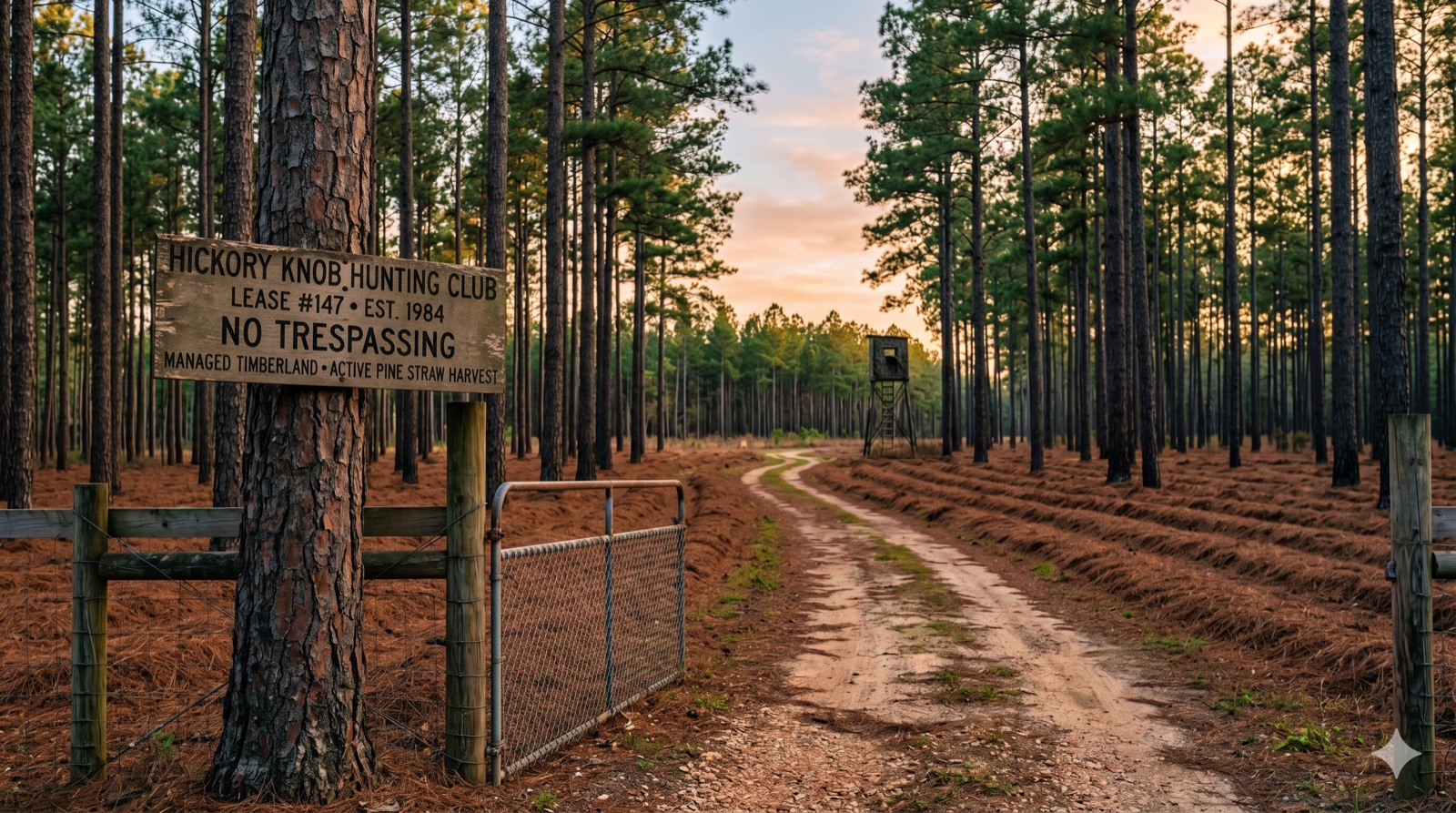
Selling Land With an Active Timber or Hunting Lease: What Happens to the Lease?
Key Takeaways
- An active hunting, recreational, or timber lease rarely stops a land sale — you can sell the parcel while the lease is in place, but depending on its wording the lease may continue as an encumbrance the buyer has to honor until it expires, according to Mossy Oak Properties and LANDTHINK
- Whether a lease "runs with the land" depends on the document — a written lease covenant can be enforceable against a future owner, while many short-term recreational leases either terminate on sale or let the hunter finish the season with a prorated refund, per Cornell Law School LII and Mossy Oak Properties
- A cash buyer purchases the parcel subject to the lease, as-is — an experienced land buyer reads the recorded lease, timber deed, or cutting contract, accounts for the remaining term and the smaller buyer pool, and reflects all of it in a firm written cash offer on your specific parcel rather than walking away the way a retail buyer often does
Can You Sell Land That Has an Active Hunting or Timber Lease?
Yes — an active hunting-club lease, a recreational (fishing or camping) lease, a standing-timber deed, a timber-cutting contract, or a pine-straw raking lease on your property does not stop you from selling, and it usually does not have to be cancelled before closing. A lease or cutting contract is a legal arrangement that gives someone the right to use or harvest from your land for a defined period; selling the land does not automatically erase that right. The real questions aren't whether you can sell — they're what happens to the lease at closing, whether the buyer inherits it, and how the remaining term affects which buyers will move forward.
This guide explains what each of these lease and contract types is, whether a lease transfers to a buyer or "runs with the land," how to find and confirm a lease on your parcel, the important difference between a recorded timber deed and a pay-as-cut contract, how an outstanding lease affects value and marketability, and why a direct cash buyer is often better positioned than a retail buyer to purchase land that is still under one. If you're selling those land types in general — rather than dealing with the lease encumbrance specifically — start with our broader guides on selling hunting land and selling timberland; this post drills into the narrower problem of an active lease or contract still attached to the parcel at sale. For the wider family of encumbrances, our overview on selling land with an easement covers recorded rights that travel with a deed.
What Are Hunting, Recreational, and Timber Leases — and How Do They Differ?
These arrangements look similar on the surface — someone pays you to use or harvest from your land — but they're legally distinct, and that distinction drives what happens when you sell.
- Hunting lease. A hunting lease gives a hunter or hunting club the right to hunt your property for a set term — typically one season or a multi-year agreement — in exchange for an annual payment. A well-drafted lease addresses the term, permitted activities, restricted areas, liability, and what happens if the land is sold, according to UGA Cooperative Extension's guidance on creating a hunting lease agreement. As recurring rental income (not a measure of land value), Southeastern deer-hunting leases commonly run in the single-to-low-double digits of dollars per acre per year, with premium ground higher, per Mossy Oak Properties.
- Recreational lease. A broader version of the same idea — fishing, camping, hiking, ATV, or general recreation rather than only hunting. It carries the same core terms and the same sale-related questions.
- Pine-straw lease. A short-term contract letting a harvester rake and bale pine straw from your stand, usually on a per-acre or per-bale basis, as a source of annual income between timber harvests, according to Clemson Extension. It's a recurring lease income stream, not a land-value figure.
- Timber deed / timber-cutting contract. A timber sale conveys the standing trees — either outright (a timber deed) or as they're cut (a pay-as-cut contract). This is fundamentally different from a recreational lease and is covered in its own section below, per Mississippi State University Extension.
The common thread: each gives a third party a defined, time-limited right in your land. The key question at sale is whether that right ends, transfers, or binds your buyer — and that turns on the document, not on a single rule.
Does a Lease Transfer to the Buyer — or "Run With the Land"?
This is the heart of it, and the honest answer is: it depends on what the lease says. A written promise tied to land can "run with the land" — meaning a future owner is bound by it — when it is created intentionally, relates to the property, and is in writing, according to Cornell Law School LII's explanation of real covenants and covenants that run with the land. A recorded long-term lease behaves much like that: the buyer takes title subject to the lease and must honor it until it expires.
In practice, recreational and hunting leases fall into a few patterns, according to Mossy Oak Properties and LANDTHINK:
- The lease survives the sale. An active lease can continue as an encumbrance on the new owner, who must let the lessee finish out the remaining term (for example, the rest of the hunting season).
- The lease terminates on sale, with a refund. Some leases include a sale clause that ends the lease when the property transfers and provides the lessee a prorated rebate of prepaid rent.
- The lease is silent. When the document doesn't address a sale, the outcome is murkier and the lease language and state law govern — which is exactly why extension specialists urge that a sale clause be written in from the start.
Two practical wrinkles matter at closing. First, if the lessee prepaid annual rent, the unused portion is typically prorated between seller and buyer at closing, the same way taxes are. Second, any security deposit the lessee posted generally transfers to the buyer along with the obligation to return it. The cleanest path is to assign the lease to the buyer in writing so everyone knows who collects rent and who owes the deposit back. If you're weighing this against other land-type decisions, our guide on selling farmland covers similar lease-assignment mechanics for crop and grazing tenants.
How Do You Find Out Whether a Lease Is "On the Record" — and Does It Show on Title?
Not every lease shows up in a title search, and that surprises sellers. Whether a lease appears depends on whether it — or a short summary of it — was recorded at the county.
A short, recordable summary called a memorandum of lease is filed specifically to put third parties, including prospective buyers and lenders, on notice that a leasehold interest encumbers the property, according to Carruthers & Roth. When a memorandum (or the full lease) is recorded, the buyer's title commitment will list it under Schedule B — the recorded exceptions to title — right alongside easements and rights-of-way. Most short-term hunting and pine-straw leases, by contrast, are never recorded, so they won't surface in a title search at all. That doesn't make them irrelevant: an unrecorded lease can still be a binding contract between you and the lessee, and you generally have a duty to disclose a known active lease to your buyer.
Because an unrecorded lease is easy to miss, buyers and title companies often request an estoppel certificate — a signed statement from the lessee confirming the lease terms, the rent, the remaining term, and that no defaults exist. Practical ways to confirm what's actually on your land:
- Pull your own copies. Locate every signed lease, timber deed, and cutting contract and read the term and termination language.
- Order or review a title commitment. Recorded leases and timber deeds show under Schedule B; this also catches anything you'd forgotten.
- Walk the property. Posted hunting-club signs, deer stands, feeders, fresh logging decks, or raked pine-straw rows are physical clues that someone holds an active right. A current survey can help map active-use areas — our guide on whether you need a survey to sell land explains when one is worth ordering.
| Recorded Lease / Timber Deed | Unrecorded Lease (typical hunting/pine-straw) | |
|---|---|---|
| Filed at the county? | Yes — often via a memorandum of lease | No |
| Shows on title commitment (Schedule B)? | Yes | No |
| Binds the buyer? | Generally yes, until it expires | Depends on the document and disclosure |
| How a buyer discovers it | Title search | Seller disclosure / estoppel / site inspection |
| Seller's duty | Convey subject to it | Disclose the known active lease |
Timber Deeds vs. Cutting Contracts: How an Outstanding Timber Right Affects the Sale
A timber arrangement is not a recreational lease, and it affects a land sale differently — because it conveys an interest in the trees themselves, not just the right to walk the land. There are two common structures, according to Mississippi State University Extension and the National Timber Tax guidance on Section 631(b):
- Timber deed (lump-sum / outright sale). When a timber deed is properly executed, delivered, and recorded, title to the standing timber passes to the buyer for the contract period, and the risk and liability for that timber transfer to the buyer. If you sell the land while a timber deed is outstanding, you are selling subject to the timber buyer's right to enter and harvest until the deed's cutting period expires.
- Pay-as-cut (Section 631(b)) contract. Here you weren't paid a lump sum up front; you're paid for the timber as it's cut, and you keep an economic interest in the trees until they're severed and become the buyer's property, per the National Timber Tax. The land buyer still takes the parcel subject to the logger's right to come in and finish cutting under the contract.
Two timing points matter at sale. First, these contracts almost always have an expiration / cutting deadline: unless the parties agree to an extension, all timber covered by the agreement must be cut and removed by a stated date, and rights that aren't exercised in time generally revert to the landowner, according to Mississippi State University Extension. Second, an outstanding cutting right means the standing timber value is already spoken for — a land buyer is acquiring the dirt and whatever rights remain, not the merchantable timber the contract already conveyed. (We never publish land or timber per-acre price figures here; for how features like this fit into a parcel's realistic worth, see our guide on how much your land is worth.) If your question is really about who owns what beneath the surface, our explainer on mineral rights vs. surface rights covers that separate split.
How Does an Active Lease or Timber Contract Affect Value and Marketability?
The effect depends on the type of lease, its remaining term, and who your likely buyer is.
An income-producing recreational or pine-straw lease can actually be a selling point to the right buyer — an investor who wants the parcel to throw off rent from day one sees a signed lease as a built-in tenant. But the same lease can be a drag for a buyer who wants to hunt the land themselves this season, or build on it, and discovers they can't take exclusive possession until the lease runs out. As LANDTHINK notes, an active lease that continues as an encumbrance can shrink the pool of interested buyers or leave a property on the market longer, because a buyer who wanted the land for their own use now has to wait.
An outstanding timber deed or cutting contract narrows the pool further. The merchantable timber is already sold, the logging activity and access are out of the new owner's control until the contract ends, and the post-harvest condition of the land is uncertain — all of which a conventional buyer finds hard to price. As with any problem parcel, the land isn't unsellable; the conventional buyer pool just gets smaller and more cautious.
A Note on Liability and Insurance
One reason a recorded, well-drafted lease can reassure a buyer is that it usually addresses liability. Extension specialists recommend that hunting and recreational leases include a release of liability, an indemnification clause, and a requirement that the lessee carry insurance — and many states' recreational-use statutes limit a landowner's duty of care, according to UGA Cooperative Extension and Texas A&M AgriLife Extension. A buyer who inherits a lease inherits those protections too, which is one more reason an experienced land buyer treats an active lease as a manageable, documented fact rather than a dealbreaker.
Why Retail Buyers Sometimes Walk
Retail buyers — especially those financing the purchase and represented by an agent — often expect to take immediate, exclusive possession and a clean slate. When they learn the property comes with a hunting club that has the rest of the season, or a logger who can drive equipment in for another eighteen months, the reaction is frequently hesitation, renegotiation, or walking away. The result is that a parcel with a perfectly ordinary active lease can sit on the market or fall out of contract — not because the land is flawed, but because the conventional buyer wanted possession the lease doesn't yet allow.
A Cash Buyer Buys It Subject to the Lease, As-Is
A direct cash buyer approaches an active lease differently. Instead of expecting vacant possession, the buyer reads the lease, timber deed, or cutting contract, confirms the remaining term and any sale or termination clause, plans around the lessee's rights, and purchases the land subject to the lease, as-is. There's nothing for you to terminate, buy out, or litigate before closing. The buyer absorbs the carrying cost, the marketing effort, and the resale risk that come with an encumbered parcel — including the smaller, more patient buyer pool on the back end — and reflects all of that in a firm written cash offer on your specific parcel.
What Are Your Options for Selling Land With an Active Lease?
If your parcel is under an active hunting, recreational, or timber arrangement, you have three main paths:
Option 1: List it and disclose the lease. Put the property on the open market and disclose the lease, timber deed, or cutting contract up front. This works well when the lease is short, income-producing, and attractive to an investor buyer — but be prepared for some retail buyers to hesitate when they realize they can't take exclusive possession or harvest the timber until the term ends.
Option 2: Wait out or terminate the lease first. If your lease has a sale-termination clause or a near-term expiration, you can time your sale for after it ends, or terminate per the document (often with a prorated refund) so you can deliver vacant possession. This can widen your buyer pool — but it costs you time, the lease income, and possibly the deposit, and a timber-cutting deadline can't be rushed.
Option 3: Sell directly to a cash buyer. If you want speed and certainty, a direct cash buyer like Jerez Land purchases land subject to the lease, as-is. We read the lease, timber deed, or cutting contract, confirm the remaining term and any termination clause, handle the proration and deposit at closing, factor it all into our underwriting, and present a firm written cash offer on your specific parcel — no formulas, no guessing, and no expectation that you deliver an empty, lease-free property.
Request a no-obligation cash offer and we'll review your property and its lease together. There are no commissions or listing fees, and we can often move faster than a traditional sale — even when a hunting club, a recreational tenant, or a logging crew still holds rights to the land.
Dealing with related complications? Our guides on selling timberland, selling hunting land, and the paperwork needed to sell land cover the situations that often appear alongside an active lease. For more guides on selling land in less-than-perfect situations, visit our blog.
Frequently Asked Questions
Can you sell land that has an active hunting or timber lease on it?
Yes. An active hunting, recreational, pine-straw, or timber lease rarely prevents a sale, and you usually don't have to cancel it before closing. Depending on the document, the lease may either terminate when the property sells — often with a prorated refund to the lessee — or continue as an encumbrance the buyer has to honor until it expires. You generally have a duty to disclose a known active lease, and the title company and your buyer account for it at closing. The main effect is that some retail buyers hesitate when they realize they can't take immediate, exclusive possession, while experienced land buyers proceed.
If I sell my land, will the hunting lease transfer to the new owner?
It depends on what the lease says. A written lease can run with the land so that a future owner is bound by it until it expires, while many short-term recreational leases include a clause that terminates the lease on sale, sometimes with a prorated rebate of prepaid rent to the hunter. If the lease is silent on a sale, the lease language and state law govern. The cleanest approach is to assign the lease to the buyer in writing, prorate any prepaid rent at closing, and transfer any security deposit along with the obligation to return it.
Will my active lease show up on a title search when I sell?
Only if it was recorded. A recorded lease — or a short memorandum of lease filed at the county — appears under Schedule B of the buyer's title commitment, the same place easements and rights-of-way show up. Most short-term hunting and pine-straw leases are never recorded, so they won't surface in a title search at all. That doesn't make them irrelevant: an unrecorded lease can still be a binding contract, you generally must disclose a known active lease, and buyers often ask the lessee to sign an estoppel certificate confirming the terms and remaining time.
I have an active timber deed on my property — what happens if I sell?
You sell the land subject to the timber buyer's remaining rights. A recorded timber deed conveys title to the standing timber to the buyer for the contract period, so a land buyer acquires the dirt while the timber buyer keeps the right to enter and harvest until the cutting deadline. A pay-as-cut contract works similarly — the logger keeps the right to come in and finish cutting under the agreement. These contracts almost always have an expiration date, and any timber not cut by then generally reverts to the landowner unless both parties agree to an extension.
Does an active lease lower the value of my land?
It depends on the lease type, the remaining term, and who your likely buyer is. An income-producing recreational or pine-straw lease can be a selling point to an investor who wants built-in rent, but the same lease can deter a buyer who wants to hunt or build on the land themselves and can't take exclusive possession until it ends. An outstanding timber deed narrows the pool more, because the merchantable timber is already sold and the logging activity is out of the new owner's control. The bigger effect is usually on marketability — how many buyers will seriously consider the parcel — rather than a precise, provable discount. A cash buyer factors the specific lease into the offer rather than applying a one-size-fits-all rule.
Will a cash buyer purchase land with an active lease still in place?
Many experienced cash land buyers — including Jerez Land — purchase land subject to the lease, as-is. We read the lease, timber deed, or cutting contract, confirm the remaining term and any sale or termination clause, handle the rent proration and security deposit at closing, and factor all of it into a firm written cash offer on your specific parcel. There's nothing for you to terminate, buy out, or litigate first, and we absorb the carrying and resale risk that comes with an encumbered, less-than-vacant parcel.
Disclaimer: This article is for informational purposes only and does not constitute legal, financial, or professional advice. Laws and regulations vary by jurisdiction and change over time. Always consult a licensed real estate attorney before making decisions about leases, timber contracts, or property transactions. Jerez Land is not responsible for actions taken based on this information.