
Sell My Land in Newberry County SC - What Landowners Need to Know
Key Takeaways
- Newberry County's population grew modestly from 37,508 in 2010 to 37,719 in 2020, with a 2024 estimate near 38,435, according to Census-based figures reported on southcarolina-demographics.com — a small, slowly-growing rural market rather than a fast-declining or fast-booming one
- Newberry ranked 2nd in South Carolina for cattle and calves sales ($11,469,000) and 4th statewide for milk from cows in 2022, according to the USDA Census of Agriculture — a genuine dairy-and-cattle county, not just a general farming county
- Vacant and non-owner-occupied land is assessed at 6% of fair market value in South Carolina under SC Code § 12-43-220, compared to 4% for a primary residence or qualifying agricultural use — and a change of use out of agricultural classification can trigger rollback taxes for the current year plus the prior 3 tax years
How Can You Sell Land in Newberry County South Carolina?
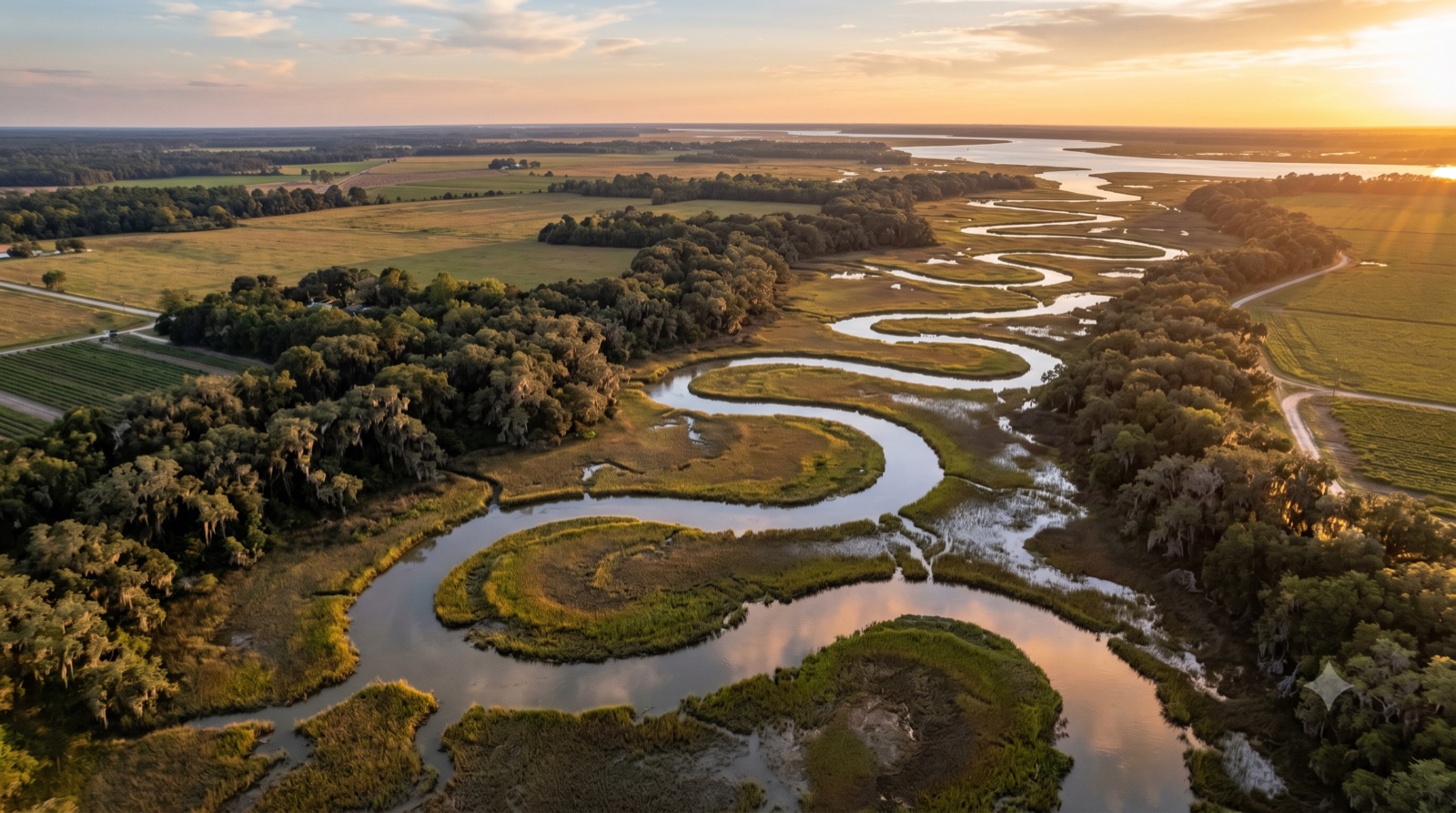
You can sell land in Newberry County through listing with a local agent, using land-focused online platforms, or requesting a direct cash offer from a land buyer — all requiring an attorney-supervised closing under South Carolina law, along with a $1.85 per $500 deed recording fee. Selling land in Newberry County, South Carolina means navigating a process shaped by the state's attorney-supervised closing requirement, a deed recording fee that functions as a transfer tax, and a rural Piedmont economy anchored in dairy, poultry, cattle, and pasture. The county seat is the city of Newberry, and the county covers roughly 630 square miles of land along the upper end of Lake Murray, with total agricultural product sales of $217,205,000 in 2022 — ranking 6th among all 46 South Carolina counties — according to the USDA 2022 Census of Agriculture.
Newberry is a small, steadily-held land market. There is no large city inside its borders, the county's population has grown only gradually over the past decade and a half, and much of the acreage is working pasture, cropland, and timber rather than subdivision-ready lots. For landowners considering a sale, this guide covers the full tax picture for vacant parcels, how attorney-supervised closings work in South Carolina, how Newberry compares to its neighbors, and what your realistic options are. For a broader look at the state's rules, see our South Carolina land selling guide.
What Are the Tax Costs of Holding Land in Newberry County?
South Carolina uses a tiered assessment ratio system under SC Code § 12-43-220. Owner-occupied primary residences are assessed at 4% of fair market value, while all other real property — including vacant land, investment parcels, and non-owner-occupied lots — is assessed at 6% of fair market value. This means a dormant vacant parcel carries a 50% higher assessment ratio than a home the owner lives in.
On top of the assessment ratio, each parcel is taxed at a combined millage rate that layers the county levy on top of school district, fire district, and other special-purpose levies. South Carolina counties reassess property countywide every five years, so a parcel's assessed value can step up at each reassessment even if the owner does nothing with the land. For a small rural county like Newberry, the county portion of the millage is only part of the bill — the school and special-district levies typically drive the larger share.
Agricultural Use Value and Rollback Taxes
If a Newberry County tract qualifies for agricultural use under SC Code § 12-43-232 — generally at least five acres in active agricultural use, or timberland producing or capable of producing timber — it can be valued on its agricultural use value rather than its full market value and taxed at the 4% agricultural ratio instead of the 6% rate for dormant vacant land. This use-value assessment is a tax classification set by the state Department of Revenue; it lowers the annual carrying cost on qualifying pasture, cropland, and timberland, but it does not change what a buyer will pay for the parcel.
The trade-off comes when that use changes. Under SC Code § 12-43-220, converting agricultural-use land to a non-agricultural use triggers a rollback tax: the county recalculates what the property would have owed at the full 6% market-value assessment instead of the 4% agricultural rate, and bills the owner for the difference. Effective January 1, 2021, the lookback period for this calculation was shortened from five years to three — rollback tax now covers the current tax year plus the immediately preceding 3 tax years, according to Burr & Forman LLP's summary of the 2021 amendment. A straight land sale that keeps the property in agricultural use does not, by itself, trigger rollback tax; it is the change in use — for example, converting pasture to a residential subdivision or commercial site — that sets it off. Sellers and buyers should confirm current classification and any pending rollback exposure with the Newberry County Assessor's Office (1512 Martin Street, Newberry, SC 29108; 803-321-2125, option 1) before closing.
Property taxes in South Carolina are due by January 15 each year; unpaid taxes accrue penalties and can ultimately lead to a delinquent tax sale run by the County Treasurer. For absentee owners — including people who inherited a Newberry parcel and now live out of state — simply tracking due dates, reassessment notices, and agricultural-classification renewals from a distance adds friction to holding the land.
For more on how unpaid taxes affect a land sale, see our guide on selling land with back taxes.
What Zoning and Closing Rules Apply to Newberry County Land?
South Carolina is an attorney-closing state. In Matrix Financial Services Corp. v. Frazer, 714 S.E.2d 532 (S.C. 2011), the South Carolina Supreme Court reaffirmed that a licensed South Carolina attorney must supervise the key steps of a real estate closing — building on decades of precedent that treats real estate conveyancing as the practice of law. In practice, every deed transfer in Newberry County — including vacant land, cash transactions, and inherited-property conveyances — is handled through a licensed South Carolina attorney. There is no do-it-yourself closing for a routine cash land sale.
The closing process in South Carolina follows this sequence:
- Title search: The attorney examines the land records at the Newberry County Clerk of Court (Newberry County Courthouse, 1226 College Street, Newberry, SC 29108; 803-321-2110) to confirm the seller holds clear, marketable title — especially important where a parcel has passed through an estate or multiple family members. Newberry County records deeds through the Clerk of Court's office rather than a standalone Register of Deeds
- Deed preparation: The attorney drafts the warranty or quitclaim deed based on the chain of title
- Closing: Buyer, seller, and attorney meet (or sign remotely) to execute documents and transfer funds
- Recording: The attorney records the deed with the Clerk of Court and pays the deed recording fee — $1.85 per $500 of sale price — with the $1.30 state portion and $0.55 county portion both remitted at recording
- Disbursement: The attorney disburses proceeds to the seller, less any outstanding liens, back taxes, or rollback tax obligations
For sellers who need to understand what documents are required, our paperwork needed to sell land guide covers the typical set — deed, survey (if required), any easement disclosures, and property tax clearance.
Zoning and Land Use in Newberry County
Newberry County is a largely rural, agricultural county, and much of the unincorporated land is used for dairy, cattle, poultry, pasture, and timber rather than dense development. A meaningful share of the county also sits within the Enoree Ranger District of Sumter National Forest, which spans roughly 170,000 acres across Newberry, Union, Laurens, Fairfield, and Chester counties — a factor worth checking for any tract near the district's boundary. Land-use and permitting questions for unincorporated areas are handled at the county level, while the city of Newberry and other municipalities administer their own rules within their limits. Because zoning, road-frontage, floodplain, and access details vary parcel by parcel, sellers should confirm the current designation and any restrictions before marketing a tract. Start with the Newberry County Assessor's Office (803-321-2125, option 1) to verify the parcel's legal description, acreage, and tax classification, and check with the county's planning staff on any use limitations near municipal boundaries, Lake Murray's upper reaches, or national forest land.
How Does Newberry County Compare to Neighboring South Carolina Counties?
Newberry County's population moved from 37,508 in 2010 to 37,719 in 2020, and a 2024 estimate puts it near 38,435, according to Census-based figures reported by southcarolina-demographics.com. That is modest, steady growth — not the sharp decline seen in some of the state's Black Belt counties, and not the rapid suburban growth seen in Columbia's closer-in counties. Newberry borders seven counties — Union, Fairfield, Richland, Lexington, Saluda, Greenwood, and Laurens — and the table below compares it with three of them.
| Factor | Newberry County | Laurens County | Fairfield County | Lexington County |
|---|---|---|---|---|
| Population (2020 census) | ~37,700 | ~67,500 | ~20,950 | ~294,000 |
| Population trend | Modest growth | Modest growth | Declining (-11% since 2010) | Growing rapidly (+12% since 2010) |
| Market character | Small, rural | Larger, rural-town | Small, rural | Large, suburban metro |
| Land economy | Dairy, cattle, poultry, pasture, timber | Mixed farm and manufacturing | Timber, pasture, Lake Wateree recreation | Development, suburban, Lake Murray recreation |
| Distance to Columbia | ~45 min | ~55 min | ~40 min | ~15-20 min |
| Key land market signal | Few local buyers, working farms | Moderate buyer pool, mixed economy | Shrinking buyer pool, rural exodus | High demand, low inventory |
Newberry's agricultural economy ranked 6th in South Carolina in 2022, with $217,205,000 in total product sales, according to the USDA 2022 Census of Agriculture. The county is heavily livestock-driven: livestock, poultry, and products made up 95% of sales, led by poultry and eggs at $187,870,000 (ranked 4th statewide) and cattle and calves at $11,469,000 (ranked 2nd statewide). Milk from cows also ranked 4th in the state by sales value, even though the exact dollar figure was withheld to avoid disclosing data for individual operations — confirming Newberry's standing as one of South Carolina's genuine dairy counties, not just a general farming county.
The land base itself tells the same story: of 110,964 acres in farms across 555 farms, roughly 23,143 acres are pastureland, 44,673 acres are woodland, and 37,774 acres are cropland, according to the 2022 Census of Agriculture. That mix of dairy pasture, cattle range, and timber — rather than tracts of buildable subdivision lots — is exactly what shapes the Newberry land market for a seller.
Why a Small Rural Market Matters for Sellers
In a county like Newberry, the pool of local buyers for a vacant tract is limited. Pasture and timber ground appeals mainly to neighboring farmers expanding a dairy or cattle operation, hunters drawn to land near Sumter National Forest, and out-of-area investors — a narrower audience than in a fast-growing metro county like Lexington. That can mean longer days on market for a traditional listing, more negotiation on price, and real carrying costs (taxes, upkeep, and time) while the parcel waits for the right buyer. Understanding those dynamics up front helps you set realistic expectations before you decide how to sell.
For more county-level land analysis across South Carolina, explore our blog.
What Are Your Options for Selling Land in Newberry County?
Newberry County landowners holding vacant, pasture, or timber parcels face a trade-off between ongoing carrying costs and a small local buyer pool. The 6% assessment ratio means higher annual tax bills than owner-occupied property; a rollback tax can apply if agricultural-use land changes to another use; and inherited or absentee-owned parcels often carry title questions that need to be cleared before any deed can transfer.
Before selling, confirm your property's legal description and tax classification through the Newberry County Assessor's Office (1512 Martin Street, Newberry, SC 29108; 803-321-2125, option 1) and verify any delinquent taxes or rollback exposure with the County Treasurer (1400 Martin Street, Newberry, SC 29108; 803-321-2130). Land records and recorded deeds are handled by the Newberry County Clerk of Court (Newberry County Courthouse, 1226 College Street, Newberry, SC 29108; 803-321-2110). If the parcel was inherited without a will, consult a South Carolina real estate attorney about clearing title before listing.
Sellers have several paths. Listing with a local agent experienced in farm, dairy, and timber land provides exposure but involves commission costs and, in a small market, potentially a long wait. Land-focused online platforms can reach out-of-state hunting, timber, and investment buyers. For owners who want a specific number rather than a listing, request a cash offer from Jerez Land. We provide firm, parcel-specific written offers priced to the individual tract, handle the attorney-supervised closing, and can close in weeks without commissions or listing fees — with our company absorbing the carrying, marketing, and resale risk.
Reviewing how much your land is worth and whether you need a realtor to sell land before negotiating puts you in a stronger position regardless of which path you choose.
Frequently Asked Questions
I inherited 60 acres of pasture in Newberry County and live in Charlotte — will I owe rollback taxes if I sell it?
Not automatically. A rollback tax under SC Code § 12-43-220 is triggered by a change in the land's use — for example, converting agricultural pasture to residential or commercial use — not by the sale itself. If the buyer keeps the land in agricultural use, no rollback tax is due at the time of sale. If a change of use is planned, rollback tax covers the current tax year plus the 3 preceding tax years at the higher 6% market-value rate instead of the 4% agricultural rate. Confirm the parcel's current classification with the Newberry County Assessor's Office (803-321-2125, option 1) before you list or negotiate a sale.
What is the property tax rate for vacant land in Newberry County SC?
Vacant and non-owner-occupied land is assessed at 6% of fair market value under SC Code § 12-43-220, compared to 4% for a primary residence or qualifying agricultural use. The final bill depends on the combined millage rate — county, school district, and special-district levies — that applies to the parcel's location. South Carolina counties reassess property every five years, so assessed values can rise over time even if the owner makes no changes to the land.
What is South Carolina's deed recording fee and who pays it?
South Carolina charges $1.85 per $500 of sale price — a $1.30 state portion plus $0.55 county portion — recorded at closing as the Deed Recording Fee, according to the SC Department of Revenue Deed Recording Fee Manual 2024. By custom, the seller pays this fee, though the parties may negotiate otherwise in the purchase contract.
I'm selling land in Newberry County SC — is an attorney required?
Yes. South Carolina treats real estate conveyancing as the practice of law, and in Matrix Financial Services Corp. v. Frazer, 714 S.E.2d 532 (S.C. 2011), the South Carolina Supreme Court reaffirmed that a licensed South Carolina attorney must supervise the key closing steps. Every deed transfer — including vacant land and cash transactions — is handled through a licensed South Carolina attorney who conducts the title search, prepares the deed, and records it with the Newberry County Clerk of Court, the office that handles deed recording for the county.
I run a small cattle operation on land I inherited outside Newberry and I'm considering selling part of it — will splitting off a parcel change my agricultural tax classification?
It can. South Carolina's agricultural use classification under SC Code § 12-43-232 generally requires at least five acres in active agricultural use, or qualifying timberland. If splitting off and selling a portion leaves the remaining tract below the acreage or use threshold, that remaining parcel could lose its 4% agricultural assessment and shift to the 6% rate — and depending on what the sold-off portion is used for afterward, it could trigger rollback tax on that piece. Verify both parcels' post-split eligibility with the Newberry County Assessor's Office before finalizing any subdivision or sale.
I own land in Newberry County and want to sell quickly — is that difficult?
Newberry is a small, steady rural market, so the pool of local buyers is smaller than in South Carolina's metro and coastal counties. Dairy, cattle, pasture, and timber tracts appeal mainly to neighboring farmers, hunters, and out-of-area investors, which can mean longer days on market and more negotiation for a traditional listing. Owners who want speed and certainty often prefer a direct cash offer, which sets a firm price and avoids commissions and an open-ended wait.
Disclaimer: This article is for informational purposes only and does not constitute legal, financial, or professional advice. Laws and regulations vary by jurisdiction and change over time. Always consult with qualified professionals before making land purchase decisions. Jerez Land is not responsible for actions taken based on this information.