
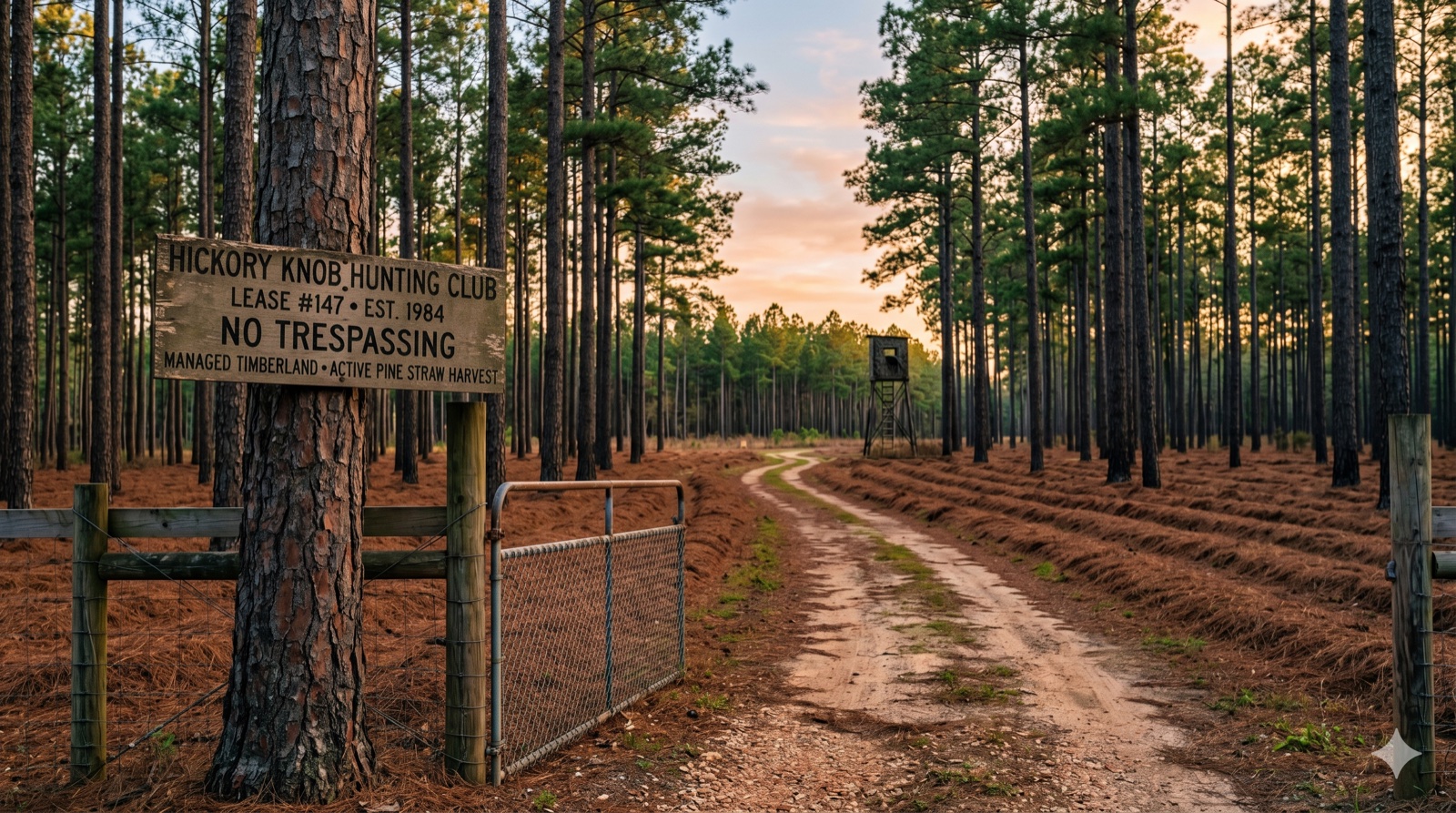
Can I Sell Land That's Enrolled in a State Wildlife Access or WMA Cooperator Program?
Key Takeaways
- These agreements are almost never recorded against your title. Oklahoma's Land Access Program (OLAP) tells enrolled landowners in writing that the agreement automatically ends when the property sells, and the new owner simply has the option of re-enrolling — it doesn't transfer with the deed.
- A landowner can generally get out on their own timeline. Michigan's Hunting Access Program lets a participating landowner cancel "at any time prior to the expiration of the lease," with the only consequence being forfeiture of that year's lease payment, under Mich. Comp. Laws § 324.43556(4).
- State law limits your liability while the public is on your land. Michigan (MCL § 324.43556(6)), Pennsylvania (68 P.S. § 477-1 et seq.), Oklahoma (76 O.S. § 10.1 and 2 O.S. § 16-71.1), and Georgia (O.C.G.A. § 51-3-20 et seq.) all bar an ordinary negligence claim against a landowner who lets the public use land for recreation without charging a fee.
Can I Sell Land That's Enrolled in a State Wildlife Access or WMA Cooperator Program?
Yes. A state wildlife-access agreement — whether it's called a cooperator agreement, a Hunting Access Program lease, or a Wildlife Management Area (WMA) enrollment — is almost always a contract between you and the state wildlife agency, not a deed restriction recorded against your land, so it doesn't automatically transfer to your buyer and it doesn't block a sale. What it does require is that you notify the agency, formally end or transfer the agreement before or at closing, and tell your buyer in writing what's currently in effect on the property.
This is a genuinely different situation than the other land-encumbering arrangements Jerez Land covers on this blog, and the differences change what you actually have to do. A public wildlife-access program means a state agency has opened your private land to hunters, anglers, or other recreational users who are not your tenants and never signed anything with you directly — that's a different animal from an active timber or hunting lease, where you have a private contract with an individual or a hunt club that terminates like an ordinary landlord-tenant or lease relationship. It's also different from a conservation easement or CRP contract: a conservation easement is a perpetual deed restriction recorded in the county land records that runs with the title forever, and a CRP contract is a multi-year USDA payment agreement tied to taking cropland out of production. A state access program is neither of those — it's usually a shorter-term, agency-administered agreement that either party can end, which is genuinely good news if you're trying to sell.
The programs go by different names in every state, and some counties or regions run them differently even within the same state. Below is what's actually confirmed, state by state, about how long these agreements run, whether they touch your title, and how you get out — plus the practical steps to take before closing. If your land is also under an active hunting lease or enrolled for timber production, those guides cover the mechanics specific to those situations. For more on selling land with an existing complication, see the Jerez Land blog.
What's the Difference Between a Private Hunting Lease and a State Wildlife Access Program on My Land?
A private hunting lease is a contract between you and one hunter or hunt club, governed by ordinary lease and landlord-tenant law, and ends the way any lease ends — at term expiration, by mutual agreement, or under whatever termination clause you wrote into the lease. A state wildlife-access program is a contract between you and a state agency (Michigan's DNR, Pennsylvania's Game Commission, Oklahoma's ODWC, and similar agencies elsewhere), and it opens your land to the general licensed public, not to one identifiable party — meaning strangers you've never met, using your land under rules the agency sets and publishes, not rules you negotiated one-on-one.
That distinction drives everything else. A hunt-club lease is enforceable the way a lease of a house or an apartment is enforceable — you can usually assign it, terminate it for breach, or let it expire, and any dispute is between you and the tenant. A state program is enforceable the way a government benefit contract is enforceable — the agency sets minimum acreage and habitat standards, decides what access it will pay for (walk-in hunting, fishing, wildlife viewing), and reserves the right to inspect and approve the arrangement. In exchange, you typically get an annual per-acre payment that varies by habitat type and the level of access you agree to allow, liability protection under the state's recreational-use statute, and sometimes free technical help managing habitat on the property. None of that changes who owns the land or clouds your title — but it does mean members of the public may currently have a legal right to be on your land that a private hunting lease never grants to strangers, and that's the piece a buyer needs to know is either ending or continuing after closing.
Is My Wildlife Access Agreement Recorded Against My Property, and Will It Bind My Buyer?
In the programs we could verify, the agreement is a personal contract between you and the state agency, not an instrument recorded in the county land records, so it generally does not automatically bind a buyer the way a deed restriction or easement would. Oklahoma's ODWC states this directly for OLAP: the agreement "automatically terminates" when the property is sold to a new owner, and the new owner then has the independent option of re-enrolling if they want to — they are not stepping into your existing contract.
Michigan's Hunting Access Program works the same way in practice, though for a different reason: the statute authorizing HAP, Mich. Comp. Laws § 324.43556, describes it as a lease between the department and "a participating landowner" for "a designated lease period," and nowhere requires or mentions filing the lease with the register of deeds or otherwise recording it against title. Because it isn't a recorded instrument, a title search on the property won't turn it up, and a buyer's deed won't reference it. The statute doesn't separately address what happens if you sell mid-lease, which is exactly why you — not the buyer, and not an assumption that it "just ends" — need to formally close it out with the department before or at closing rather than leaving it open.
That said, "not recorded against title" is not the same as "no residual visibility." Enrolled parcels are typically shown on the agency's public hunting maps, mobile apps, and printed atlases for the season, and the agency may not scrub your parcel from those maps the moment you sell — it usually happens on the agency's own update cycle. A hunter with last year's app screenshot showing your (now your buyer's) land as open access is a predictable, low-stakes but real irritant if you don't handle the paperwork and timing deliberately. That's a disclosure and buyer-expectation issue, not a title problem, and it's worth walking your buyer through it directly rather than assuming they'll never notice.
How Do These Public-Access Programs Compare Across the States Where Jerez Land Buys Land?
Program names, agreement terms, and exit mechanics vary sharply by state, and we could only independently confirm structural details — term, recording, and how a landowner exits — for four of the nine states. The table below lists only what we verified against the agency's own materials; contact the named agency directly for any state not shown or for a cell marked not verified.
| State | Current Program Name | Typical Term | Recorded Against Title? | How the Landowner Exits |
|---|---|---|---|---|
| Michigan | Hunting Access Program (HAP), Michigan DNR | A "designated lease period," administered as an annual lease payment cycle under Mich. Comp. Laws § 324.43556(2) | Not mentioned in the statute or agency materials — appears to be an unrecorded lease contract | Landowner may cancel at any time before the lease expires; cancellation forfeits that year's lease payment (MCL § 324.43556(4)) |
| Oklahoma | Oklahoma Land Access Program (OLAP), ODWC | Negotiated per property; single-year or multi-year contracts available | Not described as recorded; ODWC confirms the agreement automatically ends when the property is sold | Either party may terminate at any time (early termination results in a prorated payment); sale of the property ends the agreement automatically |
| Pennsylvania | Hunter Access Program, PA Game Commission | Described as a "term-lease agreement"; specific length not published on agency pages we reviewed | Not verified from available agency materials | Not verified from available agency materials — contact the Game Commission's Hunter Access staff to formalize withdrawal |
| Georgia | Voluntary Public Access & Habitat Incentive Program (VPA-HIP), GA DNR Wildlife Resources Division | Landowner's choice of single-year or multi-year contract | Not verified from available agency materials | Not verified from available agency materials |
States Where We Could Not Confirm Program Structure
Alabama, South Carolina, Tennessee, and North Carolina all have real, currently active arrangements that put private land into public hunting or fishing access — this isn't a case of the program having been discontinued. Alabama's Division of Wildlife and Freshwater Fisheries manages roughly 38,000 acres of privately owned land inside its WMA system through what the agency calls "in-kind" lease agreements, concentrated among large timber, oil and gas, and infrastructure landowners rather than small individual parcels. South Carolina's DNR similarly leases scattered tracts — much of it industrial timberland — as part of its WMA system. Tennessee's TWRA operates Public Hunting Areas on land it calls "Cooperative and Leased Lands," working directly with landholding companies. North Carolina's Wildlife Resources Commission enrolls both public and private property, including land owned by companies and organizations, in its Game Lands Program covering more than two million acres statewide. In each of these four states, we could not independently confirm the agreement's term length, recording status, or exit mechanics from public agency materials, so if your parcel is enrolled in one of these, call the agency directly — Alabama's ADCNR Wildlife and Freshwater Fisheries Division, SCDNR, TWRA, or NCWRC — and ask for a copy of your specific agreement rather than relying on a general description. Mississippi's MDWFP runs a Private Lands Program, but based on what we reviewed, it's structured as free technical habitat-management assistance rather than a public-access lease, so it may not be the right category for your situation at all — confirm with MDWFP directly what you're actually enrolled in.
Am I Liable if a Member of the Public Gets Hurt on My Land Through One of These Programs?
Generally no, beyond gross negligence or willful misconduct — every state we checked has a statute that limits a landowner's liability specifically because they're allowing the public onto their land for recreation without charging a fee, and several of these statutes were written with exactly this kind of access program in mind. This is usually the seller's biggest unspoken worry, and it's addressed directly in the law, not just left to hope.
Michigan's protection is built directly into the Hunting Access Program statute itself: under Mich. Comp. Laws § 324.43556(6), "a cause of action shall not arise for injuries to persons hunting on lands leased under this section unless the injuries were caused by the gross negligence or willful and wanton misconduct of the owner, tenant, or lessee." That's a program-specific liability shield, not just the state's general recreational-use law. Pennsylvania relies on its broader Recreational Use of Land and Water Act, 68 P.S. § 477-1 et seq., which provides that a landowner who charges no fee "owes no duty of care to keep the premises safe for entry or use by others for recreational purposes, or to give any warning of a dangerous condition" — with the immunity limited to land that remains largely in its natural, undeveloped state and lost if the landowner willfully conceals a known danger. Oklahoma's ODWC points OLAP landowners to two statutes working together: the state's General Recreational Use statute (76 O.S. § 10.1 et seq.) and the Limitation of Liability for Farming and Ranching Land Act (2 O.S. § 16-71.1), which the agency describes as meaning "the landowner incurs no duty of care towards anyone accessing the land." Georgia's version, the Recreational Property Act at O.C.G.A. § 51-3-20 et seq., states its purpose plainly: to "encourage owners of land to make land and water areas available to the public for recreational purposes by limiting the owners' liability toward persons entering thereon for recreational purposes."
The common thread across every one of these statutes is that the protection depends on not charging the public a fee to use the land — which is exactly how these access programs are structured, since your payment comes from the state agency, not from the hunters or anglers using the property. That's a meaningfully different liability posture than an unposted, unmanaged parcel where a trespasser could theoretically argue you knew people were coming and never warned them of a hazard.
Could Ending My Enrollment Trigger a Property-Tax Rollback?
Maybe, but not because of the access program itself — the risk, if any, comes from whether your county has you enrolled in a separate current-use or use-value property tax program (like Current Use, CUVA, PUV, Clean & Green, or Greenbelt classification) that happens to run alongside your wildlife-access agreement, not from the access agreement itself. We could not confirm, for any of the programs named above, that enrollment in a public hunting-access program is itself tied to a property tax benefit or that withdrawing from one automatically triggers a rollback tax assessment.
That doesn't mean the question isn't worth asking — it means it's the wrong question to answer with a general rule. Some landowners enroll in a wildlife-access program around the same time they apply for a use-value or current-use tax classification, because both often depend on similar things (open land, active habitat or agricultural management, minimum acreage), but the two are administered by different offices under different statutes. Before you sign anything ending your access-program enrollment, call your county tax assessor or appraiser and ask two specific questions: whether your parcel currently carries any current-use or use-value classification, and whether ending the wildlife-access agreement — as opposed to a change in the land's actual use — has any bearing on that classification. If a rollback tax is on the table, you want that number in hand before you negotiate price or closing costs, not discovered afterward.
What Do I Need to Do Before Closing to Get My Land Out of a Public Access Program?
Start by locating your actual signed agreement, confirm its expiration date or renewal window, and contact the agency's regional biologist or program office directly — don't rely on assumptions about what your agreement says, since terms are frequently negotiated per property rather than standardized statewide. Once you've confirmed the current status, submit written non-renewal or withdrawal, get written confirmation back from the agency, confirm your parcel is removed from any published hunting maps or app before the buyer takes possession, and disclose the agreement's status to your buyer in writing as part of your closing paperwork.
Walking through it in order:
- Find your copy of the agreement. If you can't locate it, the agency's regional wildlife biologist or the program's landowner-relations office can usually pull up your enrollment and confirm the exact terms on file.
- Identify the expiration or renewal date. Several of these programs, including Michigan's HAP and Oklahoma's OLAP, don't require you to wait for expiration — you can typically cancel before the term ends, sometimes at the cost of forfeiting that season's payment.
- Contact the agency in writing. Call first if you need to, but follow up with a written notice of your intent to withdraw or not renew, addressed to the regional office or biologist who administers your enrollment.
- Get written confirmation the agreement is closed out. Don't treat a phone call as sufficient — ask for an email or letter confirming your parcel has been removed from the program, and keep it with your closing file.
- Confirm removal from public maps and apps. Agencies that publish walk-in access maps or onX-style app layers typically update on a seasonal cycle, not instantly — ask directly when your parcel will be pulled and note that date for your buyer's benefit.
- Disclose the agreement's status to your buyer in writing. Even after you've formally exited the program, tell your buyer plainly that the land was enrolled, when it ended, and whether any residual signage, gates, or map listings might still be active for a period after closing. This belongs alongside the rest of the paperwork typically needed to sell land — a current copy of the agreement (or your withdrawal confirmation) is exactly the kind of document a title company or buyer's attorney will ask for.
Selling Mid-Season, When the Public May Still Be on the Land
If you're closing during an active hunting or fishing season, the practical reality is that hunters may show up expecting access right up until the agency's records and posted signage actually change — which is a timing problem, not a legal one, since your agreement's termination and the agency's public-facing map update don't necessarily happen the same day. If closing falls mid-season, ask the agency whether they can expedite pulling your parcel and removing program signage, and be upfront with your buyer about the realistic window before public access actually stops on the ground. A buyer moving onto the property expecting to post "No Trespassing" signs immediately needs to know that a hunter following an outdated map isn't trespassing out of malice — they're working off information the agency hasn't updated yet. Closing after the season ends, where practical, sidesteps this entirely.
What Are My Options for Selling Land Enrolled in a Public Access Program?
You have three realistic paths: list with a land broker or agent, sell directly to a neighbor or adjoining landowner, or sell directly to a cash buyer — and the wildlife-access enrollment affects each one differently mainly through disclosure and timing, not through any legal barrier to the sale itself. Listing with a broker means the enrollment (and its current status) needs to be part of your listing disclosures, and a broker unfamiliar with these programs may need you to walk them through what it is and isn't before they can accurately represent the property to buyers.
Selling to a neighbor or an adjoining landowner is often the smoothest path if that person already knows the land and the access arrangement — they've likely seen hunters on it before and may even want to continue or discontinue the program themselves once they own it. Selling directly to a cash buyer removes financing-related friction: a firm, individually priced written offer that isn't contingent on a lender's title requirements means an unrecorded agency lease isn't something a bank's underwriting has to independently vet the way it might scrutinize a recorded easement, and you're not carrying the parcel through a season while an agency's map update catches up. Request a no-obligation cash offer and we'll talk through exactly what your access agreement covers, whether you've already withdrawn or still need to, and what a straightforward closing timeline looks like around your program's exit — with Jerez Land absorbing the carrying costs and marketing risk rather than you. If your land is out of state and you're managing the agreement remotely, our guide on selling land as an out-of-state owner covers handling paperwork and closings you can't attend in person. For more guides like this one, visit the Jerez Land blog.
Frequently Asked Questions
I enrolled 60 acres in Michigan's Hunting Access Program a few years ago and now I'm selling — do I have to do anything before closing?
Yes. Contact the DNR's HAP program directly, confirm whether your lease term has already expired or is still active, and if it's active, submit written notice that you don't intend to renew (or want to cancel outright). Michigan law lets a participating landowner cancel at any time before the lease expires, though doing so forfeits that year's lease payment under Mich. Comp. Laws § 324.43556(4). Get written confirmation the enrollment is closed, and disclose the agreement's history and current status to your buyer.
My land in Oklahoma is enrolled in OLAP and I already have a buyer under contract — does the lease just end automatically, or do I need to notify anyone?
According to ODWC's own landowner guidance, the OLAP agreement automatically terminates when the property is sold to a new owner, and the new owner then has the separate option of re-enrolling if they choose. You should still notify your OLAP biologist directly that the property is under contract so the agency can plan to update its public access maps on its normal schedule, and so you have written confirmation the enrollment is being closed out rather than relying on the sale alone to handle it.
We are selling land in Pennsylvania that's been in the Hunter Access Program for years — will hunters still show up on our buyer's property after closing?
Possibly, for a short period, since the Game Commission's published Hunter Access maps and app listings are typically updated on the agency's own cycle rather than the moment your sale closes. Contact the Game Commission's Hunter Access staff before closing to formally withdraw and ask when your parcel will be pulled from public maps. Tell your buyer directly that hunters following an outdated map isn't malicious trespassing — it's a timing gap the agency's update cycle creates, and it typically resolves within a season.
Does enrolling in a state wildlife access program lower my property taxes, and will withdrawing trigger a tax bill?
We could not confirm that any of the hunting or fishing access programs covered here are themselves tied to a property tax benefit — the risk, if it exists, comes from a separate current-use or use-value classification (like Current Use, CUVA, PUV, Clean & Green, or Greenbelt) your parcel might also carry. Before ending your access agreement, ask your county tax assessor two things directly: whether your parcel has a current-use classification on file, and whether ending the access agreement (versus an actual change in land use) has any bearing on that classification or triggers a rollback assessment.
Can my buyer be held liable for hunters who were using the land under my old access agreement?
Once your agreement is formally closed out and the agency has updated its records, your buyer isn't a party to an agreement that no longer exists, so ordinary premises-liability rules for their own land apply to them going forward, not the terms of your prior enrollment. The gap to manage is timing: if hunters show up on outdated map information shortly after closing, that's a disclosure and communication issue for you to flag to your buyer in writing, not a liability the buyer inherited from your program participation.
I'm selling mid-hunting-season and the access-program signs are still up on my property — what should I do?
Contact the administering agency and ask them to expedite removing your parcel from public hunting maps and, if applicable, retrieve or note the status of any program signage on the property. Tell your buyer plainly, in writing, that the enrollment is ending but that public access may not stop immediately on the ground due to the agency's update cycle. If your closing date has flexibility, closing after the season ends avoids this overlap entirely; if it doesn't, over-communicating the timeline to your buyer is the practical fix.
Disclaimer: This article is for informational purposes only and does not constitute legal, financial, or professional advice. Laws and regulations vary by jurisdiction and change over time. Always consult a licensed real estate attorney before making decisions about a wildlife access agreement, withdrawing from a public-access program, or closing a property transaction affected by one. Jerez Land is not responsible for actions taken based on this information.