
Sell My Land in Johnson County TN - What Landowners Need to Know
Key Takeaways
- Mountain City, the county seat, sits at 2,418 feet — the highest incorporated city in Tennessee, and Johnson County's high point, Snake Mountain, reaches 5,574 feet, making this one of the state's highest-elevation, most mountainous counties, according to Wikipedia and the Tennessee Encyclopedia
- Tennessee assesses vacant land at 25% of appraised value, and Johnson County's effective property tax rate runs approximately 0.55% of market value — close to the state median and well below the national median of roughly 1.02%, according to Ownwell
- Population dipped from 18,244 in 2010 to 17,948 in 2020, then rebounded to roughly 18,700 by 2025, a modest recovery after a decade of decline, according to Wikipedia and U.S. Census Bureau estimates
How Can You Sell Land in Johnson County Tennessee?
Selling land in Johnson County, Tennessee is shaped by a state property tax system that taxes all real property at 25% of appraised value, a realty transfer tax of $0.37 per $100 of consideration, and the Agricultural, Forest and Open Space Land Act — Tennessee's "Greenbelt Law" — which can trigger rollback taxes on qualifying farm, forest, or open space parcels at the time of sale. Add in steep Appalachian terrain, thin road access on many interior tracts, and no county-wide zoning, and a Johnson County parcel often requires more legwork to sell than the tax bill alone suggests.
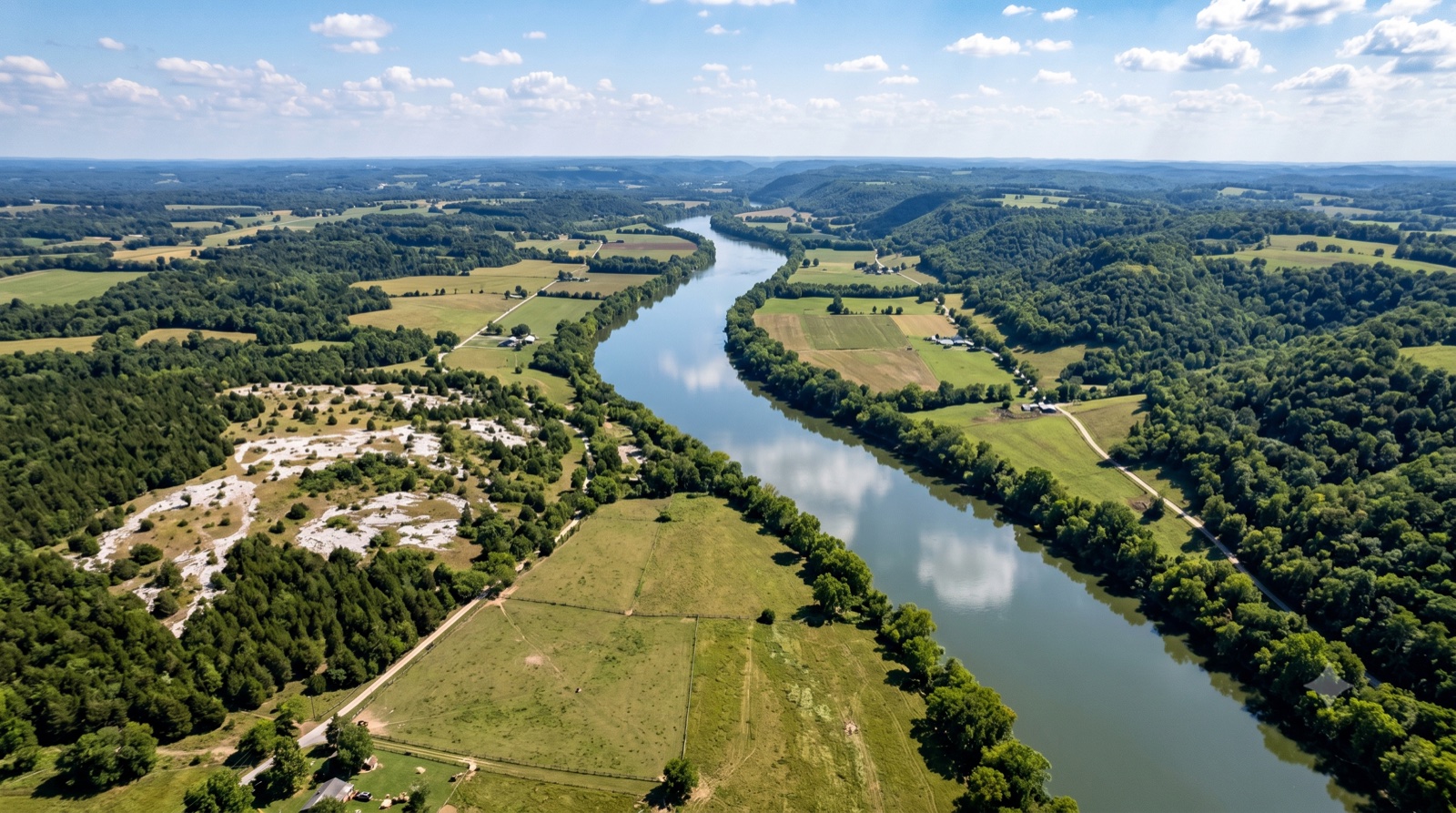
Johnson County occupies the far northeastern tip of Tennessee, on the western slope of the Appalachians. It covers roughly 298 square miles and is bordered by only two Tennessee counties — Carter to the southwest and Sullivan to the west — while its northern and eastern edges run along Virginia (Washington and Grayson counties) and North Carolina (Ashe, Watauga, and Avery counties). Mountain City, the county seat, was originally named Taylorsville before being renamed in 1885 to reflect its position in one of the highest valleys in the state. The Appalachian Trail crosses into the county, most of its wooded acreage falls within or near the Cherokee National Forest, and Watauga Lake — built by the TVA in 1949 — sits near the community of Butler.
For landowners weighing a sale, this guide covers the county's carrying costs, closing requirements, how Johnson County compares to its neighbors, and your practical options for exiting a parcel. For the statewide picture first, see our Tennessee land selling guide, or browse our full blog for more county- and topic-specific guides.
What Are the Tax Costs of Holding Land in Johnson County?
Tennessee applies a uniform 25% assessment ratio to all real property, meaning the taxable assessed value of a parcel equals one-quarter of the county assessor's appraised value before any tax rate is applied. Johnson County's effective property tax rate — tax paid as a share of full market value — runs approximately 0.55%, according to Ownwell, essentially in line with the Tennessee median and well under the national median of roughly 1.02%.
Using that effective rate as a rough guide, a parcel appraised at $100,000 would carry an estimated annual property tax bill in the neighborhood of $550 countywide, before any city or special-district add-ons in Mountain City. That's a modest carrying cost in absolute terms, but it accumulates year after year on remote mountain acreage that produces no income, especially land held by out-of-state heirs who may not be tracking the bill closely.
The Greenbelt Program: Lower Taxes, Deferred Liability
Tennessee's Greenbelt Law — the Agricultural, Forest and Open Space Land Act — lets qualifying land be assessed at its current-use value instead of full fair market value. To qualify:
- Agricultural land: At least 15 acres constituting a working farm unit, or land farmed 25-plus years by the owner (or a parent or spouse) that also serves as the owner's residence; land averaging $1,500 or more in annual gross farm income over a three-year period is presumed agricultural
- Forest land: At least 15 acres under a sound, documented forest management plan aimed at sustained timber yield
- Open space land: At least 3 acres, requiring a written designation from a county or municipal planning commission for conservation, recreation, or scenic purposes
Given Johnson County's terrain, forest and small-farm enrollments are common on the county's wooded hillsides and pasture bottoms. But when Greenbelt land is sold or converted to a disqualifying use, rollback taxes come due — the gap between what was actually paid and what full-assessment taxes would have been — covering the preceding three years for agricultural and forest land or five years for open space land, according to the UT County Technical Assistance Service. Always confirm a parcel's Greenbelt status and potential rollback exposure before closing.
Johnson County's Assessor of Property is Matthew Lewis, at the Johnson County Courthouse, 222 W Main Street, Mountain City, TN 37683, phone (423) 727-7692.
If you're carrying land with delinquent taxes, our guide on how to sell land with back taxes walks through your options.
What Zoning and Closing Rules Apply to Johnson County Land?
Tennessee does not require a licensed attorney at real estate closings, and Johnson County itself has no zoning department or building-permit requirement in the unincorporated county — new construction there only needs a septic permit and an electrical permit, per the county's own guidance for newcomers. Only the incorporated town of Mountain City enforces its own zoning and building rules, so a parcel's status can change sharply depending on whether it sits inside or outside town limits.
Closing typically runs through a title company or a real estate attorney acting as closing agent, and the deed is recorded with the Johnson County Register of Deeds, Freida May, at the Johnson County Courthouse in Mountain City, phone (423) 727-7841.
Tennessee's Realty Transfer Tax
Tennessee charges a realty transfer tax of $0.37 per $100 of consideration — the purchase price, or fair market value if higher — under Tenn. Code Ann. § 67-4-409, according to the UT County Technical Assistance Service. On a $50,000 land sale, that's $185 due at closing. Gifts, spousal transfers, and certain corporate reorganizations may be exempt, but an arm's-length sale to a third party is fully taxable, and no additional county-level transfer tax applies in Johnson County.
Terrain and Access
Johnson County's mountainous geography — anchored by Snake Mountain at 5,574 feet and dropping to 1,959 feet at Watauga Lake — means slope, rock outcrops, and seasonal drainage constrain buildability on many parcels regardless of the absence of formal zoning. Legal road access is not guaranteed either: interior hollow tracts near the Cherokee National Forest or the North Carolina and Virginia state lines are sometimes reached only by unrecorded farm roads or easements across neighboring land. Buyers should confirm a documented, legal access route and a soil/septic evaluation before purchase.
If your parcel is reached only by crossing someone else's property, our guide on selling land with no road access or easement covers your options. And if the tract has no utilities or improvements, see our guide on selling recreational or off-grid land with no utilities.
How Does Johnson County Compare to Neighboring Tennessee Counties?
Johnson County's population dipped from 18,244 at the 2010 census to 17,948 in 2020, then climbed back to roughly 18,700 by 2025 — a modest rebound after a decade of decline. Only two counties actually share a border with Johnson County inside Tennessee: Carter to the southwest and Sullivan to the west. Unicoi County, included below for comparison, sits nearby in the same northeast Tennessee mountain corridor but does not physically adjoin Johnson County.
| Factor | Johnson County | Carter County | Sullivan County | Unicoi County |
|---|---|---|---|---|
| Borders Johnson County | — | Yes | Yes | No (nearby, non-adjacent) |
| Population (recent est.) | ~18,700 | ~57,000 | ~163,800 | ~17,900 |
| Population trend | Dip then rebound | Growing | Growing | Roughly stable |
| Effective tax rate | ~0.55% | ~0.55% | ~0.62% | ~0.65% |
| Land area | ~298 sq mi | — | ~413 sq mi | ~186 sq mi |
| Closing attorney required | No | No | No | No |
Sullivan County anchors the Tri-Cities metro area around Kingsport and Bristol, giving it a far larger and denser population than any of its mountainous neighbors. Carter County, home to Elizabethton and part of Watauga Lake, sits between Johnson County's remote plateau and the more built-up Tri-Cities corridor. Unicoi County, though not a direct neighbor, shares Johnson County's small-town, mountain-recreation character and is a useful yardstick for what nearby, similarly rural East Tennessee land carries in tax terms.
An Economy Built on Farming, Timber, and Recreation
Johnson County's USDA 2022 Census of Agriculture county profile (FIPS 47091) counted 436 farms covering 32,922 acres — both down sharply from 2017 — with an average farm size of 76 acres. Of that farmland, woodland accounts for 12,827 acres, cropland 9,865 acres, and pastureland 8,251 acres. Livestock and poultry made up 58% of the county's $4.357 million in agricultural sales, led by cattle and calves at roughly $2.27 million, while forage and hay dominate the crop acreage at over 7,000 acres. Alongside agriculture, the county's economy leans on outdoor recreation tied to the Appalachian Trail, Cherokee National Forest, and Watauga Lake, plus proximity to the North Carolina high country around Boone (about 24 miles from Mountain City) — a draw for second-home and retirement buyers from outside the region.
If your tract is timbered or used for grazing, our guides on selling timberland and selling hunting land cover what recreational and timber buyers look for. For a broader look at what shapes land value, our land valuation guide explains the factors assessors and buyers weigh.
What Are Your Options for Selling Land in Johnson County?
Johnson County landowners often face a specific mix of frictions: a small, thin local buyer pool spread across a mountainous 298-square-mile county, possible Greenbelt enrollment carrying rollback exposure, and interior parcels where legal road access isn't a given. Owners who inherited land from family or who moved out of state face those frictions from a distance; our guide on selling land as an out-of-state owner covers the extra steps involved, and our guide on the paperwork needed to sell land walks through what to gather before you start.
Before listing or accepting any offer, take these steps. Verify your deed and legal description with the Johnson County Register of Deeds (Freida May, 423-727-7841). Confirm the parcel's Greenbelt status and any rollback exposure with the Johnson County Assessor of Property (Matthew Lewis, 423-727-7692). Confirm there's a documented, legal access route to the tract — essential on mountainous terrain where old farm roads and handshake easements are common. Check for any delinquent balance with the Johnson County Trustee (Lisa J. Crowder, 423-727-9062).
From there, sellers have a few paths. Listing with a land-specialist agent puts your parcel in front of recreational, second-home, and retirement buyers drawn to the mountains and the nearby North Carolina high country, but commissions of roughly 5–6% plus the $0.37/$100 transfer tax cut into net proceeds, and access-challenged tracts can sit on the market for many months. (Our guide on whether you need a realtor to sell land weighs that trade-off.) Online land marketplaces reach buyers actively searching for recreational and off-grid property near the Appalachian Trail and Watauga Lake. For owners who want a firm number without months of showings, uncertain closings, or the cost of clearing an access or Greenbelt issue themselves, Jerez Land provides a direct cash offer for your land. Each offer is parcel-specific and delivered in writing; as the buyer, we absorb the carrying costs, marketing, terrain and access risk, and resale timeline, so the number you see is the number you get, with no commission and a closing timeline measured in weeks.
A direct cash sale won't be the highest theoretical price a perfectly marketed, fully-accessed parcel might eventually fetch. What it offers instead is certainty and speed on land that can otherwise be genuinely hard to move.
Frequently Asked Questions
How do I sell vacant land in Johnson County TN?
Confirm your legal description and any existing Greenbelt enrollment with the Johnson County Assessor of Property (423-727-7692), and verify clean title and access through the Register of Deeds (423-727-7841). Tennessee does not require an attorney at closing — a title company or closing agent can handle the transaction. You can list with a local agent, use an online land marketplace, or request a direct cash offer from a land buyer like Jerez Land.
I inherited 30 acres of mountain land near Mountain City and live in Ohio — can I sell it without coming to Tennessee?
Yes. Out-of-state sellers routinely close on Tennessee land without traveling, since Tennessee doesn't require an attorney or an in-person appearance at closing — a title company or closing agent handles the transaction, and documents like the deed and closing paperwork can be signed remotely or by mail with notarization. You'll still need to confirm the estate's title is clear (probate or an affidavit of heirship, depending on how the land passed to you) and check whether the parcel carries any Greenbelt enrollment before you sell. Our guide on selling land as an out-of-state owner covers the process step by step.
My land in Johnson County is enrolled in Greenbelt — what happens when I sell?
Tennessee's Greenbelt Law lets qualifying agricultural land (15-plus acres as a working farm unit), forest land (15-plus acres under a management plan), and open space land (3-plus acres with a planning-commission designation) be taxed on current-use value instead of full market value. When Greenbelt land is sold or converted to a disqualifying use, rollback taxes come due for the preceding three years on agricultural or forest land, or five years on open space land — the difference between what was paid and what full-assessment taxes would have been, according to the UT County Technical Assistance Service. Confirm the parcel's classification and estimated rollback liability with the county assessor before you accept an offer.
I have a steep hollow tract near the North Carolina line with no recorded road access — can I still sell it?
Yes, but it takes extra groundwork before a buyer will commit. Interior mountain tracts near the Cherokee National Forest or the North Carolina and Virginia lines sometimes have no recorded easement, only an old farm road or a longstanding but undocumented crossing over a neighbor's property, which title companies and lenders will flag. Sellers typically need to document an existing easement, negotiate a new recorded one with the adjoining owner, or disclose the access limitation and price accordingly for a cash or recreational buyer who can absorb that risk. Our guide on selling land with no road access or easement walks through each option.
How much is Tennessee's realty transfer tax when I close on a land sale?
Tennessee charges $0.37 per $100 of consideration — the sale price, or fair market value if higher — on publicly recorded real estate transfers, under Tenn. Code Ann. § 67-4-409. On a $75,000 sale, that's $277.50 in transfer tax, generally paid at closing and recorded with the deed. Gifts, spousal transfers, and certain corporate reorganizations can qualify for exemptions. Johnson County does not add a separate county-level transfer tax on top of the state rate.
Is an attorney required to close a land sale in Tennessee?
No. Tennessee does not require a licensed attorney to be present at a real estate closing; the transaction can be handled by a title company or closing agent instead. The deed is then recorded with the Johnson County Register of Deeds. Given the prevalence of Greenbelt classifications and access questions on Johnson County's mountain tracts, working with a title company experienced in rural East Tennessee closings is a good idea even though it isn't legally required.
Disclaimer: This article is for informational purposes only and does not constitute legal, financial, or professional advice. Laws and regulations vary by jurisdiction and change over time. Always consult with qualified professionals before making land purchase decisions. Jerez Land is not responsible for actions taken based on this information.