
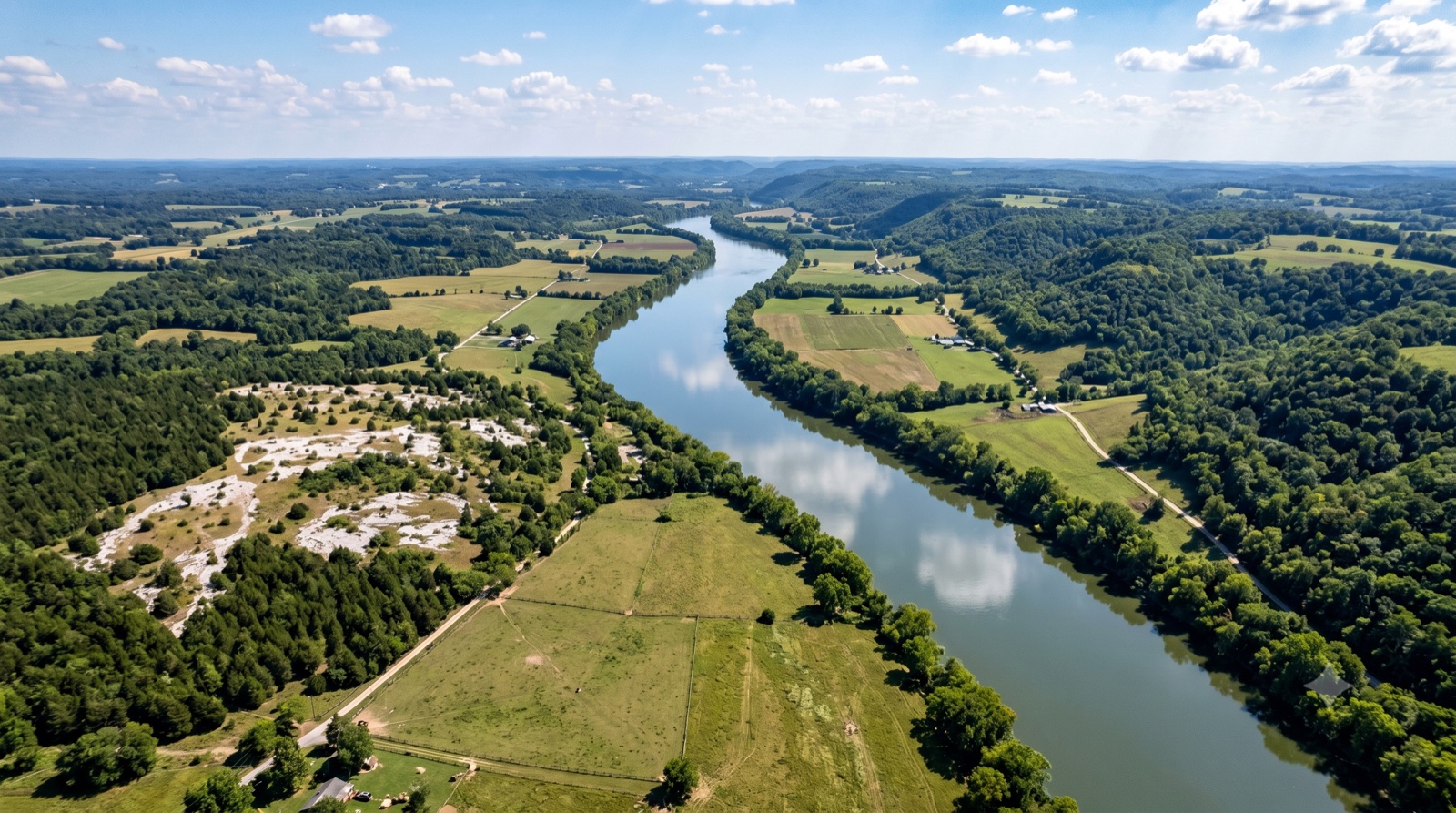
How to Sell Land in Tennessee: A Landowner's Guide
Key Takeaways
- Tennessee does not require an attorney to close a real estate transaction: Unlike neighboring Georgia, Alabama, and Mississippi, Tennessee allows title companies to conduct closings — attorney involvement is available but not legally required for land sales
- The realty transfer tax is $0.37 per $100 under TCA § 67-4-409: Tennessee imposes a uniform statewide realty transfer tax of $0.37 per $100 of the greater of consideration or property value — no county is permitted to add a supplemental transfer tax on top of this, according to Tennessee Department of Revenue
- Tennessee assesses all real property at 25% of appraised value: According to the Tennessee Comptroller of the Treasury, all classes of real property — including vacant land — are assessed at 25% of appraised value, and the Greenbelt program allows qualifying agricultural and forest land to be assessed at 25% of current use value instead, which is substantially lower
How Do You Sell Land in Tennessee?
Selling land in Tennessee doesn't require an attorney—title companies are fully authorized to conduct closings and handle all documentation. The process is shaped by Tennessee's uniform statewide realty transfer tax, the 25% assessment ratio for property taxes, and the Greenbelt program for qualifying agricultural and forest land, with timelines varying significantly by county and parcel type. Selling vacant land in Tennessee is more flexible than neighboring states in one key respect: you are not legally required to use an attorney for the closing. Title companies are commonly used and fully competent to handle Tennessee land closings. The state's uniform realty transfer tax, its straightforward 25% assessment ratio, and the well-known Greenbelt conservation program all play a role in how Tennessee land is valued, held, and sold. Whether you own a ridge-and-valley farm in middle Tennessee, a Cumberland Plateau timber tract, or a rural parcel in west Tennessee's bottomlands, understanding these mechanisms gives you a clearer picture of what to expect.
Who Handles Closings in Tennessee and What Does the Process Look Like?
Tennessee does not restrict real estate closings to attorneys. Title companies — which are common and well-established across the state — can conduct closings, hold earnest money in escrow, prepare settlement statements, and coordinate the transfer of funds and documents. Many buyers and sellers do choose to involve an attorney, particularly for complex title situations, but it is not a legal requirement.
The typical Tennessee vacant land closing process:
- Purchase and sale agreement: Buyer and seller execute a contract specifying price, earnest money, contingencies (inspection, survey, financing if any), and closing timeline. For raw land, common contingencies include satisfactory soil testing, survey confirmation, and clear title.
- Title search: The title company or closing attorney searches county register of deeds records to confirm clear chain of title — no outstanding mortgages, liens, judgments, or tax delinquencies.
- Realty transfer tax computation: Under TCA § 67-4-409, the tax is computed on the greater of consideration paid or the value of the property. The standard rate is $0.37 per $100. An oath regarding the amount due is required for deed recordation, as specified in TCA § 67-4-409(a)(6)(A).
- Deed preparation: A warranty deed (or other deed type) is prepared. Tennessee deeds are recorded at the county Register of Deeds — not a Chancery or Probate court as in some neighboring states.
- Closing and disbursement: The closing agent (title company or attorney) coordinates signatures, collects and disburses funds, and ensures all conditions are met before releasing the deed for recording.
- Recording: The deed is filed at the county Register of Deeds. Recording fees vary by county.
One seller note: Tennessee requires the oath certifying the transfer tax amount to be included on or with the deed for recording. Failure to include this can delay recording. Your title company or closing attorney will handle this, but it's worth confirming before closing day.
For a full list of what documents are needed in a land sale, see our guide on paperwork needed to sell land.
What Are the Transfer Taxes and Seller Closing Costs in Tennessee?
Tennessee's realty transfer tax of $0.37 per $100 is among the lowest in the eastern United States. On a $100,000 land sale, the transfer tax is $370. The tax is applied to the greater of the actual sale price or the appraised value, so sellers should be aware that if a parcel is appraised above the agreed sale price, the tax is computed on the appraised figure.
Seller closing costs in Tennessee typically include:
- Realty transfer tax: $0.37 per $100 of the greater of consideration or value (TCA § 67-4-409)
- Title company or attorney fees: Closing coordination, title search, and settlement statement preparation
- Title insurance: Optional for sellers; often required by buyers using financing; owner's policy protects the buyer from title defects not found in the search
- Recording fees: Set by the county Register of Deeds; typically modest per-page fees
- Outstanding property taxes: Tennessee property taxes are paid in arrears; unpaid taxes will be prorated and settled at closing
- Agent commission: If listed with a real estate agent, typically 5–6% of sale price
- Greenbelt rollback tax: If the parcel is enrolled in Tennessee's Greenbelt program and is sold for development or removed from qualifying use, the seller may owe a rollback tax — back taxes for the prior three years at the difference between Greenbelt assessment and full assessment, plus interest
The Greenbelt rollback is the cost most likely to surprise Tennessee land sellers. Before listing, confirm with the county assessor whether your parcel is enrolled and what the rollback obligation would be.
For situations involving delinquent taxes, see our guide on how to sell land with back taxes.
How Long Does It Take to Sell Land in Tennessee, and What Makes Rural Parcels Slow to Move?
Tennessee's land market spans distinctly different regions. Metro-adjacent counties — particularly near Nashville's expanding suburbs and Hamilton County in the Chattanooga market — have seen sustained buyer demand and faster-moving land markets. The Cumberland Plateau counties, including Fentress County, attract hunters, outdoor recreation buyers, and off-grid lifestyle seekers. West Tennessee counties, including Wayne County in the Western Highland Rim, appeal to timber and agricultural buyers.
Tennessee's property tax structure
All Tennessee real property is assessed at 25% of appraised value, according to the Tennessee Comptroller of the Treasury. The county assessor determines appraised value, which is updated on a four-year cycle across most of the state. Annual tax bills are computed as: assessed value (25% of appraised value) × local tax rate (set by county and municipality).
Tennessee's Greenbelt program — formally the Agricultural, Forest and Open Space Land Act of 1976 — allows qualifying landowners to have their land assessed at 25% of current use value rather than 25% of market value, according to the Tennessee Comptroller. Current use values are significantly lower than market values for most rural land, resulting in substantially reduced annual tax bills. Qualifying requirements include:
- Agricultural land: Minimum 15 acres actively devoted to farming or agricultural production
- Forest land: Minimum 15 acres covered by trees capable of producing timber products
- Open space land: Minimum 3 acres used to provide green space, recreation, or environmental benefit
The program caps enrolled acreage at 3,000 acres per owner per county. Sellers whose land is enrolled must factor in the potential rollback tax when pricing their parcels.
Why rural Tennessee land can be slow to sell:
- Access and road frontage: Tennessee has many landlocked parcels and rural tracts reached only by private roads or recorded easements. No legal access dramatically narrows the buyer pool — most lenders will not finance land without recorded access, which limits buyers to all-cash purchasers.
- Greenbelt rollback risk: Buyers planning to develop enrolled land face the three-year rollback tax, which reduces their net return. This can dampen offers or extend negotiation timelines.
- Septic and well feasibility: Rural Tennessee parcels without county water and sewer need to pass a perc test before any residential development can occur. Marginal soils — common in some Plateau counties — can make this difficult and reduce buyer confidence.
- Market depth: Rural counties with small populations and limited economic growth have fewer qualified buyers in the local market. Much of the demand for rural Tennessee land comes from out-of-state buyers, which extends marketing timelines.
For realistic expectations on land sale timelines across property types, see how long it takes to sell land.
Counties We Buy Land In Across Tennessee
Jerez Land buys vacant land across rural Tennessee. We make firm written cash offers, coordinate with the closing title company or attorney, and can work on your timeline. Here are three Tennessee counties where we actively purchase land:
Giles County, TN — A growing south-central Tennessee county on the Alabama line around the seat of Pulaski, and the rare county where pastureland outranks both cropland and woodland as the largest use of farmland — ranked 4th statewide for cattle and calves sales, which gives open grazing ground an operator buyer pool that wooded back tracts do not have. Learn more about selling land in Giles County, TN.
Lincoln County, TN — A growing south-central Tennessee county on the Alabama line around the seat of Fayetteville, ranked first in the state for cattle and calves sales, where roughly three-quarters of the land base is working farmland and a consolidating farm sector sits beside a corridor positioning for Huntsville-area growth. Learn more about selling land in Lincoln County, TN.
Franklin County, TN — A growing county around the seat of Winchester where the largest cropland base in the region and a statewide-ranked poultry and nursery-sod sector sit alongside Tims Ford Lake, whose shoreline carries a federal TVA permitting layer most sellers do not expect. Learn more about selling land in Franklin County, TN.
Moore County, TN — Tennessee's second-smallest county by area, governed as the consolidated Metropolitan Government of Lynchburg, Moore County, where cattle and hay ground cover most of the land base and a rapidly consolidating farm sector leaves a very small local buyer pool. Learn more about selling land in Moore County, TN.
Sequatchie County, TN — A Cumberland Plateau county around the seat of Dunlap in the Sequatchie Valley within commuting range of Chattanooga, where beef-cattle pasture, hay ground, and hardwood-timber ridges trade in a small but growing rural land market. Learn more about selling land in Sequatchie County, TN.
Lewis County, TN — A middle Tennessee county around the seat of Hohenwald along the Natchez Trace, where hardwood timber and small farms trade in a small, slow rural land market. Learn more about selling land in Lewis County, TN.
Hickman County, TN — A middle Tennessee Highland Rim county around the seat of Centerville, where hardwood ridge timber, beef-cattle pasture, and hay ground trade in a small, slow rural land market on the southwestern edge of the Nashville region. Learn more about selling land in Hickman County, TN.
Bledsoe County, TN — A Cumberland Plateau county around the seat of Pikeville in the Sequatchie Valley, where beef-cattle pasture, hay ground, and hardwood-timber tracts trade in a small, slow rural land market. Learn more about selling land in Bledsoe County, TN.
Overton County, TN — An Upper Cumberland county around the seat of Livingston, where hardwood ridge timber, cattle and hay ground, and Standing Stone recreational tracts trade in a small, slow rural land market. Learn more about selling land in Overton County, TN.
Cannon County, TN — A small middle Tennessee Highland Rim county around the seat of Woodbury, where beef-cattle pasture, hay and nursery-stock ground, and hardwood timber trade in a thin rural land market on the eastern edge of the Nashville exurbs. Learn more about selling land in Cannon County, TN.
Meigs County, TN — A small east Tennessee county around the seat of Decatur on the Tennessee River and Watts Bar Lake, where hardwood ridge timber, beef-cattle pasture, and lake and recreational tracts trade in a thin rural land market. Learn more about selling land in Meigs County, TN.
Jackson County, TN — An Upper Cumberland county around the seat of Gainesboro along Cordell Hull Lake, where hardwood ridge timber, cattle and hay ground, and lake-country recreational tracts trade in a small, slow rural land market. Learn more about selling land in Jackson County, TN.
Crockett County, TN — A small west Tennessee county around the seat of Alamo, where cotton, soybean, and corn row-crop farmland and scattered hardwood timber trade in a thin, steadily declining rural market. Learn more about selling land in Crockett County, TN.
Lauderdale County, TN — A west Tennessee county around the seat of Ripley on the Mississippi River, where cotton, soybean, and corn bottomland row crop and hardwood timber trade in a thin, steadily depopulating rural market with deep absentee and heirs' ownership. Learn more about selling land in Lauderdale County, TN.
Stewart County, TN — A northern Highland Rim county around the seat of Dover wrapped around the south end of Land Between the Lakes, where oak-hickory timber ridges and hunting tracts slope down to the Kentucky Lake and Lake Barkley shorelines in a thin, slow rural market where nearly half the county is public land. Learn more about selling land in Stewart County, TN.
Houston County, TN — One of Tennessee's smallest counties, around Erin in the northern Highland Rim near the Land Between the Lakes region, where wooded hunting tracts, river-and-lake recreational land, and small farms trade in a thin rural market. Learn more about selling land in Houston County, TN.
Humphreys County, TN — A Western Highland Rim county around the seat of Waverly where Kentucky Lake forms the western border, and fertile bottomland along the Tennessee, Duck, and Buffalo rivers supports more row-crop and cattle farming than its hardwood-ridge terrain might suggest, alongside a steadily growing population and a lake-recreation buyer pool. Learn more about selling land in Humphreys County, TN.
Decatur County, TN — A sparsely settled west Tennessee county around Decaturville along the Tennessee River, where river-bottom farmland, hardwood timber, and rural deer-and-turkey hunting ground trade in one of the state's thinnest local land markets. Learn more about selling land in Decatur County, TN.
Hamilton County, TN — Tennessee's fourth-largest county and home to Chattanooga, Hamilton County has a strong market for land with residential or commercial development potential, particularly in the county's growing northern and eastern corridors. Learn more about selling land in Hamilton County, TN.
Fentress County, TN — A Cumberland Plateau county known for Pickett State Park and the Big South Fork recreation area, Fentress County draws buyers seeking hunting tracts, off-grid parcels, and recreational land. The county's rugged terrain and low density appeal to buyers seeking privacy. Learn more about selling land in Fentress County, TN.
Wayne County, TN — Located in the Western Highland Rim bordering Alabama, Wayne County offers productive timber land and agricultural parcels. The county's rural character and access to the Buffalo River make it attractive to outdoor recreation and timber investment buyers. Learn more about selling land in Wayne County, TN.
Scott County, TN — A Cumberland Plateau county next to the Big South Fork around Huntsville, Scott offers heavily timbered recreational land and former coal country reverting to recreation, with many access-challenged plateau parcels. Learn more about selling land in Scott County, TN.
Clay County, TN — One of Tennessee's smallest, most rural counties, Clay sits on Dale Hollow Lake in the Upper Cumberland around Celina, with recreational lake-country tracts and steep hill farms. Learn more about selling land in Clay County, TN.
Lake County, TN — Tennessee's far-northwest corner county around Tiptonville, Lake pairs high-yield Mississippi River bottom farmland with the cypress shallows of Reelfoot Lake, and ranks among the state's smallest and fastest-depopulating counties with a thin local buyer pool. Learn more about selling land in Lake County, TN.
Pickett County, TN — Tennessee's least populous county, Pickett surrounds Byrdstown on the shores of Dale Hollow Lake in the Upper Cumberland, with deeply forested plateau and Highland Rim tracts, limited road access on many interior parcels, and a thin local buyer pool that makes out-of-region marketing essential. Learn more about selling land in Pickett County, TN.
Hancock County, TN — One of Tennessee's least-populous and most isolated counties, Hancock sits in the northeastern corner of the state around Sneedville, with densely timbered Appalachian ridges, access-challenged hollow tracts, and deep rural depopulation that narrows the local buyer pool significantly. Learn more about selling land in Hancock County, TN.
Van Buren County, TN — One of Tennessee's least-populous counties, perched on the Cumberland Plateau around Spencer where Fall Creek Falls State Park and the Caney Fork gorges define a market of plateau timber and recreational tracts that move slowly through a small local buyer pool. Learn more about selling land in Van Buren County, TN.
Grundy County, TN — A Cumberland Plateau county around Altamont where Savage Gulf, South Cumberland State Park, and dense hardwood timber define a market of plateau timber and recreational gorge tracts that move slowly through a small local buyer pool. Learn more about selling land in Grundy County, TN.
Perry County, TN — A sparsely settled west-central Tennessee county around Linden along the Tennessee River, where hardwood timber, Buffalo River recreation, and rural deer-and-turkey hunting ground trade in one of the state's thinnest local land markets. Learn more about selling land in Perry County, TN.
Hardeman County, TN — A thinly populated, declining West Tennessee county around Bolivar in the Hatchie River bottoms, where row-crop farmland (soybeans, cotton, corn), hardwood timber, and rural hunting ground trade in a slow local market with a steadily shrinking buyer pool. Learn more about selling land in Hardeman County, TN.
Bledsoe County, TN — A small Cumberland Plateau and Sequatchie Valley county around Pikeville where cattle, hay ground, and hardwood-timber ridges define a slow rural land market with a thin local buyer pool. Learn more about selling land in Bledsoe County, TN.
Benton County, TN — A northwest Middle Tennessee county around Camden where Kentucky Lake forms the entire eastern border, drawing duck hunters and anglers to the Tennessee National Wildlife Refuge and Big Sandy WMA alongside a crop-heavy farm economy inland. Learn more about selling land in Benton County, TN.
Johnson County, TN — Tennessee's far northeastern corner around Mountain City, the state's highest incorporated town at 2,418 feet, where rugged Appalachian terrain, Cherokee National Forest holdings, and borders with both North Carolina and Virginia leave many hollow tracts access-challenged and the local buyer pool small. Learn more about selling land in Johnson County, TN.
Claiborne County, TN — Ridge-and-hollow timberland around Tazewell at the Cumberland Gap where Tennessee, Kentucky, and Virginia meet, with Norris Lake's Powell and Clinch River arms, a cattle-and-hardwood economy, and a coal history still generating new mining permits and old mineral severances. Learn more about selling land in Claiborne County, TN.
Grainger County, TN — Ridge-and-valley farmland between the Clinch and Holston rivers around Rutledge, known statewide for its tomato crop and increasingly a Knoxville exurb along the Cherokee Lake corridor. Learn more about selling land in Grainger County, TN.
McNairy County, TN — A West Tennessee county on the Mississippi line around the seat of Selmer, where hardwood ridge timber, cattle pasture, and row-crop bottoms trade in a steady local market whose population has held near 26,000 since 2010 while neighboring counties declined. Learn more about selling land in McNairy County, TN.
Explore more county-level guides and topical articles on our blog.
Should You List with an Agent, Sell FSBO, or Request a Cash Offer in Tennessee?
Tennessee landowners have three realistic paths to a sale, and the right choice depends on your timeline, the complexity of your parcel, and what you need from the transaction.
Listing with a real estate agent familiar with Tennessee land gives you MLS exposure, professional marketing, and access to the agent's buyer network. This works best when your land has clear access, a recent survey, and features that photograph well — waterfront, hardwood timber, development potential. Agent commissions of 5–6% plus closing costs reduce your net, and rural listings in lower-demand counties can sit on the market for an extended period.
For Sale By Owner is a common path for Tennessee land sellers, particularly those who know their buyer pool (neighboring farmers, hunting clubs, timber companies). FSBO eliminates the agent commission and is straightforward when the land has clean title. You'll need to ensure title work is done through a title company or attorney, and that the realty transfer tax oath is handled properly at recording.
A direct cash offer from Jerez Land is the fastest path when certainty matters. We make a specific written offer based on your parcel's location, acreage, access, Greenbelt status, and title. We cover our own closing costs, coordinate with the title company, and can move quickly — without the listing period or carrying costs that come with a traditional sale.
For context on what determines your land's value, see how much is my land worth. For Tennessee land that came to you through an estate, see our guide on how to sell inherited land.
Request a cash offer for your Tennessee land
Frequently Asked Questions
How can I sell my land in Tennessee fast?
Requesting a direct cash offer from a buyer like Jerez Land is the fastest path. We evaluate your parcel, make a firm written offer, and can close in weeks. Traditional listings in rural Tennessee counties often take months due to the limited pool of qualified buyers, particularly for land without county utilities or road frontage.
I'm selling land in Tennessee—do I need to hire an attorney?
No. Unlike neighboring Georgia, Alabama, and Mississippi, Tennessee does not require an attorney to conduct a real estate closing. Title companies can legally handle all aspects of a Tennessee land closing, including title search, settlement statement preparation, fund disbursement, and coordination of deed recording at the county Register of Deeds. Many sellers choose to involve an attorney anyway for complex title situations.
What is Tennessee's realty transfer tax?
Under Tennessee Code Annotated § 67-4-409, Tennessee imposes a realty transfer tax of $0.37 per $100 of the greater of consideration or appraised value. This is a statewide uniform rate — no county or city may impose a supplemental transfer tax on top of it, according to the Tennessee Department of Revenue. On a $100,000 sale, the tax is $370.
I own vacant land in Tennessee—how much will the property taxes be?
All Tennessee real property, including vacant land, is assessed at 25% of appraised value, according to the Tennessee Comptroller of the Treasury. The assessor determines appraised value on a county-wide reappraisal cycle. If your land qualifies for the Greenbelt program (minimum 15 acres for agricultural or forest use, 3 acres for open space), it can be assessed at 25% of current use value — which is substantially lower than market value for most rural parcels.
My land is enrolled in Tennessee's Greenbelt program—how does that affect my sale?
The Greenbelt program, established under the Agricultural, Forest and Open Space Land Act of 1976, allows qualifying landowners to have their land assessed at current use value rather than market value, resulting in significantly lower annual property taxes. If you sell or convert enrolled land, a rollback tax applies — the difference between Greenbelt assessment and full assessment for the prior three years, plus interest. This rollback is typically the seller's responsibility and should be factored into your net proceeds when pricing.
How long does it take to sell vacant land in Tennessee?
Timeline varies by county and land type. Metro-adjacent land near Nashville or Chattanooga can sell in weeks; rural land in plateau or west Tennessee counties often takes six months to a year or more. The most common delays involve lack of road access, Greenbelt rollback concerns that dampen buyer offers, and limited local buyer pools in low-population counties.
Can I sell land in Tennessee without a realtor?
Yes. There is no legal requirement to use a real estate agent to sell land in Tennessee. You can market your land through FSBO platforms, Land.com, direct outreach, or by requesting a cash offer. A title company (or attorney if you prefer) handles the closing and recording process regardless of how you find your buyer.
Who pays closing costs when selling land in Tennessee?
Closing cost allocation is negotiable. Typically, the seller pays the realty transfer tax and any delinquent property taxes. Closing agent fees are often split or buyer-paid. Title insurance is commonly a buyer cost. Greenbelt rollback tax, if applicable, is typically a seller obligation. Cash buyers like Jerez Land absorb their own closing costs, making the process cleaner for sellers.
Disclaimer: This article is for informational purposes only and does not constitute legal, financial, or professional advice. Laws and regulations vary by jurisdiction and change over time. Always consult with qualified professionals before making land purchase decisions. Jerez Land is not responsible for actions taken based on this information.