
Sell My Land in Keweenaw County MI - What Landowners Need to Know
Key Takeaways
- Michigan transfer tax is seller-paid at $3.75 per $500 state plus $0.55 per $500 county: totaling $4.30 per $500 (about 0.86%) of the sale price, paid at closing before the deed is recorded with the Register of Deeds, according to the Michigan Legislature's State Real Estate Transfer Tax Act
- Keweenaw County ranked dead last — 83rd of 83 Michigan counties — in total agricultural sales in 2022: just 15 farms on 955 acres produced $9,000 in total product sales, confirming that this county's private land is almost entirely forest, recreational, and historic mining ground rather than cropland, per the USDA Census of Agriculture
- Keweenaw is Michigan's least-populous county and the most water-dominated county in the United States: of its roughly 5,966 total square miles, about 90% is Lake Superior — only 541 square miles is land — and population sits near 2,046 as of the 2020 Census, down from 7,156 in 1910, according to the county's own website and Wikipedia's county profile
How Can You Sell Land in Keweenaw County Michigan?
Selling land in Keweenaw County, Michigan means working within a property tax system built on State Equalized Value (SEV) with a taxable-value cap that resets the year after a sale, a seller-paid transfer tax of $3.75 per $500 state plus $0.55 per $500 county, and a land market defined by three unusual facts: this is Michigan's smallest county by population, the most water-dominated county in the country, and a place where 19th-century copper mining left behind a legacy of severed mineral rights that can complicate a modern title search.
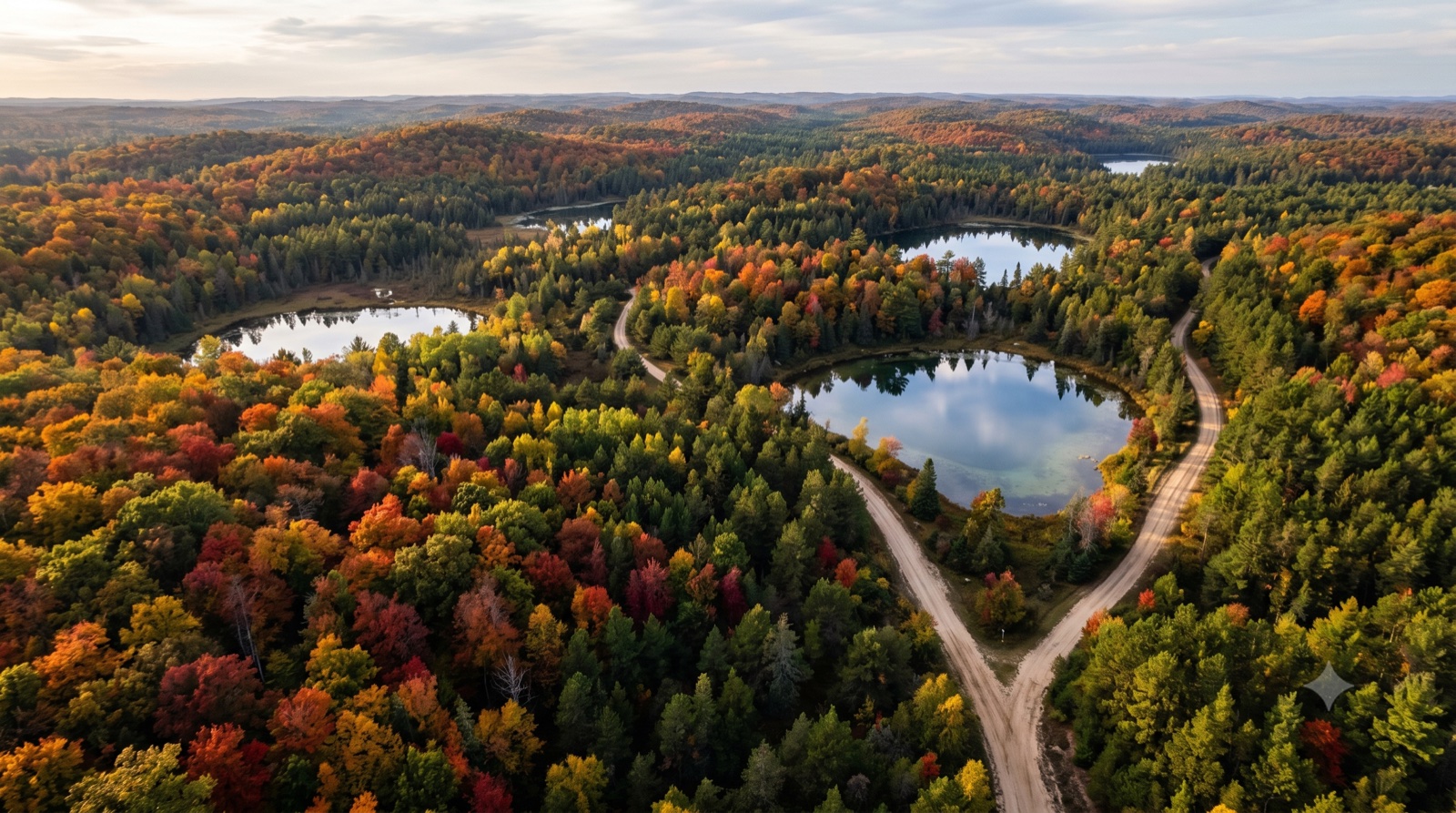
Keweenaw County occupies the far tip of the Keweenaw Peninsula in the western Upper Peninsula, with the tiny village of Eagle River serving as the county seat. Two land masses make up nearly all of the county's dry ground: the peninsula's northeastern half, split among the townships of Allouez, Eagle Harbor, Grant, Houghton, and Sherman, and Isle Royale — the Lake Superior island now entirely within Isle Royale National Park — separated from the mainland by open water. Copper drew people here starting in the 1840s, and over ten percent of all copper ever mined worldwide came out of this stretch of the "Copper Country" before the mines closed through the mid-20th century, according to the county's own history page. What's left is a landscape of old mining locations, second-growth hardwood and conifer forest, rocky Lake Superior shoreline, and heavy snowmobile and tourism traffic drawn by 180 to 250 inches of average annual snowfall.
This guide walks through Keweenaw County's property tax mechanics, Michigan's title-company closing process, the county's mineral-rights history, how it compares to its Upper Peninsula neighbors, and your practical options for exiting a parcel here. For the statewide picture, start with our Michigan land selling guide, and for the full library of county and topic guides see the Jerez Land blog.
What Are the Tax Costs of Holding Land in Keweenaw County?
Michigan taxes every parcel on two linked figures: the State Equalized Value (SEV), set at 50% of the assessor's estimate of true cash value, and the taxable value, the number millage rates are actually applied against. Under Proposal A (1994), taxable value can only rise each year by the lesser of inflation (CPI) or 5%, no matter how fast market value moves — but when a parcel sells, taxable value uncaps and resets to that year's SEV. On long-held Keweenaw County land — much of it passed down through mining-era families for generations — that uncapping can meaningfully raise the buyer's tax bill the year after closing.
Keweenaw County carries a moderate property tax burden for the Upper Peninsula: an effective rate near 1.09% of assessed value, with a median annual property tax bill around $895, according to tax-rates.org. That is the lowest effective rate of the four western U.P. counties compared later in this guide, though the actual rate any individual owner pays depends on the specific township, school district millage, and how long the parcel has been held without a sale resetting its taxable value. The Keweenaw County Equalization Department oversees countywide property assessment and can confirm current SEV and taxable value for any parcel.
Michigan Transfer Tax: Seller Pays Both State and County Levies
Michigan's real estate transfer tax is seller-paid at two levels:
- State transfer tax: $3.75 per $500 of sale price (or fraction thereof)
- County transfer tax: $0.55 per $500 of sale price (or fraction thereof)
- Combined: $4.30 per $500, or approximately 0.86% of the purchase price
On a $40,000 land sale, the combined transfer tax works out to $344. Certain transfers are exempt — transfers between spouses, some foreclosure deeds, and transfers where no consideration changes hands — under the Michigan Legislature's State Real Estate Transfer Tax Act. Sellers should build both levies into their net-proceeds math before agreeing to a price.
If you manage a Keweenaw County parcel from somewhere else — a common situation given how much of the county's land is held by descendants of mining families who moved away decades ago — our guide on selling land as an out-of-state owner covers how Michigan title companies typically handle remote closings.
What Zoning and Closing Rules Apply to Keweenaw County Land?
Michigan does not require an attorney to be present at a real estate closing. Title companies routinely handle the title search, issue title insurance, prepare the deed (warranty or limited warranty deed), collect the transfer tax, and record the transaction with the county Register of Deeds. Attorney involvement is optional but worth considering for parcels with mining-era mineral severances, easements, shoreline or Lake Superior access issues, or a complicated multi-generation ownership history.
The Keweenaw County Clerk & Register of Deeds office (906-337-2229), the Treasurer's Office (906-337-1625), and the Equalization Department (906-337-3471) are all located together at the county courthouse, 5095 Fourth Street, Eagle River, MI 49950. Courthouse hours are Monday through Friday, 9:00 a.m. to 4:00 p.m., closed on legal holidays, per the county's own contact directory. Unlike some neighboring western U.P. counties that leave land-use control entirely to individual townships, Keweenaw County maintains its own countywide Zoning Ordinance administered by the county Zoning & Construction Codes Department, which also issues building, electrical, mechanical, and plumbing permits — worth checking before you list a parcel that may carry setback, shoreline, or lot-size restrictions.
A typical Keweenaw County land closing runs in this order:
- Confirm ownership and taxable value — pull your deed and current SEV/taxable value through the Register of Deeds and Equalization Department.
- Open title — a title company orders a search, checks for liens or delinquent taxes, and confirms whether mineral rights were severed from the surface historically.
- Check zoning and access — verify the parcel's zoning district and any shoreline, wetland, or road-access constraints with the Zoning & Construction Codes Department.
- Sign and fund — the title company prepares the deed, collects the seller-paid state and county transfer tax, and disburses proceeds.
- Record — the deed is recorded with the Keweenaw County Register of Deeds, completing the transfer.
Copper-Era Severed Mineral Rights: A Real Title Issue Here
Keweenaw County's mining history left a lasting mark on land titles that few other Michigan counties share. When 19th- and early-20th-century copper companies sold off cutover surface land, many transactions kept the mineral estate for the company rather than passing it to the new surface owner — a legal "severance" that survives indefinitely unless later reunited by deed. Keweenaw Land Association, Limited, a mineral-and-land management company with roots in the copper era, still holds roughly 1.1 million acres of mineral rights across thirteen Upper Peninsula counties, including Keweenaw County itself, according to the company's own annual report. In practical terms, that means a meaningful share of private surface parcels in this county may not include the minerals beneath them. A title search that checks specifically for a severed mineral estate — not just liens and easements — is worth the extra step before you sign a purchase agreement, since it affects what exactly you're conveying to a buyer. Our guide on selling land with severed mineral or oil and gas rights walks through what that means for a sale in more detail.
Two Michigan forest-tax programs are also worth checking if your parcel is wooded: the Commercial Forest (CF) program, administered by the Michigan DNR for 40-plus-acre tracts managed for commercial timber in exchange for public foot-access, and the Qualified Forest Program (QFP), administered by MDARD for 20-plus-acre forestland with a management plan, which exempts qualifying owners from school operating millage but triggers recapture of that savings if the land sells to a buyer who doesn't continue the program. Confirm enrollment status through the Equalization Department before you price a wooded parcel for sale. If your land is primarily timber, our guide on selling timberland and our hunting land guide cover what those buyers look for.
How Does Keweenaw County Compare to Neighboring Michigan Counties?
Keweenaw County's only true land border is with Houghton County to the south, across the Keweenaw Waterway; Ontonagon County lies across open Lake Superior water to the southwest rather than sharing a land line, and Baraga County — the next county down the peninsula — doesn't touch Keweenaw's border at all. All three are useful comparisons because they share the same western U.P. Copper Country geography, forest-and-recreation land base, and Michigan tax framework, even though only Houghton is a literal neighbor.
| Factor | Keweenaw County | Houghton County | Baraga County | Ontonagon County |
|---|---|---|---|---|
| Population (2020 Census) | 2,046 | 37,361 | 8,158 | 5,816 |
| Land area (sq mi) | 541 | 1,009 | 898 | 1,311 |
| Effective tax rate | ~1.09% | ~1.22% | ~1.44% | ~1.22% |
| County seat | Eagle River | Houghton | L'Anse | Ontonagon |
| Borders Keweenaw? | — | Yes, by land | No | By water only |
| Key land draw | Isle Royale, copper-mining history, Lake Superior shoreline, snowmobile tourism | Michigan Tech, Keweenaw Waterway, Portage Lake | Keweenaw Bay, L'Anse Indian Reservation land | Porcupine Mountains, Ottawa National Forest timber |
Keweenaw County stands out from all three neighbors as by far the smallest by population — roughly a twentieth the size of Houghton County next door, which is anchored by Michigan Technological University and a much larger year-round economy. Keweenaw's land base is also the smallest of the four by square mileage, since most of the county's official area is Lake Superior water rather than dry ground. The land draws are similar across all four counties — timber, Lake Superior recreation, mining or industrial heritage — but Keweenaw's combination of the smallest population, the highest water-to-land ratio, and Isle Royale National Park makes its private land market unusually thin and specialized compared to its neighbors.
Economy and a Small, Aging, Tourism-Dependent Buyer Pool
Keweenaw County's year-round economy leans on tourism, small-scale services, health care, and local government, with median household income around $52,600 and roughly 15% of residents below the poverty line, according to Data USA. The median resident age is in the upper 50s, reflecting a population of retirees, seasonal residents, and descendants of mining families who never left. Summer visitors come for Isle Royale, Fort Wilkins State Historic Park, and the shoreline; winter brings snowmobilers drawn to hundreds of inches of annual snowfall and a groomed trail network — but the year-round resident base that would normally support a steady local land market is small and shrinking.
That thinness shapes who actually buys land here. Many parcels — old mining-company lots in communities like Ahmeek, Mohawk, Copper Harbor, and Eagle Harbor, along with larger wooded tracts inland — are owned by out-of-area heirs who inherited them from relatives with roots in the copper boom, or by seasonal owners who no longer make the trip north as often as they used to. Carrying a Keweenaw County parcel from a distance means paying annual taxes on land you may rarely see, while buyer demand is concentrated among a small pool of local, seasonal, and recreational purchasers. For a sense of what actually drives value in a market like this, see our guide on how much is my land worth, and if you're weighing whether an agent makes sense for a remote or unusual parcel, see do you need a realtor to sell land.
What Are Your Options for Selling Land in Keweenaw County?
The typical Keweenaw County seller is an out-of-area owner who inherited a parcel tied to the county's mining history, or a seasonal owner who no longer visits as often, and is now weighing whether the annual tax bill and upkeep still make sense. Common signals it's time to sell: you can't remember the last time you set foot on the land, you're not sure whether the mineral rights were ever severed from your deed, you've inherited a parcel alongside siblings scattered across other states, or the property sits in a county so remote that finding a buyer feels harder than it should be. Any one of those is a reasonable reason to explore your options.
Before accepting any offer, take a few verification steps. Confirm your current SEV and taxable value through the Keweenaw County Equalization Department (5095 Fourth Street, Eagle River, 906-337-3471). Verify your deed and check for a severed mineral estate through the Clerk & Register of Deeds at the same address (906-337-2229). Confirm your property tax status with the Treasurer's Office (906-337-1625) — Michigan's tax-forfeiture process moves on a set statutory timeline once a parcel falls behind, and our guide on selling land with back taxes explains your options if you're behind. If the parcel is wooded and possibly enrolled in the Commercial Forest or Qualified Forest Program, confirm enrollment and any withdrawal or recapture cost before you commit to a sale price.
From there, sellers have a few realistic paths. Listing with a Michigan land or recreational-property specialist can reach hunting, snowmobile, and Lake Superior recreation buyers through platforms like LandSearch and Lands of America — but in a county this small and remote, a listing can sit for many months waiting for the right out-of-area buyer, and commissions come off the top. For owners who want a specific number in hand without gambling on a thin market, Jerez Land provides a direct, parcel-specific written cash offer for your land. Because we buy for cash and take on the carrying costs, marketing effort, and resale risk ourselves, our offer reflects the certainty and speed we provide rather than a retail listing price. Each parcel is priced individually as a firm written number, with no agent commissions, no repairs, and a closing timeline driven by clear title rather than by how long it takes to find a buyer in one of Michigan's smallest counties.
Frequently Asked Questions
I inherited land in Keweenaw County and live out of state — how do I sell it?
Start by verifying your deed and checking for a severed mineral estate through the Keweenaw County Clerk & Register of Deeds (906-337-2229, 5095 Fourth Street, Eagle River), and confirm your current SEV and taxable value through the Equalization Department at the same address. Michigan does not require an attorney at closing — a title company can handle the search, deed preparation, and recording remotely. From there you can list with a recreational-land or Upper Peninsula land broker, market it yourself on platforms like LandSearch and Lands of America, or request a direct cash offer from a land buyer if you'd rather skip an extended marketing period on a small, remote parcel.
I'm considering buying land in Keweenaw County — what will my annual property taxes be?
Keweenaw County's effective property tax rate runs near 1.09% of assessed value, with a median annual tax bill around $895, according to tax-rates.org — among the lower rates of the western Upper Peninsula counties, though it varies by township and school district. Taxable value equals 50% of the assessor's estimate of true cash value (State Equalized Value), capped annually at the lesser of inflation or 5% under Proposal A. When a parcel sells, taxable value uncaps and resets to the current SEV the following year, which can raise the buyer's tax bill notably on land that has been held for decades without a sale.
When I sell my land in Michigan, what transfer taxes will I owe?
Michigan charges two seller-paid transfer taxes: $3.75 per $500 of sale price at the state level and $0.55 per $500 at the county level, for a combined $4.30 per $500 — about 0.86% of the purchase price. On a $40,000 land sale, that works out to $344 total. Certain transfers, such as those between spouses or some foreclosure deeds, are exempt under the Michigan Legislature's State Real Estate Transfer Tax Act. The tax is collected at closing and recorded with the deed at the Keweenaw County Register of Deeds.
Do I need to hire a lawyer to close my Michigan land sale?
No. Michigan does not require a licensed attorney at a real estate closing. Title companies handle the title search, issue title insurance, prepare the deed, collect the transfer tax, and record the transaction with the Register of Deeds. Attorney involvement is optional but worth considering in Keweenaw County specifically because of the county's history of severed mineral rights from the copper-mining era, along with any parcel involving shoreline access, easements, or a complicated multi-generation ownership chain.
My family's land has been in Keweenaw County since the copper-mining era, and I'm not sure who owns the mineral rights — does that affect selling it?
It can. Many copper companies that sold off surface land in the 19th and early 20th centuries kept the mineral rights for themselves, a legal severance that still stands today unless it was later reunited by deed. Keweenaw Land Association, Limited, a company with roots in that era, still holds roughly 1.1 million acres of mineral rights across thirteen Upper Peninsula counties, including Keweenaw County, according to its own annual report. A title search that specifically checks for a severed mineral estate — not just standard liens and easements — will confirm whether your deed includes the minerals beneath your land, which affects exactly what you're able to convey to a buyer.
I've heard Keweenaw is Michigan's least-populated county — will that make it hard to sell my land there?
It's a real factor to plan around. Keweenaw County's 2020 Census population was 2,046, the smallest of any Michigan county, down from 7,156 in 1910, and the county is also the most water-dominated in the country — only about 541 of its roughly 5,966 total square miles is land. That small, seasonal buyer pool means a listed parcel can take considerably longer to sell than land in a more populous county, since demand is concentrated among local residents, seasonal owners, and recreational buyers drawn by Isle Royale, snowmobiling, and Lake Superior access rather than a broad year-round market.
Disclaimer: This article is for informational purposes only and does not constitute legal, financial, or professional advice. Laws and regulations vary by jurisdiction and change over time. Always consult with qualified professionals before making land purchase decisions. Jerez Land is not responsible for actions taken based on this information.