
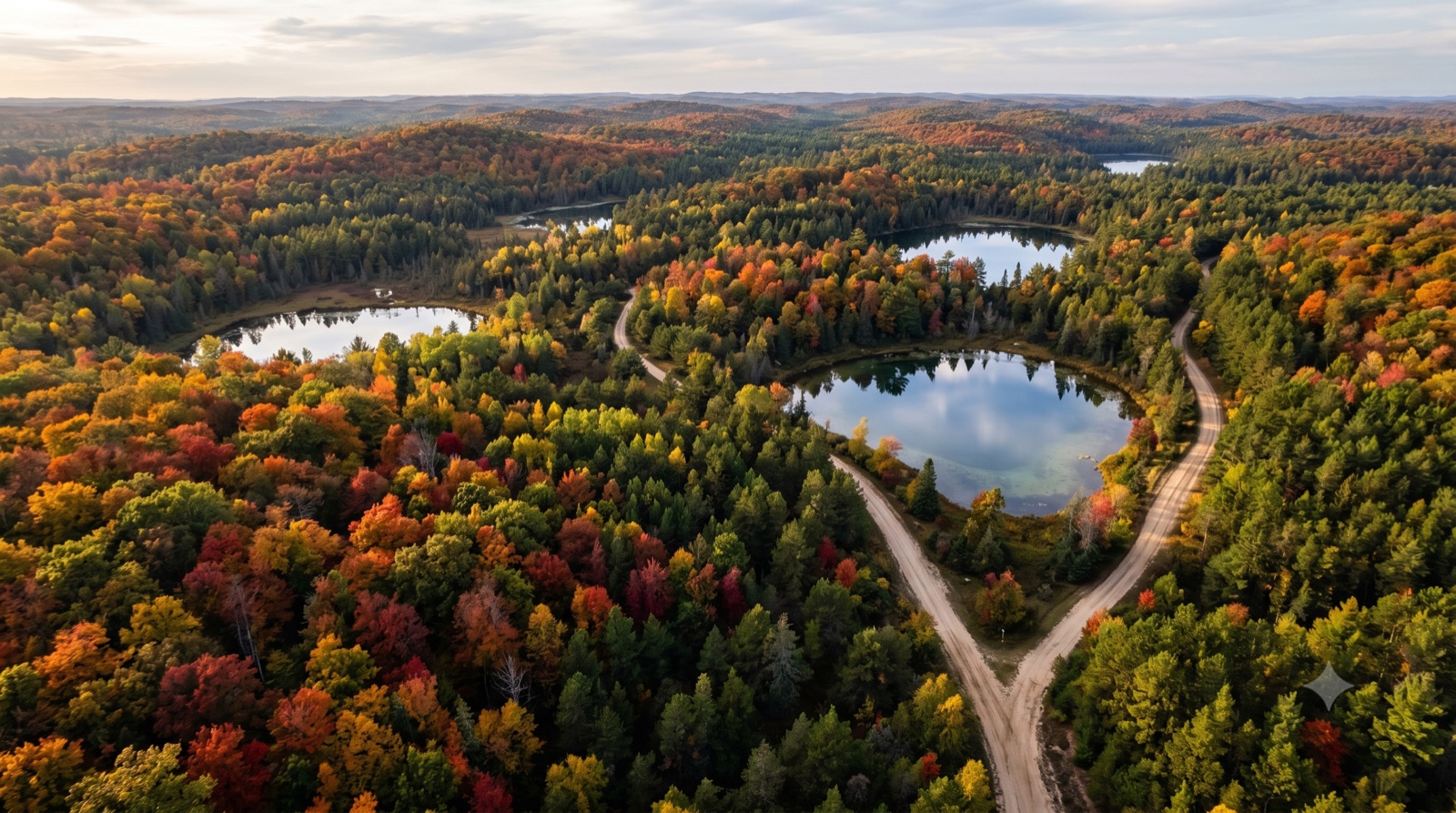
Sell My Land in Sanilac County MI - What Landowners Need to Know
Key Takeaways
- Sanilac County's population has declined every census cycle since at least 2010 — from 43,114 in 2010 to 40,611 in 2020 to an estimated 40,038 in 2025, a drop of roughly 7% overall, even as it remains Michigan's largest county by land area in the Lower Peninsula at 963 square miles, according to Wikipedia's county profile
- Sanilac ranked #5 among Michigan's 83 counties for total agricultural sales in 2022 — $557.7 million across 1,334 farms working 471,070 acres, up 56% in dollar sales since 2017, led by soybeans, corn, wheat, forage, and dry edible beans, with a #1 statewide ranking in grains-oilseeds-dry-beans-and-dry-peas sales, per the USDA 2022 Census of Agriculture
- Sanilac's effective property tax rate runs about 0.94% of assessed value — below both Michigan's statewide median (roughly 1.05%) and the national median (roughly 1.02%), with a median annual tax bill of $1,472 against a median home value of $156,400, according to Ownwell's property tax data
How Can You Sell Land in Sanilac County Michigan?
To sell land in Sanilac County, Michigan, you close through a title company rather than an attorney, pay a seller-funded transfer tax of $4.30 per $500 of the sale price, navigate property taxes built on State Equalized Value with a taxable-value cap that resets the year after the parcel sells, and work within zoning set by your individual township rather than one countywide ordinance — all in a county built almost entirely around row-crop agriculture and a population that keeps shrinking. Selling land here means dealing with two facts most buyers and sellers both know locally: this is serious, productive farm ground, and the pool of local buyers is thinner every year.
Sanilac occupies the eastern edge of Michigan's Thumb, bordered by Lake Huron to the east, with Sandusky serving as the county seat near the geographic center. At 963 square miles, it's the largest county by land area in the entire Lower Peninsula, and most of that ground is flat, open, and cultivated — soybeans, corn, wheat, forage, and dry edible beans cover the landscape in long, contiguous rows broken only by drainage ditches, township roads, and the occasional grain elevator. Small towns like Sandusky, Croswell, Marlette, and Deckerville anchor the local economy, and lakefront communities such as Port Sanilac and Lexington draw seasonal tourism, but the county's identity is agricultural first.
Honest framing matters here. Sanilac is not a county with a fading farm economy — its 2022 total agricultural sales climbed 56% since 2017 and rank 5th of Michigan's 83 counties. What's shrinking is the resident population, which has dropped in every census count since at least 2010, part of the same aging and out-migration pattern common across Michigan's rural Thumb region. For a landowner, that combination — real, growing farm-sector dollars paired with fewer people actually living in the county — shapes how long an idle or non-farmed parcel sits on the market, and who's realistically looking to buy it. This guide walks through Sanilac County's property tax mechanics, its closing process and zoning setup, how the county compares to its neighbors, and your practical options for exiting land here. For the statewide picture, start with our Michigan land selling guide, and you can browse more county and topic guides on our blog.
What Are the Tax Costs of Holding Land in Sanilac County?
Sanilac County's effective property tax rate runs about 0.94% of assessed value — below both Michigan's statewide median (roughly 1.05%) and the national median (roughly 1.02%) — with a median home value of $156,400 and a median annual tax bill of $1,472, itself well under the state median of $2,084 and the national median of $2,400, according to Ownwell's property tax data. In practical terms, Sanilac taxes at a below-average rate against a below-average value base, which keeps annual carrying costs modest for most parcels but still adds up over years of ownership on land that isn't producing income.
As in every Michigan county, every parcel carries two relevant numbers: State Equalized Value (SEV), equal to 50% of the assessor's estimate of true cash (market) value, and taxable value, the figure millage rates are actually applied to. Under Proposal A (1994), taxable value can rise annually only by the lesser of inflation or 5%, regardless of how fast market values move — but taxable value uncaps and resets to SEV the year after a property sells. For a Sanilac County farm parcel that's been held for decades, that uncapping can meaningfully raise the buyer's first full-year tax bill compared to what the seller had been paying. Millage varies by township and school district; the Sanilac County Equalization Department oversees county assessment and publishes the underlying data.
Michigan Transfer Tax: Seller Pays Both State and County Levies
Michigan's real estate transfer tax is seller-paid at two levels:
- State transfer tax: $3.75 per $500 of sale price (or fraction thereof)
- County transfer tax: $0.55 per $500 of sale price (or fraction thereof)
- Combined: $4.30 per $500, or approximately 0.86% of the purchase price
On a $50,000 sale, the combined transfer tax works out to $430; on a $150,000 sale, it's $1,290. This is a meaningful line item compared to states with no transfer tax at all, and Sanilac County sellers should factor both levies into their net-proceeds math before closing. Certain transfers are exempt — between spouses, some foreclosure deeds, and conveyances where no money changes hands — see the Michigan State Real Estate Transfer Tax Act for the full exemption list.
If you're managing a Sanilac County farm parcel from out of state, our guide on selling land as an out-of-state owner covers the remote-closing logistics Michigan title companies handle routinely.
What Zoning and Closing Rules Apply to Sanilac County Land?
Sanilac County does not operate under a single countywide zoning ordinance — zoning authority sits with individual townships, cities, and villages, each maintaining its own ordinance, which means the rules governing a parcel depend on exactly which township it sits in rather than one uniform county code, according to the Sanilac County government's ordinances and zoning listings. Michigan does not require an attorney at closing; title companies routinely handle the title search, title insurance, deed preparation, and recording with the county Register of Deeds. Attorney involvement is optional but worth considering for parcels with an active PA 116 agreement, a farm tenancy, or a complicated ownership history spread across heirs.
The Sanilac County Register of Deeds, Michele VanNorman, is located at the Courthouse, 60 West Sanilac, P.O. Box 168, Sandusky, MI 48471, phone 810-648-2313, open Monday through Friday, 8:00 a.m. to 12:00 p.m. and 1:00 p.m. to 4:30 p.m.
A straightforward Sanilac County land closing generally follows these steps:
- Confirm ownership and legal description. Pull your current deed and parcel data through the Register of Deeds to verify the legal description matches the parcel you intend to sell.
- Order a title search and title insurance. A Michigan title company examines the chain of title and flags any recorded liens, easements, or farm lease memoranda.
- Resolve any liens or delinquent taxes. Check with the Sanilac County Treasurer for unpaid or delinquent property taxes before you list.
- Prepare and review the deed. The title company or an attorney drafts the deed; the seller reviews the conveyance and any reserved rights.
- Calculate the transfer tax. The seller-paid state ($3.75/$500) and county ($0.55/$500) transfer taxes are computed on the sale price.
- Close and record. Documents are signed, the transfer tax is paid, funds are disbursed, and the deed is recorded with the Register of Deeds — making the transfer public record.
Township Zoning and What It Means for a Sanilac County Sale
Because zoning here is set township-by-township rather than countywide, a buyer's due diligence has to confirm the specific township ordinance covering a parcel — permitted uses, minimum lot sizes, and setback rules can differ from one township line to the next even on similar-looking farmland. That's a normal feature of rural Michigan (most of the state's townships zone themselves rather than deferring to the county), but it means a seller should be ready to point a buyer to the correct township office, not just the county, for zoning questions. The Sanilac County government's website maintains links to individual township ordinances for reference.
Qualified Agricultural Property and PA 116: Michigan's Farmland Tax Programs
Because Sanilac's economy runs on row-crop and dairy agriculture, many parcels carry a farm tax status that affects a sale. Michigan's Qualified Agricultural Property exemption removes the local school operating millage (up to 18 mills) from land devoted primarily to agricultural use — a real savings on the county's cash-grain ground. The exemption follows the land's current use rather than a signed contract, so confirming a parcel's status with the assessor is a routine pre-sale step.
Separately, Michigan's Farmland and Open Space Preservation program (PA 116) lets owners enter a development-rights agreement with the state in exchange for tax benefits. PA 116 carries real consequences at sale: withdrawing land early or converting it to non-agricultural use can trigger repayment of tax credits or a lien, according to MDARD guidelines. If your Sanilac County parcel is enrolled in PA 116 or claims the Qualified Agricultural exemption, confirm its status with the Equalization Department and MDARD before accepting any offer, and address who bears any recapture in the purchase agreement. If your land carries a USDA Farm Service Agency loan, our guide on selling farmland with a USDA FSA farm loan lien explains how that gets resolved at closing, and our broader guide on selling farmland covers what buyers evaluate on working ground.
How Does Sanilac County Compare to Neighboring Michigan Counties?
Sanilac County's population has declined at every census point over the past decade and a half — from 43,114 in 2010 to 40,611 in 2020 to an estimated 40,038 in 2025 — a pattern shared by most of its Thumb-region neighbors but not by every county that borders it, according to Wikipedia's county profiles. Unlike a county with a fading economic base, though, Sanilac's agricultural output has grown sharply: the 2022 USDA Census of Agriculture counted total farm sales up 56% since 2017 and net cash farm income up 93%, even as the number of farms rose only 1% — a sign of larger, more productive operations rather than genuine population-driven decline in farming itself.
| Factor | Sanilac County | Huron County | Tuscola County | St. Clair County |
|---|---|---|---|---|
| Population (2020 census) | ~40,611 | ~31,407 | ~53,323 | ~160,383 |
| Population trend | Declining | Declining | Declining | Roughly stable |
| County seat | Sandusky | Bad Axe | Caro | Port Huron |
| Land area | 963 sq mi (largest in Lower Peninsula) | 836 sq mi | 803 sq mi | 721 sq mi |
| Economic base | Row-crop and dairy farming; #5 Michigan county for total farm sales | #1 Michigan county for total farm sales; utility-scale wind | Row-crop farming; part of the Thumb wind cluster | Blue Water Area hub; Detroit-metro-adjacent, mixed suburban/industrial |
| Zoning structure | Township-based, no countywide ordinance | Countywide zoning ordinance | Varies by township | Varies by township |
The comparison shows Sanilac as the largest of the four counties by land area but a mid-sized player by population — smaller than St. Clair by a wide margin, but larger than Huron and closing in on Tuscola. Huron and Tuscola share Sanilac's row-crop farm economy and its declining-population trend; St. Clair, anchored by Port Huron and its proximity to Metro Detroit, runs on a different engine largely insulated from the rural depopulation pattern. That contrast matters for a seller: buyers shopping Sanilac farmland are typically working farmers or land investors looking for productive acreage, not suburban commuters looking for a homesite near Port Huron.
Economy and the Row-Crop Land Market
Sanilac's farm economy is not a minor supporting player — it ranked 5th among Michigan's 83 counties for total agricultural sales in 2022. The USDA Census of Agriculture counted 1,334 farms working 471,070 acres (up 1% and up 8%, respectively, since 2017), generating $557.7 million in total product sales, a 56% increase since 2017. Crop sales totaled $343.5 million and livestock, poultry, and products totaled $214.1 million, with Sanilac ranking #1 statewide in grains-oilseeds-dry-beans-and-dry-peas sales ($274.7 million) and #2 statewide in the "other crops and hay" category ($62.6 million). By acreage, the top crops are soybeans (143,866 acres), corn for grain (95,172 acres), wheat (54,210 acres), forage/hay (38,409 acres), and dry edible beans (34,589 acres), per the USDA data.
That working-farm base creates two distinct sub-markets for a seller. Active row-crop ground with strong soils and existing farm tenants draws real interest from operators expanding their base — the kind of parcel a neighboring farmer or a land investment group actively watches for. Smaller, marginal, or non-farmed tracts — old homesteads, wooded corners, drainage-limited ground, or land simply too small to interest a large operation — face the same thin, patient buyer pool found in most declining-population rural counties, regardless of how strong the county's aggregate farm numbers look. For help understanding what drives value on either type of parcel, see our guide on how much is my land worth, and if you're weighing whether to bring in an agent at all, see do you need a realtor to sell land.
What Are Your Options for Selling Land in Sanilac County?
A common Sanilac County seller is someone who inherited a share of the family farm and no longer lives close enough to manage it, an owner whose ground is still worked by a longtime tenant under an informal cash-rent arrangement they'd rather not keep tracking from a distance, or a landowner carrying a PA 116 agreement or a USDA FSA loan who wants a clean exit. Watch for the signals that usually mean it's time to sell: heirs scattered across several states all holding a piece of the same farm split, a tax bill that arrives every year for ground you can't precisely picture anymore, a tenant relationship you've never formalized in writing, or simply the fact that the nearest family member who could look after the land now lives hours away. Any one of those is a reason Sanilac County landowners decide to exit.
Before accepting any offer, take these steps. Confirm your current taxable value and SEV through the Sanilac County Equalization Department (Keegan Bengel, Director, 60 West Sanilac, Room 103, Sandusky, MI 48471, phone 810-648-2955). Verify deed and title through the Register of Deeds, Michele VanNorman (Courthouse, 60 West Sanilac, P.O. Box 168, Sandusky, MI 48471, phone 810-648-2313). Check for delinquent county property taxes with the Sanilac County Treasurer, Trudy M. Bowers (Courthouse, 60 West Sanilac, Room 204, Sandusky, MI 48471, phone 810-648-2127). If the property is enrolled in PA 116 or claims the Qualified Agricultural Property exemption, confirm its status and any recapture exposure before you sign. And if a tenant is actively farming the ground, get any lease or cash-rent arrangement in writing before you talk to a buyer — it clarifies what the buyer is actually stepping into.
Sellers have several realistic paths. Listing with a Michigan land-specialist agent or farm real estate broker gives access to regional farm operators and investors through platforms like LandSearch and Lands of America — but Sanilac's shrinking population means a thinner year-round buyer pool for anything short of prime, tenant-ready cropland, and a marginal or non-farmed parcel can sit for a long time on a retail listing. For landowners who want a specific number in hand quickly, without waiting on a seasonal or specialized buyer, Jerez Land provides a direct, parcel-specific written cash offer for your land. Each offer is individually priced for the specific parcel — active row-crop ground, a smaller non-farmed tract, or anything in between — and delivered in writing. Because we buy for cash and absorb the carrying, marketing, and resale risk ourselves, our offer reflects the certainty and speed we provide, not a retail listing price. There are no agent commissions, no repairs, and a closing timeline set by when the title and any tenancy paperwork are clear, not by when the right buyer happens to come along. If your parcel is behind on taxes, our guide on selling land with back taxes explains how that gets handled at closing.
Frequently Asked Questions
How do I sell vacant land in Sanilac County Michigan?
Verify your deed and title through the Sanilac County Register of Deeds (810-648-2313, Courthouse, 60 West Sanilac, Sandusky). Check your current taxable value through the Equalization Department and confirm any Qualified Agricultural exemption or PA 116 enrollment. Michigan does not require an attorney at closing — title companies handle most rural and farm land transactions. You can list with a land-specialist broker, market on platforms like LandSearch and Lands of America, or request a direct cash offer from a land buyer.
I inherited my family's Sanilac County farm ground and live in Florida — the tenant still farms it under a handshake cash-rent deal, can I sell?
Yes. An informal cash-rent arrangement doesn't prevent a sale, but it's worth putting the terms in writing before you list — the rent amount, the crop years covered, and how much notice the tenant gets — since a buyer will want to know exactly what they're stepping into and when they can take possession. Michigan closings run through a title company rather than a courtroom, and most steps, including signing, can be handled remotely with a mobile notary or mail-away closing package. Start by confirming your taxable value with the Sanilac County Equalization Department and checking for delinquent taxes with the Treasurer before you talk to any buyer.
What property taxes will I pay on land I own in Sanilac County?
Sanilac County's effective property tax rate runs about 0.94% of assessed value, below Michigan's statewide median of roughly 1.05% and the national median of roughly 1.02%. Taxable value equals 50% of the assessor's true cash value (SEV), capped annually at the lesser of CPI or 5% under Proposal A (1994). When a property sells, taxable value uncaps and resets to the current SEV, which can raise the buyer's first full-year bill. Millage varies by township and school district; the Sanilac County Equalization Department oversees assessment.
I own land in Sanilac County that hasn't been farmed in years, and I keep hearing the county's population is shrinking — is it still possible to sell?
Yes, but it's realistic to expect a longer, more patient sale process than active cropland would see. Sanilac's population has declined every census cycle since at least 2010, which thins the pool of local buyers for non-farmed or marginal tracts even though the county's overall agricultural sales are strong and growing. A land-specialist broker can market the parcel to regional investors and operators, but if you want a firm number without an open-ended listing timeline, a direct cash offer from a land buyer is a faster, more predictable path.
Do I need to hire an attorney for my Michigan land sale?
No. Michigan does not require a licensed attorney to be present at a real estate closing. Title companies conduct the title search, issue title insurance, prepare the deed, collect the transfer tax, and record the documents with the Register of Deeds. Attorney involvement is optional but recommended for transactions involving PA 116 enrollment, an active farm tenancy, farm splits among heirs, or complex ownership history.
My Sanilac County farmland is enrolled in PA 116 or claims the Qualified Agricultural exemption — what happens to that status when I sell?
Two programs matter most on Sanilac's working farmland. The Qualified Agricultural Property exemption removes local school operating millage (up to 18 mills) from land used primarily for agriculture; it follows the land's use rather than a formal contract. The Farmland and Open Space Preservation program (PA 116) is a development-rights agreement with the state that can trigger repayment of tax credits or a lien if land is withdrawn early or converted to non-agricultural use, according to MDARD. Before selling enrolled or exempt land, confirm its status with the Equalization Department and MDARD, and address any recapture exposure directly in the purchase agreement.
Disclaimer: This article is for informational purposes only and does not constitute legal, financial, or professional advice. Laws and regulations vary by jurisdiction and change over time. Always consult with qualified professionals before making land purchase decisions. Jerez Land is not responsible for actions taken based on this information.