
Sell My Land in Wayne County TN - What Landowners Need to Know
Key Takeaways
- Wayne County's population has declined since 2010: From 16,981 residents in 2010 to 16,232 at the 2020 census and approximately 15,974 in 2024, according to U.S. Census Bureau data — a loss of over 1,000 residents in 14 years driven primarily by natural population change (more deaths than births)
- The county poverty rate is 20%: Approximately 2,900 Wayne County residents live below the federal poverty line, according to USAFacts analysis of 2020-2024 Census data — one of the highest rates in south-central Tennessee and a signal of limited local buyer demand for investment-grade land
- 627 farms covered 136,826 acres in 2022: According to the USDA 2022 Census of Agriculture, Wayne County farms produced $45.7 million in agricultural products, with 87% of sales from livestock and poultry and 13% from crops — a classic south-central Tennessee cattle and timber county profile
How Can You Sell Land in Wayne County Tennessee?
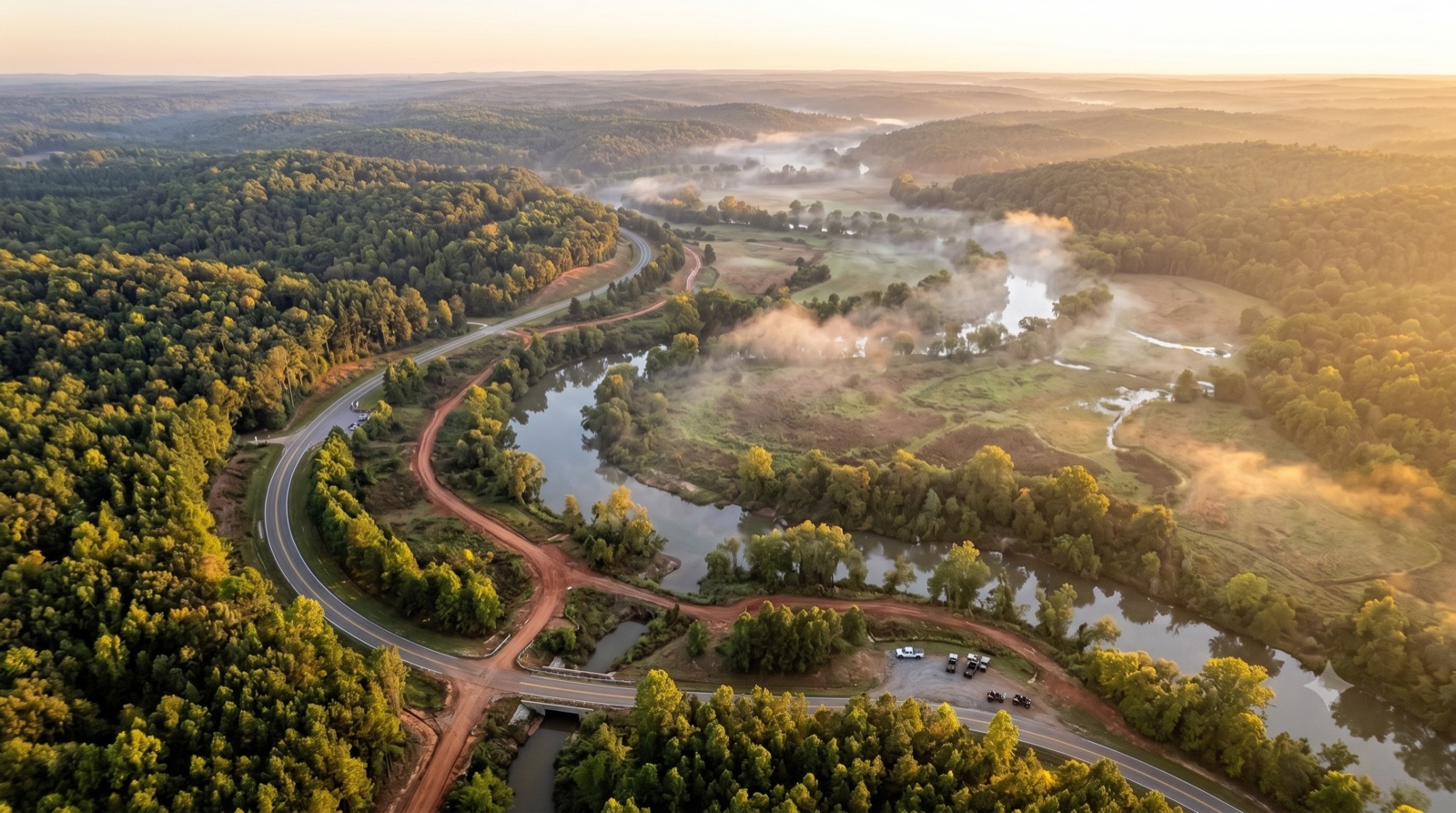
You can sell land in Wayne County through a real estate agent, by owner, or by requesting a direct cash offer from a land buyer — and you'll complete closing with either a licensed title company or real estate attorney, both of which Tennessee allows. Selling land in Wayne County, Tennessee means working within one of the state's most rural south-central markets — a 736-square-mile county along the Alabama border, bisected by the Tennessee River near Clifton and flanked by the Natchez Trace Parkway. The county seat of Waynesboro sits roughly 90 miles southwest of Nashville and has historically depended on manufacturing, corrections, and healthcare for its employment base.
This guide covers how Tennessee's property tax system applies to Wayne County landowners, what the state's closing process involves, how the county compares to its neighbors, and what practical options exist for getting your land sold — whether you've held it for years, inherited it, or need to liquidate to settle an estate.
What Are the Tax Costs of Holding Land in Wayne County?
Tennessee's property tax structure applies uniformly across all 95 counties: residential and farm land — which covers most rural and vacant parcels — is assessed at 25% of appraised value under Tennessee Constitution Art. 2, § 28 and TCA § 67-5-801, according to the Tennessee Comptroller's Office. Commercial property is assessed at 40%, and public utilities at 55%. For a typical Wayne County rural parcel, the 25% assessment ratio means taxes are calculated on one-quarter of the county assessor's estimated market value.
Wayne County's certified tax rate for fiscal year 2025-2026 was set at $1.6416 per $100 of assessed value — a ten-cent increase above the State's recommended certified rate of $1.5416, but still lower than the prior year's rate of $2.1673, according to the Wayne County News. The county's effective property tax rate is approximately 0.54%, equal to the Tennessee state median, according to Ownwell.
How Carrying Costs Build Over Time for Vacant Land
For a vacant parcel, the holding cost math is straightforward but persistent. At a 25% assessment ratio and the $1.6416 county rate, a parcel with an appraised value of $80,000 would carry an assessed value of $20,000 and an annual tax bill of approximately $328. Over ten years, that adds up to roughly $3,280 in taxes alone — before accounting for any liability insurance, maintenance, timber management, or opportunity cost on tied-up capital.
Wayne County property taxes are due annually starting in October, with payments accepted through February without penalty, according to the Wayne County Trustee's Office. Delinquent accounts accumulate penalties and interest, and persistent non-payment can lead to tax lien proceedings — a risk that many out-of-state or inherited landowners may not anticipate until the problem has grown. For landowners dealing with back taxes already on account, our guide to selling land with back taxes outlines options before the situation escalates.
Tennessee's Greenbelt law — the Agricultural, Forest and Open Space Land Act of 1976 — offers tax relief for qualifying working land. Agricultural land must consist of at least 15 acres (or 10 acres with documented annual farm income of $1,500 or more) actively used for bona fide agricultural production, according to the Tennessee Comptroller's State Board of Equalization. Forest land requires a minimum of 15 acres managed under a written, filed sustained-yield forestry plan. Greenbelt classification taxes the land on present-use value instead of market value — reductions of 80-90% are common. Landowners who remove property from Greenbelt must pay rollback taxes for the current year and two prior years. Application is made to the Wayne County Property Assessor.
If you received Wayne County land through an estate and aren't sure about the tax history, our guide to selling inherited land covers how to trace title and clear probate before a sale.
What Zoning and Closing Requirements Apply in Wayne County?
Wayne County's unincorporated rural areas do not operate under a countywide zoning ordinance. The municipalities of Waynesboro, Clifton, and Collinwood maintain their own zoning regulations, but most of the county's land inventory — agricultural, timber, and recreational parcels — is not subject to use restrictions beyond state environmental permits, deed covenants, and floodplain regulations. This gives rural buyers flexibility for agricultural, hunting, or recreational use without zoning approval, but it also means there is no zoning office to call for a formal permitted-use letter on most parcels.
Confirming legal access is especially important in Wayne County, where many rural parcels were originally created without recorded easements. Before listing land in the county, have the Register of Deeds (Tyler Strait, 100 Court Circle, Suite 205, Waynesboro, TN 38485, (931) 722-5518) verify that the deed's legal description matches current county plat maps and that any access road is covered by a recorded easement or public right-of-way. For questions about parcel assessment history, the Property Assessor (Dustin White, 100 Court Circle, Suite 203, Waynesboro, TN 38485, (931) 722-5282) maintains current records.
Tennessee's Closing Process: Title Company or Attorney
Tennessee does not legally require a real estate attorney for closings, according to multiple Tennessee legal sources including collins.legal and murfreeatty.com. A licensed title company may conduct the title search, prepare the deed, and manage the closing for both parties. Some Wayne County transactions use Waynesboro-area attorneys with real estate experience, while others use regional title companies — the choice is the seller's and buyer's to make.
The mandatory cost at closing is Tennessee's Documentary Transfer Tax under TCA § 67-4-409: $0.37 per $100 of the greater of sale price or appraised value, according to Thompson Burton's statutory analysis. On a $60,000 parcel sale, the transfer tax would be approximately $222. Sellers typically pay this at closing. Recording fees are collected by the Register of Deeds when the deed is filed.
For a complete checklist of what documents you'll need to move from accepted offer to recorded deed, see our guide on paperwork needed to sell land. If you want to request a no-obligation cash offer on your Wayne County land before committing to any listing path, that's a low-commitment way to establish a baseline.
How Does Wayne County Compare to Neighboring Tennessee Counties?
Wayne County's population of approximately 15,974 in 2024, down from 16,981 in 2010 and 16,232 in 2020, reflects a persistent decline driven by natural population change (more deaths than births each year), according to U.S. Census Bureau data and USAFacts. The county's poverty rate of 20% — with roughly 2,900 residents below the federal poverty line — is significantly above the Tennessee average of about 14%, according to USAFacts data. Median household income is approximately $52,294 in 2024 dollars, according to Census QuickFacts, but median home value sits at just $129,000, according to TNECD's county profile.
The county's largest employers reflect its dependence on public-sector and institutional employment: Wayne County Board of Education (approximately 423 employees), South Central Correctional Facility (approximately 230), Wayne Halfway Home (approximately 200), Wayne County Government (approximately 150), and Wayne Medical Center (approximately 106), according to TNECD. The private-sector manufacturing and industrial base that once anchored south-central Tennessee counties has contracted significantly over the past two decades.
| Factor | Wayne County | Hardin County | Lawrence County | Lewis County |
|---|---|---|---|---|
| Population (2024 est.) | ~15,974 | ~27,617 | ~44,000 | ~12,000 |
| Population trend | Declining | Stable | Growing | Stable |
| Effective tax rate | ~0.54% | ~0.44% | ~0.48% | ~0.47% |
| Poverty rate | ~20% | ~21.5% | ~15% | ~18% |
| Tennessee River access | Yes (Clifton) | Yes (Savannah) | No | No |
| Natchez Trace Parkway | Yes | No | No | Yes (partial) |
Wayne County's access to the Tennessee River near Clifton and the adjacent Natchez Trace Parkway corridor gives it a recreational land story that some neighboring counties lack. The county's quality-of-life profile on waynecountyecd.com highlights outdoor recreation along the river and scenic drives through the Natchez Trace. For buyers interested in waterfront or recreation-adjacent parcels, Wayne County competes on those assets.
Agriculture remains the county's backbone. According to the USDA 2022 Census of Agriculture, Wayne County had 627 farms covering 136,826 acres, with woodland accounting for 52,946 acres (39% of farmland) — reflecting the county's mixed cattle/timber character. Total agricultural sales reached $45.7 million in 2022, up 21% from 2017, with cattle and livestock operations dominating (87% of sales). Average farm size is 218 acres.
Despite recreational appeal, selling rural land in Wayne County typically requires patience — our guide to how long it takes to sell land explains why remote rural markets routinely run 12 months or longer to close, and what factors speed or slow the timeline.
For more county-level analysis across Tennessee and surrounding states, visit our blog.
What Are Your Options for Selling Land in Wayne County?
Wayne County landowners choosing to sell have several routes, each with different tradeoffs on time, net proceeds, and certainty of closing.
Real estate agents with rural Tennessee land experience can list your parcel on the MLS, Land.com, LandWatch, and Lands of America. LandSearch shows approximately 82 undeveloped properties active in Wayne County — a manageable inventory, but one that also means buyers have options and may negotiate on price. Land commissions typically run 6-10%, and rural parcels in counties with declining populations and limited local buyer pools can take 12-24 months to sell. During that period, taxes, insurance, and maintenance continue.
For sale by owner (FSBO) using platforms like LandWatch or Facebook Marketplace can reduce or eliminate commission, but you'll manage all buyer communications, negotiate the contract, arrange your own title search, and coordinate closing. Our guide to selling land by owner walks through the full process if you want to go that route.
Cash land buyers like Jerez Land work differently: we assess the specific parcel, make a firm written offer, and close on a defined timeline — typically weeks rather than months. There are no commissions or listing fees, and the buyer absorbs the carrying costs, marketing costs, and resale risk that come with rural land transactions. For Wayne County landowners who need liquidity, want to settle an estate, or have been holding non-productive land for years while taxes accumulate, a cash offer provides a concrete number to evaluate against the listing alternative.
To see what your parcel qualifies for, request a cash offer from Jerez Land — there's no obligation and no cost.
Before any sale, confirm your deed is properly recorded with the Register of Deeds (Tyler Strait, 100 Court Circle, Suite 205, Waynesboro, TN 38485, (931) 722-5518) and check your tax status through the Wayne County Trustee's Office. If Greenbelt classification applies to your parcel, understand the rollback tax implications before signing a sale contract, as the buyer or seller may need to account for that cost.
Frequently Asked Questions
How do I sell vacant land in Wayne County TN?
Confirm your deed is recorded with the Wayne County Register of Deeds and verify your current tax status through the Trustee's Office. Tennessee allows closings to be handled by a licensed title company or real estate attorney — neither is legally required over the other. You can list with a land agent, market the property yourself on platforms like LandWatch, or request a direct cash offer from a land buyer like Jerez Land.
What property taxes will I owe when selling land in Wayne County?
Wayne County's certified tax rate for FY 2025-2026 was set at $1.6416 per $100 of assessed value, according to the Wayne County News — down from $2.1673 the prior year following a county-wide reappraisal. Tennessee law assesses residential and farm land at 25% of appraised value. The county's effective property tax rate is approximately 0.54%, equal to the Tennessee state median, according to Ownwell.
What transfer taxes do I owe on my Tennessee land sale?
Yes. Tennessee's Documentary Transfer Tax under TCA § 67-4-409 applies at $0.37 per $100 of the greater of sale price or appraised value, according to Thompson Burton's analysis of the statute. Sellers typically pay this at closing. The deed is recorded with the Wayne County Register of Deeds (931-722-5518) at 100 Court Circle, Suite 205, Waynesboro, TN 38485.
Do I need to hire an attorney to close my land sale?
No. Tennessee does not legally mandate a real estate attorney for closings, according to legal sources including collins.legal. A licensed title company may conduct the title search, prepare the deed, and manage settlement. Many rural land transactions use either a regional title company or a local attorney with land experience — both are valid options in Wayne County.
If my land is enrolled in Greenbelt, how does that affect my sale?
Yes, Tennessee's Greenbelt program — the Agricultural, Forest and Open Space Land Act of 1976 — applies statewide, including Wayne County. Land qualifying as agricultural (minimum 15 acres in bona fide farm use, or 10 acres with $1,500+ annual income) or forest (minimum 15 acres with a filed management plan) is taxed on present-use value rather than market value, according to the Tennessee Comptroller — a reduction of 80-90% in many cases. Removing land from Greenbelt triggers rollback taxes for up to three prior years.
Does Wayne County's declining population affect my ability to sell my land?
Wayne County's population has declined since 2010, falling from 16,981 at the 2010 Census to 16,232 at the 2020 Census and approximately 15,974 by July 2024, according to U.S. Census Bureau data and USAFacts. Natural population change — more deaths than births annually — is the primary driver. The county lost 73 residents between 2023 and 2024, according to USAFacts. This trend limits local buyer demand for land.
Disclaimer: This article is for informational purposes only and does not constitute legal, financial, or professional advice. Laws and regulations vary by jurisdiction and change over time. Always consult with qualified professionals before making land purchase decisions. Jerez Land is not responsible for actions taken based on this information.