
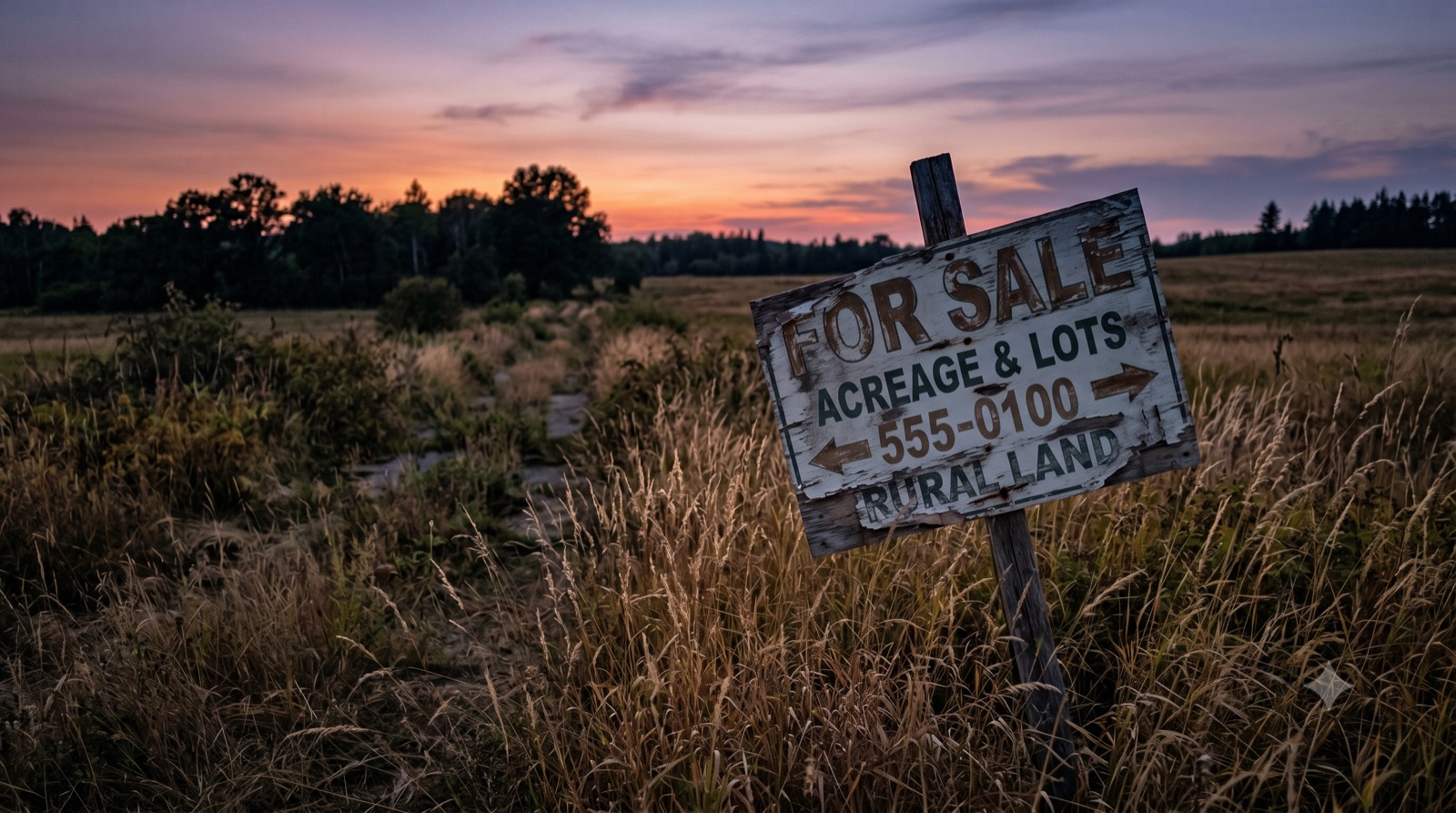
What to Consider When Selling Land: The Complete Pre-Sale Checklist
Key Takeaways
- Clear title is the single most important factor before accepting any offer. A title search will reveal liens, ownership gaps, and unresolved estate issues — problems that can delay or kill a sale at closing. Resolving these before marketing the property puts you in control of the timeline, according to the American Land Title Association.
- Legal access — a recorded easement or direct road frontage — is often what separates a sellable parcel from one that sits for years. Landlocked parcels are harder to finance and harder to market; buyers factor access directly into their offer, according to Cornell Law School's Legal Information Institute.
- Carrying costs are real and accumulate quietly. Property taxes, liability exposure, and the opportunity cost of tied-up equity add up year over year. Knowing your total holding cost is essential context before deciding when and how to sell.
What Should You Consider Before Selling Your Land?
Before listing or accepting any offer, verify eight key factors: clear title and ownership, legal access, current survey and boundaries, zoning and deed restrictions, property tax standing, pricing baseline, choice of sale channel, and your carrying costs.
Selling land is not as simple as listing a price and waiting for a buyer. Unlike a house, vacant land has no comparable rental income to anchor value, no improvements that buyers can walk through, and a set of legal and physical characteristics — access, zoning, title — that can dramatically affect whether a sale happens at all and on what terms.
Before you list, post signs, or accept any offer, work through the eight considerations in this guide. Together they form the pre-sale checklist that experienced land sellers and professional buyers run through on every transaction. Some items take an afternoon to verify; others may take weeks to resolve. Knowing where you stand on all eight before you go to market prevents surprises at closing, gives you leverage in negotiations, and helps you choose the right sale channel.
If you have already decided to sell and want to compare your options, the best way to sell land guide covers the full channel comparison. If you are weighing whether selling is even the right move, should I sell my land or keep it is a useful companion to this post. And when you have a specific parcel ready, request a no-obligation offer to get a firm written number with no commitment to proceed. Browse more guides on the blog.
What Does Clear Title Mean — and How Do You Check It?
Title is the legal record of who owns a parcel and what obligations run with it. A clear title means one clear owner, no unresolved liens or judgments, no gaps in the chain of ownership, and no competing claims on the property. Clouded title can delay a sale for weeks or months — or prevent a close entirely.
What to check:
- Chain of ownership. County recorder offices maintain deed records going back decades. A title company will search the chain of ownership when you open escrow, but you can do a preliminary check yourself by looking up the property in your county recorder's or auditor's database. Nolo's guide on title searches outlines how to trace ownership records at the county level.
- Outstanding liens. A lien is a creditor's legal claim against the property — it must be paid before a clean deed can transfer, according to Cornell Law School's Legal Information Institute. Common land liens include mechanics' liens (from unpaid contractors), judgment liens (from court awards against the owner), and mortgage liens. Check the county recorder for recorded liens on your parcel number.
- Estate issues and missing heirs. If the land was inherited and the prior owner's estate was never formally closed, or if multiple heirs are on title and one is deceased or unreachable, those gaps must be resolved before closing. See how to sell inherited land for a step-by-step guide to inherited parcels.
- Old unreleased mortgages. Mortgages paid off decades ago are sometimes never formally released in the county records, creating a cloud on title even though the debt is gone. A title company can identify and help cure these.
If your title has issues, a cash buyer experienced with land can often close despite clouded title by addressing the problem through escrow — but it adds time. See sell land with a lien or cloud on title for detailed options.
Does Your Land Have Legal Access?
Legal access means there is a recorded, enforceable right to reach your parcel from a public road. Without it, the land is effectively landlocked — a buyer cannot build on it, use it, or finance it in most cases.
Two types of access to understand:
- Direct road frontage. The parcel directly borders a public road. This is the clearest form of access and creates no ambiguity.
- Recorded access easement. A recorded right-of-way or ingress/egress easement gives the parcel the legal right to cross a neighboring property to reach a public road. Easements are interests in land and must be recorded in the county deed records to be enforceable against future owners, according to Cornell Law School's Legal Information Institute and Investopedia.
How to check: Pull your deed and any attached title commitment or survey. The deed or a separate easement document should describe any recorded access rights. Your county recorder's office can confirm whether an easement is on file for your parcel.
A gravel track, a dirt path, or a neighbor's informal permission to cross their land is not legal access unless it is backed by a recorded document. If your parcel lacks documented access, see sell landlocked land and how to sell land with no road access easement for strategies.
Easements that benefit buyers vs. easements that limit use. Not all easements are negative. Utility easements (for power lines, pipelines) are extremely common on rural land and rarely prevent a sale — but they do limit where a buyer can build structures within the easement corridor. Easements that benefit adjacent owners (access roads, shared driveways) require buyers to maintain that access indefinitely. See sell land with an easement for a full breakdown.
Is Your Survey Current and Accurate?
A survey is the official measurement and mapping of your parcel's physical boundaries. It confirms the acreage, locates corners and boundary lines, identifies encroachments, and flags easements or setback lines.
Why it matters before selling:
- If your deed's legal description is vague or references old monuments that no longer exist, a buyer's title company may require a new survey before insuring the title.
- If the parcel has been divided, combined, or had an easement recorded since the last survey, the old survey may not reflect current conditions.
- Boundary disputes with neighbors — overhanging fences, structures near property lines — are far easier to resolve before a sale than after a buyer raises them in due diligence.
Do you need a new survey? Not always. Many rural land sales close on the existing legal description without a new survey, especially for large parcels in rural counties where boundary lines are straightforward. A buyer may accept the existing survey or waive the survey requirement. See do you need a survey to sell land for a detailed breakdown of when a survey is and is not required.
Typical cost range: Survey costs vary widely by parcel size, terrain, access difficulty, and the type of survey required. A boundary survey on a small, flat rural parcel may cost a few hundred dollars; a large or complex parcel can run significantly higher. Get a quote from a licensed land surveyor registered in your state.
What Is the Zoning and What Can a Buyer Do With It?
Zoning determines what uses are permitted on a parcel by local government. It is one of the first things buyers check — because it determines whether they can farm it, build on it, subdivide it, or use it for a specific commercial or industrial purpose.
Common rural land zoning categories:
- Agricultural (A-1, AG, etc.): Farming, ranching, and often single-family residential. Usually the most common zoning for rural vacant land.
- Residential (R-1, R-2, etc.): Single-family or multi-family housing, depending on density.
- Conservation or Floodplain: Severely restricts development. Wetlands, riparian buffers, and floodplain overlays often limit what can be built.
- Timber or Forest Production: Common in the Pacific Northwest and Southeast; may have special tax treatment tied to continued timber use.
How to check: Your county's planning or zoning department maintains the official zoning map. Most counties have online GIS portals where you can look up any parcel's zoning designation by parcel number or address. The zoning department can also tell you what uses are permitted outright, what requires a special-use permit, and whether the parcel is in any overlay district (flood zone, wetlands buffer, historic area).
Deed restrictions vs. zoning. Zoning is set by the government. Deed restrictions (covenants, CC&Rs) are private agreements that run with the land and can be more restrictive than zoning. Both affect what a buyer can do with the parcel, so check both. According to Cornell Law School's Legal Information Institute, zoning regulations must serve a legitimate public purpose and are generally upheld unless they constitute a "taking" of private property.
Are Property Taxes Current — and What Is the Annual Obligation?
Property tax status is one of the first things a title company and a serious buyer will check. Delinquent taxes create a tax lien that attaches to the land, which must be resolved before a clean deed can transfer.
What to check:
- Current tax bill: Look up your parcel on your county assessor's or treasurer's website to see the current annual tax obligation and whether any amounts are overdue.
- Delinquency. If taxes are delinquent, they accrue interest and penalties. After a statutory period set by state law, unpaid taxes can result in a tax lien sale or tax deed proceeding that can eventually transfer the parcel to a new owner — extinguishing your ownership rights. See sell land with back taxes for options if you are behind.
- Special assessments. Some rural parcels carry special assessment districts for drainage, irrigation, road maintenance, or utilities. These appear on the property tax bill or as a separate assessment and transfer with ownership.
Prorated taxes at closing: In a standard real estate closing, property taxes are prorated between the seller and buyer as of the closing date. If taxes are paid in arrears (as in many states), the seller will owe a credit to the buyer for the portion of the year the seller owned the property. Your closing settlement statement will show this calculation.
Pre-Sale Land Checklist at a Glance
| Consideration | Why It Matters | How to Check It |
|---|---|---|
| Clear title / deed | Liens, missing heirs, or ownership gaps can block or delay closing | Title company search; county recorder lookup by parcel number |
| Legal access | Landlocked parcels are hard to sell and hard to finance | Review deed + any recorded easements; county GIS or recorder |
| Survey & boundaries | Vague legal descriptions or disputes delay closing | Locate existing survey on file; get a quote if one is needed |
| Zoning & deed restrictions | Determines what a buyer can do with the land | County planning/zoning department; GIS portal; deed covenants |
| Property taxes & assessments | Delinquent taxes create liens that must be paid at closing | County assessor/treasurer online portal |
| Pricing approach | Overpricing leads to long market time; underpricing leaves value on the table | Comparable sales data; how to price land to sell |
| Sale channel | Cash buyer, agent listing, FSBO, and auction each have different timelines, costs, and certainty | See channel comparison below |
| Carrying costs | Taxes, liability, and opportunity cost accumulate every month you hold | Add up annual taxes + insurance + any loan payments |
How Should You Approach Pricing Your Land?
Pricing land is harder than pricing a home because land has fewer direct comparables, no rentable improvements, and enormous variation in value based on access, zoning, soil, and proximity to utilities. Overpricing relative to actual demand is the most common reason rural land sits unsold for years.
What drives land value (parcel-specific factors):
- Legal access and road frontage
- Zoning and permitted uses
- Proximity to utilities (electric, water, sewer)
- Topography and soil quality
- Timber, mineral, or agricultural income potential
- Distance to population centers and services
- Size — larger parcels often sell at lower per-unit prices than smaller, more usable tracts
How to build a pricing baseline:
Look up recorded sales of comparable parcels in the same county through your county assessor's website, a county GIS portal, or a land-focused real estate platform. Focus on parcels that actually sold — not current listings, which reflect asking prices, not market prices. The American Society of Farm Managers and Rural Appraisers (ASFMRA) maintains standards for rural property valuation and can connect you with a licensed rural appraiser if you want a formal opinion.
For a deeper dive, see how much is my land worth and how to price land to sell. A cash buyer who specializes in land will give you a firm written number you can use as a baseline against any other pricing approach — request an offer with no obligation.
Which Sale Channel Is Right for Your Parcel?
Once you know your parcel's characteristics, you can match the sale channel to your priorities: speed, price, certainty, or minimizing hassle.
| Sale Channel | Typical Timeline | Upfront Cost | Commission | Best For |
|---|---|---|---|---|
| Direct cash buyer | 2–6 weeks after agreement | None | None | Speed, certainty, as-is condition, title issues |
| Real estate agent (MLS listing) | 3–12+ months | Listing costs | 5–10% of sale price (land) | Maximizing exposure; straightforward parcels |
| FSBO (for sale by owner) | Unpredictable | Marketing costs | None | Sellers with time, experience, and a buyer network |
| Land auction | 30–90 days to auction date | Entry fee + buyer's premium | Varies | Unique parcels; liquidation; competitive bidding |
| Land contract / owner financing | Immediate occupancy; payments over time | Minimal | None | Sellers who want income stream; buyers who can't get bank financing |
For a full breakdown, see do you need a realtor to sell land for the agent vs. no-agent decision. If your parcel has title issues, back taxes, access problems, or other complications, a direct cash buyer experienced with land is typically the most practical path — they are equipped to close on parcels that agents and financed buyers will not touch.
What Are Your Carrying Costs While You Hold?
Carrying costs are the ongoing expenses of owning land you are not actively using. Most landowners underestimate them because they are spread out over months and years, but they are very real and should factor into your timing decision.
Common carrying costs on vacant land:
- Property taxes — often the largest line item. Rural parcels with agricultural or timber exemptions may have lower assessed values, but taxes still accumulate.
- Liability insurance — some landowners carry general liability coverage on vacant land in case someone is injured on the property. This is especially relevant for parcels near population centers, with water features, or with existing structures.
- Loan payments — if you financed the land purchase and still carry a note, monthly payments continue regardless of whether the land is generating income.
- Maintenance — fence repair, invasive species control, fire hazard mitigation, road maintenance (if you have a private road), and similar costs.
- Opportunity cost — money tied up in land equity is money not deployed elsewhere.
Adding up these numbers gives you a monthly "cost of holding" figure. Comparing that against the potential benefit of waiting — a higher price, a specific development timeline, or a change in zoning — is the core of the hold-vs.-sell analysis. See should I sell my land or keep it and when should you sell land for frameworks to work through that decision.
Ready to Put a Number on Your Parcel?
Working through this checklist gives you a clear picture of where your parcel stands before any buyer or agent sees it. Once you know your title status, access situation, zoning, tax standing, and carrying costs, you are in a much stronger position to evaluate an offer — whatever channel it comes from.
For a comprehensive walkthrough of every document involved in a land sale, see paperwork needed to sell land. And when you are ready for a firm written number on your specific parcel — no obligation, no listing period — request a cash offer from Jerez Land. We review the parcel, present a written offer, and close through a licensed title company. Browse more seller guides on the blog.
Frequently Asked Questions
What's the most important thing I should check before selling my land?
Title clarity is the single most important factor. A title search reveals liens, ownership disputes, missing heirs, and gaps in the chain of ownership — any of which can block a closing. If you do nothing else before listing or accepting an offer, verify that you have clear, marketable title to the parcel. A title company can run a preliminary search for a modest fee, and it will surface any issues before they become surprises at closing.
My land doesn't have direct road frontage — can I still sell it?
Not legally — you can sell landlocked land — but the absence of recorded legal access makes the parcel significantly harder to sell, harder to finance, and less valuable. Most buyers require a recorded ingress/egress easement or direct road frontage as a condition of purchase, and conventional lenders will not finance a landlocked parcel. Cash buyers experienced with problem parcels will sometimes purchase landlocked land at a price that reflects the limitation. See sell landlocked land for detailed options.
Should I get a new survey before selling my land?
Not always. Many rural land sales close without a new survey, particularly on large parcels with straightforward boundaries and a clear existing legal description. However, if the existing survey is outdated, the legal description is vague, the parcel has been divided since the last survey, or there are boundary disputes, a new survey may be required by the title company or the buyer. See do you need a survey to sell land for a complete breakdown of when one is and is not needed.
I'm behind on property taxes — how will that affect my sale?
Delinquent property taxes create a tax lien that must be paid before the deed can transfer to a buyer. In most cases this is handled at closing: the title company uses a portion of the sale proceeds to pay off the delinquent taxes and any accrued penalties, with the remainder going to the seller. If the tax debt is large relative to the sale price, it may need to be negotiated or partially resolved before closing. See sell land with back taxes for a step-by-step walkthrough.
I'm not sure what my land is zoned for — how do I find out?
Contact your county's planning or zoning department, or look up your parcel on the county's online GIS portal using your parcel number. The zoning designation determines what uses are permitted outright, what requires a special-use or conditional permit, and whether any overlay districts (floodplain, wetlands buffer, etc.) apply. Also check your deed for any private deed restrictions or covenants, which can impose additional limitations beyond what zoning allows.
Should I sell my land to a cash buyer or list it with a real estate agent?
It depends on your priorities. A cash buyer offers speed, certainty, and the ability to purchase as-is with no financing contingency — the trade-off is that the offer reflects those advantages. An agent listing on the MLS maximizes exposure to a broader buyer pool and may produce a higher sale price if the parcel is straightforward, access is good, and you have months to wait. Many sellers request a cash offer first as a pricing baseline, then decide whether the difference justifies the additional time and uncertainty of a retail listing. See do you need a realtor to sell land for a full comparison.
Disclaimer: This article is for informational purposes only and does not constitute legal, financial, or professional advice. Laws, regulations, title practices, and market conditions vary by jurisdiction and change over time. Always consult a licensed real estate professional, title company, or attorney before making decisions about selling property. Jerez Land is not responsible for actions taken based on this information.