
Sell My Land in Fentress County TN - What Landowners Need to Know
Key Takeaways
- Tennessee assesses residential and farm land at 25% of appraised value: Under Tennessee Constitution Art. 2, § 28 and TCA § 67-5-801, all residential and farm property — including most rural vacant land — is assessed at 25% of market value, according to the Tennessee Comptroller's Office, creating predictable but ongoing annual carrying costs
- Fentress County's effective property tax rate is 0.34%: Well below both the Tennessee state median of 0.54% and the national median of 1.02%, Fentress County has the 30th-lowest effective rate among Tennessee's 95 counties, according to Ownwell property tax data
- 536 farms covered 109,309 acres in 2022: According to the USDA 2022 Census of Agriculture, Fentress County farms produced $69.2 million in agricultural products — a 84% increase from 2017 — with 91% of sales from livestock and poultry
How Can You Sell Land in Fentress County Tennessee?
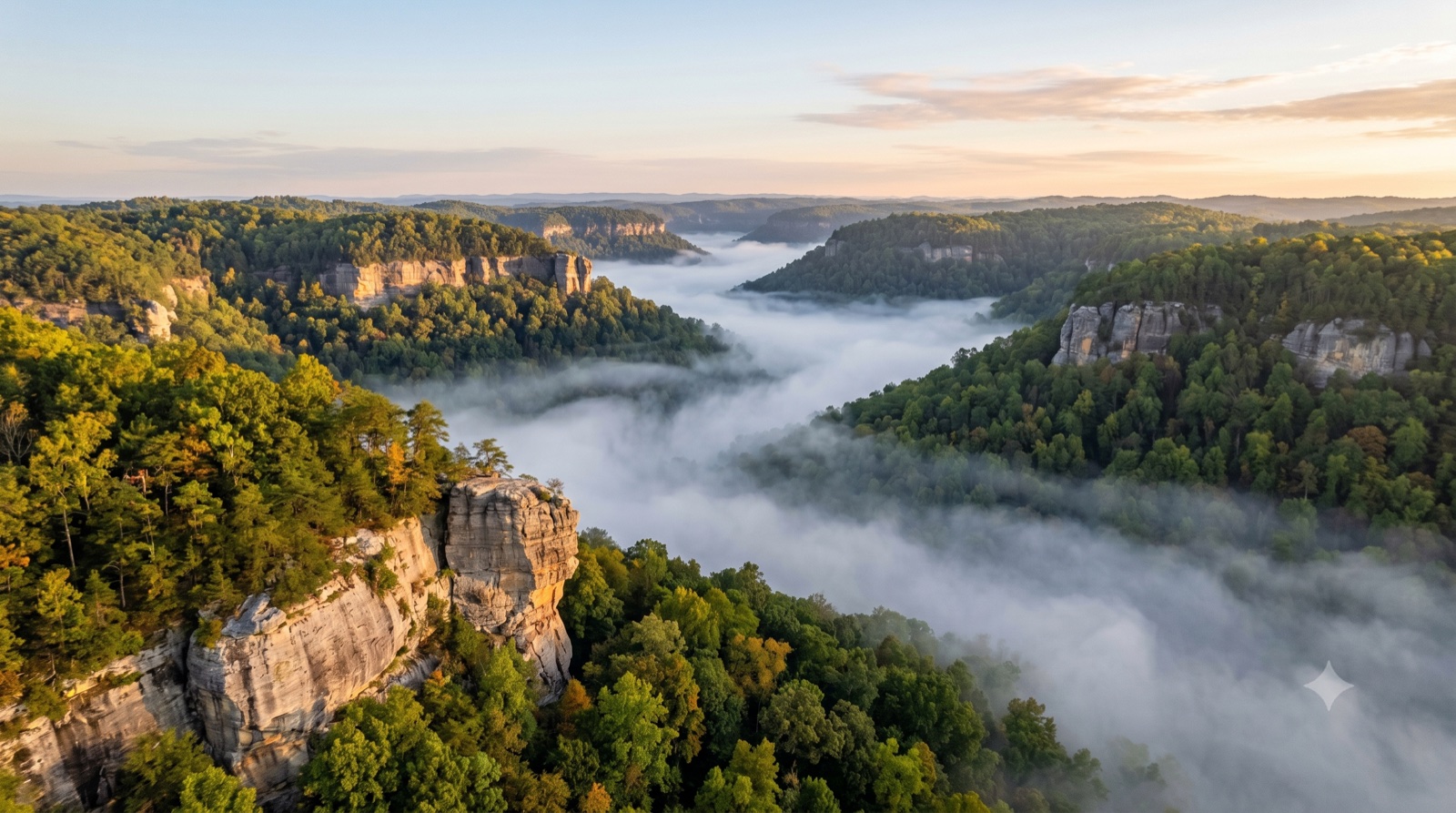
Selling land in Fentress County, Tennessee involves navigating a rural market shaped by the county's position on the Cumberland Plateau, a modest but growing agricultural base, and Tennessee's straightforward title-company-or-attorney closing process. The county covers 490 square miles of plateau terrain in north-central Tennessee, bordering the Big South Fork National River and Recreation Area — 125,000 acres of federally managed land that draws outdoor recreation buyers from across the region.
This guide covers Tennessee's property tax structure and how it affects Fentress County landowners, the state's closing requirements, the county's economic context compared to its neighbors, and the realistic options for getting your land sold — whether you've held it for years or just inherited it from family.
What Are the Tax Costs of Holding Land in Fentress County?
Tennessee's property tax system is one of the most favorable in the Southeast for landowners. Under Tennessee Constitution Art. 2, § 28 and TCA § 67-5-801, residential and farm property — which includes most rural and vacant land — is assessed at 25% of appraised value, according to the Tennessee Comptroller's Office. Commercial and industrial property carries a higher 40% ratio, while public utilities are assessed at 55%. This means vacant rural land in Fentress County is taxed on roughly one-quarter of its market value.
Fentress County's median effective property tax rate is 0.34%, according to Ownwell — significantly below Tennessee's statewide median of 0.54% and the national median of 1.02%. The median annual tax bill for a Fentress County property is approximately $508, compared to the Tennessee median of $2,400. For landowners holding non-producing parcels with no income stream, even modest tax bills compound over time, adding up to thousands of dollars in carrying costs over a decade.
How the Assessment and Rate Combine for Vacant Parcels
Property taxes are due each year, payable from October through the following February without penalty, according to the Fentress County Trustee's Office (931-879-7717). Late payments trigger penalties and interest. Accounts that remain delinquent can ultimately be seized and sold at tax lien sale — a risk that disproportionately affects absentee owners who have moved away from the area and may not monitor their Tennessee tax bills closely.
Beyond the annual tax bill, vacant land carries other holding costs: liability exposure (especially near the gorges and trails of the Cumberland Plateau), periodic clearing or maintenance needs, and the opportunity cost of capital tied up in an illiquid asset. For landowners who acquired Fentress County parcels as an investment or inherited them without a plan, these costs are real even when the tax bill itself is low.
Tennessee's Greenbelt program — the Agricultural, Forest and Open Space Land Act of 1976 — offers a path to lower the tax burden for qualifying land. Qualifying agricultural land requires at least 15 acres devoted to bona fide agricultural use (or a minimum of 10 acres with $1,500 in annual farm income), while forest land requires 15 or more acres under a sound sustained-yield management program with a filed forestry plan, according to the Tennessee Comptroller's State Board of Equalization. Under Greenbelt, the assessed value is based on present-use value rather than market value — a reduction of 80-90% in some cases. If land is later removed from Greenbelt classification, rollback taxes covering the current year and two prior years become due. Application is filed with the county Assessor of Property.
If your land has delinquent taxes that have been accumulating, it's worth reviewing our guide on selling land with back taxes before choosing your exit strategy.
What Zoning and Closing Requirements Apply in Fentress County?
Fentress County does not maintain a countywide zoning ordinance outside of Jamestown's municipal boundaries. The county seat of Jamestown operates under its own zoning framework, but most rural parcels in the unincorporated county are subject only to state-level regulations and any deed restrictions recorded in the chain of title. This lack of countywide zoning can be an advantage for buyers planning agricultural or recreational uses, but it also means the county cannot offer zoning clearances for out-of-county buyers who call to ask about permitted uses.
Permitted uses for rural land are governed primarily by Tennessee's septic and well permitting requirements (administered by the Tennessee Department of Environment and Conservation), any applicable floodplain regulations under FEMA flood maps, and deed covenants. For parcels near the Big South Fork National River and Recreation Area boundaries, federal land adjacency can affect access and use — confirming legal access via a current survey before listing is advisable.
Tennessee's Closing Process: Title Company or Attorney
Unlike Mississippi (which legally requires an attorney for all closings), Tennessee does not mandate that a real estate attorney oversee every closing, according to collins.legal and multiple Tennessee real estate law sources. Closings in Tennessee may be handled by a licensed title company or by a real estate attorney — the seller and buyer choose. In practice, most rural land transactions in Fentress County run through a title company that performs the title search, prepares the deed, and handles the transfer tax calculation.
The key cost at closing is Tennessee's Documentary Transfer Tax, codified at TCA § 67-4-409, which applies to all transfers of real estate recorded in the state. The rate is $0.37 per $100 of the greater of sale price or appraised value, according to Thompson Burton law firm's analysis of TCA § 67-4-409. On a parcel with a recorded sale price of $50,000, the transfer tax would be approximately $185. Sellers are typically responsible for paying this tax, though it can be negotiated, according to JVM Lending's closing cost analysis. The deed is recorded with the Fentress County Register of Deeds after closing.
For a step-by-step overview of what paperwork is required from contract to recorded deed, see our guide on paperwork needed to sell land.
Key contacts for Fentress County closings:
- Register of Deeds: 101 Main St South, PO Box 341, Jamestown, TN 38556, (931) 879-7818
- Property Assessor (Melynda Sullivan): 101 Main Street, Jamestown, TN 38556, (931) 879-9194
- County Trustee (property tax records): 101 S Main Street, Jamestown, TN 38556, (931) 879-7717
Before listing or closing, confirm your deed is properly recorded and the legal description is accurate — especially for older parcels that may have been split informally over generations. Inherited land in particular often requires a probate-reviewed deed before it can transfer cleanly; our guide to selling inherited land walks through that process.
How Does Fentress County Compare to Neighboring Tennessee Counties?
Fentress County's population was 20,129 in July 2024, according to U.S. Census Bureau estimates — up from 18,489 at the 2020 census, a 9% gain driven primarily by domestic in-migration to the plateau region. The county seat of Jamestown had 2,143 residents as of 2026 estimates. The median age is 48.4 years, among the highest in the region, and the civilian labor force participation rate is 46.4% — indicating a significant share of the adult population is not actively working, according to Census QuickFacts.
The county's economy is dominated by healthcare and social assistance (2,739 jobs), government (914 jobs), and retail trade (739 jobs), according to TNECD's county profile. Major employers include Fentress County School District (448 employees), Fentress County Government (296), Walmart (194), and Buckeye Home Health Care Center (100). Median household income is $47,884, and median home value is $137,000, according to TNECD data. Per capita income of $41,694 reflects a mix of healthcare wages and retirement income.
| Factor | Fentress County | Cumberland County | Scott County | Overton County |
|---|---|---|---|---|
| Population (2024 est.) | ~20,129 | ~65,000 | ~22,000 | ~23,000 |
| Population trend | Growing (+9% since 2020) | Growing | Stable | Stable |
| Effective tax rate | ~0.34% | ~0.28% | ~0.40% | ~0.56% |
| Land listings (approx.) | 216+ | 300+ | 100+ | 80+ |
| Key terrain | Cumberland Plateau / Big South Fork | Plateau / Crossville | Cumberland Plateau | Upper Cumberland |
| Distance to I-40 | ~10 miles | On I-40 | ~45 miles | ~40 miles |
Fentress County's proximity to Big South Fork National River and Recreation Area — 125,000 acres of plateau gorges, bluffs, and river corridor managed by the National Park Service — drives consistent interest from hunting, hiking, and recreation-oriented buyers. The park draws hundreds of thousands of visitors annually and gives adjacent private land recreational appeal that is harder to find in flat-terrain counties.
Agriculture plays a supporting role. According to the USDA 2022 Census of Agriculture, Fentress County had 536 farms covering 109,309 acres, with total agricultural sales of $69.2 million — an 84% increase from 2017. Woodland covers 40,825 acres of farmland (37% of total), and 91% of sales came from livestock and poultry rather than row crops. Average farm size is 204 acres.
Despite the growth trend, land sales in Fentress County can take longer than expected due to limited local buyer demand and the county's remote character — our guide to how long it takes to sell land covers what influences timelines for rural parcels.
For more county-level land analysis across Tennessee and the Southeast, explore our blog.
What Are Your Options for Selling Land in Fentress County?
Fentress County landowners have several realistic paths to sell. Each involves different tradeoffs on time, cost, and certainty.
Real estate agents familiar with Upper Cumberland land transactions can list your property on MLS, Land.com, LandWatch, and similar platforms. Land.com shows approximately 216 active listings in Fentress County, suggesting meaningful activity and competition for buyer attention. Agent commissions for land typically run 6-10% of sale price — higher than residential — and rural parcels can sit on the market for 6-24 months before closing, during which tax bills, liability, and maintenance costs continue accumulating. If you want to understand how agents and FSBO options compare, our guide to selling land by owner covers both.
For sale by owner (FSBO) on platforms like LandWatch, Lands of America, or Facebook Marketplace can reduce commission costs but requires managing inquiries, negotiating with buyers, and coordinating your own closing — and still takes time.
Cash land buyers like Jerez Land offer a different structure: a firm written offer priced to the specific parcel, a defined closing date, and no agent commissions or listing fees. The buyer absorbs carrying costs, marketing costs, and resale risk. If you've been holding a Fentress County parcel that isn't producing income and want a clear exit on a defined timeline, a cash offer is worth comparing against listing. You can request a no-obligation cash offer to see what your parcel qualifies for.
Before choosing a path, verify your property's current tax status through the Fentress County Trustee (931-879-7717) and confirm the legal description through the Register of Deeds (931-879-7818). If you're uncertain what your land is worth before entering any negotiation, our land valuation guide covers the factors that drive rural land value in counties like Fentress.
If you decide to move forward with a sale, request a cash offer from Jerez Land — we work across Tennessee and close on a timeline that works for you.
Frequently Asked Questions
How do I sell vacant land in Fentress County TN?
Confirm your deed is recorded with the Fentress County Register of Deeds and check your current tax status through the Trustee's Office. Tennessee does not require a real estate attorney for land closings, though a title company or attorney will conduct the title search, prepare the deed, and collect the $0.37 per $100 transfer tax. Options include listing with a land agent, selling by owner on online platforms, or requesting a direct cash offer.
I'm holding land in Fentress County — what will my annual tax bill be?
Fentress County has an effective property tax rate of approximately 0.34%, according to Ownwell — well below the Tennessee median of 0.54% and the national median of 1.02%. Under Tennessee law, residential and farm land is assessed at 25% of appraised value, and the county tax rate is applied to that assessed value. The median annual tax bill in Fentress County is approximately $508.
Does Tennessee charge a transfer tax on land sales?
Yes. Tennessee imposes a Documentary Transfer Tax under TCA § 67-4-409 at a rate of $0.37 per $100 of the greater of sale price or appraised value, according to Thompson Burton's analysis of the statute. On a $75,000 land sale, the transfer tax would be approximately $277.50. Sellers typically pay this tax at closing, and the deed is recorded with the county Register of Deeds.
Is an attorney required to close a land sale in Tennessee?
No. Unlike some states, Tennessee does not legally require an attorney to oversee real estate closings, according to legal resources including collins.legal and murfreeatty.com. A licensed title company may handle the title search, deed preparation, and closing in Tennessee. Many buyers and sellers still choose to use a real estate attorney for additional protection, particularly on complex titles.
I'm holding agricultural land in Fentress County — can the Greenbelt program reduce my taxes?
Tennessee's Greenbelt program — the Agricultural, Forest and Open Space Land Act of 1976 — allows qualifying agricultural (minimum 15 acres or 10 acres with $1,500+ annual farm income) and forest land (minimum 15 acres under a sustained-yield management plan) to be taxed on present-use value rather than market value, according to the Tennessee Comptroller. This can reduce assessed value by 80-90%. When land leaves Greenbelt, rollback taxes for up to three prior years become due.
Is Fentress County Tennessee population growing or declining?
Fentress County has seen population growth in recent years, reaching 20,129 residents in July 2024 — up from 18,489 at the April 2020 census, a gain of approximately 1,640 people, according to U.S. Census Bureau QuickFacts. Domestic in-migration to the Cumberland Plateau region is the primary driver. The median age of 48.4 years reflects an older, established resident base.
Disclaimer: This article is for informational purposes only and does not constitute legal, financial, or professional advice. Laws and regulations vary by jurisdiction and change over time. Always consult with qualified professionals before making land purchase decisions. Jerez Land is not responsible for actions taken based on this information.