
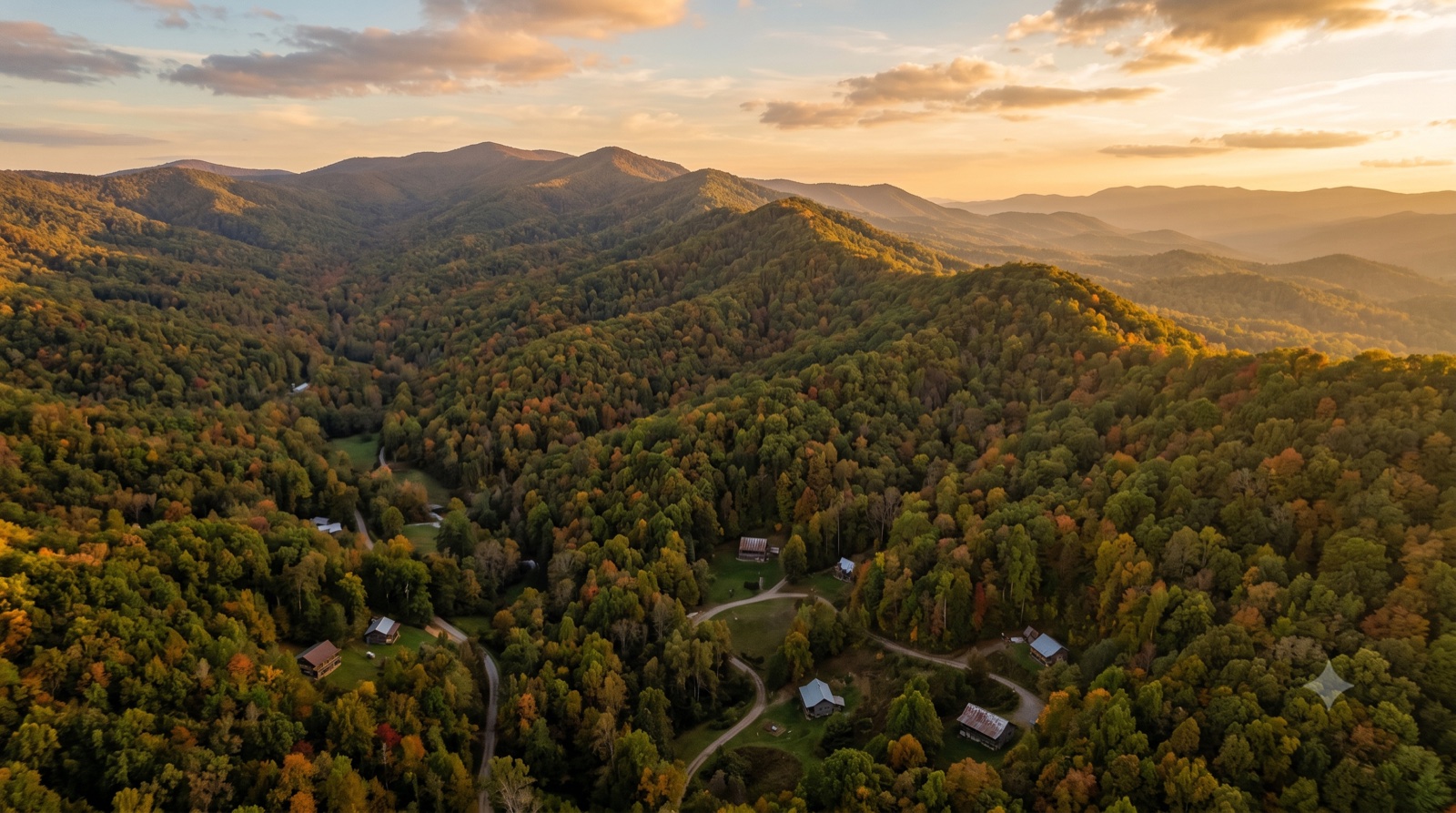
Sell My Land in Wilkes County NC - What Landowners Need to Know
Key Takeaways
- North Carolina charges a $2-per-$1,000 excise tax on deeds: Sellers pay $1 per $500 of the conveyed property value (equivalent to $2 per $1,000) to the Register of Deeds at closing, per N.C. Gen. Stat. § 105-228.30, according to HomeLight's North Carolina transfer tax guide
- Wilkes County is the largest, most rural county in the northwest foothills: With roughly 66,000 residents spread across more than 750 square miles of Blue Ridge and Brushy Mountain terrain, much of the county is forested timber and recreational tract rather than open farmland, and its population has slipped about 4.9% since the 2010 Census, according to U.S. Census Bureau data
- Forestland qualifies for North Carolina's Present-Use Value deferral: Qualifying timber tracts can be taxed on income-producing value rather than market value — a reduction of up to roughly 90% — but selling or converting the land triggers rollback of deferred taxes, according to the NC Forest Service
How Can You Sell Land in Wilkes County North Carolina?
Selling land in Wilkes County, North Carolina means dealing with an attorney-supervised closing, a state excise tax paid by the seller, and a mountain-and-foothills market where most acreage is forested timber, hunting ground, or recreational cabin land rather than row-crop farmland. The county sprawls across more than 750 square miles of the northwest North Carolina foothills, climbing from the Yadkin River valley up into the Blue Ridge and across the Brushy Mountains — it is the largest and most rural county in this corner of the state.
This guide covers North Carolina's property tax system and the Present-Use Value deferral that matters most for forestland, the state's attorney-closing requirement and what it means for your timeline, how Wilkes County compares to neighboring Surry, Caldwell, and Alexander counties, and the practical steps for completing a sale of remote mountain acreage. For a broader overview of the process across the state, visit our guide on how to sell land in North Carolina.
What Are the Property Tax and Carrying Costs of Holding Land in Wilkes County?
North Carolina assesses all real property — including vacant land — at 100% of fair market value, unlike states that apply fractional assessment ratios. The county then applies its rate to that assessed value. According to the North Carolina Department of Revenue's 2025-2026 county tax rate schedule, Wilkes County's rate is $0.66 per $100 of assessed value, a rate that took effect with the county's 2025 revaluation. Because North Carolina's statewide average effective rate runs approximately 0.77% and the national average sits near 1.02%, Wilkes County's burden lands in the lower-to-middle range for the state.
That said, carrying costs on remote mountain land add up in ways that go beyond the annual tax bill. A forested ridge tract with no road frontage, no utilities, and seasonal access generates no income while the owner pays taxes year after year. For out-of-state owners holding inherited family land they rarely visit, those quiet annual costs are often the single biggest reason a parcel eventually gets sold.
How the Present-Use Value (PUV) Program Can Reduce Your Tax Bill
North Carolina's Present-Use Value program, authorized under N.C. Gen. Stat. §§ 105-277.2 through 105-277.7, allows qualifying agricultural, horticultural, and forestland to be assessed on its income-producing value rather than market value. According to the NC Forest Service, this program can reduce property taxes by up to 90% for eligible parcels. Because so much of Wilkes County is timberland, the forestland classification is the most relevant tier here — forestland is capitalized at a fixed 9% rate set by statute, while agricultural land is capped at no more than $1,200 per acre for the best classification under the NCDOR Use-Value Manual.
To qualify, a parcel must meet minimum acreage thresholds — 20 acres under a sound timber management plan for forestland, 10 acres for field crops or pasture, and 5 acres for horticultural use — and farm and horticultural classifications must generate at least $1,000 in gross annual income. Applications are due by January 31 each year with the county Tax Assessor. If ownership changes or the land is converted to a non-qualifying use, deferred taxes from the current year plus the three prior years become immediately due with interest. For a timber tract that has been enrolled for years, this rollback can be a meaningful figure that comes out of your proceeds at closing.
For landowners carrying back taxes on a Wilkes County parcel, resolving delinquency before listing is important because a tax lien will appear in any title search and must be satisfied at closing.
Wilkes County Tax Administration Contact
Wilkes County Tax Administration | 110 North Street, Wilkesboro, NC 28697 | Phone: (336) 651-7300 | Website: wilkescounty.net
What Closing and Zoning Requirements Apply in Wilkes County?
North Carolina is an attorney-close state. Under established North Carolina case law and State Bar opinions, a licensed North Carolina attorney must conduct or supervise every real estate closing — including reviewing title, preparing the deed, coordinating payoffs, and recording the deed with the Register of Deeds. A title company can issue title insurance but cannot replace the attorney's legal role.
The closing sequence for a Wilkes County land sale typically works as follows: the buyer's (or seller's, if agreed) attorney orders a title search through Wilkes County's deed records, resolves any clouds on title, prepares a warranty deed, and schedules the closing. The seller pays the excise tax — $1 per $500 of the sale price, or $2 per $1,000 — directly to the Register of Deeds when the deed is recorded. This tax is conventionally a seller cost in North Carolina transactions, according to HomeLight's transfer tax analysis. For a parcel selling at $50,000, the excise tax obligation would be $100. Our guide on who pays closing costs when selling land covers how these costs are typically allocated.
Title work on inherited mountain land can be slower than on a platted suburban lot. Old deeds describing boundaries by trees and stones, unrecorded family transfers, and gaps in the chain of title are common on tracts that have stayed in one family for generations. If you need to understand what documents are required, see our overview of the paperwork needed to sell land.
Zoning and Permitting in Wilkes County
Wilkes County administers planning, zoning, and building inspection through its county offices, with the towns of Wilkesboro and North Wilkesboro maintaining their own municipal zoning overlays. Across the rural balance of the county, much of the land is lightly regulated, which is part of what makes it attractive to recreational and cabin buyers. For any proposed land use change — subdividing a larger tract, placing a manufactured home, or constructing a building — permits are required, and steep-slope and access considerations often govern what is buildable on mountain parcels.
Wilkes County Register of Deeds | 500 Courthouse Drive, Suite 1000, Wilkesboro, NC 28697 | Phone: (336) 651-7351
How Does Wilkes County Compare to Neighboring Counties?
Wilkes County's population of approximately 66,186 (2024 estimate, according to the U.S. Census Bureau) makes it the largest county in the immediate northwest foothills region, even after a decline of roughly 4.9% from the 2010 Census count of 69,340. The county seat is Wilkesboro, though neighboring North Wilkesboro is the larger of the two towns — together they form the commercial heart of the county along the Yadkin River, with the rural mountain townships radiating outward into timber and recreational land.
| Factor | Wilkes County | Surry County | Caldwell County | Alexander County |
|---|---|---|---|---|
| Population (2024 est.) | ~66,200 | ~72,300 | ~80,000 | ~37,000 |
| Population trend | Declining (−4.9% since 2010) | Stable | Stable | Stable |
| County tax rate (per $100) | $0.66 | $0.552 | $0.63 | $0.79 |
| Dominant land type | Timber / recreational / foothills | Tobacco / vineyards / foothills | Furniture / foothills | Lake Hickory / rural |
| Top industry | Food processing / manufacturing | Manufacturing / agriculture | Furniture / manufacturing | Manufacturing |
| Key selling challenge | Remote tracts; absentee owners | Smaller mountain parcels | Slope and access | Small market |
Wilkes County's economy is anchored by food processing and manufacturing. The Tyson Foods poultry complex in Wilkesboro is the county's largest employer with more than 2,000 workers, followed by Wilkes County Schools and Lowe's — the home-improvement giant that was founded in North Wilkesboro in 1921 as North Wilkesboro Hardware and grew from a single local store into a national company, according to North Carolina History. Lowe's corporate roots remain a point of regional pride even though its headquarters later moved to Mooresville.
Wilkes County's median household income of approximately $50,438 and poverty rate near 16% (Data USA and U.S. Census Bureau estimates) reflect a working economy that nonetheless leaves many landowners reluctant to keep paying taxes on acreage that produces nothing. For context on land valuation, see our guide on how much is my land worth.
On the agricultural side, the 2022 USDA Census of Agriculture counted 871 farms in Wilkes covering 114,778 acres — an average of 132 acres per farm — and the value of agricultural products sold approached $459 million, placing Wilkes among the top tier of western North Carolina counties for farm output. But those figures are concentrated in commercial poultry and the river-valley bottomland; the forested ridges and hollows that make up most of the county's acreage rarely show up in farm income at all. That gap is exactly where remote, timber-and-recreational tracts struggle to find buyers.
Motivated-Seller Signals in Wilkes County
Several patterns concentrate motivated sellers in Wilkes County. The biggest is absentee, out-of-state ownership of inherited family mountain land — parcels passed down to children and grandchildren who have moved to Charlotte, the Piedmont, or out of state and have no practical use for a wooded ridge they visit once a year, if at all. These owners often hold timberland or hunting land that carries steady tax bills but generates no income. The remoteness that makes a tract appealing for hunting and recreation also makes it illiquid: comparable sales are scarce, access is seasonal, and conventional buyers who need financing struggle with raw, unimproved mountain acreage.
If you are an out-of-state owner or holding inherited land with multiple heirs, settling title and agreeing among the family is usually the first hurdle to clear. The Wilkes County delinquent tax rolls and periodic tax foreclosure proceedings are publicly searchable through the Tax Administration office. For more county-level land analysis across North Carolina and the Southeast, explore our blog.
What Are Your Options for Selling Land in Wilkes County?
A remote, forested tract in the Wilkes County mountains is one of the harder things to sell on the open market. Comparable sales are thin, access is often seasonal, and most retail buyers either need financing the land won't support or simply never see the listing. Understanding your options helps you choose the path that fits your timeline and financial goals.
Listing with a real estate agent gives your parcel the broadest market exposure through the MLS and land-specific platforms. Agents who specialize in mountain and recreational land can reach hunting, timber, and cabin buyers from across the region. Agent commissions typically run 5–6% of the sale price, plus the state excise tax and other closing costs, and remote tracts can sit unsold for many months while you keep paying taxes. If you own the land with multiple heirs, all owners must agree before a listing can proceed.
For Sale By Owner (FSBO) and online platforms like Land.com, LandWatch, and LandAndFarm let you list directly. These platforms have active audiences of recreational land buyers, but marketing a remote mountain parcel effectively — with boundary surveys, access documentation, and timber or topographic detail — takes time and knowledge of what mountain-land buyers actually look for.
Working with a direct cash buyer like Jerez Land means skipping the listing period, agent commissions, and the uncertainty of buyer financing. We make parcel-specific, firm written offers based on a full review of your property — location, access, slope, timber, encumbrances, and condition — and we absorb the carrying costs, marketing expense, and resale risk that come with illiquid mountain acreage. Our offers are not formulas; they reflect what we can actually do with your specific land. If you have inherited land or are an out-of-state owner dealing with title or access complications, we're experienced working through those situations.
Request a cash offer to get a specific number on your Wilkes County parcel, or read our full guide on whether you need a realtor to sell land before deciding.
Frequently Asked Questions
How do I sell my land in Wilkes County fast?
The fastest path to closing on a Wilkes County parcel is working with a direct cash buyer who does not require mortgage financing — which matters especially for remote mountain tracts that conventional lenders won't finance. Cash closings eliminate lender timelines and can often close in two to four weeks once title is clear. Before any sale, confirm your property's legal description with the Wilkes County Register of Deeds and verify there are no delinquent taxes that would need to be resolved at closing.
Do I have to pay all the closing costs when selling land in North Carolina?
In North Carolina, the seller conventionally pays the excise tax (revenue stamps) at $1 per $500 of sale price, which equals $2 per $1,000. Attorney fees and title search costs are typically split by negotiation or paid by the buyer. There is no fixed statewide rule beyond the excise tax obligation, so closing cost allocation is addressed in the purchase contract.
Can I sell my land without an attorney in North Carolina?
No. North Carolina requires a licensed attorney to supervise every real estate closing — this is not optional or waivable by the parties. The attorney conducts the title examination, prepares the deed, coordinates the disbursement of funds, and records the deed with the county Register of Deeds. Closing cannot be completed by a title company alone.
How much property tax will I owe annually on my Wilkes County land?
Wilkes County's tax rate is $0.66 per $100 of assessed value following the county's 2025 revaluation, according to the North Carolina Department of Revenue's 2025-2026 schedule. Because North Carolina assesses property at 100% of fair market value, that rate applies to the full appraised value. Land enrolled in the Present-Use Value program — including qualifying forestland — may be taxed at significantly lower rates based on income-producing capacity rather than market value.
My mountain land has no road access — can I still sell it in Wilkes County?
Yes, though remote and access-challenged tracts are harder to sell on the open market because financing is difficult and comparable sales are scarce. A direct cash buyer who specializes in raw land can evaluate access, slope, and timber and make a firm written offer without requiring a lender. Documenting any recorded easements or deeded access ahead of time helps the sale move faster.
How does the Present-Use Value program affect selling my Wilkes County timberland?
North Carolina's PUV program lets qualifying forestland be taxed on income-producing value rather than market value — potentially reducing taxes by up to 90%, according to the NC Forest Service. If you sell PUV-enrolled timberland and the use changes, deferred taxes from the current year and the three prior years become due immediately at closing, with interest. This rollback is a real cost that affects your net proceeds and should be factored into any offer evaluation.
Disclaimer: This article is for informational purposes only and does not constitute legal, financial, or professional advice. Laws and regulations vary by jurisdiction and change over time. Always consult with qualified professionals before making land purchase decisions. Jerez Land is not responsible for actions taken based on this information.